
Resources
Explore a wide range of valuable resources on GCED to deepen your understanding and enhance your research, advocacy, teaching, and learning.
1,329 Results found
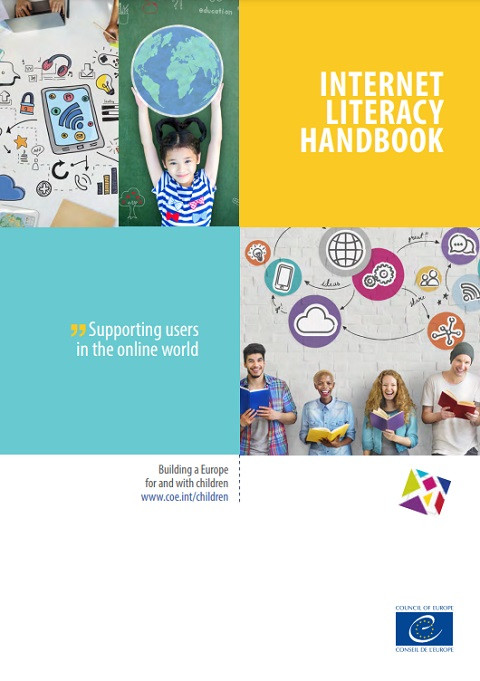 Manuel de maîtrise de l'internet: Accompagner les utilisateurs dans le monde en ligne Year of publication: 2017 Author: Janice Richardson | Elizabeth Milovidov | Martin Schmalzried Corporate author: Conseil de l'Europe Depuis la publication de la première édition du Manuel de maîtrise d’Internet en 2003, le monde en ligne a beaucoup changé. Les Internautes sont de plus en plus jeunes, leur nombre a augmenté, leurs usages d’Internet et l’objet de leurs recherches évoluent et de nouveaux dangers, par exemple en matière de sécurité individuelle, apparaissent chaque jour. Cette nouvelle édition tient compte de ces nombreux changements mais conserve son objectif, qui est de donner aux familles, aux enseignants et aux décideurs politiques des connaissances techniques suffisantes pour pouvoir naviguer, avec les jeunes, dans le monde des technologies de la communication. La nouvelle édition étend également le contenu des Fiches d’information aux concepts qui étaient alors «nouveaux» de citoyenneté numérique et de parentalité numérique, ce qui porte le nombre de fiches à 26, organisées en six thématiques dont l’une est spécialement consacrée à l’avenir d’Internet. Le manuel se veut convivial et pratique, comme l’illustre la fiche intitulée « Trouver de l’information de qualité sur le web ». Il est également accessible en ligne où il peut être téléchargé dans son intégralité ou fiche par fiche.
 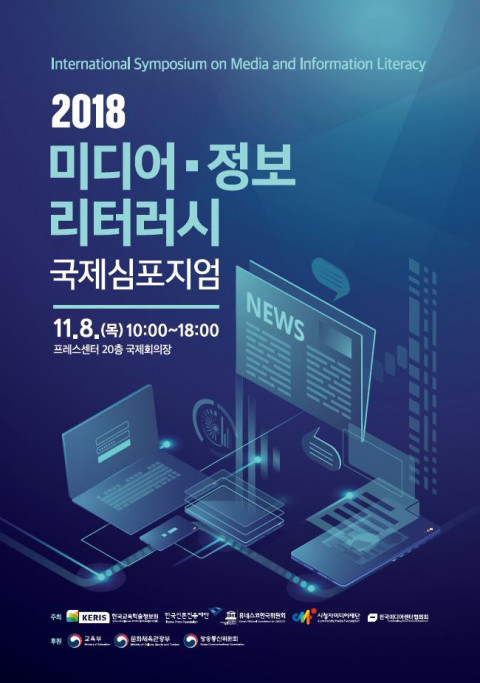 2018 International Symposium on Media and Information Literacy Year of publication: 2018 Corporate author: Korean National Commission for UNESCO | Community Media Foundation | National Association of Community Mediacenters | Korea Education and Research Information Service (KERIS) | Korea Press Foundation (KPF) This book is a conference report of 2018 International Symposium on Media and Information Literacy. The Symposium on MIL is hosted by the Korea Press Foundation (KPF), the Korea Education and Research Information Service (KERIS), and the Korean National Commission for UNESCO (KNCU), in cooperation with the Community Media Foundation, the National Association of Community Mediacenters. 2018 미디어·정보리터러시: 국제심포지엄 자료집 Year of publication: 2018 Corporate author: 유네스코한국위원회 | Community Media Foundation | National Association of Community Mediacenters | 한국교육학술정보원 | 한국언론진흥재단 이 책은 유네스코한국위원회, 한국언론진흥재단, 한국교육학술정보원, 시청자미디어재단, 전국미디어센터협의회가 공동주최하고 교육부, 문화체육관광부, 방송통신위원회가 후원한 「2018 미디어·정보리터러시: 국제심포지엄」의 자료집으로 기조연설 및 주제별 발표내용을 담고 있다.
 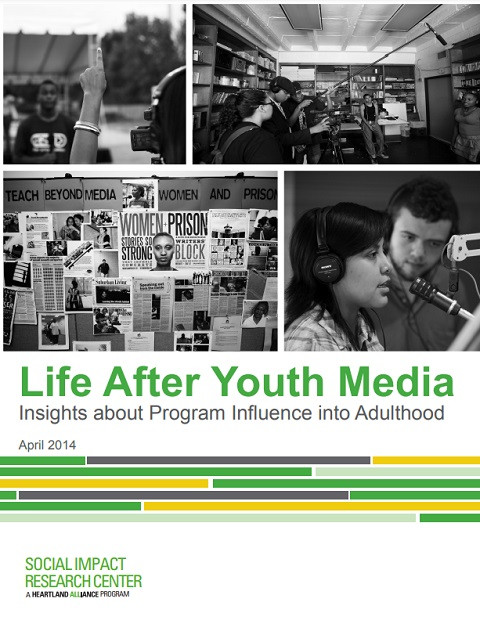 Life After Youth Media: Insights About Program Influence Into Adulthood Year of publication: 2014 Author: Suniya Farooqui | Amy Terpstra Corporate author: Social IMPACT Research Center * Do the skills, attitudes, and behaviors imparted in youth programs "stick" into adulthood? * If they do, how do they manifest in career, education, and life decisions? * How do the skills, attitudes, and behaviors that youth programs try to impart differ based on program intensity or levels of engagement? * Do these elements look different for people who went through youth media programs versus people who went through other types of youth programs? These are common questions that youth program providers, funders, public officials, and other leading thinkers regularly wrestle with. This report tells the story of a group in Chicago committed to providing quality youth media programming in the city and how, through a collective evaluation, they were able to begin to answer these critical questions.
 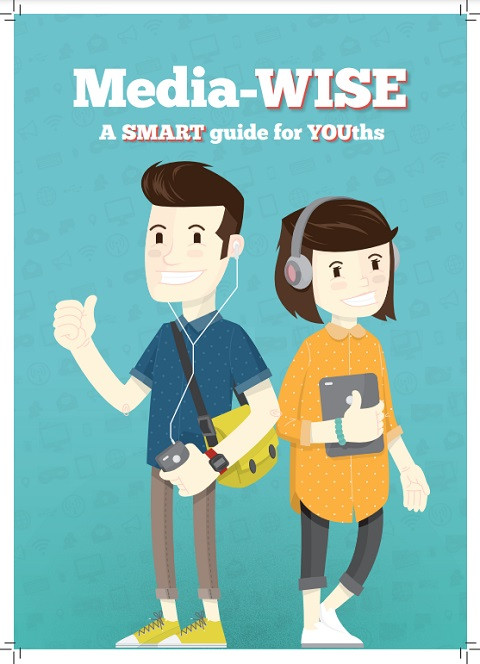 Media-Wise: A Smart Guide for Youths Year of publication: 2015 Corporate author: Media Literacy Council (MLC) Even as a digital native, you might need some help figuring out the safest and kindest route through the digital world - this guide will give you the tips and advice you need to make that journey.
  Localizing the 2030 Agenda and Global Citizenship Education: An Essential Dialogue Year of publication: 2020 Corporate author: Diputació de Barcelona Diputació de Barcelona has produced a document that offers guidelines to strengthen the links between Global Citizenship Education (GCE) actions and localizing SDGs initiatives, in order to drive real changes in local policies.What we call Global Citizenship Education (GCE) brings together key elements of different educational trends, such as development education, peace education or education for sustainability, among others. Each of them has decades of experience in promoting changes in citizen’s knowledge, attitudes and behaviours through formal or informal channels. This experience can help to reinforce the 2030 Agenda’s capacity to generate real change towards a more sustainable future for the planet, connecting local and global realities and highlighting interdependencies and co-responsibility. The document points out what can be done at the local level to improve this dialogue between SDG and GCE with practical proposals such as introducing GCE perspective in the SDGs training activities or implementing joint initiatives between development cooperation departments and other areas to reach new audiences. Localización de la agenda 2030 y la educación para la ciudadanía global: Un diálogo imprescindible Year of publication: 2020 Corporate author: Diputació de Barcelona Este documento pretende contribuir al diálogo entre los procesos de localización de la Agenda 2030 y la ECG, así como ofrecer orientaciones concretas para la acción local.
 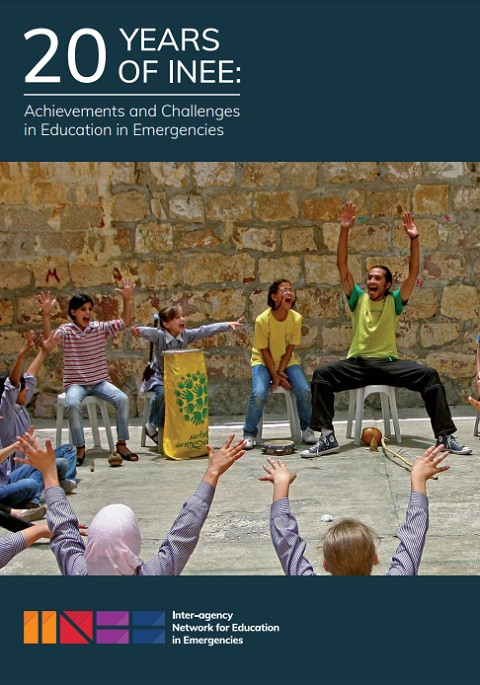 20 Years of INEE: Achievements and Challenges in Education in Emergencies Year of publication: 2020 Corporate author: Inter-agency Network for Education in Emergencies (INEE) This report highlights the continued relevance of INEE 20 years on. It presents new data that shows 127 million primary and secondary school-age children and young people living in crisis-affected countries were out of school in 2019. This is equivalent to almost half of the global out-of-school population, even though only around 29% of children and young people in this age group globally live in crisis-affected countries. These figures are based on new data provided by the UNESCO Institute for Statistics (UIS). The report also demonstrates the still urgent need to prioritize education and financing of education in emergencies, particularly in ‘forgotten’ crises. 20 ans de l’INEE : Réalisations et Défis dans l’Éducation en Situations d’Urgence Year of publication: 2020 Corporate author: Inter-agency Network for Education in Emergencies (INEE) Ce rapport, qui marque le 20e anniversaire de l’INEE, souligne les réalisations dans le domaine de l’ESU au cours des deux dernières décennies et identifie les défis permanents. Il retrace les changements qui ont amené l’ESU dans les programmes mondiaux de planification et d’action et note les étapes clés du développement de l’ESU en tant que domaine reconnu. Reconnaissant également les engagements énoncés dans l’Agenda 2030 pour le développement durable, notamment la promesse de veiller à ce que « personne ne soit laissé de côté » (ONU, 2015), ce rapport se tourne vers l’avenir en recommandant des actions immédiates et durables pour atteindre l’Objectif de Développement Durable 4 (ODD 4), une éducation de qualité et des possibilités de formations permanente inclusives et équitables pour tous - incluant les enfants et les jeunes dans les contextes de crise (ONU, 2015). 20º aniversario de la INEE: Logros y desafíos en la educación en situaciones de emergencia Year of publication: 2020 Corporate author: Inter-agency Network for Education in Emergencies (INEE) Este informe, con motivo del 20.º aniversario de la INEE, enfatiza los logros alcanzados en el ámbito de la EeE en las últimas dos décadas y señala los desafíos que siguen existiendo. Explora los cambios que facilitaron la inclusión de la EeE en los programas globales de planificación y acción, y señala los hitos principales en el desarrollo de la EeE como un campo reconocido. Asimismo, este informe reconoce los compromisos establecidos en la Agenda de Desarrollo Sostenible de 2030, incluido el compromiso de «no dejar a nadie atrás» (ONU, 2015), y enfrenta el futuro con la recomendación de acciones inmediatas y sostenidas para alcanzar el Objetivo de Desarrollo Sostenible 4 (ODS 4),una educación de calidad inclusiva y equitativa, y oportunidades de aprendizaje durante toda la vida para todos; incluidos los niños, niñas y jóvenes en contextos de crisis (UN, 2015).