
Resources
Explore a wide range of valuable resources on GCED to deepen your understanding and enhance your research, advocacy, teaching, and learning.
1,364 Results found
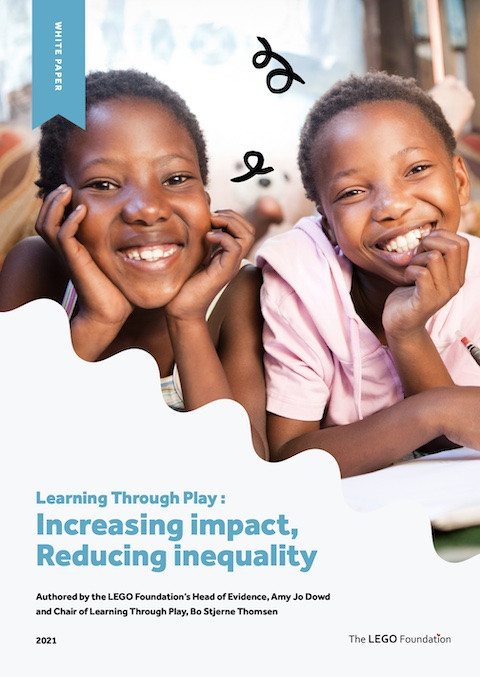 Learning Through Play: Increasing Impact, Reducing Inequality Year of publication: 2021 Author: Amy Jo Dowd | Bo Stjerne Thomsen Corporate author: LEGO Foundation This study explores the role of play in contributing to the effort to promote learning and reduce inequality. Reviews of play’s importance for learning present mostly correlational evidence from small samples in high-income, developed contexts, most often the United States, and often under laboratory conditions. This review expands both the geographic breadth and the scale of this evidence and explores the use of play in early childhood classroom and home-based educational interventions that have demonstrated causal impact on learning and the closing of achievement gaps. By doing so, it aims to understand whether and how the evidence about play and learning relates to tackling the learning crisis, especially in terms of inequality in learning outcomes around the globe.
  Educating for American Democracy: Excellence in History and Civics for All Learners Year of publication: 2021 Corporate author: Educating for American Democracy (EAD) This material presents a Roadmap to Educating for American Democracy— guidance and an inquiry framework that states, local school districts, and educators in U.S. to transform teaching of history and civics to meet the needs of a diverse 21st century K-12 student body. It also recommends approaches to learning that do five critical things as follow: inspire students to want to become involved in their constitutional democracytell a full narrative of America’s plural yet shared storyexplore the need for compromise to make constitutional democracy workcultivate civic honesty and patriotism that leaves space both to love and to critique this countryteach history and civics both through a timeline of events and the themes that run through those events.
 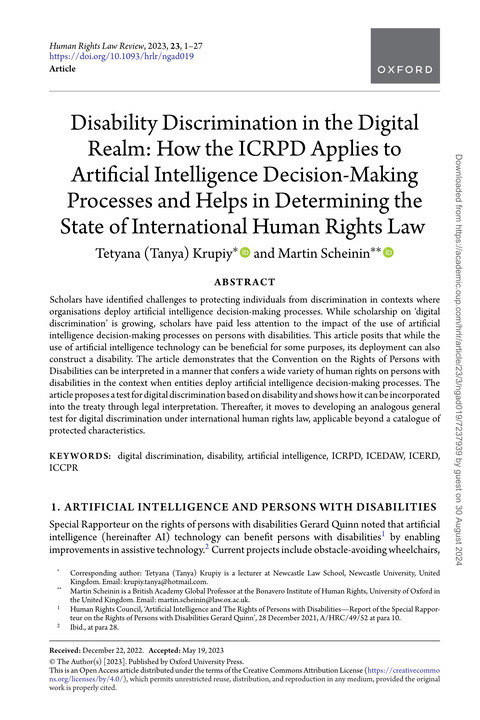 Disability Discrimination in the Digital Realm: How the ICRPD Applies to Artificial Intelligence Decision-Making Processes and Helps in Determining the State of International Human Rights Law (Human Rights Law Reivew; Volume. 23, Issue. 3) Year of publication: 2023 Author: Tetyana Krupiy | Martin Scheinin Scholars have identified challenges to protecting individuals from discrimination in contexts where organisations deploy artificial intelligence decision-making processes. While scholarship on ‘digital discrimination’ is growing, scholars have paid less attention to the impact of the use of artificial intelligence decision-making processes on persons with disabilities. This article posits that while the use of artificial intelligence technology can be beneficial for some purposes, its deployment can also construct a disability. The article demonstrates that the Convention on the Rights of Persons with Disabilities can be interpreted in a manner that confers a wide variety of human rights on persons with disabilities in the context when entities deploy artificial intelligence decision-making processes. The article proposes a test for digital discrimination based on disability and shows how it can be incorporated into the treaty through legal interpretation. Thereafter, it moves to developing an analogous general test for digital discrimination under international human rights law, applicable beyond a catalogue of protected characteristics.
 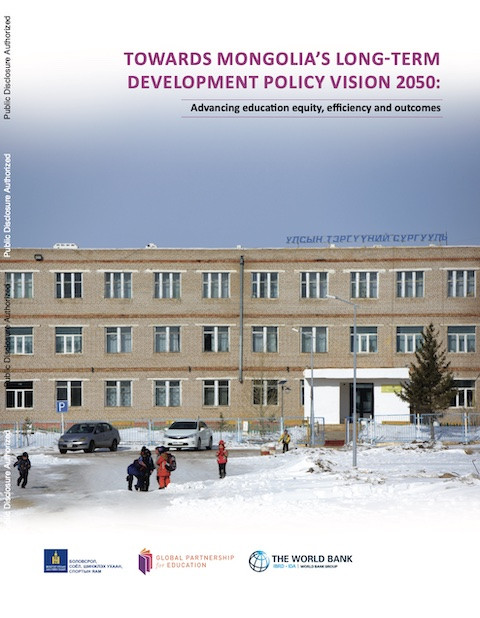 Towards Mongolia’s Long-Term Development Policy Vision 2050: Advancing Education Equity, Efficiency and Outcomes Year of publication: 2020 Corporate author: Mongolia Ministry of Education, Culture, Science and Sports | World Bank This report seeks to synthesize and analyze education outcomes with a view of identifying the main priorities for strengthening the education sector in support of Mongolia’s Sustainable Development Vision 2050. The report highlights data and findings generated from a series of source reports (see bibliography) related to the goals and targets set out in the Vision 2050. The report is composed of six thematic chapters: Access; Equity; Internal Efficiency, Education Cost and Finance; External Efficiency; Management. Each chapter will include an overview of the current situation and recent development with a focus on, key achievements and persistent challenges. As a synthesis report, the information on each topic is not exhaustive but rather seeks to present key findings. Specific activities highlighted in the Vision 2050 have been included at the beginning of each chapter and a complete mapping by activity is annexed (Annex 1. Vision 2050 Chapter mapping). This synthesis report draws on conclusions, finding, data and surveys produced in collaboration with MECSS by the Asian Development Bank, the Global Partnership for Education and the World Bank. The synthesis also draws from key UNESCO reports. The scope, research, and focus of the source reports differ, and precise findings are, on occasions, incongruent however the overall conclusions are fundamentally compatible. Whereas most of the source reports focus on one or two key stages, the synthesis report seeks to extract cross-cutting and/or recurring challenges that have an impact, positive or negative, on equity, efficiency and outcomes which ultimately may contribute to the implementation of Vision 2050. Mongolia’s State Education Policy (2014-2024) states: ‘Education is the main key factor of each citizen’s lifelong support and guarantee of life quality, and of the State’s societal and economical, science and technological development, and guarantee of national independence and security. Mongolian State shall develop education as a leading sector in society’.
 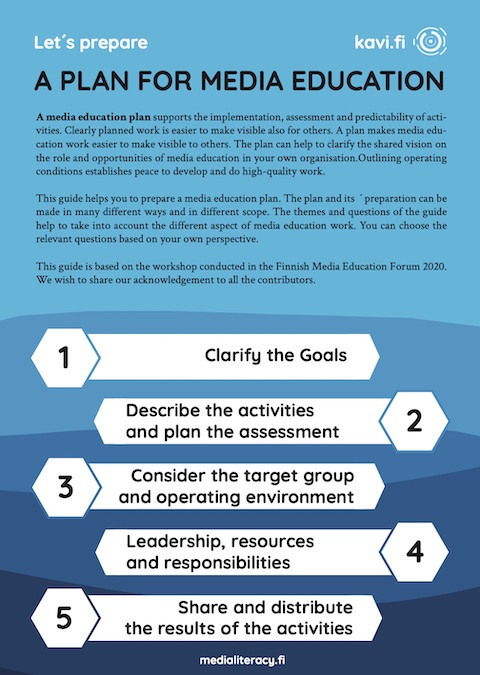 Let's Prepare: A Plan For Media Education Year of publication: 2020 Corporate author: KAVI National Audiovisual Institute (Finland) This guide helps you to prepare a media education plan. The plan and its preparation can be made in many different ways and in different scope. The themes and questions of the guide help to take into account the different aspect of media education work. You can choose the relevant questions based on your own perspective. This guide is based on the workshop conducted in the Finnish Media Education Forum 2020.
 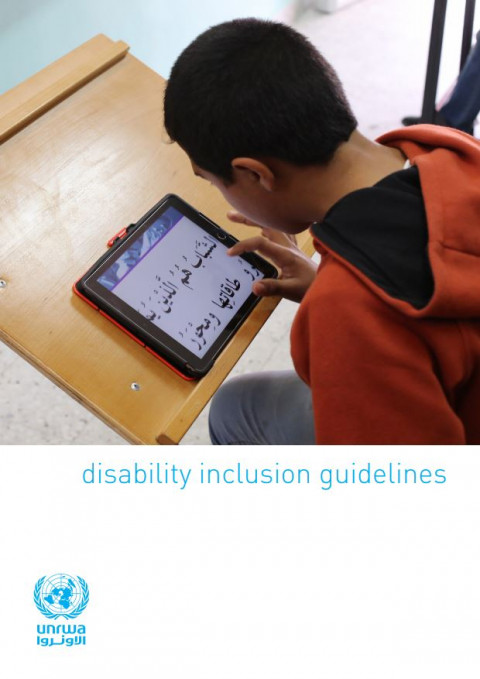 Disability Inclusion Guidelines Year of publication: 2017 Corporate author: United Nations Relief and Works Agency for Palestine Refugees in the Near East (UNRWA) These Guidelines provide information about the recommended approach to disability inclusion within UNRWA. While this document does not provide tools for identifying the particular service provision needs of persons with disabilities in a given sector or context, staff can apply the principles and recommendations in this document to develop specific project- and programme- level actions to further enhance the inclusion of persons with disabilities in UNRWA programmes and services. دليل دمج الإعاقة Year of publication: 2017 Corporate author: United Nations Relief and Works Agency for Palestine Refugees in the Near East (UNRWA) يوفر هذا الدليل الارشادي معلومات عن النهج الذي يوصى باتباعه في دمج الإعاقة داخل األونروا. والغرض من هذا الدليل هو: بناء فهم ثابت على نطاق الوكالة ككل لأهم مبادئ وممارسات دمج الاعاقة، وإسداء المشورة بشأن كيفية تعميم دمج الاعاقة في برامج األونروا وخدماتها.
  Methods of Teaching People with Special Needs "Specialization in Science" Year of publication: 2010 Author: Marwa El-Baz Corporate author: Port Said University This report contains the scientific material used in the teaching methodology for people with special needs course "Specialization Science". The course was divided into multiple topics that familiarize the learner with people with special needs and methods of teaching them. طرق تدريس ذوي الاحتياجات الخاصة " تخصص علوم" Year of publication: 2010 Author: Marwa El-Baz Corporate author: Port Said University هذا الملف يحتوي على المادة العلمية المستخدمة في تدريس مقرر طرق تدريس ذوي الاحتياجات الخاصة " تخصص علوم". تم تقسيم المقرر على مواضيع متعددة تعرف المتعلم بذوي الاحتياجات الخاصة وطرق تدريسهم.
  وضع تصورات جديدة لمستقبلنا معاً: عقد اجتماعي جديد للتربية والتعليم Year of publication: 2022 Corporate author: International Commission on the Futures of Education | منظمة الأمم المتحدة للتربية والعلم والثقافة (UNESCO) تُستشف من أحوال العالم في الوضع الراهن أن البشرية وكوكب الأرض معرضان للخطر. وقد قدمت الجائحة التي حلت بنا في الفترة الأخيرة دليلاً دامغاً على أن العالم الذي نعيش فيه يتسم بالهشاشة وتترابط أجزاؤه ترابطاً وثيقاً. ولا بد لنا الآن من اتخاذ إجراءات عاجلة معاً لتغيير المسار ووضع تصورات جديدة لمستقبلنا. وينطوي هذا التقرير الصادر عن اللجنة الدولية المعنية بمستقبل التربية والتعليم على إقرار بقدرة التربية والتعليم على إحداث تغيير عميق في الأوضاع الراهنة. وثمة تحديان ماثلان أمامنا الآن، أولهما هو الوفاء بالوعد المتمثل في ضمان الحق في التعليم الجيد لجميع الأطفال والشباب والكبار، وهو وعد لم يتحقق بعد، وثانيهما هو تحقيق كامل الإمكانات الكفيلة بإحداث التغيير الجذري المنشود، التي ينطوي عليها التعليم بوصفه سبيلاً إلى بناء مستقبل جماعي مستدام. ولا سبيل إلى بلوغ هذه الغاية إلا بإبرام عقد اجتماعي جديد للتربية والتعليم يتيح إصلاح المظالم والاضطلاع في الوقت نفسه بتغيير المستقبل على النحو المنشود. ويجب أن يقوم هذا العقد الاجتماعي الجديد على حقوق الإنسان وأن يستند إلى مبادئ عدم التمييز، والعدالة الاجتماعية، واحترام الحياة، والكرامة الإنسانية، والتنوع الثقافي. ويجب أن يشتمل على أخلاقيات الرعاية والتبادل والتضامن. ويجب أن يعزز التعليم باعتباره عملاً ومنفعة مشتركة. وينطوي هذا التقرير، الذي استغرق إعداده عامين واسترشد معدوه بعملية تشاور عالمية شارك فيها نحو مليون شخص، على دعوة موجهة إلى الحكومات والمؤسسات والمنظمات والمواطنين في جميع أنحاء العالم لصياغة عقد اجتماعي جديد للتربية والتعليم يساعدنا في بناء مستقبل مستدام ينعم فيه الجميع بالسلام والعدل. وليست الرؤى والمبادئ والمقترحات المعروضة ههنا سوى منطلق لمزيد من العمل، إذ ينبغي بذل جهد جماعي لتجسيد هذه الرؤى والمبادئ والمقترحات بما يتماشى مع الظروف والبيئات التي تندرج فيها. وقد تحقق بالفعل العديد من المنجزات البارزة في هذا الشأن. ويسعى في هذا التقرير إلى استعراضها والارتكاز عليها لبناء صرح جديد. وليس هذا التقرير دليلاً إرشادياً ولا خطة لإيجاد حلول، بل هو فتح لباب التحاور في شأن يتسم بأهمية حيوية.