
Resources
Explore a wide range of valuable resources on GCED to deepen your understanding and enhance your research, advocacy, teaching, and learning.
1,364 Results found
 Racial Literacy Year of publication: 2021 Author: Yolanda Sealey-Ruiz Corporate author: National Council of Teachers of English (NCTE) This paper gives a clear definition of the racial literacy connected to the concepts of democracy and equity and presents racial literacy development model for teaching and learning.
  Human Rights Storytelling: Manual for the Educators Year of publication: 2018 Corporate author: Huristo Project Consortium Huristo project developed a methodology about awareness and advocacy about the European Human Rights Charter as a part of global citizenship education with low skilled adult learners (refugees and migrants living in the city and natives living in rural places). This methodology is based on digital storytelling: participants work on personal narratives illustrating different topics of the charter.The main result for the adult learners are increased digital skills, reading and writing skills, awareness about the Human Rights Charter and European citizenship. The work on the Charter and the personal narratives also improve participants’ analytic media literacy, interpersonal and intercultural skills, but also core skills for employability, such as teamwork, problem solving, learning to learn and communication. Additionally, the adult trainers who are involved increase their teaching skills using digital media and the methodology of digital storytelling in particular.In the HURISTO project trainers start with the stories of the participants, and afterwards the stories are linked to articles of the Charter. To do so, the methodology is using two concepts:1) PHOTOLANGUAGE SET: a set of 30 flashcards for students with photos that illustrate the European Charter of Human Rights. They have been created as a tool to start up conversations about human rights in Europe and the situations in which these rights may be at risk. Based on these discussions and the sharing of stories, each participant chooses one photo out of the flashcards, as a starting point for a digital story. The HURISTO Photolanguage set for educators contains guidelines for educators who want to use it in a human rights digital storytelling workshop with adult learners.2) STORY CIRCLES: in different rounds participants share their stories with the group and develop them together into short stories for their film.
 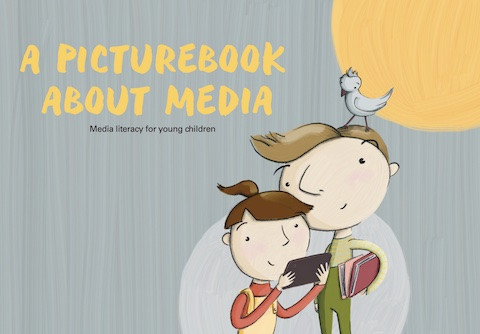 A Picture Book About Media: Media Literacy For Young Children Year of publication: 2018 Author: Alma Čakmazović Corporate author: United Nations Children's Fund (UNICEF) Media literacy helps to form the habit of appraising media contents and to develop the skills of expression necessary for critical thinking. Today, it represents education for life, human values, active citizenship and responsible media practices.This picturebook is devoted to children, parents, foster parents and educators. Its purpose is to give the youngest children the chance to understand media through one of the first lessons in media literacy, one about the difference between the media world and the real world.
  Global Gender Gap Report 2021: Insight Report, March 2021 Year of publication: 2021 Corporate author: World Economic Forum The report is a measure of gender gap on four parameters: economic participation and opportunity, educational attainment, health and survival, and political empowerment. The index has benchmarked 156 nations across the globe in 2021. The data show that it will take 135.6 years to bridge the gender gap worldwide and the pandemic has impacted women more severely than men. The gap is the widest on the political empowerment dimension with economic participation and opportunity being next in line. However, the gap on educational attainment and health and survival has been practically bridged.
 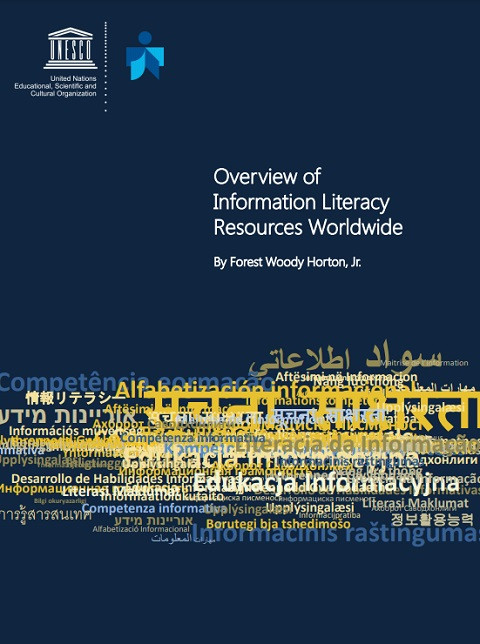 Overview of Information Literacy Resources Worldwide Year of publication: 2013 Author: Forest Woody Horton Corporate author: UNESCO This publication aims to bring together Information Literacy contributions in forty-two languages from all of the different geographic regions around the world in order to provide inclusive and multilingual Information Literacy resources for Library and Information Science professionals, teachers, researchers, and students.
 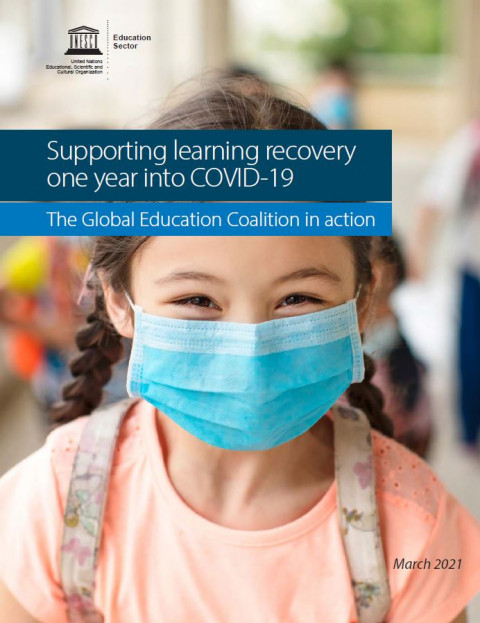 Supporting Learning Recovery One Year into COVID-19: The Global Education Coalition in Action Year of publication: 2021 Corporate author: UNESCO | Global Education Coalition The Global Education Coalition, launched by UNESCO, is a platform for collaboration and exchange to protect the right to education during this unprecedented disruption and beyond.This is the annual report of the Coalition, which builds on the inaugural report published in September 2020, and covers the activity between March 2020 and March 2021.
 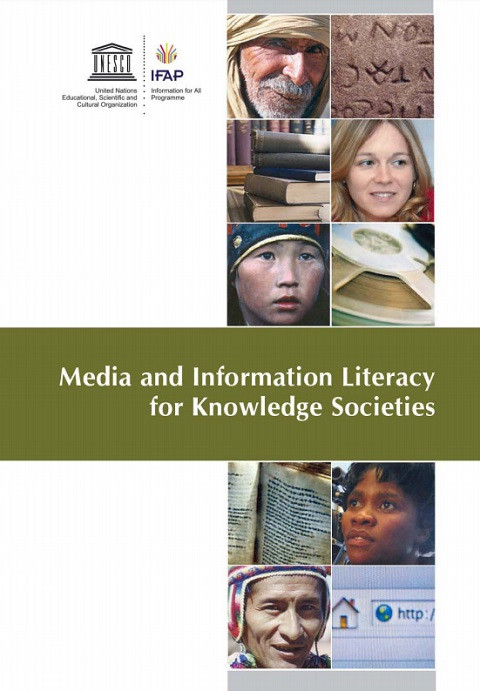 Media and Information Literacy for Knowledge Societies Year of publication: 2013 Corporate author: Interregional Library Cooperation Centre | UNESCO This book includes communications by the participants and other materials of the International Conference on Media and Information Literacy for Knowledge Societies (Moscow, Russian Federation, 24–28 June, 2012), that offered a unique opportunity to identify the key existing challenges in the field, to outline policies and professional strategies for the advocacy of media and information literacy (MIL), to promote best practices and strengthen international cooperation among various stakeholders. It also contains the Media and Information Literacy Competencies Catalogue prepared by The Modern Poland Foundation (Warsaw, Poland).
 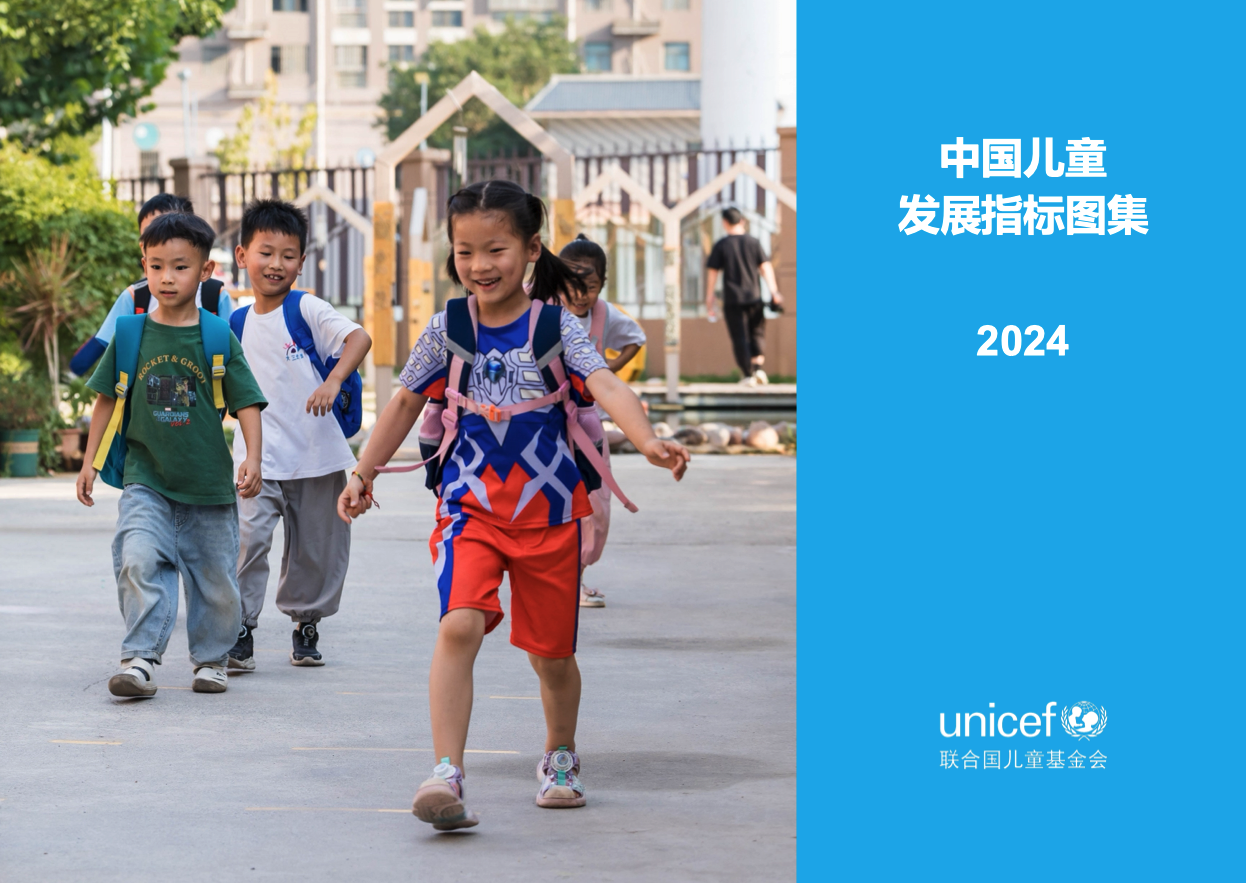 中国儿童发展指标图集2024 Year of publication: 2025 Corporate author: 联合国儿童基金会 2024版《中国儿童发展指标图集》是自2010年以来编写的第四本儿童发展指标图集。历次图集均汇编了与中国儿童发展密切相关的指标,力图反映中国在不同时期的社会经济发展、人口结构转型与政策改革进程,尽可能全面展示变迁之下中国儿童发展的新情况和新问题,并着重展现在公平推动实现所有儿童生存、发展、保护权利过程中所取得的成就、面临的机遇以及存在的挑战。2024版《中国儿童发展指标图集》延续了以往做法,主要使用国家统计局和各部委发布的官方统计数据以及国际组织发布的权威数据和信息,力求更加丰富的数据分组和更为细致的解读,并通过图文并茂的可视化形式将这些数据和信息呈现给读者,旨在为政府部门、发展合作机构、社会公众了解中国儿童发展状况提供最新参考。同时,2024版在涵盖人口、经济与社会发展、妇幼保健、营养、环境卫生、教育、儿童和妇女权利、受人口流动影响的儿童、残障儿童等之前版本已有内容的基础上,提供了新的视角,并新增了青少年健康、儿童超重肥胖、气候变化、职业教育等日益受到关注的议题。中国儿童人口众多,对于实现全球《2030年可持续发展议程》中与儿童相关的目标意义重大。2024版因此加强了与相应的可持续发展目标和指标的衔接,方便读者更好地理解中国的实施进展和对全球的贡献,以及在实现可持续发展目标的进程中还需要应对的挑战。我们希望这本数据汇编能为进一步开展更加深入的分析和研究、循证采取行动措施奠定坚实的基础,同时也期待它不仅能够启发思考和讨论,更能持续推动与儿童相关的政策制定、完善和落实,从而切实改善儿童和他们所在家庭的生活。联合国儿童基金会始终是中国政府坚定的合作伙伴。我们有着共同的愿景,那就是要解决长期存在的不同群体间的发展差异和儿童面临的困境。让我们携手努力,确保所有儿童茁壮成长,尽展潜力。
 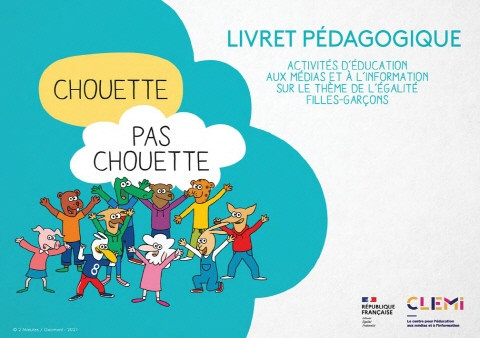 Chouette, pas chouette, déconstrure les stéréotypes sexistes, ça s'apprend ! Year of publication: 2021 Author: Anne Lechaudel | Séverine Poncet-Ollivier | Séverin Ledru-Milon Corporate author: Centre pour l’éducation aux médias et à l’information (CLEMI) Ce livret propose des activités pédagogiques sur le thème de l’égalité filles/garçons, pour apprendre à questionner et déconstruire les stéréotypes sexistes.Il est réalisé dans l’univers graphique et avec les personnages de la série Chouette, pas chouette ! une série de 16 programmes courts animés pour sensibiliser les 4-6 ans aux stéréotypes sexistes. Les activités proposées dans le livret permettent de soutenir l’expression des élèves, d’aborder le quotidien des relations filles - garçons, et plus largement du vivre-ensemble, de manière concrète et créative. Trois entrées thématiques par niveau et des pistes d’activités adaptées en éducation aux médias et à l’information sont proposées:- L’apparence. « À quoi doit ressembler une fille ou un garçon ? » (cycle 1, 4-5 ans)- Le comportement. « Fais-le comme une fille, comme un garçon » (cycle 2, 6-7-8 ans)- Le devenir et les désirs d’orientation. C ’est quoi un "métier de femme", un "métier d’homme" ? (cycle 3, 9-10 ans)Des épisodes de la série « Chouette, pas chouette ! » ont été identifiés pour chacune des entrées thématiques.Le livret est accompagné de ressources pédagogiques pour aller plus loin. This booklet offers educational activities on the theme of equality between girls and boys, to help children question and deconstruct sexist stereotypes.It is based on the graphics and characters of Chouette, pas chouette! a series of 16 short animated programs designed to raise awareness of sexist stereotypes among 4-6 year-olds. The activities in the booklet are designed to support pupils' self-expression, and address the day-to-day issues of boy-girl relationships and, more broadly, living together, in a concrete, creative way. The booklet features three thematic entries for each grade level, along with suggestions for activities adapted to media and information literacy:- Appearance. "What should a boy or a girl look like?" (cycle 1, 4-5 years old)- Behavior. "Do it like a girl, do it like a boy" (cycle 2 6-7-8 years old)- Becoming and career aspirations. What's a "woman's job", what's a "man's job"? (cycle 3, 9-10 years old)Episodes from the "Chouette, pas chouette!" series have been identified for each of these themes.The booklet is accompanied by teaching resources for further reading.
  Guidelines to Strengthen the Right to Education in National Frameworks Year of publication: 2021 Corporate author: UNESCO These Guidelines aim to strengthen national frameworks by assisting countries and stakeholders in conducting an assessment of the compatibility of their national education legal and policy framework with international standard-setting instruments on the right to education, and in light of SDG 4 commitments. These Guidelines provide a hands-on approach aiming to assist in the review of national education legal and policy frameworks in view of:Developing practical knowledge on the right to education based on the Right to education handbook and supporting capacity developmentProviding operational tools to assess the status of the right to education at country level and its compatibility with international and regional human rights obligations and international commitments (notably SDG 4)Identifying legal and policy gaps in education at country level and resulting challengesMaking recommendations for the full alignment of national constitutions, legislation , singular and policies with international standards and provisionsProviding insights on how to implement the recommendations in view of necessary reforms.