
Resources
Explore a wide range of valuable resources on GCED to deepen your understanding and enhance your research, advocacy, teaching, and learning.
1,364 Results found
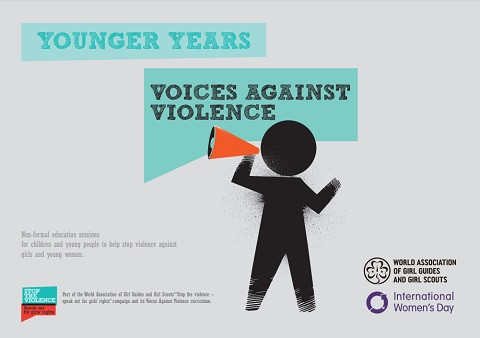 Voices Against Violence: Younger Years Corporate author: World Association of Girl Guides and Girl Scouts | International Women's Day (IWD) This resource aims to help children and young adolescents to understand gender stereotypes and develop the mindset and strategies to challenge them.The lesson objectives are to:think about what toys and films tell us about being a girl or a boyunderstand how these stereotypes are used in play and how they limit the lives and development of girls and boysnegotiate more positive gender rules and roles in the playgroundThe Pack materials are aimed at children aged:5 - 11 years
 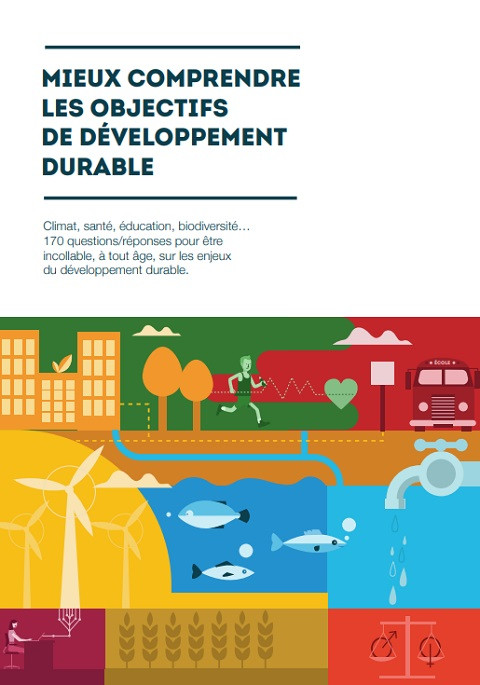 Mieux comprendre les Objectifs de développement durable Year of publication: 2017 Corporate author: Agence Française de Développement (AFD) Pour mieux appréhender les Objectifs de développement durable (ODD), ce quiz de 170 questions/réponses propose de découvrir de façon ludique et pédagogique les différentes facettes et engagements de chacun de ces objectifs. En adéquation avec la mission d’éducation au développement durable des établissements scolaires, ce quiz peut permettre d’aborder de nombreuses notions étudiées dans les programmes scolaires. Dix questions sont proposées par ODD. Ce quiz convient aux grands comme aux petits, dès 9 ans, et peut être utilisé aussi bien par le grand public que par les enseignants. C'est l'un des outils pédagogiques proposés par l'AFD pour vous accompagner dans des actions de sensibilisation aux enjeux de développement durable et de solidarité internationale, éveiller la curiosité et susciter l'envie d'agir.
  Global Media and Information Literacy Assessment Framework: Country Readiness and Competencies Year of publication: 2013 Corporate author: UNESCO The MIL Assessment Framework can foster lifelong learning initiatives by building on the relationship between information, media, digital, and ICT literacies, along with societal transformations, education, workforce, policy and decision making processes, economic growth and democracy. The overall goal of the publication is to guide UNESCO’s Member States throughout the assessment of country readiness and competencies regarding the media and information literacy of citizens, in particular teachers in service and in training. The document is particularly aimed at the following stakeholders: policy makers and decision makers; national officers responsible for statistical data collection and analysis; educational policy makers and planners working in formal and informal education settings; teacher training institutions and teachers. It is also of relevance to the professional information and communication community, and has wide applicability for civil society at large.
 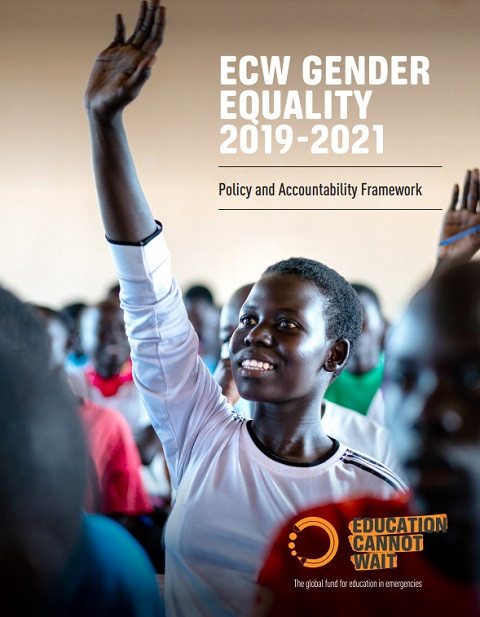 ECW Gender Equality 2019-2021: Policy and Accountability Framework Year of publication: 2020 Corporate author: Education Cannot Wait (ECW) This report presents Education Cannot Wait (ECW)'s gender equality policy, which leverages action and contributes toward coordinated strategies going beyond parity in enrollment. ECW's gender equality policy aims to provide girls and boys with equal access to education during crises, create spaces that allow learning to happen safely and without fear and ensure educational systems empower girls and boys. The Gender and Policy Accountability framework lays out the organizational strategies, explains the implementation process and outlines the compliance regulations that ECW implements to ensure girls and boys in emergencies and protracted crises have access to equitable and inclusive education. Égalité des genres dans le cadre des activités d’ECW 2019-2021: Politique et cadre de responsabilité Year of publication: 2020 Corporate author: Education Cannot Wait (ECW) Éducation sans délai s’est engagé à soutenir la prestation de services d’éducation inclusive et de qualité auprès de 9 millions d’enfants et de jeunes parmi les plus touchés par une situation d’urgence ou de crise prolongée d’ici à 2021. La Politique ECW pour l’égalité des genres vise à détailler, en s’appuyant sur les normes internationales, les aspirations du fonds en matière d’égalité des genres et d’autonomisation des femmes et des filles. Igualdad de género en el marco de las actividades para 2019-2021 de ECW : Política y marco de rendición de cuentas Year of publication: 2020 Corporate author: Education Cannot Wait (ECW) ECW se ha comprometido a respaldar la provisión de educación inclusiva y de calidad a 9 millones de niñas, niños y jóvenes afectados por emergencias y crisis prolongadas no más tarde de 2021. La finalidad de la Política de Igualdad de Género de ECW, que se apoya en normas y estándares internacionales2 , consiste en estructurar la visión del Fondo para promover la igualdad de género y el empoderamiento de las mujeres y las niñas.
 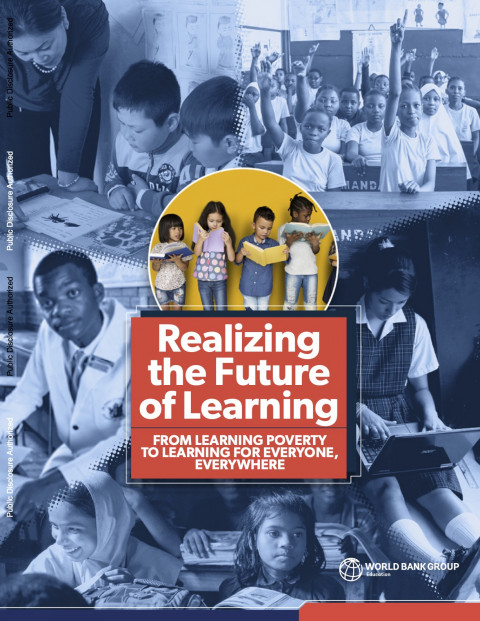 Realizing the Future of Learning: From Learning Poverty to Learning for Everyone, Everywhere Year of publication: 2020 Author: Jaime Saavedra | Cristian Aedo | Omar Arias | Adelle Pushparatnam | Halsey Rogers | Marcela Gutierrez Bernal Corporate author: World Bank Education is a right with immense inherent value. As an essential building block for a country’s human capital, it is also a key driver of growth, competitiveness, and economic development. For societies to be inclusive and fair, they need to prepare all their children to succeed as citizens and give them the tools to participate in their countries’ development. This has become increasingly challenging, because students must have the skills and competencies to adapt and be successful in a rapidly changing, uncertain world, especially as the world grapples with the effects of the COVID19 pandemic. At the same time, our understanding of how children best learn and what the most effective education delivery mechanisms are has grown. Armed with this knowledge, countries that are serious about living up to this challenge will invest in their people to build their human capital; take action to show that learning really matters to them; and commit not only the financial, but also the political and managerial resources necessary to build an education system that serves all with quality. Urgent action is needed to realize a new vision for education: one in which learning happens for everyone, everywhere. Too many education systems are not delivering even basic skills for all children, let alone preparing them for the demanding world they will live in as adults. As the World Bank expands its support for countries to invest more, and more effectively, in education, it has developed a renewed policy approach to address the educational challenges of today while helping countries lay the groundwork to seize tomorrow’s opportunities. The Bank’s 2018 World Development Report urged action to address the global learning crisis and examined the policies needed to tackle it (World Bank 2018a). To support efforts to improve foundational learning, last year the Bank launched a global target: to cut the Learning Poverty rate—the fraction of 10-year-olds in low- and middle-income countries who cannot read and understand an age-appropriate text—at least in half by 2030 (World Bank 2019a). It was also a recognition of the severity of the learning crisis that we are living through: that more than half of children lack these fundamental skills at the end-of-primary age shows that their future is at stake. And now the pandemic has generated a crisis within a crisis.
 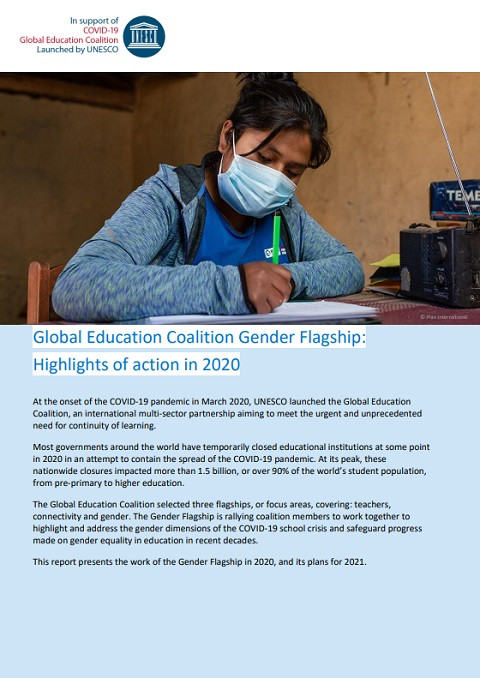 Global Education Coalition Gender Flagship: Highlights of Action in 2020 Year of publication: 2021 Corporate author: UNESCO | Global Education Coalition At the onset of the COVID-19 pandemic in March 2020, UNESCO launched the Global Education Coalition, an international multi-sector partnership aiming to meet the urgent and unprecedented need for continuity of learning.Most governments around the world have temporarily closed educational institutions at some point in 2020 in an attempt to contain the spread of the COVID-19 pandemic. At its peak, these nationwide closures impacted more than 1.5 billion, or over 90% of the world’s student population, from pre-primary to higher education. The Global Education Coalition selected three flagships, or focus areas, covering: teachers, connectivity and gender.The Gender Flagship is rallying coalition members to work together to highlight and address the gender dimensions of the COVID-19 school crisis and safeguard progress made on gender equality in education in recent decades.This report presents the work of the Gender Flagship in 2020, and its plans for 2021.
  Seoul Declaration on Media and Information Literacy for Everyone and by Everyone: A Defence Against Disinfodemics Year of publication: 2020 Corporate author: UNESCO On the 10th anniversary of Global Media and Information Literacy Week, stakeholders from all over the world gave a resounding affirmation as to the urgency to strengthen people’s media and information literacy competencies. The number of celebratory events increased from one hundred events in 2019 to over three hundred events in 2020.The outcomes of the deliberations in the Feature Conference and Youth Agenda Forum have been immortalized in the Seoul Declaration on Media and Information Literacy for Everyone and by Everyone: A Defence against Disinfodemics. This Seoul Declaration benefited from a consultation with close to one thousand registered participants.Through the Seoul Declaration, partners and participants called for media and information literacy for all. They:Emphasized that “media and information literacy (MIL) is a core competency for addressing the disinfodemic, and that MIL also contributes to access to information, freedom of expression, protection of privacy, prevention of violent extremism, promotion of digital security and combating hate speech and inequality”.Recognized “UNESCO’s effort to promote a Global MIL Cities Framework to stimulate creative learning about MIL in city spaces and the involvement of non-traditional actors in promoting MIL”.Called on duty bearers at the national to city levels to “commit to advancing ‘Media and Information Literacy for Everyone and by Everyone’ through policy and resource allocation across all relevant areas, including education, health, elections, child protection, climate, gender equality, governance and regulation, to mention some examples”.Urged technological intermediaries to “play an accountable role, through institutionalized multi-stakeholder systems, as part of the social endeavor to tackle disinformation and to build communities that are media and information literate”.Requested UNESCO, in cooperation with other UN Agencies, to “maintain a focus on inclusion of disadvantaged groups in MIL engagements, and to continue to foster gender equality in relation to MIL.” 모두를 위한, 모두에 의한 미디어·정보 리터러시에 관한 서울 선언문: 디스인포데믹에 대한 저항 Year of publication: 2020 Corporate author: 유네스코 2020년 글로벌 미디어·정보리터러시(MIL) 주간 대표회의 및 청년포럼의 결과문서로 채택된 서울선언문이다. 본 선언문에서는 MIL의 중요성을 강조하고, 각각의 이해관계자가 MIL 역량 증진을 위해 실천할 수 있는 구체적인 행동을 담고 있다.