
Resources
Explore a wide range of valuable resources on GCED to deepen your understanding and enhance your research, advocacy, teaching, and learning.
1,329 Results found
 Itinéraire d'un téléphone portable Year of publication: 2019 Corporate author: E-graine E-graine te propose de te familiariser à la notion de citoyenneté mondiale, à travers un objet du quotidien : le smartphone.Tu pourras découvrir le système complexe de fabrication du téléphone, les impacts qu’il provoque sur l’Homme et l’environnement... et surtout comment tu as, en tant que citoyen et consommateur, la capacité de faire des choix pour un monde plus solidaire et plus responsable. Chez e-graine, nous sommes persuadés que c’est la prise de conscience que nous faisons tous partie d’une même humanité qui nous permettra de nous emparer de notre futur. E-graine introduces you to the concept of global citizenship through an everyday object: the smartphone. You'll be able to find out about the complex way a phone is made, the impact it has on people and the environment... and, above all, how, as a citizen and consumer, you have the ability to make choices for a more caring and responsible world. At e-graine, we are convinced that it is the realisation that we are all part of the same humanity that will enable us to take control of our future.
  La famille Kiagi Year of publication: 2018 Corporate author: E-graine Suivez les aventures en dessins animés de la famille Kiagiqui décide d’agir au quotidien pour des sociétés solidaires et responsables. Follow the cartoon adventures of the Kiagi family who decide to take action every day to promote responsible, caring societies.
  Calendrier des événements du développement durable 2023-2024 Year of publication: 2023 Author: Matthieu Remblière Corporate author: Académie de Versailles Ce calendrier met en lumières les dates et les journées nationales, européennes et mondiales en rapport avec le développement durable. This calendar highlights national, European and international dates and days related to sustainable development.
 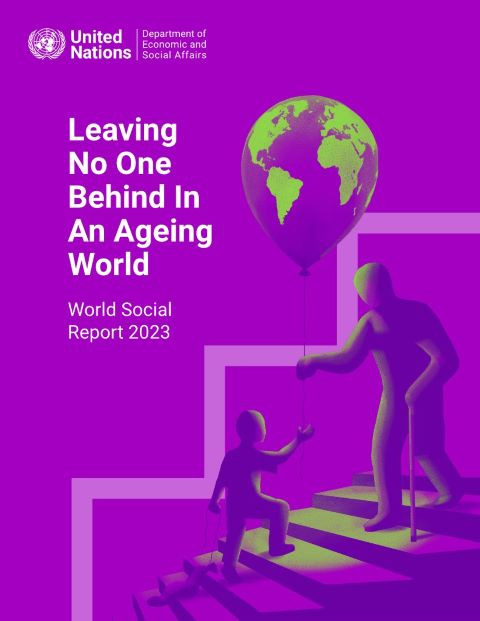 World Social Report 2023 : Leaving No One Behind in an Ageing World Year of publication: 2023 Corporate author: UN. Department of Economic and Social Affairs (UN. DESA) Population ageing is a defining global trend of our time. People are living longer, and more are older than ever before. Spectacular improvements in health and survival and reductions in fertility have driven this momentous shift, which has begun or is expected to begin soon in all countries and areas. This change brings both challenges and opportunities as countries strive to achieve the Sustainable Development Goals (SDGs). In 2022, the world marked the twentieth anniversary of the adoption of the Madrid International Plan of Action on Ageing. To commemorate this landmark, the World Social Report 2023 explores the economic and social implications of the ageing of the human population. It builds on the Plan of Action’s framework for national policies to create equitable, inclusive societies for people of all ages, providing recommendations to put the rights and well-being of older persons at the centre, across the life course. Population ageing is an inevitable result of the demographic transition towards longer lives and smaller families. While the shift towards older populations is largely irreversible, collective actions and policy decisions shape its path and consequences. Postponing critical measures that allow societies to benefit from and adapt to population ageing would impose high social, economic, fiscal and health-related costs, for both current and future generations. By contrast, with appropriate foresight and planning, Governments can manage the challenges from population ageing while enhancing opportunities for all people to thrive and ensuring that no one is left behind. As elaborated in this report, population ageing needs to be widely understood as more than just a set of discrete concerns mainly for one group of people who have advanced beyond a given age. Ageing touches all parts of economies and societies, from health care and education to employment and taxation. Each stage of life can contribute to or detract from well-being at older ages.
 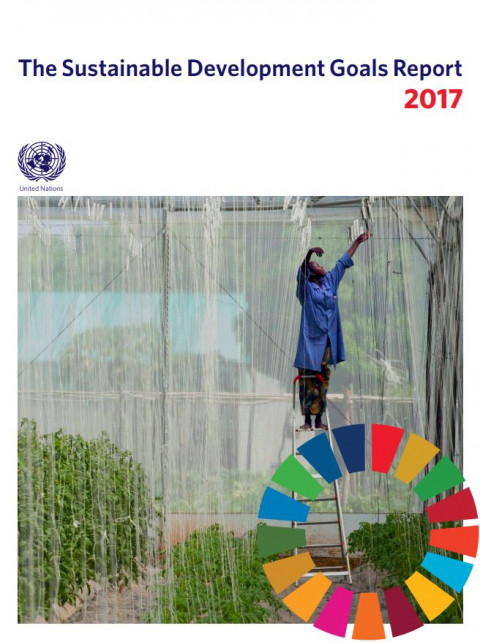 The Sustainable Development Goals Report 2017 Year of publication: 2017 Corporate author: United Nations (UN) In adopting the 2030 Agenda for Sustainable Development, world leaders resolved to free humanity from poverty, secure a healthy planet for future generations, and build peaceful, inclusive societies as a foundation for ensuring lives of dignity for all.This report provides a snapshot of our efforts to date. It stresses that high-level political leadership and new partnerships will be essential for sustaining momentum. It also underscores the need for reliable, timely, accessible and disaggregated data to measure progress, inform decision-making and ensure that everyone is counted.
 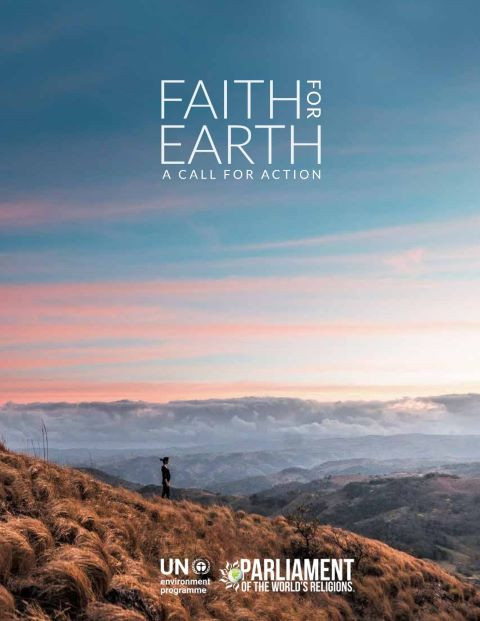 Faith for Earth : a Call for Action Year of publication: 2020 Corporate author: United Nations Environment Programme (UNEP) | Inter-Agency Network on Women and Gender Equality (IANWGE) The UN Environment Programme (UNEP) and the Parliament of the World’s Religions today released a new book, "Faith for Earth — A Call for Action", which gives readers a wide-ranging look at the history and diversity of faith teachings and their advocacy for the protection of the environment. The online book and its print edition were launched on 8 October 2020 during the Faith for Nature Global Conference, (5th - 8th October) in Skálhol, Iceland. The book provides a comprehensive overview of the faith traditions and scientific findings that underpin the understandings and reflections of world religions concerning environmental sustainability. It includes clear statements from sacred scripts and faith leaders. It underlines that protecting the Earth, restoring ecosystems, preventing pollution, and leaving behind a healthy environment for the next generations is an ethical, moral and spiritual responsibility. With more than one hundred million houses of worship around the globe, adapting green building principles is a massive demonstration of commitment to sustainability.
 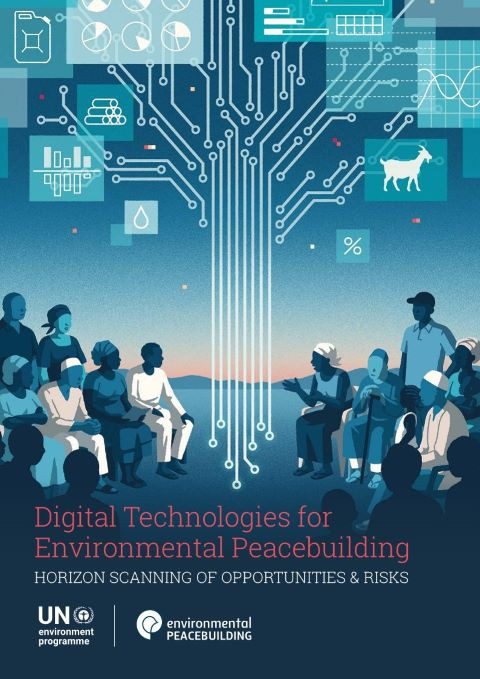 Digital Technologies for Environmental Peacebuilding : Horizon Scanning of Opportunities and Risks Year of publication: 2024 Corporate author: United Nations Environment Programme (UNEP) This report specifically delves into how digital technologies can be harnessed to manage environmental and natural resource risks that contribute to insecurity and social conflict, as well as the opportunities they present for peacebuilding, cooperation, and social cohesion. It examines relevant use cases spanning the peace and security continuum and concludes with a set of important policy and governance recommendations. The report is designed to inform and contribute to significant upcoming frameworks addressing digital technologies, including the Summit of the Future and the Global Digital Compact.
  Childhood and Citizenship Year of publication: 2011 Author: Osvaldo Torre G. This publication, Niñez y Ciudadanía, is an effort of the Postgraduate Diploma, "Childhood and Public Policies", taught by the Department of Anthropology of the Faculty of Social Sciences of the University of Chile. This course has been held for 5 years, in partnership with the Chilean Association for the United Nations, ACHNU. This first publication presents a selection of those works developed by students graduated from the Diploma in 2010, in which a subject of interest for the researcher is tested and on which a rights approach is applied, which tends to evaluate the situation of the boys and girls in a different way than traditional childhood views; these works are the product of their dissertations to approve this post-title. Also included are some brief essays on the relationship between childhood and violence, elaborated by some of the students of the 2011 generation, in the idea of making available to the interested public a sample of the different forms that acquire the uses of violence on children. It also incorporates a collaboration requested to the anthropologist Dimas Santibáñez, member of the Academic Committee of the Diploma. Niñez y Ciudadanía Year of publication: 2011 Author: Osvaldo Torre G. Esta publicación, Niñez y Ciudadanía, es un esfuerzo del Diplomado de postítulo, “Niñez y Políticas Públicas”, que imparte el Departamento de Antropología de la Facultad de Ciencias Sociales de la Universidad de Chile. Este curso se realiza desde hace 5 años, en alianza con la Asociación Chilena pro Naciones Unidas, ACHNU. Esta primera publicación presenta una selección de aquellos trabajos desarrollados por estudiantes egresados del Diplomado en el año 2010, en los cuales se ensaya un tema de interés para el investigador y sobre el cual aplica un enfoque de derechos, que tiende a evaluar la situación de los niños y niñas de una forma distinta a como lo hacen las miradas tradicionales sobre la infancia; estos trabajos son el producto de sus tesinas para aprobar este postítulo. También se incluyen algunos breves ensayos sobre la relación entre la niñez y la violencia, elaborados por algunos de los y las estudiantes de la generación 2011, en la idea de poner a disposición del público interesado una muestra de las diversas formas que adquieren los usos de la violencia sobre los niños. También se incorpora una colaboración solicitada al antropólogo Dimas Santibáñez, miembro del Comité Académico del Diplomado.
  Engaging Girls, Boys and Youth as Active Citizens: Plan International’s Position Paper Year of publication: 2020 Corporate author: Plan International Plan International believes that every child and young person has the right to express their views freely and safely; influence decisions and take action on issues that matter to them. However, around the world children and young people – particularly girls and young women – face significant challenges in realising this right. They tend to be wrongly dismissed as insufficiently mature to participate in political and civic processes. They also tend to be stigmatised as potential perpetrators of disruption, not as valued citizens and contributors to society who can lead and drive positive change. Plan International is calling for a paradigm shift in the way the international community talks about, engages and partners with children and young people. Children and young people are not just the future. They are the present. Young people constitute almost half of the world’s population, yet they are dramatically underrepresented – even excluded – in political decision-making. It is critical that their views and needs are taken into account politically, socially, legally and economically. Promoting the voices and views of children and young people – especially girls and women – in all their diversity and supporting them to actively engage in decision-making on issues that affect their lives must be an urgent priority for the world’s power holders. Realising children and young people’s civil and political rights is a prerequisite for building sustainable and peaceful societies, and a gender just world envisioned in international human rights frameworks and the 2030 Agenda’s Sustainable Development Goals (SGDs).Across the 75+ countries Plan International works in, young people have consistently identified the denial of their political and civil rights as a priority issue. In March 2017, Plan International conducted consultations with young women and men aged 14 to 30 from 14 countries. In every country, young people reported a sense of “citizen responsibility” and an interest in public life, yet identified the lack of platforms to meaningfully engage with decision-makers and inability to ensure their opinions are taken seriously as key barriers. Girls and young women in particular have called for the removal of gendered norms that increase those barriers, silence their voices and disproportionately hold them back from leadership and active citizenship.