
Resources
Explore a wide range of valuable resources on GCED to deepen your understanding and enhance your research, advocacy, teaching, and learning.
1,329 Results found
 Report of the Committee on the Rights of the Child (General Assembly Official Records Sixty-fifth Session Supplement No. 41) Year of publication: 2010 Corporate author: UN. Committee on the Rights of the Child (UN. CRC) This report reviews the efforts of the Committee on the Rights of the Child, published in 2010. The report is considered a tool to review the Convention on the Rights of the Child and what has been done to achieve it. تفرير لجنة حقوق الطفل: الوثائق الرسمية الجمعية العامة الدورة الخامسة والستون الملحق رقم ٤١ Year of publication: 2010 Corporate author: UN. Committee on the Rights of the Child (UN. CRC) يستعرض التقرير جهود لجنة حقوق الطفل والمنشور في 2010. وبعتبر التقرير أداة لاستعرض اتفاقية حقوق الطفل وما تم من اعمال لتحقيقها.
  Domestic Violence Year of publication: 2013 Author: Sabha Ghora Corporate author: Naif Arab University for Security Sciences (NAUSS) This article deals with domestic violence and its forms and goes on to discuss hitting children as one of the types of domestic violence. And how hitting children leads to intertwining problems in a child's life. العنف الأسري Year of publication: 2013 Author: Sabha Ghora Corporate author: Naif Arab University for Security Sciences (NAUSS) يتطرق المقال للعنف الأسري وأشكاله. ويستطرد في نقاش ضرب الاطفال كأحد أنواع العنف الأسري. وكيف يقود ضرب الأطفال لمشاكل متداخلة في حياة الطفل.
  Learning About Human Rights in the Primary School Year of publication: 2013 Corporate author: Amnesty International UK This booklet provides a sample of our human rights education resources produced for primary schools. It helps provide pupils with an understanding of their own human rights and the values and attitudes that underpin them. It will help to foster attitudes of respect and an appreciation of the uniqueness of each individual. Pupils will also develop skills to enable them to take action to defend human rights.You will find a set of 10 interactive lessons for children – five for age 5+ (England and Northern Ireland: Key Stage 1; Wales: Foundation Phase; Scotland: Early and First Level) and five for age 7-11 (England, Nothern Ireland and Wales: Key Stage 2; Scotland: Second Level). Please photocopy and adapt these exercises for your own classroom use.All the activities are designed to encourage pupils to take a basic starting point, often based on something close to home or an event or situation they’ve experienced or can relate to, and then develop it. Pupils are then invited to expand their understanding beyond themselves and to begin to think outwards and towards others, whether locally, nationally or globally.The final activity, Taking action for human rights, explains how schools can sign up to the Junior Urgent Action Network. It’s an opportunity for children to become more actively involved with Amnesty International’s human rights work through our letter-writing campaign. In addition, you can download free resources on a range of human rights issues and order free posters for your school from www.amnesty.org.uk/resources-schools.
  Violence in Schools: Thematic Report Year of publication: 2023 Corporate author: Higher Council for Education, Training, and Scientific Research (CSEFRS) | United Nations Children's Fund (UNICEF) This report presents the results of an assessment of violence in school settings conducted by the Higher Council for Education, Training and Scientific Research, through the National Evaluation Authority, in partnership with UNICEF. This report highlights the importance of a safe, violence-free school environment to ensure quality education.The main objective of this evaluation is to provide a detailed diagnosis of the situation of violence in the school environment in Morocco. Accordingly, the study focuses on measuring the extent of the spread of this phenomenon and identifying its various forms and manifestations in the school environment, as well as the actors involved in it. It does not only target the perpetrators of violence, but also its victims, including students and educational staff. La violence en Milieu scolaire: Rapport Thématique Year of publication: 2023 Corporate author: Higher Council for Education, Training, and Scientific Research (CSEFRS) | United Nations Children's Fund (UNICEF) Ce rapport présente les résultats de l’évaluation de la violence en milieu scolaire réalisée par le Conseil Supérieur de l’Éducation, de la Formation et de la Recherche Scientifique à travers l’Instance Nationale d’Évaluation en partenariat avec l’UNICEF. Il met en évidence l’importance d’un environnement scolaire sûr et sans violence pour garantir une éducation de qualité. L’objectif principal de cette évaluation est d’apporter un diagnostic détaillé sur la situation de la violence en milieu scolaire au Maroc. Elle vise ainsi à en mesurer la prévalence et à identifier les différentes formes et manifestations de celle-ci, ainsi que les acteurs impliqués, en ciblant, non seulement les auteurs de violence, mais également les victimes parmi les élèves et le personnel éducatif. Cette évaluation repose sur les résultats d’une enquête quantitative réalisée à la fin du premier trimestre de l’année scolaire 2021-2022, auprès de 260 établissements représentatifs à l’échelle nationale, avec la participation de 13 884 élèves représentant les trois cycles de l’enseignement (primaire, secondaire collégial et qualifiant), ainsi qu’une enquête qualitative menée dans 27 établissements. العنف في الوسط المدرسي:تقرير موضوعاتي Year of publication: 2023 Corporate author: Higher Council for Education, Training, and Scientific Research (CSEFRS) | United Nations Children's Fund (UNICEF) يقدم هذا التقرير نتائج تقييم العنف في الوسط المدرسي الذي أجراه المجلس الأعلى للتربية والتكوين والبحث العلمي، من خلال الهيئة الوطنية للتقييم، بشراكة مع منظمة اليونيسيف. ويسلط هذا التقرير الضوء على أهمية وجود بيئة مدرسية آمنة وخالية من العنف لضمان تعليم ذي جودة.الهدف الرئيسي لهذا التقييم يكمن في تقديم تشخيص مفصل لوضع العنـف في الوسط المدرسي في المغرب. وعليـه، تركــز الدراســة عـلـى قيــاس مــدى انتشــار هــذه الظاهــرة وتحديــد أشــكالها وتجلياتها المختلفة في الوســط المدرسي، وكــذا الفاعلـيـن المعنين بهــا، وهــي لا تســتهدف مرتكبــي العنــف فقــط، بــل أيضــا ضحايــاه مــن تلامذة وأطر تربوية.
 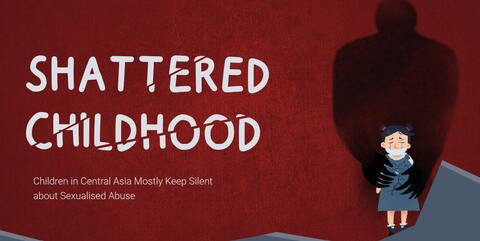 Shattered Childhood: Children in Central Asia Mostly Keep Silent about Sexualised Abuse Author: Katerina Afanasieva | Aleksandra Vasilkova | Mazkhab Dzhumaev | Aida Dzhaksybaeva Corporate author: Central Asian Bureau for Analytical Reporting (CABAR) No one really knows the scope of sexualised abuse of children in Central Asia. According to estimates of human rights activists, only one case of 10 goes reported to law enforcement bodies at best. Once it is reported, the investigation and courts often cause another trauma to children, while proceedings may take years. Осколки детства: В Центральной Азии дети чаще всего молчат о сексуализированном насилии Author: Katerina Afanasieva | Aleksandra Vasilkova | Mazkhab Dzhumaev | Aida Dzhaksybaeva Corporate author: Central Asian Bureau for Analytical Reporting (CABAR) Никто не знает реальные масштабы сексуализированного насилия в отношении детей в Центральной Азии. По оценке правозащитников, в лучшем случае только 1 кейс из 10 доходит до правоохранительных органов. А если это и происходит, то недружественное к детям следствие и суды часто наносят повторную травму, а дела длятся порой годами.