
Resources
Explore a wide range of valuable resources on GCED to deepen your understanding and enhance your research, advocacy, teaching, and learning.
1,329 Results found
 طرق تدريس ذوي الاحتياجات الخاصة " تخصص علوم" Year of publication: 2010 Author: Marwa El-Baz Corporate author: Port Said University هذا الملف يحتوي على المادة العلمية المستخدمة في تدريس مقرر طرق تدريس ذوي الاحتياجات الخاصة " تخصص علوم". تم تقسيم المقرر على مواضيع متعددة تعرف المتعلم بذوي الاحتياجات الخاصة وطرق تدريسهم. Methods of Teaching People with Special Needs "Specialization in Science" Year of publication: 2010 Author: Marwa El-Baz Corporate author: Port Said University This report contains the scientific material used in the teaching methodology for people with special needs course "Specialization Science". The course was divided into multiple topics that familiarize the learner with people with special needs and methods of teaching them.
  A Coherent European Approach to SDG Target 4.7 Year of publication: 2021 Author: Ana Teresa Santos Corporate author: Bridge 47 This document aims to showcase why a coherent approach to Target 4.7 of the Sustainable Development Goals’ (SDG) will strengthen the European Union’s role in achieving the targets and goals set out in Agenda 2030. The report suggests some pathways to follow in order to make this coherent approach a reality.It explores: Relevance of a coherent European approach to SDG Target 4.7 and connections with other EU processes Funding lines Possible pathways to make the coherent approach a reality
 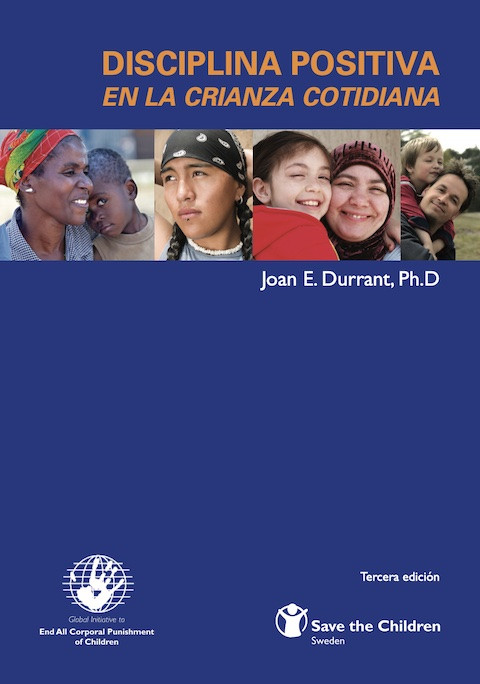 Disciplina positiva en la crianza cotidiana (Tecera edición) Year of publication: 2013 Author: Joan E. Durrant Corporate author: Save the Children Sweden Este documento es un respuesta al informe mundial sobre la violencia con la niñez en el año 2006, un estudio que determinó que el maltrato ocurre en los hogares de los niños y las nñas en todos los paises del mundo. Es un libro dirigido a padres y futuros padres de niños de todas las edades. Aborda temas que surgen desde el nacimiento y el final de la adolescencia.
  Becoming a Global Citizen: Proceedings of the International Symposium on Competencies of Global Citizens (Espoo, Finland, 5-7th October 2011) Year of publication: 2011 Author: Liisa Jääskeläinen | Taina Kaivola | Eddie O’Loughlin | Liam Wegimont Corporate author: Global Education Network Europe (GENE) | Finnish National Board of Education (FNBE) The international symposium on competences of global citizens, entitled Becoming a Global Citizen, was held in Espoo, Finland on 5 – 7. October, 2011. The symposium was organized by the Finnish National Board of Education (FNBE), the Finnish Ministry for Foreign Affairs, GENE (Global Education Network Europe) and the Hanasaari Swedish- Finnish Cultural Centre.The symposium focused on three main questions, namely:• what is global education?• what are key competences of global citizens in general education?• how can the priorities of global education be supported nationally?This publication contains the proceedings and main information gathered in the symposium. From Finland’s point of view the Symposium provided a substantial contribution to the publication called Schools Reaching out to a Global World. The publication comprises several articles on competencies of global citizens serving the next curricular reform of the entire general education sector for Finland, to be fully implemented by 2016. From the international perspectives the Symposium meant a most relevant input into the pan-European debate on perspectives for Global Education.
  The Impact of COVID-19 on Early Childhood Education in the Asia-Pacific and Sub-Saharan Africa: Insights From the Results of Rapid Regional Personnel Survey Year of publication: 2021 Author: Yoshie Kaga | Kyungah Bang Corporate author: UNESCO Bangkok Declared a global pandemic on 11 March 2020 by the World Health Organization (WHO), COVID-19 has had far-reaching impacts on every facet of life around the world, exacerbating pre-existing inequalities and negatively impacting on vulnerable and disadvantaged populations the most. Learning continuity has been disrupted by school closures, generating an unprecedented situation worldwide. According to UNESCO Institute for Statistics (UIS) data collated in July 2020, over 18.6 million children in pre-primary education in forty-eight Sub-Saharan African countries and 4.4 million pre-primary teachers – eighty- five per cent of whom were women – in twenty-four countries in the Asia-Pacific region were affected by school or centre closures. Recognizing the possible severe and detrimental impact that COVID-19 might have on ECE personnel and their practices, UNESCO Bangkok and Dakar teamed up with several partners to undertake regional surveys in the Asia-Pacific and Sub-Saharan Africa from April to July 2020. Based on the regional surveys, this report features eight key findings and three key messages to better understand ECE personnel’s needs and to identify possible responses to support them.
  Promoting Integration of Migrants and Refugees in and Through Education: Toolkit Year of publication: 2018 Corporate author: Education International (EI) The past years have seen large numbers of refugees moving to Europe. This, and the rise of populist movements in Europe and North America, has led unions to develop activities engaging schools, local communities, authorities, etc. to promote the rights of migrants and build inclusive schools and communities.With the support of Education International (EI), exchange visits, information sharing and peer-learning activities allowed education unions to inspire each other and explore synergies across borders. This toolkit aims to build on these experiences and facilitate education unions to develop their work in this area. It also assists unions by exploring the issues around integrating migrants and refugees in education and sharing what others have been doing in this domain. Promouvoir l'intégration des personnes migrantes et réfugiées dans et à travers l'éducation: Boite à outils Year of publication: 2018 Corporate author: Education International (EI) Beaucoup de personnes réfugiées se sont installées en Europe ces dernières années. Ceci et la montée des mouvements populistes en Europe et en Amérique du Nord ont conduit les syndicats à développer des activités engageant les écoles, les communautés locales, les autorités, etc. pour promouvoir les droits des migrant.e.s et développer des écoles et communautés inclusives.Avec le soutien de l’Internationale de l’Education (IE), les visites d’échange, le partage d’informations et les activités d’apprentissage avec leurs pairs ont permis aux syndicats de l’éducation de s’inspirer mutuellement et d’explorer les synergies transfrontalières. Cette boite à outils vise à tirer parti de ces expériences et à aider les syndicats de l’éducation à amplifier leur travail dans ce domaine. Elle aide également les syndicats en explorant les questions liées à l’intégration des personnes migrantes et réfugiées dans l’éducation et en partageant ce que les autres ont fait sur cette thématique.
  Advancing Arabic Language Teaching and Learning: A Path to Reducing Learning Poverty in the Middle East and North Africa Year of publication: 2021 Author: Laura Gregory | Hanada Taha Thomure | Amira Kazem | Anna Boni | Mahmoud Abduh A. Elsayed | Nadia Taibah Corporate author: World Bank The purpose of the present report is to identify and explore the evidence on factors that are leading to high rates of learning poverty in MENA countries. In addition, the report proposes a path for countries of the region to make the teaching and learning of the Arabic language—which are critical foundations for children in Arabic-speaking countries—more effective. The intended audience of the report is education stakeholders in the MENA region, including officials in ministries of education across the region, those responsible for education decision-making, teachers, academics, education administrators, parents, and nongovernmental organizations, as well as World Bank and partner organization staff tasked with supporting countries in their efforts to raise learning and human capital.The intention of the report is not to provide an Arabic literacy strategy for each country since countries of the region differ and each would need to have their own national dialogue. Instead, the report collates the relevant literature from the region and beyond, as well as local and regional initiatives, and offers guidance to countries to advance the teaching and learning of MSA. As such, the report does not focus on the broader issues of language use within each country. As part of the process of developing the report, a summary of the emerging evidence and recommendations was shared with a small group of teachers from two countries across the region in advance of a focus group discussion to explore local views. Unanimous agreement on the key findings and recommendations were expressed by these teachers. Further discussions on the topics raised in this report are expected to take place during the dissemination of this report and in the months and years to come, leading to greater consensus across stakeholders on the best ways to advance Arabic language teaching and learning.The report is structured in a way that first explores the incidence of learning poverty in the MENA region, followed by international evidence on the science of learning to read, and factors that are influencing Arabic language learning outcomes. The report then looks at some of the national strategies, policies, and initiatives already in place for Arabic language education, and proposes a path for advancing Arabic language teaching and learning, along with suggestions for regional collaboration efforts that could further support MENA countries.
  Children's Rights Are They Necessary? Year of publication: 2017 Corporate author: CuriosaMente This video rises the question about the need for children´s rights. It describes the historical perspectives of childhood and how their rights were developed, stressing their importance.