
Resources
Explore a wide range of valuable resources on GCED to deepen your understanding and enhance your research, advocacy, teaching, and learning.
1,329 Results found
 UNESCO Green Academies: Guidelines for Climate-Resilient Buildings Year of publication: 2019 Corporate author: UNESCO Bangkok This brochure encourages capacity building in communities to transition towards climate resilience. It is based on scientific knowledge to improve the relationship between people and the environment as prescribed by the Man and Biosphere Programme. Academias verdes de la UNESCO: Pautas para Edificios Resistentes al Clima Year of publication: 2019 Corporate author: UNESCO Bangkok Este folleto alienta el desarrollo de capacidades en las comunidades para la transición hacia la resiliencia climática. Se basa en el conocimiento científico para mejorar la relación entre las personas y el medio ambiente según lo prescrito por el Programa sobre el Hombre y la Biosfera. UNESCO Green Academies: Directives pour la résilience climatique des écoles Year of publication: 2019 Corporate author: UNESCO Bangkok Cette brochure encourage le renforcement des capacités dans les communautés pour faciliter la transition vers la résilience aux changements climatiques. Comme prescrit par le programme l’Homme et la biosphère, il s’agit d’utiliser les connaissances scientifiques pour améliorer les relations entre l’Homme et l’environnement.
  A Better Start?: A Progress Check on Donor Funding for Pre-Primary Education and Early Childhood Development Year of publication: 2021 Author: Asma Zubairi | Pauline Rose Corporate author: Theirworld This report focuses on aid trends to pre-primary education using data reported by donors to the Organisation for Economic Cooperation and Development (OECD) as Overseas Development Assistance. It updates our analysis from our 2019 Leaving the Youngest Behind report, which ranked donors’ performance on pre-primary education and looked at data from 2002 to 2016. The new report tracks whether donors are meeting Theirworld’s recommended target of investing at least 10% of their education aid budget on pre-primary education.
  Media Literacy Education to Counter Truth Decay: An Implementation and Evaluation Framework Year of publication: 2021 Author: Alice Huguet | John F. Pane | Garrett Baker | Laura S. Hamilton | Susannah Faxon-Mills Corporate author: RAND Corporation Media literacy (ML) education has emerged as a promising approach to slowing the spread of Truth Decay, described as the diminishing role that facts, data, and analysis play in political and civil discourse. Several factors contribute to Truth Decay, including a rapidly evolving information ecosystem and overburdened educational institutions. Many teachers believe their students lack the complex skills that are necessary to navigate today’s information- saturated world. This gap—between students’ existing competencies and those required to engage responsibly in a fast-paced media environment— could lead to negative consequences for individuals and society writ large.However, teachers report a lack of guidance around promoting ML education in their practice, and rigorous research about what kinds of ML educationwork best, and in what conditions, remains limited. This report presents a framework for implementing and evaluating ML educational efforts. Following an introduction to the framework, the authors discuss six steps of ML implementation and evaluation: setting ML learning expectations; identifying conditions that can influence ML instructional efforts; exploring instructional resources; identifying measures of ML competencies; monitoring progress; and finally, measuring the summative impacts of ML education on student learning. By bringing this information together for implementors—such as district decisionmakers and teachers—as well as evaluators, the authors emphasize the important connections between these too often separate groups.
  School Closures and Regional Policies to Mitigate Learning Loss due to COVID-19: A Focus on the Asia-Pacific Year of publication: 2021 Corporate author: UNESCO Institute for Statistics (UIS) Global school closures as a result of COVID-19 have caused learning losses for millions of children despite efforts to deploy remote learning options. Greater economic insecurity among families may also affect school enrolment as many struggle to pay school fees, or require children to work to supplement family income. Ultimately, this will lead to rising dropout rates, estimated to be as much as 4% in a region where 128 million children and young people were already out of school before COVID-19. The largest number of learners at risk reside in South and West Asia.Together, the education and economic fallout from the pandemic threaten progress toward the Sustainable Development Goal for education (SDG 4). Even prior to the COVID-19 disruptions, progress towards SDG 4 was lagging in many countries in the Asia-Pacific and without significant contributions to education finance, the pandemic threatens to push the region even further behind.This report breaks down the effects of school closures. It considers, for example, how many schools were closed, and when, across the Asia-Pacific, and the effects on different levels of education from early childhood education, through to primary and secondary school. The report analyses country efforts to implement remote learning, and strategies to mitigate learning losses as the proportion of students expected to fall below minimum proficiency levels is expected to rise.To achieve SDG 4, all children and young people, and especially those in marginalized groups, need support to get the education they need and deserve.
  Online Media Literacy Strategy Year of publication: 2021 Corporate author: Government of the United Kingdom The Online Harms White Paper set out a commitment to develop an Online Media Literacy Strategy ahead of the implementation of the online harms regulator. The aim of the strategy is to educate and empower internet users across the UK to manage their online safety. Over 170 organisations are currently involved in delivering media literacy education in the UK. The Media Literacy Strategy sets out the government’s multi-year plan to bring coordination to the media literacy landscape and outlines a Media Literacy Framework of best practice principles to inform the content and delivery of media literacy education.
 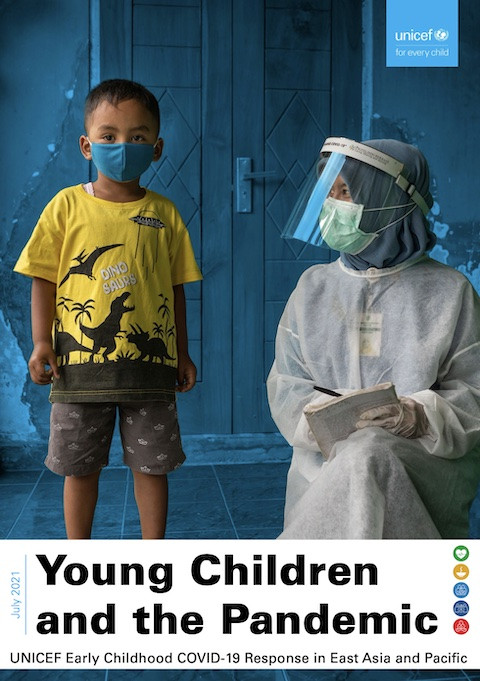 Young Children and the Pandemic: UNICEF Early Childhood COVID-19 Response in East Asia and Pacific Year of publication: 2021 Corporate author: United Nations Children's Fund (UNICEF) This report summarizes the impact of the COVID-19 disruptions on early childhood development in countries across East Asia and the Pacific in terms of the five dimensions of the Nurturing Care Framework. It proposes priorities for stakeholders and policy-makers towards achieving the fourth Sustainable Development Goal, which is inclusive and equitable in nature. The report also highlights and analyses examples of UNICEF’s programmatic interventions geared towards supporting the development of young children during this pandemic.
  Как улучшить доступность дошкольного и начального образования в Казахстане? Year of publication: 2019 Author: Meruert Seidumanova Corporate author: Central Asian Bureau for Analytical Reporting (CABAR) | Institute for War and Peace Reporting (IWPR) «Равный доступ для всех социальных групп к качественному дошкольному и начальному образованию является ключом к устойчивому развитию, как и отдельного индивидуума, так и общество в целом», – отмечает Меруерт Сейдуманова, казахстанский независимый исследователь, в своей специальной статье для CABAR.asia.
 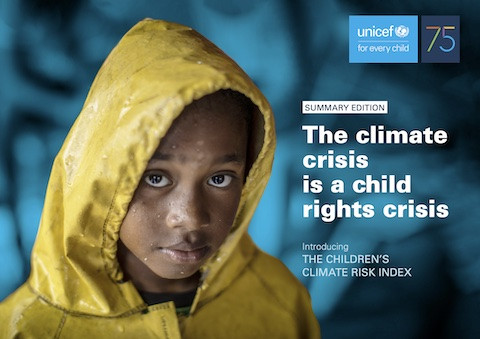 [Résumé] La crise climatique est une crise des droits de l’enfant: Présentation de l’indice des risques climatiques pour les enfants Year of publication: 2021 Author: Nicholas Rees | Margaretha Barkhof | Jan Burdziej | Sophie Lee | Harriet Riley Corporate author: United Nations Children's Fund (UNICEF) La crise climatique est une crise des droits de l’enfant. Les canicules, les incendies et les inondations sans précédent qui viennent de frapper plusieurs pays sont annonciateurs d’une nouvelle normalité climatique particulièrement hostile. L’impact des changements climatiques est connu de tous. Les solutions le sont également. Il est inadmissible que les enfants et les jeunes d’aujourd’hui soient confrontés à un avenir aussi incertain. Partout dans le monde, à travers des manifestations, des interventions sur les réseaux sociaux et un engagement communautaire et citoyen, les enfants et les jeunes revendiquent haut et fort le changement. Les modi operandi classiques ont fait long feu. Le présent rapport s’appuie sur l’Indice des risques climatiques pour les enfants (IRCE) pour fournir un premier aperçu de l’exposition et de la vulnérabilité des enfants aux effets des changements climatiques.