
Resources
Explore a wide range of valuable resources on GCED to deepen your understanding and enhance your research, advocacy, teaching, and learning.
1,372 Results found
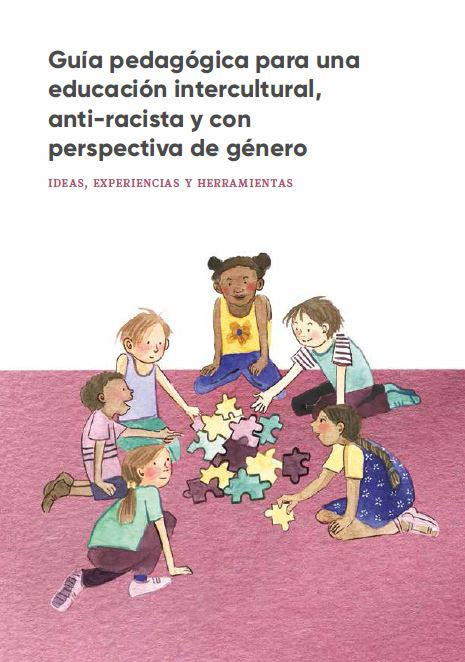 Pedagogical Guide for an Intercultural, Anti-racist and Gender Perspective Education: Ideas, Experiences and Tools Year of publication: 2017 Author: Carolina Stefoni | Andrea Riedemann | Fernanda Stang | Andrea Guerrero | Antonia Garcés | Marta Camarena Corporate author: Programa Interdisciplinario de Estudios Migratorios (PRIEM) | Universidad Alberto Hurtado | Fundación para la Superación de la Pobreza (FUSUPO) The main purpose of this Guide is, then, to share some ideas, tools and experiences that can help build and walk the path towards an intercultural, anti-racist and gender perspective education in various educational spaces. It is directed primarily - though not exclusively, of course - to all those people who are part of formal and informal teaching-learning processes. It is important to emphasize that the Guide does not pretend to be a recipe for a mechanical application, but a tool box that each educational community can use considering its specific context, its particular needs and its potentialities. Guía pedagógica para una educación intercultural, anti-racista y con perspectiva de género: ideas, experiencias y herramientas Year of publication: 2017 Author: Carolina Stefoni | Andrea Riedemann | Fernanda Stang | Andrea Guerrero | Antonia Garcés | Marta Camarena Corporate author: Programa Interdisciplinario de Estudios Migratorios (PRIEM) | Universidad Alberto Hurtado | Fundación para la Superación de la Pobreza (FUSUPO) El propósito principal de esta Guía es, entonces, compartir algunas ideas, herramientas y experiencias que puedan ayudar a construir y andar el camino hacia una educación intercultural, anti-racista y con perspectiva de género en diversos espacios educativos. Está dirigida principalmente -aunque no de manera exclusiva, por supuesto- a todas aquellas personas que sean parte de procesos de enseñanza-aprendizaje formales e informales. Es importante enfatizar que la Guía no pretende ser un recetario para una aplicación mecánica, sino una caja de herramientas que cada comunidad educativa puede usar considerando su contexto específico, sus necesidades particulares y sus potencialidades.
  Reimagining Life Skills and Citizenship Education in the Middle East and North Africa: A Four-Dimensional and Systems Approach to 21st Century Skills; Conceptual and Programmatic Framework Year of publication: 2017 Corporate author: UNICEF Middle East and North Africa The situation of learning in MENA calls for a holistic, lifelong and rights-based vision of education that maximizes the potential of all children and youth in the region and better equips them to create meaning out of knowledge and to face the transitions from childhood to adulthood, from education to work, and from unreflective development to responsible and active citizenship. This is what drives the MENA Life Skills and Citizenship Education (LSCE) Initiative, kicked off in 2015 with the aim of supporting the countries of the region – conceptually, programmatically and technically – to improve learning and to better invest such learning in individual, social and economic development.The LSCE Conceptual and Programmatic Framework (CPF) puts forth a roadmap to guide policies, strategies and programmes on life skills and citizenship education supporting the region-wide efforts to provide children and youth with opportunities to learn, transition from childhood to adulthood, move from school to work settings, and become responsible and active citizens of their communities.A set of twelve core life skills for MENA has been identified using the four-dimensional learning model: ‘Learning to Know’ (Cognitive Dimension), ‘Learning to Do’ (Instrumental Dimension), ‘Learning to Be’ (Individual Dimension), and ‘Learning to Live Together’ (Social Dimension). The twelve core life skills are life-long, and they build on evidence that underlines the importance of skills acquisition from an early age. Furthermore, the twelve core life skills are acquired and sustained through all forms of learning in a systems approach that recognizes multiple pathways of learning, formal, non-formal and informal. Réimaginer l’éducation aux compétences de vie et à la citoyenneté au Moyen-Orient et en Afrique du Nord : Une approche à quatre dimensions et systémique des compétences pour le XXIe siècle ; Cadre programmatique et conceptuel Year of publication: 2017 Corporate author: UNICEF Middle East and North Africa L’Initiative pour l’éducation aux compétences de vie et à la citoyenneté de la région MENA (LSCE) représente un effort de collaboration étatique et régional en faveur de la réalisation de l’objectif de développement durable (ODD) 4 – Assurer l’accès de tous à une éducation de qualité, sur un pied d’égalité, et promouvoir les possibilités d’apprentissage tout au long de la vie. Elle cherche à reformuler la compréhension traditionnelle de l’éducation aux compétences de vie et à la citoyenneté dans la région, tout en rappelant les questions fondamentales au sujet du but et du rôle de l’éducation dans le développement sociétal qui sont pertinentes dans le contexte actuel.L’Initiative LSCE se concentre sur trois défis interdépendants :Une société du savoir inaccessible, résultat de la mauvaise qualité de l’éducation, du bas niveau des résultats scolaires et d’une équité et inclusion limitées.Une croissance économique en déclin, résultat d’un manque d’aptitudes à l’employabilité, du haut taux de chômage chez les jeunes, de l’inégalité des sexes face à l’accès au marché du travail, du manque de création d’emplois, et d’un environnement économique faible.Une faible cohésion sociale, résultat de l’escalade de la violence et de la radicalisation tout autant que d’un faible engagement civique.
 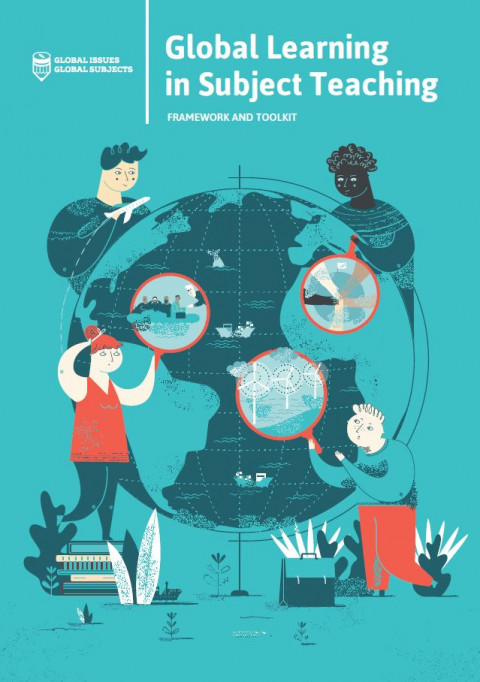 Global Learning in Subject Teaching: Framework and Toolkit Year of publication: 2020 Corporate author: Center for Citizenship Education (CCE) | Global Issues, Global Subjects (GIGS) The brochure 'Global Learning in Subject Teaching: Framework and Toolkit' has been developed as a proposal for teachers, educators and educational institutions on how to reach pupils with Global Learning. In its practical part, the brochure provides the reader with a toolkit of 20 ready-to-use lesson plans for subject lessons where the subject curriculum topics are linked with global issues such as migration, climate change and gender equality.
 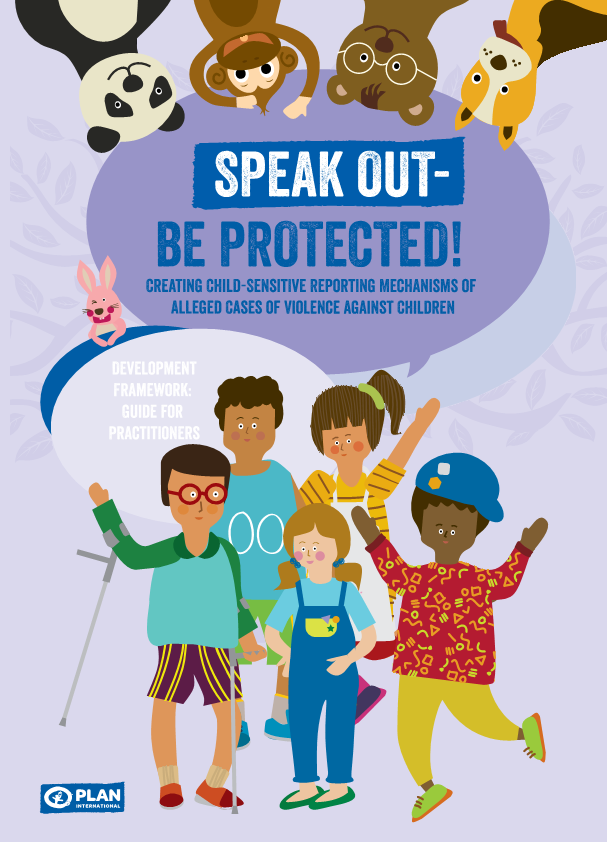 Speak Out - Be Protected! Development Framework: Guide for Practitioners; Creating Child-sensitive Reporting Mechanisms of Alleged Cases of Violence Against Children Year of publication: 2016 Author: Raša Sekulović | Stephanie Delaney Corporate author: Plan International Produced by Plan International, the Child-Sensitive Reporting Mechanisms toolkit “Speak Out – Be Protected!” identifies simple, user-friendly processes through which children and their peers (and families) can raise child protection concerns and report them to child protective agencies, services or trusted community groups and institutions.
 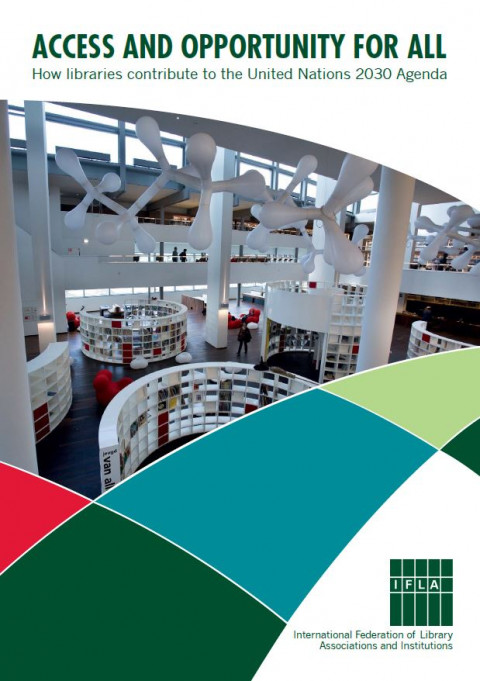 Access and Opportunity for All: How Libraries Contribute to the United Nations 2030 Agenda Year of publication: 2020 Corporate author: International Federation of Library Associations and Institutions (IFLA) The inclusion of libraries and access to information in national and regional development plans will contribute to meeting the global United Nations 2030 Agenda for Sustainable Development.In support of this goal, IFLA has published a booklet of examples and recommendations for policymakers demonstrating the contribution of libraries to the UN Sustainable Development Goals (SDGs).The booklet includes stories from all types of libraries in many countries around the world.
 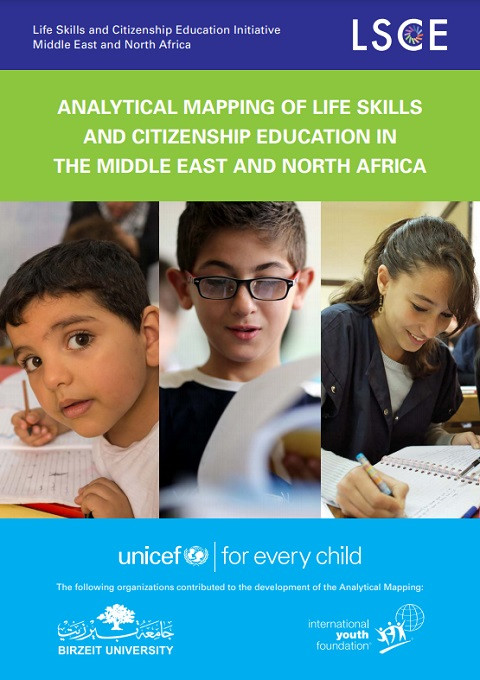 Analytical Mapping of Life Skills and Citizenship Education in the Middle East and North Africa Year of publication: 2017 Corporate author: UNICEF Middle East and North Africa The Analytical Mapping of the Life Skills and Citizenship Education in MENA, published in October 2017, provides a multi-stakeholder view of the status of life skills and citizenship education in MENA and the corresponding vision for the region. It does not evaluate existing interventions, nor is it meant to generate an exhaustive list of all existing life skills programmes in MENA. It rather aims to provide an analytical overview of Life Skills and Citizenship Education (LSCE) related intervention in the region. Through analyzation, it also attempts to highlight general challenges encountered in the programming of LSCE, as well as focus on opportunities for LSCE in MENA national education systems.
 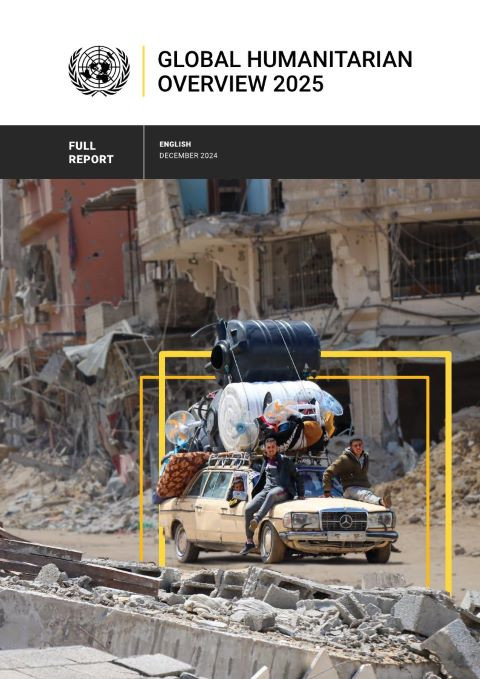 Global Humanitarian Overview 2025 Year of publication: 2024 Corporate author: UN. Office for the Coordination of Humanitarian Affairs (UN. OCHA) A snapshot of the global trends driving increased humanitarian needs in 2025, analysis from 2024 and an overview of where the system is delivering better to help those affected by crises. The Global Humanitarian Overview (GHO) is the world’s most comprehensive, authoritative and evidence-based assessment of humanitarian need. Through plans that prioritize those most in need, it aims to fight hunger, killer diseases, gender-based violence and displacement. The GHO 2025 presents an analysis of global crises and needs and the humanitarian plans to address them. In 2025, humanitarian partners are appealing for over US$47 billion to assist nearly 190 million people facing life-threatening and urgent needs across 72 countries. The report looks at response trends to strengthen, such as localization, cash, accountability and the changes needed to deliver aid effectively: security and funding. The GHO presents a collective picture of humanitarians' achievements and, conversely, what happens when humanitarians are unable to deliver aid. Explore the full report and interactive content through humanitarianaction.info.
 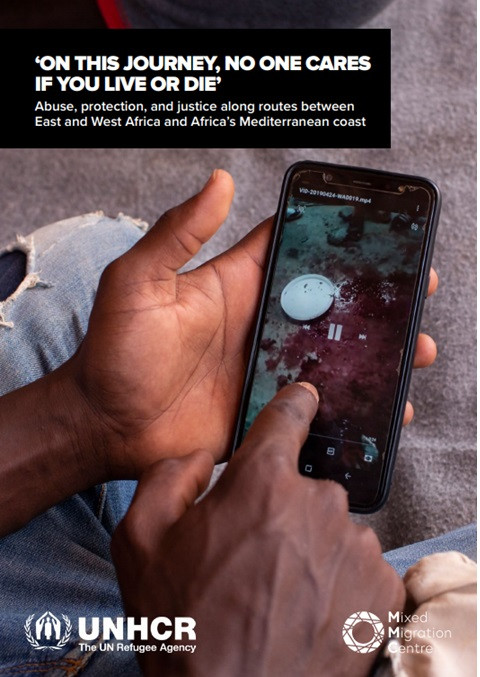 On This Journey, No One Cares If You Live or Die: Abuse, Protection, and Justice Along Routes Between East and West Africa and Africa’s Mediterranean Coast Year of publication: 2020 Corporate author: UN. Office of the United Nations High Commissioner for Refugees (UNHCR) | Mixed Migration Centre This report draws on data collected by the Mixed Migration Centre’s 4Mi monitors along the route to map the places where refugees interviewed in 2018 and 2019 most frequently reported deaths, sexual and gender-based violence (SGBV), physical violence, and kidnappings occurred. It illustrates how refugees and migrants using the route face a series of risks including as they cross into eastern Sudan, and when crossing the Sahara Desert, and then again in multiple places in Libya. Similarly, those traveling through West Africa reported multiple incidents of physical violence, SGBV, as well as deaths at various points. Refugees and migrants have reported being subjected to brutal violence, including being burnt with hot oil, melted plastic, or heated metal objects, being electrocuted, tied in stress positions, and experiencing and witnessing repeated sexual violence, often in the context of ransom demands. UNHCR staff and partners continue to witness the severe impact these abuses have had on the mental health of many men, women, and children.