
Resources
Explore a wide range of valuable resources on GCED to deepen your understanding and enhance your research, advocacy, teaching, and learning.
1,372 Results found
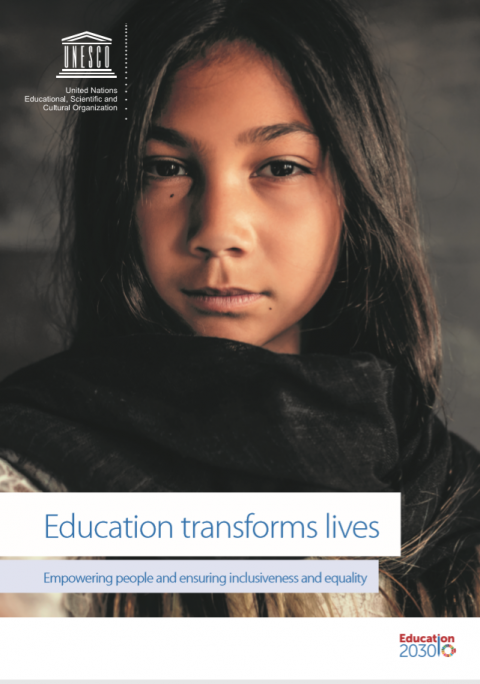 L'éducation transforme la vie: autonomiser les individus et assurer l'inclusion et l'égalité Year of publication: 2019 Corporate author: Organisation des Nations Unies pour l'éducation, la science et la culture (UNESCO) Cette brochure rassemble les principaux éléments des progrès accomplis dans la réalisation de l'objectif 4 du développement durable (ODD 4) mis en évidence dans la communicationprésentée par l'UNESCO, au nom du Comité directeur de l'ODD-Éducation 2030, au Bureau du Secrétaire général adjoint aux affaires économiques et sociales (DESA) à l'occasion du Forum politique de haut niveau (HLPF) 2019 –Donner aux populations les moyens d'agir et assurer l'intégration. La educación transforma vidas: empoderar a las personas y garantizar la inclusión y la igualdad Year of publication: 2019 Corporate author: Organización de las Naciones Unidas para la Educación, la Ciencia y la Cultura (UNESCO) Este folleto recopila los principales elementos de progreso en relación con el Objetivo de Desarrollo Sostenible 4 (ODS 4) destacados en la presentación de la UNESCO, en nombre del Comité Directivo del ODS-Educación 2030, a la Oficina del Secretario General Adjunto del Departamento de Asuntos Económicos y Sociales (DESA) con motivo del Foro Político de Alto Nivel (HLPF) 2019 - Empoderar a las personas y garantizar la inclusión y la igualdad.
  Indigenous peoples’ right to education Year of publication: 2019 Corporate author: UNESCO This document follows a previous series of thematic mappings on the implementation of the right to education regarding specifically Girls’ and Women’s Right to Education, the Right to Education for Persons with Disabilities, and the Right to Education and the Teaching Profession. It compiles practical examples related to indigenous people’s right to education, extracted from reports submitted by Member States within the framework of the Ninth Consultation on the implementation of the 1960 Convention and Recommendation against Discrimination in Education. It is intended to serve as a practical tool for both information sharingandadvocacy.
 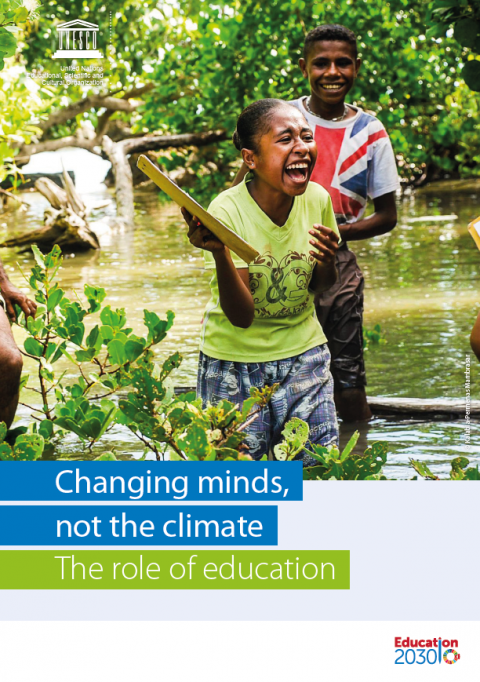 Changing minds, not the climate: the role of education Year of publication: 2017 Corporate author: UNESCO Education is the most powerful element in preparing societies for the global challenges that climate change brings. It equips individuals, communities and the wider world with the understanding, skills and attitudes to engage in shaping green, low emission and climate-resilient societies. Education for Sustainable Development (ESD) is not an ‘extra’ but rather an integral part of any strategy to combat the effects of climate change, put into practice a global agreement and achieve the Sustainable Development Goals (SDGs). It acts to raise awareness and change behaviours and attitudes and enables people to make informed decisions about their lives. The heads of UNESCO and UNFCCC agree that “education provides the skills people need to thrive in the new sustainable economy, working in areas such as renewable energy, smart agriculture, forest rehabilitation, the design of resource-efficient cities, and sound management of healthy ecosystems. Perhaps most important, education can bring about a fundamental shift in how we think, act, and discharge our responsibilities toward one another and the planet.” ESD is increasingly recognized around the world as a key enabler for a more sustainable future. Changeons les esprits, pas le climat: le rôle de l’éducation Year of publication: 2017 Corporate author: Organisation des Nations Unies pour l'éducation, la science et la culture (UNESCO) L’éducation est fondamentale afin de préparer les sociétés aux défis mondiaux que pose le changement climatique. Elle offre aux individus, aux communautés et au monde en général la compréhension, les compétences et les attitudes nécessaires pour construire des sociétés à faibles émissions, plus vertes et résilientes. L’éducation au développement durable (EDD) n’est pas un « supplément » mais plutôt une partie intégrante de toute stratégie visant à lutter contre les effets du changement climatique, à mettre en pratique un accord mondial et à atteindre les objectifs de développement durable (ODD). Elle permet de sensibiliser les personnes, favorise une prise de décision éclairée et donc le changement des comportements des individus. Cambiemos las mentalidades, no el clima: la función de la educación Year of publication: 2017 Corporate author: Organización de las Naciones Unidas para la Educación, la Ciencia y la Cultura (UNESCO) La educación es la herramienta más eficaz para preparar a las sociedades para los desafíos globales que plantea el cambio climático, ya que proporciona a las personas, a las comunidades y al mundo en general los conocimientos, las competencias y las actitudes que se necesitan para construir unas sociedades sostenibles, de bajas emisiones y resilientes al cambio climático.La educación para el desarrollo sostenible (EDS) no es un “extra”, sino un componente esencial de cualquier estrategia para combatir los efectos del cambio climático, poner en práctica un acuerdo mundial y alcanzar los Objetivos de Desarrollo Sostenible (ODS). La EDS contribuye a concienciar y cambiar comportamientos y actitudes y permite a las personas tomar decisiones informadas sobre su vida.
 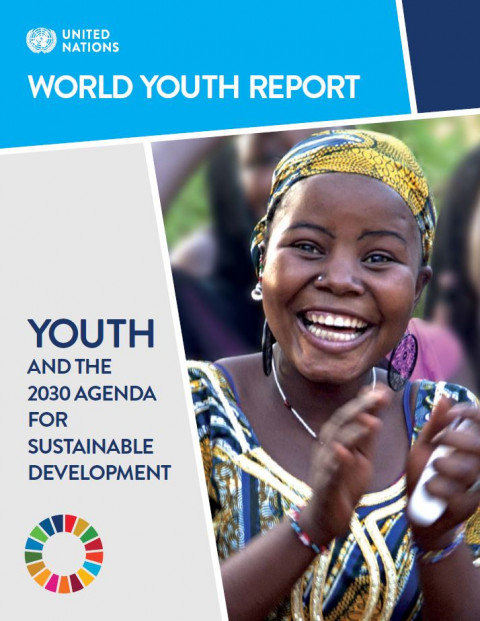 World Youth Report: Youth and the 2030 Agenda for Sustainable Development Year of publication: 2018 Corporate author: United Nations (UN) The World Youth Report on “Youth and the 2030 Agenda for Sustainable Development”, prepared by the United Nations Department of Economic and Social Affairs (UN DESA), examines the mutually supportive roles of the new agenda and current youth development efforts. The report provides insight into the role of young people in sustainable development in the context of the implementation of the 2030 Agenda for Sustainable Development and related frameworks, in particular, the Addis Ababa Action Agenda of the Third International Conference on Financing for Development and the World Programme of Action for Youth.The Report considers the role the 2030 Agenda can play in enhancing youth development efforts and examines how evidence-based youth policies can help accelerate youth-related objectives. It explores the critical role young people have in the implementation of sustainable development efforts at all levels. 세계청소년보고서: 청소년과 2030 지속가능발전 의제 Year of publication: 2018 Corporate author: United Nations (UN) UN 경제사회국이 작성한 『세계청소년보고서: 청소년과 2030 지속가능발전 의제(World Youth Report: Youth and the 2030 Agenda for Sustainable Development)』는 청소년 개발에 대한 현재의 노력과 새로운 의제 간의 상호 보완적인 역할을 다루고 있습니다. UN 경제사회국은 경제, 사회 및 환경 분야 글로벌 정책과 국가적 실천 사이의 연결고리를 제공하고 있습니다. 2년마다 발간되는 본 보고서는 회원국 및 기타 이해관계자들이 청소년 문제 해결에 대한 진전 사항을 파악하고, 정책과 현실의 격차를 평가하고, 가능한 정책 대안을 마련하기 위한 정보와 분석 결과를 제공합니다.본 보고서는 2030 지속가능발전 의제 및 관련 프레임워크 이행의 맥락, 특히 제3차 개발재원총회 아디스아바바 행동의제 (Ababa Action Agenda of the Third International Conference on Financing for Development) 및 세계청소년행동계획 (World Programme of Action for Youth) 의 이행과 관련하여 지속가능발전을 위한 청소년의 역할에 대한 통찰을 제시합니다. 2030 의제는 청소년개발 노력을 증진하고 증거기반(evidence ― based) 청소년정책이 청소년 목표 증진에 이바지하는 바를 검토하는 데 있어 중요한 역할을 할 수 있습니다. 본 보고서는 이를 통해 모든 수준에서의 지속가능발전 이행에 있어 결정적으로 중요한 청소년의 역할을 살펴봅니다.
 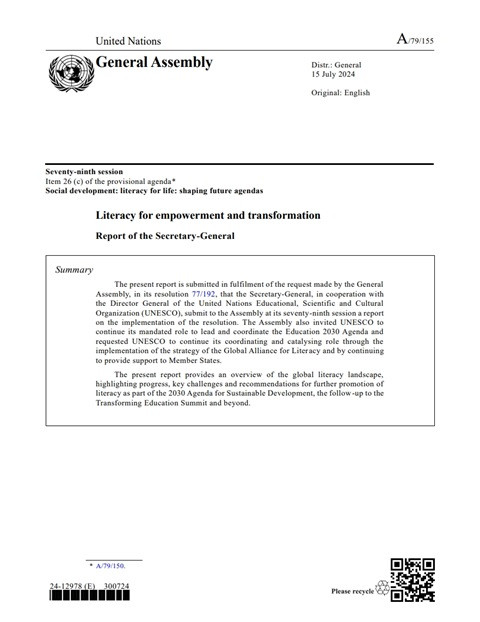 Literacy for Empowerment and Transformation: Report of the Secretary-General Year of publication: 2024 Corporate author: United Nations (UN) | UNESCO The present report is submitted in fulfilment of the request made by the General Assembly, in its resolution 77/192, that the Secretary-General, in cooperation with the Director General of the United Nations Educational, Scientific and Cultural Organization (UNESCO), submit to the Assembly at its seventy-ninth session a report on the implementation of the resolution. The Assembly also invited UNESCO to continue its mandated role to lead and coordinate the Education 2030 Agenda and requested UNESCO to continue its coordinating and catalysing role through the implementation of the strategy of the Global Alliance for Liter acy and by continuing to provide support to Member States. The present report provides an overview of the global literacy landscape, highlighting progress, key challenges and recommendations for further promotion of literacy as part of the 2030 Agenda for Sustainable Development, the follow-up to the Transforming Education Summit and beyond.
 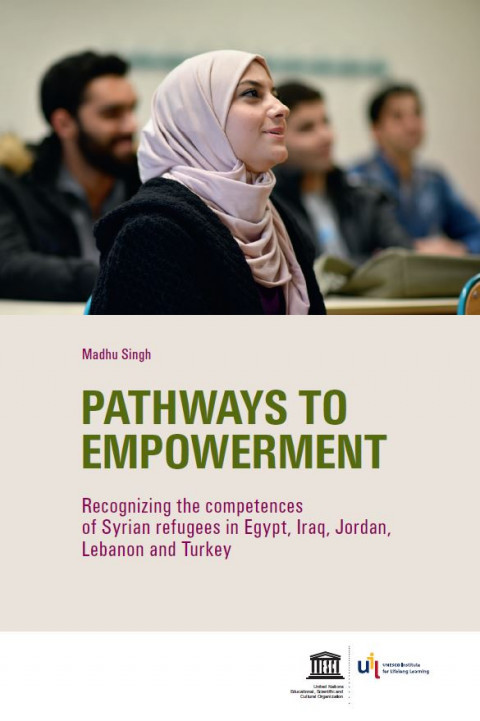 Pathways to Empowerment: Recognizing the Competences of Syrian Refugees in Egypt, Iraq, Jordan, Lebanon and Turkey Year of publication: 2018 Author: Madhu Singh Corporate author: UNESCO Institute for Lifelong Learning (UIL) For Syrian refugees living in Egypt, Iraq, Jordan, Lebanon and Turkey, recognition is a transformative mechanism that can help them enter or re-enter education, integrate into the world of work and participate fully in their host communities. However, while policy-makers in the region have prioritized the recognition, validation and accreditation of non-formal and informal learning, it remains a major challenge to develop systems that do this effectively. Pathways to Empowerment lays the essential groundwork for such a system, urging governments to develop comprehensive national strategies rather than ad hoc projects to recognize the competences of Syrian refugees. Its recommendations will contribute to dialogue between national authorities and social partners, and guide policy actions and RVA practices both in the region and in other parts of the world where recognition of refugees’ learning is a critical issue.