
Resources
Explore a wide range of valuable resources on GCED to deepen your understanding and enhance your research, advocacy, teaching, and learning.
1,372 Results found
 미래교육 전망: UNESCO 교육의 미래와 OECD 교육 2030을 중심으로 Year of publication: 2022 Author: 김미경 Corporate author: 한국교육과정평가원 본 연구는 변화하는 미래 사회를 대비하기 위해 UNESCO 교육의 미래와 OECD 교육 2030을 비교하여 미래 교육을 전망하고, 이에 따른 향후 우리나라 교육의 방향을 모색하고 정책을 제언하는 것을 목적으로 한다. 이를 위해 2021년 발간된 UNESCO 교육의 미래 보고서의 주요 내용을 살펴보고, OECD 교육 2030과 미래 학교교육 시나 리오에서 제시한 미래 교육 내용을 UNESCO 교육의 미래와 비교 분석하여 시사점을 도출하였다. 또한 이를 토대로 한국의 미래 교육이 나아가야 할 방향과 제언을 제시하였다.
 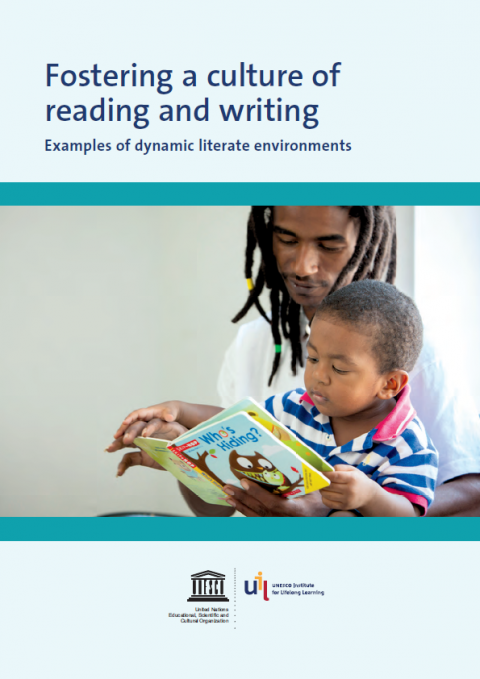 Fostering a culture of reading and writing: examples of dynamic literate environments Year of publication: 2017 Author: Hanemann, Ulrike | Krolak, Lisa Corporate author: UNESCO Institute for Lifelong Learning (UIL) The examples of literacy programmes showcased and analysed in this publication confirm the critical role of literate environments. They have been selected from UNESCO’s Effective Literacy and Numeracy Practises Database (LitBase), which UIL develops on a continuous basis. They demonstrate first and foremost how the development of literate environments can positively influence people’s motivation to (re-)engage in literacy and learning and how they can practise their newly acquired skills in their daily activities to reach sustainable skills levels. In addition, they reveal successful strategies towards a culture of reading, writing and learning in the family, community or wider society. The examples reflect different contexts, such as families, libraries and prisons, to illustrate the potential of ICTs, intergenerational approaches, and community, mobile and prison libraries to engage young people and adults in literacy and learning. Créer des cultures de la lecture, de l'écriture et de l'apprentissage Year of publication: 2017 Author: Hanemann, Ulrike | Krolak, Lisa Corporate author: Institut de l’UNESCO pour l’apprentissage tout au long de la vie (UIL) Les exemples de programmes d'alphabétisation présen-tés et analysés dans cette publication confirment le rôle déterminant des environnements alphabétisés. Ils sont tirés de la base de données Pratiques efficaces d'alpha-bétisation (LitBase) de l'UNESCO, que UIL développe en permanence. Ils démontrent, d'abord et avant tout, com-ment la mise en place d'environnements alphabétisés peut influencer positivement une personne et la pousser à se (re)mettre à l'alphabétisation et à l'apprentissage, mais aussi comment l'apprenant peut pérenniser ses acquis en les appliquant à ses activités quotidiennes. En outre, ils révèlent des stratégies efficaces pour créer une culture de la lecture, de la lecture et de l'apprentissage au sein de la famille, de la communauté ou de la société. Les exemples incluent divers contextes – familles, biblio-thèques et prisons – pour illustrer la capacité des TIC, des approches intergénérationnelles et des bibliothèques communautaires, mobiles et carcérales à encourager jeunes et adultes à s'alphabétiser et à apprendre.
  유네스코 1974 국제이해교육 권고 개정안 검토 포럼 자료집 Year of publication: 2022 Corporate author: 한국국제이해교육학회 | 유네스코 아시아태평양 국제이해교육원 | 유네스코한국위원회 2022년 10월 5일 유네스코 아태교육원과 유네스코한국위원회, 한국국제이해교육학회가 공동으로 개최한 <유네스코 1974 국제이해교육 권고 개정안 검토 포럼> 자료집 입니다. 본 포럼은 유네스코의 「국제이해, 협력, 평화를 위한 교육과 인권, 기본 자유에 관한 교육 권고( 1974 국제이해교육 권고)」가 오늘날 변화된 시대 상황과 지구촌의 새로운 과제 등을 반영할 수 있도록 개정안 초안에 대한 전문적 검토 요지 발표와 토론을 실시한 후, 참가자들의 의견을 수렴하였습니다. <목차> I. 인사말 한경구 (유네스코한국위원회 사무총장) 임현묵 (유네스코 아시아태평양 국제이해교육원장) 박순용 (한국국제이해교육학회장) II. [1부] 1974 국제이해교육 권고 개정 배경 및 현황 1974 국제이해교육 권고 개요와 개정 추진 현황 - 유네스코 아시아태평양 국제이해교육원 / 유네스코한국위원회 국제전문가그룹의 주요 활동 및 1974 국제이해교육 권고 개정안 초안의 주요 내용 / 강순원 (한신대학교 교수) III. [2부] 1974 국제이해교육 권고 개정안 초안 검토 조대훈 (성신여자대학교 교수) 김병연 (양재고등학교 교사) 권혁장 (국가인권위원회 인권교육기획과장) 이선경 (청주교육대학교 교수) 변순용 (서울교육대학교 교수) 이동연 (한국예술종합학교 교수) 손동빈/장경희 (서울시교육청 민주시민생활교육과 과장/장학사) 부록 Recommendation concerning Education for International Understanding, Co-operation and Peace and Education relating to Human Rights and Fundamental Freedoms 국제이해, 협력, 평화를 위한 교육과 인권, 기본 자유에 관한 교육 권고 REVISED RECOMMENDATION CONCERNING EDUCATION FOR INTERNATIONAL UNDERSTANDING, CO-OPERATION AND PEACE AND EDUCATION RELATING TO HUMAN RIGHTS AND FUNDAMENTAL FREEDOMS (‘1974 RECOMMENDATION’)
  제22회 한국국제이해교육학회 국제학술대회: 미래형 교육과정과 세계시민교육: 도전과 과제 Year of publication: 2021 Corporate author: 한국국제이해교육학회 2021년 11월 13일에 개최되었던 제22회 한국국제이해교육학회 국제학술대회 자료집으로 '미래형 교육과정과 세계시민교육: 도전과 과제'라는 주제로 세계시민교육의 역할과 가능성을 어떻게 학교교실 안으로 가져올지에 대한 토론과 발표내용을 담고 있습니다. 본 자료집에는 기조강연/패널부터 자유 발표 등에 이르기까지 모든 발표자들의 자료가 포함되어 있으며 기조강연 및 패널, 패널4(이기 프로젝트)의 경우 일본어 번역자료도 함께 수록되어 있습니다.
 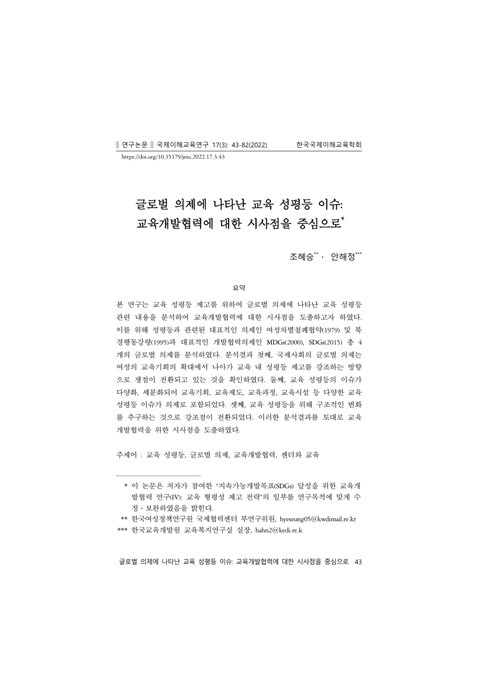 글로벌 의제에 나타난 교육 성평등 이슈: 교육개발협력에 대한 시사점을 중심으로 (국제이해교육연구; Vol. 17, No. 3) Year of publication: 2022 Author: 조혜승 | 안해정 Corporate author: 한국국제이해교육학회 본 연구는 교육 성평등 제고를 위하여 글로벌 의제에 나타난 교육 성평등 관련 내용을 분석하여 교육개발협력에 대한 시사점을 도출하고자 하였다. 이를 위해 성평등과 관련된 대표적인 의제인 여성차별철폐협약(1979) 및 북경행동강령(1995)과 대표적인 개발협력의제인 MDGs(2000), SDGs(2015) 총 4개의 글로벌 의제를 분석하였다. 분석결과 첫째, 국제사회의 글로벌 의제는 여성의 교육기회의 확대에서 나아가 교육 내 성평등 제고를 강조하는 방향으로 쟁점이 전환되고 있는 것을 확인하였다. 둘째, 교육 성평등의 이슈가 다양화, 세분화되어 교육기회, 교육제도, 교육과정, 교육시설 등 다양한 교육 성평등 이슈가 의제로 포함되었다. 셋째, 교육 성평등을 위해 구조적인 변화를 추구하는 것으로 강조점이 전환되었다. 이러한 분석결과를 토대로 교육개발협력을 위한 시사점을 도출하였다.
 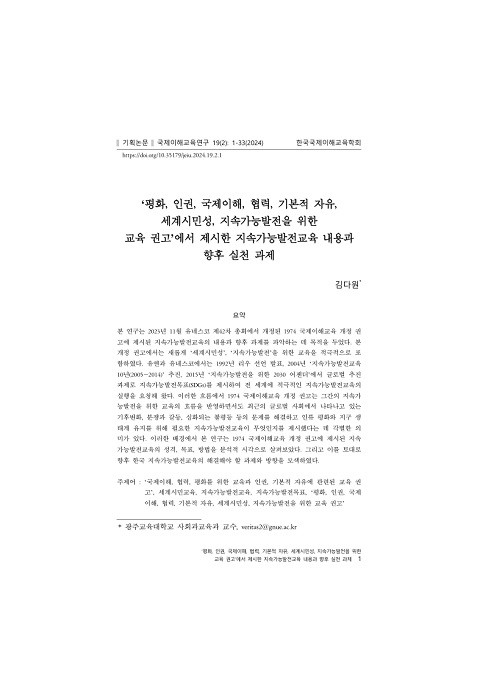 ‘평화, 인권, 국제이해, 협력, 기본적 자유, 세계시민성, 지속가능발전을 위한 교육 권고’에서 제시한 지속가능발전교육 내용과 향후 실천 과제 (국제이해교육연구; Vol. 19, No. 2) Year of publication: 2024 Author: 김다원 Corporate author: 한국국제이해교육학회 본 연구는 2023년 11월 유네스코 제42차 총회에서 개정된 1974 국제이해교육 개정 권고에 제시된 지속가능발전교육의 내용과 향후 과제를 파악하는 데 목적을 두었다. 본 개정 권고에서는 새롭게 ‘세계시민성’, ‘지속가능발전’을 위한 교육을 적극적으로 포함하였다. 유엔과 유네스코에서는 1992년 리우 선언 발표, 2004년 ‘지속가능발전교육 10년(2005~2014)’ 추진, 2015년 ‘지속가능발전을 위한 2030 어젠더’에서 글로벌 추진 과제로 지속가능발전목표(SDGs)를 제시하여 전 세계에 적극적인 지속가능발전교육의 실행을 요청해 왔다. 이러한 흐름에서 1974 국제이해교육 개정 권고는 그간의 지속가능발전을 위한 교육의 흐름을 반영하면서도 최근의 글로벌 사회에서 나타나고 있는 기후변화, 분쟁과 갈등, 심화되는 불평등 등의 문제를 해결하고 인류 평화와 지구 생태계 유지를 위해 필요한 지속가능발전교육이 무엇인지를 제시했다는 데 각별한 의미가 있다. 이러한 배경에서 본 연구는 1974 국제이해교육 개정 권고에 제시된 지속가능발전교육의 성격, 목표, 방법을 분석적 시각으로 살펴보았다. 그리고 이를 토대로 향후 한국 지속가능발전교육의 해결해야 할 과제와 방향을 모색하였다.
 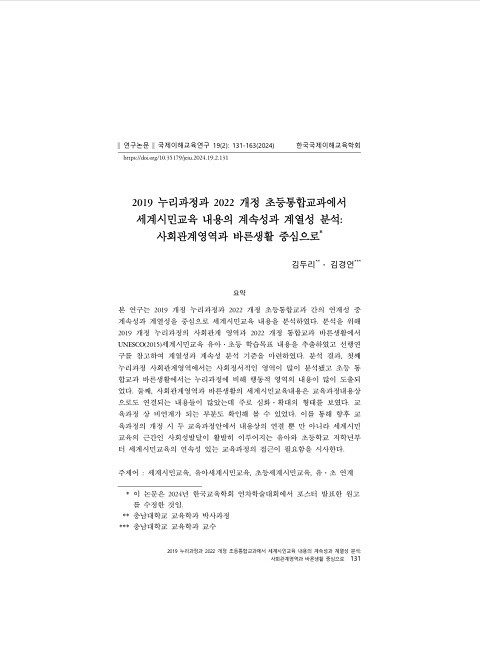 2019 누리과정과 2022 개정 초등통합교과에서 세계시민교육 내용의 계속성과 계열성 분석: 사회관계영역과 바른생활 중심으로 (국제이해교육연구; Vol. 19, No. 2) Year of publication: 2024 Author: 김두리 | 김경언 Corporate author: 한국국제이해교육학회 본 연구는 2019 개정 누리과정과 2022 개정 초등통합교과 간의 연계성 중 계속성과 계열성을 중심으로 세계시민교육 내용을 분석하였다. 분석을 위해 2019 개정 누리과정의 사회관계 영역과 2022 개정 통합교과 바른생활에서 UNESCO(2015)세계시민교육 유아․초등 학습목표 내용을 추출하였고 선행연구를 참고하여 계열성과 계속성 분석 기준을 마련하였다. 분석 결과, 첫째 누리과정 사회관계영역에서는 사회정서적인 영역이 많이 분석됐고 초등 통합교과 바른생활에서는 누리과정에 비해 행동적 영역의 내용이 많이 도출되었다. 둘째, 사회관계영역과 바른생활의 세계시민교육내용은 교육과정내용상으로도 연결되는 내용들이 많았는데 주로 심화․확대의 형태를 보였다. 교육과정 상 비연계가 되는 부분도 확인해 볼 수 있었다. 이를 통해 향후 교육과정의 개정 시 두 교육과정안에서 내용상의 연결 뿐 만 아니라 세계시민교육의 근간인 사회성발달이 활발히 이루어지는 유아와 초등학교 저학년부터 세계시민교육의 연속성 있는 교육과정의 접근이 필요함을 시사한다.
 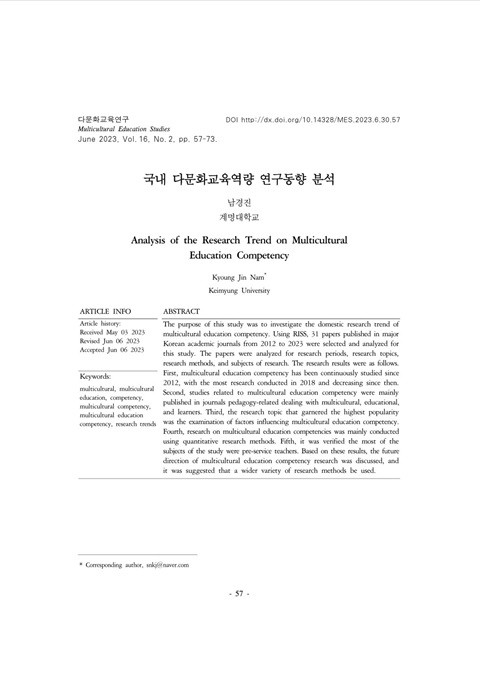 국내 다문화교육역량 연구동향 분석 (다문화교육연구; Vol. 16, No.2) Year of publication: 2023 Author: 남경진 Corporate author: 한국다문화교육학회 본 연구는 향후 다문화교육역량의 국내 연구동향을 살펴보기 위하여 2012년부터 2023년까지 한국연구재단의 등재지 및 등재후보지에 게재된 연구 중 다문화교육역량에 대한 31편의 논문을 선정하였다. 연도별 추이, 연구주제, 연구대상 등을 분석틀로 하여 연구동향 및 특징을 분석하였다. 연구결과는 다음과 같다. 첫째, 다문화교육역량 관련 연구는 2012년부터 지속적으로 연구되어왔으며 2018년 가장 많은 연구가 이루어졌으나 이후 다시 감소하였다. 둘째, 다문화교육역량 관련 연구들은 주로 다문화, 교육, 학습자를 다루는 교육학 관련 학술지에 주로 게재되고 있었다. 셋째, 다문화교육역량 관련 연구주제는 다문화교육역량의 영향에 대한 요인연구 유형이 가장 많았다. 넷째, 다문화교육역량의 연구는 주로 양적연구를 활용하여 이루어졌다. 다섯째, 다문화교육역량의 연구대상은 예비교사와 교사를 대상으로 하는 시도가 가장 많은 것으로 검증되었다. 이러한 결과를 토대로 다문화교육역량 연구의 향후 방향에 대해 논의하였으며 다양한 연구방법을 활용할 필요가 있다는 점을 시사하였다.
 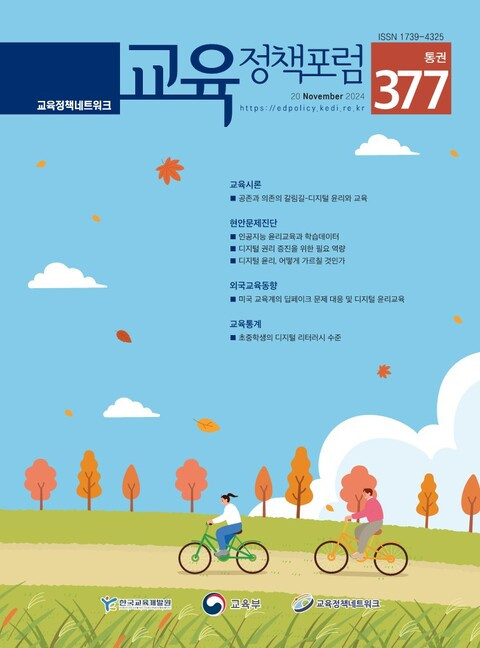 공존과 의존의 갈림길-디지털 윤리와 교육(교육정책포럼; 2024년 11월, Vol. 377) Year of publication: 2024 Corporate author: 한국교육개발원 교육시론■ 공존과 의존의 갈림길-디지털 윤리와 교육 현안문제진단■ 인공지능 윤리교육과 학습데이터■ 디지털 권리 증진을 위한 필요 역량■ 디지털 윤리, 어떻게 가르칠 것인가 외국교육동향■ 미국 교육계의 딥페이크 문제 대응 및 디지털 윤리교육 교육통계■ 초중학생의 디지털 리터러시 수준