
Resources
Explore a wide range of valuable resources on GCED to deepen your understanding and enhance your research, advocacy, teaching, and learning.
3,171 Results found
 Global Citizenship Education in the Social Studies Curriculum: from the 6th curriculum to the 2015 revised curriculum (Educational Research; Vol. 58) Year of publication: 2017 Author: Jungwoo Lee Corporate author: Sungshin Women's University Educational Research Institute This study is an comparative analysis study about global citizenship education(GCED) in the socials studies curriculum from the 6th curriculum to the 2015 revised curriculum. The main findings of this study are as follows: First, from the 6th curriculum, the themes related with GCED has been appeared in 5th-6th grades and 7th-9th grades. From 2007 revised curriculum, 3rd-4th grades also have dealt with GCED in the standards related with 'culture' or 'minority'. Second, cognitive domain was the most predominant goal of GCED among cognitive, emotional and behavioral domains. Third, overall predominant perception is 'national' but 'world justice and governance', ‘neoliberalism’ are also reflected in the curriculum. 사회과 교육과정에 반영된 세계시민교육: 제6차 교육과정에서 2015 개정 교육과정의 변화를 중심으로 (교육연구; Vol. 68) Year of publication: 2017 Author: Jungwoo Lee Corporate author: Sungshin Women's University Educational Research Institute 이 연구는 제6차 교육과정에서 2015 개정 교육과정까지의 초등학교와 중학교 사회과 교육과정의 성격과 목표, 성취기준에 반영되어 있는 세계시민교육 관련 내용을 분석한 것이다. 분석 결과는 세 가지로 요약된다. 첫째, 세계시민교육 관련 주제는 초등학교 5-6학년과 중학교 급에서는 제6차 교육과정부터 꾸준히 등장하였다. 초등학교 3-4학년의 경우 2007 개정 교육과정부터 다양성 및 소수자와 관련된 내용으로 세계화 관련 내용이 제시되기 시작하였다. 둘째, 인지, 정서, 행동 영역 중에서는 전반적으로 인지적 영역에 대한 강조가 상대적으로 강하게 나타났다. 하지만 초등학교 5-6학년 군에서는 교육과정 개정이 거듭될수록 인지, 정서, 행동 영역에 대한 강조가 고르게 나타나고 있는 반면, 3-4학년군은 상대적으로 정서 영역이, 중학교 급은 인지 영역에 대한 강조가 강하게 나타나는 등 학교 급별 차이가 있었다. 셋째, 관점 면에서는 국가주의적 관점이 지배적인 가운데 세계정의와 거버넌스, 신자유주의 관점이 혼재되어 있었다. 이러한 분석 결과가 교육과정 및 교수학습에 시사하는 바를 논의하였다.
 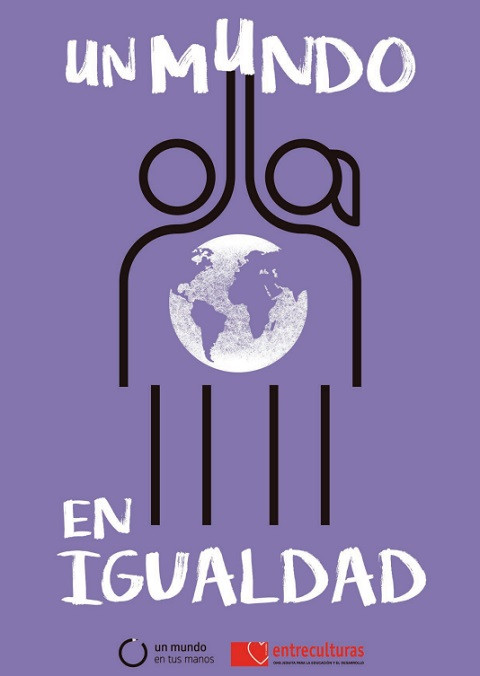 Un Mundo en Igualdad Year of publication: 2019 Corporate author: Fundación Entreculturas “Un Mundo en Igualdad” es el primer ejemplar de una serie de recopilaciones de recursos educativos diseñados por Entreculturas para trabajar distintas temáticas globales con grupos de niños, niñas y jóvenes.En esta ocasión, esta publicación recoge una serie de recursos educativos para trabajar sobre la promoción de la igualdad de género, con el objetivo de desarrollar conocimientos, valores y competencias sociales y ciudadanas para promover que los grupos aprendan que la igualdad está en sus manos y que pueden ser protagonistas de los cambios necesarios para alcanzar una sociedad igualitaria.La publicación ofrece propuestas didácticas divididas en cuatro bloques de edad. Cada bloque recoge un itinerario adaptado con distintas actividades de menor a mayor grado de complejidad para trabajar con grupos de niñas, niños y jóvenes, tanto en el ámbito formal como en el no formal, de 4 a 18 años.
 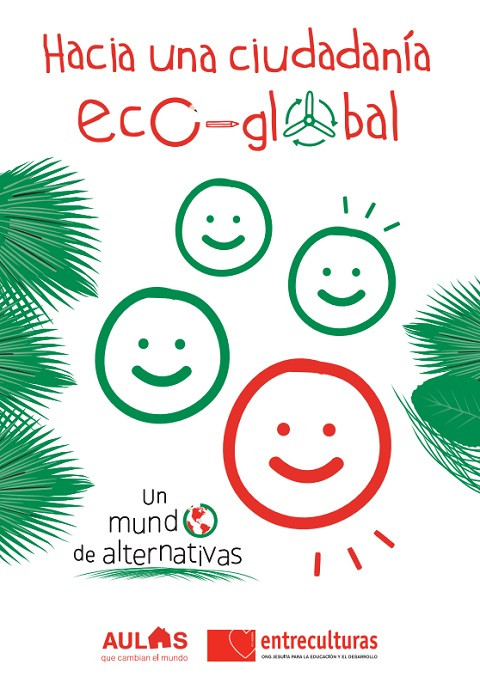 Hacia una ciudadanía eco-global: Un mundo de alternativas Year of publication: 2017 Corporate author: Fundación Entreculturas En este cuaderno se ofrece tres propuestas desde las que crear alternativas para labrar desde la educación, una ciudadanía que sane la Tierra:1. Una propuesta ética para cuestionarnos más allá de lo evidente e ir a las causas de fondo así como las claves para reorientarnos.2. Una propuesta política que nos da el marco y el recorrido de la acción para transitar como ciudadanía hacia 2030 y alcanzar los Objetivos de Desarrollo sostenible.3. Una propuesta pedagógica como herramienta para una ciudadanía que se convierta en agente de la transición hacia nuevos modelos y estilos de vida comprometidos con la justicia y la sostenibilidad.
 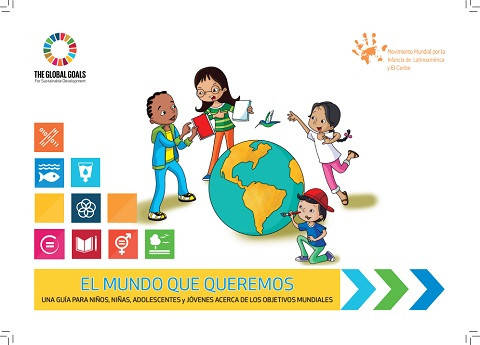 El mundo que queremos: Una guía para niños, niñas, adolescentes y jóvenes acerca de los objetivos mundiales Year of publication: 2015 Author: Dora Bardales | Paola Arenas Corporate author: Movimiento Mundial por la Infancia en Latinoamérica y el Caribe (MMI-LAC) El propósito de esta guía es ayudarle a comprender los Objetivos, la manera en que impactan su vida y lo que usted puede hacer día con día para ayudar a su gobierno a lograrlos. Este documento también nos ayudará a comprender lo que piensan los niños, niñas, adolescentes y jóvenes como usted acerca de estos Objetivos, lo que es más importante para usted, los pasos que se deben tomar para mejorar la vida de todos y la manera en que podemos trabajar jun.
  Digital Technologies to Advance Global Citizenship Education in Schools Year of publication: 2020 Author: Maria Barry | Gabriela Martinez Sainz Corporate author: Dublin City University. Institute of Education. Centre for Human Rights and Citizenship Education | Trócaire How can technology be used in classrooms to advance Global Citizenship Education? That is the general question that guides the present report as a result of a research project conducted at the Centre for Human Rights and Citizenship Education in partnership with Trócaire. The overall aim of the project was to develop a knowledge base on the contribution of digital technologies (DT) to school-based GCE programmes and teaching. It consisted of a systematic review of the most recent literature and published evidence, a discussion with experts in the field of digital technologies and education, and an exploration of teacher practices in Ireland and beyond.
 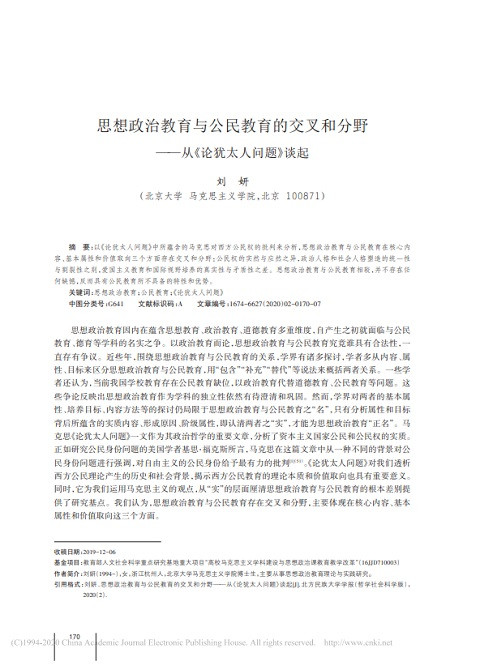 The Intersection and Division between Ideological and Political Education and Civic Education: Starting from the question of the Jewish Question (Journal of North Minzu University; No. 2) Year of publication: 2020 Author: Liu Yan Corporate author: North Minzu University Based on the analysis of Marx’s critique of western citizenship contained in On the Jewish Question, ideological and political education and citizenship education have overlaps and divergences in three aspects, core content, basic attributes and value orientation:the difference between actual and expected of citizenship, the difference between the unity and fragmentation of political personality and social personality, the difference between the authenticity and contradiction of patriotism education and the cultivation of international vision. Compared with civic education, ideological and political education does not have any regrets, but has characteristics and advantages that civic education does not have.
  A Desirable and Practical Approach to Global Citizenship Education: An Exploration of “Global Storylines” in Scotland (Studies in Foreign Education; Vol. 47, No. 3) Year of publication: 2020 Author: Rao Shuqi Corporate author: Northeast Normal University The problems that global citizenship education has to deal with are threefold. “Global Storylines”, which provides corresponding solutions to practical difficulties, has emerged as the most effective approach to global citizenship education in Scotland. Firstly, global citizenship education has enjoyed a long continuity of government support. Through integrating with the current curriculum landscape, “Global Storylines” experiences secure curriculum status. Secondly, by utilizing “storylines” and educational drama, global society and global issues are introduced in subtle forms, which benefits students’ experienced-based learning. The contradiction between students’ cognitive need and ability is resolved accordingly. Thirdly, WOSDEC as the co-creator of “Global Storylines” offers a professional learning program. Teachers are universally supported in terms of theoretical knowledge, practical skills and being involved in the teaching community of global citizenship education.
 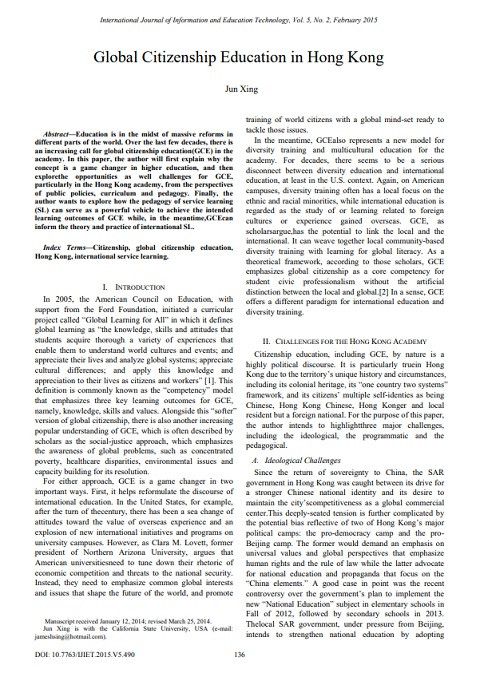 Global Citizenship Education in Hong Kong Year of publication: 2015 Author: Jun Xing Corporate author: IACSIT Press Education is in the midst of massive reforms in different parts of the world. Over the last few decades, there is an increasing call for global citizenship education(GCE) in the academy. In this paper, the author will first explain why the concept is a game changer in higher education, and then explorethe opportunities as well challenges for GCE, particularly in the Hong Kong academy, from the perspectives of public policies, curriculum and pedagogy. Finally, the author wants to explore how the pedagogy of service learning (SL) can serve as a powerful vehicle to achieve the intended learning outcomes of GCE while, in the meantime, GCEcan inform the theory and practice of international SL.
  The Teaching of Regional and Minority Languages in Schools in Europe: Eurydice Report Year of publication: 2019 Corporate author: European Commission This Eurydice report provides a short overview of policy efforts made across Europe in support of the teaching of regional or minority languages in schools. It firstly presents the reference made to regional or minority languages by top-level education authorities in official documents. It then illustrates some of the policies and measures related to the teaching of regional or minority languages that are in place in the different European education systems. This is followed by an overview of some of the EU-funded projects and initiatives aiming to support the teaching of regional or minority languages in schools in Europe.