
Resources
Explore a wide range of valuable resources on GCED to deepen your understanding and enhance your research, advocacy, teaching, and learning.
3,165 Results found
 Education at a Glance 2020: OECD Indicators Year of publication: 2020 Corporate author: Organisation for Economic Co-operation and Development (OECD) Education at a Glance is the authoritative source for information on the state of education around the world. It provides data on the structure, finances and performance of education systems across OECD countries and a number of partner economies. More than 100 charts and tables in this publication – as well as links to much more available on the educational database – provide key information on the output of educational institutions; the impact of learning across countries; access, participation and progression in education; the financial resources invested in education; and teachers, the learning environment and the organisation of schools.The 2020 edition includes a focus on vocational education and training, investigating participation in vocational education and training at various levels of education, the labour market and social outcomes of vocational graduates as well as the human and financial resources invested in vocational institutions. Two new indicators on how vocational education and training systems differ around the world and on upper secondary completion rate complement this topic. A specific chapter is dedicated to the Sustainable Development Goal 4, and investigates the quality and participation in secondary education.
  The Impact of COVID-19 on Education: Insights From Education at a Glance 2020 Year of publication: 2020 Author: Andreas Schleicher Corporate author: Organisation for Economic Co-operation and Development (OECD) OECD Director for Education and Skills Andreas Schleicher gives his insights and interpretations from the OECD’s Education at a Glance 2020 report – the go-to source for information on the state of education around the world. This brochure focuses on a selection of indicators from Education at a Glance, selected for their particular relevance in the current context. Their analysis enables the understanding of countries’ response and potential impact from the COVID-19 containment measures.
  Returning to Learning During Crises: Decision-Making and Planning Tools for Education Leaders Year of publication: 2020 Corporate author: United States Agency for International Development (USAID) This toolkit is for USAID Mission staff and their partner national and local education officials, implementing partners, and administrators and educators of education institutions. It helps education planners plan and make key decisions on the return to learning during and after education disruptions caused by crises, such as COVID-19, in a way that is equitable, inclusive, and builds the resilience of education systems. To provide timely support to the field, this toolkit includes a first set of tools and identifies several tools that are forthcoming. The toolkit is expected to be updated with the full set of tools in late 2020.
  Национальный добровольный обзор достижений Целей устойчивого развития в Кыргызской Республике 2020 Year of publication: 2020 Corporate author: Kyrgyzstan. Ministry of Economy | United Nations (UN) Данный добровольный обзор содержит в себе информацию по выполнению Кыргызской Республикой целей устойчивого развития 2030, задачи и направления дальнейшей деятельности. Отдельное внимание уделено ЦУР 4 "Образование", где приоритетом является повышение качества и охвата образованием на всех уровнях, а также развитие системы непрерывного образования.
  Case Study of British Citizenship Education (Educational Science Research; No. 8) Year of publication: 2018 Author: Jia Meihua Corporate author: Beijing Academy of Educational Sciences | Beijing Radio and Television University In the British education system, citizenship education is a research content with extensive connotation. In recent years, the British government and the UK education sector attention to cultivate students’ literacy of citizens, the UK has special citizen education research institutions, in stages, step-by-step implementation of civic education to develop solutions, and is equipped with teaching materials, teaching coach book, online research projects, basic method, initially formed the citizen education especially education in common use case study approach to learning, which is worthy of study and reference. Voluntary National Review on the Implementation of the Sustainable Development Goals in the Kyrgyz Republic 2020 Year of publication: 2020 Corporate author: Kyrgyzstan. Ministry of Economy | United Nations (UN) This voluntary review contains information on the implementation of the 2030 Sustainable Development Goals by the Kyrgyz Republic, objectives and directions for further activities. Special attention is paid to SDG 4 "Education", where the priority is to improve the quality and coverage of education at all levels, as well as the development of the lifelong education system.
 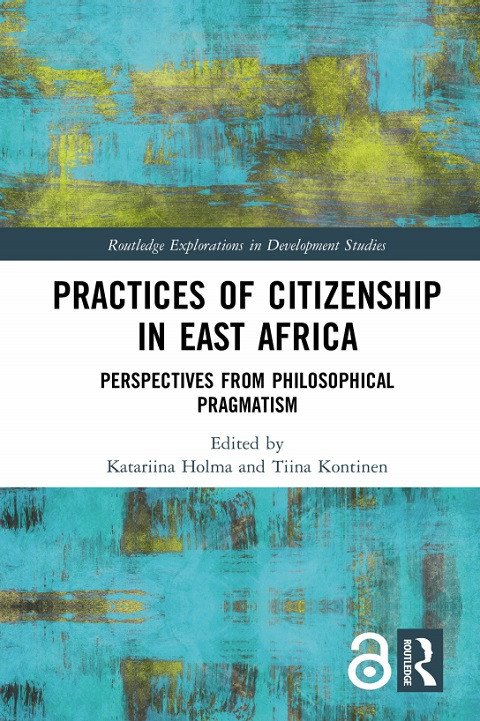 Practices of Citizenship in East Africa: Perspectives from Philosophical Pragmatism Year of publication: 2020 Author: Katariina Holma | Tiina Kontinen Corporate author: Routledge Practices of Citizenship in East Africa uses insights from philosophical pragmatism to explore how to strengthen citizenship within developing countries. Using a bottom-up approach, the book investigates the various everyday practices in which citizenship habits are formed and reformulated. In particular, the book reflects on the challenges of implementing the ideals of transformative and critical learning in the attempts to promote active citizenship. Drawing on extensive empirical research from rural Uganda and Tanzania and bringing forward the voices of African researchers and academics, the book highlights the importance of context in defining how habits and practices of citizenship are constructed and understood within communities. The book demonstrates how conceptualizations derived from philosophical pragmatism facilitate identification of the dynamics of incremental change in citizenship. It also provides a definition of learning as reformulation of habits, which helps to understand the difficulties in promoting change. This book will be of interest to scholars within the fields of development, governance, and educational philosophy. Practitioners and policy-makers working on inclusive citizenship and interventions to strengthen civil society will also find the concepts explored in this book useful to their work.
 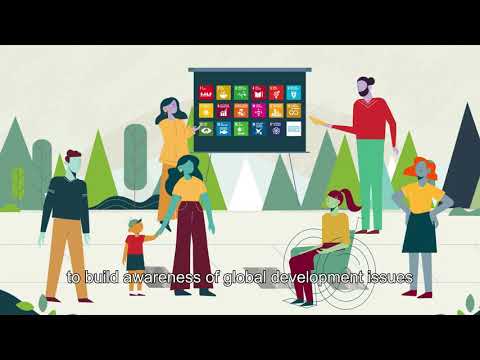 DEAR: Action Through Education Year of publication: 2020 Corporate author: Development Education and Awareness Raising (DEAR) Programme | European Commission This video explains how DEAR programme works and supports educators in their endeavours to spread greater understanding of the world around us.
  A Brief Analysis of the Curriculum Objectives of Citizenship Education in Primary and Secondary Schools in Singapore Year of publication: 2018 Author: Tao Xiaocao Corporate author: Guangdong Chenyue Education Development Since the 1990s, the curriculum system of Citizenship and Moral Education has gradually taken shape in Singapore’s primary and secondary schools. In order to adapt to the new international situation, Singapore has carried out a new round of reform on citizenship education in primary and secondary schools, and launched character and Citizenship Education in 2014. From course objectives to content, organization. By analyzing and comparing the two in the three dimensions of orientation, we can see the innovation of Citizenship and Moral Education. 浅析新加坡中小学公民教育的课程目标 Year of publication: 2018 Author: Tao Xiaocao Corporate author: Guangdong Chenyue Education Development 20 世纪 90 年代以来 , 新加坡中小学 《 公 民 与 道德教育 》 的课程体系逐渐形成 。 为顺应国际新形势的变化 , 新加坡对中小学公民教育进行了新一轮的改革 , 并于 2014 年推出了 《 品格与公民教育 》 。 从课程 目标的内容 、 组织 、取向三个维度对两者进行分析和比较 , 可以 窥见 《 品格与 公民 教育 》 的创新之处 。