
Resources
Explore a wide range of valuable resources on GCED to deepen your understanding and enhance your research, advocacy, teaching, and learning.
3,128 Results found
 Greening Curriculum Guidance: Teaching and Learning for Climate Action Year of publication: 2024 Corporate author: UNESCO This Guidance responds to the calls from young people for a holistic approach to climate change and sustainability in the curriculum. It outlines a common language on how quality climate change and sustainability can be reflected in the curriculum by setting expected learning outcomes per age group (from 5-year olds and up to 18+ age group, including a lifelong learning approach).This is crucial for accelerating country-level action and ensuring joint monitoring of progress. The objective is to have 90 per cent of all countries include climate change in their curricula by 2030, as established by the Greening Education Partnership.This Guidance aims to support countries, schools or individual practitioners in reassessing their ongoing practices to adopt a more action-oriented, holistic, scientifically accurate, justice-driven and lifelong learning approach to climate change.
  Guía para hacer verdes los currículos: enseñanza y aprendizaje para la acción climática Year of publication: 2025 Corporate author: UNESCO Hacer verdes los currículos con el fin de preparar a todos los estudiantes para el cambio climático. La educación es una herramienta poderosa para transformar el mundo e impulsar la acción contra el cambio climático a largo plazo.Esta guía responde a los llamados de las juventudes en favor de un enfoque holístico del cambio climático y la sostenibilidad en los planes de estudio. Define un lenguaje en común sobre cómo debe reflejarse con calidad el cambio climático y la sostenibilidad en los planes de estudio, mediante el establecimiento de los resultados de aprendizaje esperados por grupo etario (grupos de 5 años hasta mayores de 18 años, incluyendo un enfoque de aprendizaje a lo largo de toda la vida).Esto es crucial para acelerar la acción a nivel de los países y garantizar el seguimiento conjunto de los progresos. La meta es lograr que el 90 por ciento de todos los países incluyan el cambio climático en sus planes de estudio para el año 2030, según lo establecido por la Alianza para una Educación Verde.Esta guía tiene el propósito de apoyar a países, escuelas y profesionales en la revisión de las prácticas que tienen en marcha para adoptar un enfoque del cambio climático más orientado a la acción, holístico, científicamente preciso, impulsado por la justicia y con una perspectiva de aprendizaje a lo largo de toda la vida.
  The Effects of AI on the Working Lives of Women Year of publication: 2022 Author: Clementine Collett | Gina Neff | Livia Gouvea Gomes Corporate author: UNESCO | Inter-American Development Bank | Organisation for Economic Co-operation and Development (OECD) The use of AI technologies will affect women’s opportunities for work, and their position, status and treatment in the workplace. Around the globe, women in the labour force earn less than men, spend more time undertaking unpaid child- and elder-care jobs, hold fewer senior positions, participate less in science, technology, engineering and mathematics (STEM) fields, and tend to hold more precarious jobs overall. In harnessing AI, governments, institutions and companies must narrow gender gaps rather than perpetuate or exacerbate them. This report, by the IDB, OECD and UNESCO, outlines current knowledge of the impact that AI systems have on women’s opportunities for work, and their position, treatment and status in the workforce. It does so by exploring how AI is used within and outside the workplace, and how it could be used in the future. It looks at the potential impact of new and emerging AI technologies on the skills that employers will require, on how women look for and are hired for jobs, and on how jobs are structured through automated monitoring and oversight. The report maps the opportunities and challenges that AI presents for the working lives of women and highlights the complexities that varying national and regional contexts present for understanding the impact of AI on the work of women. The report also notes that current research does not offer a complete or definite picture of how AI impacts the working lives of women and calls for further research and analysis in this area. Los efectos de la IA en la vida laboral de las mujeres Year of publication: 2022 Author: Clementine Collett | Gina Neff | Livia Gouvea Gomes Corporate author: UNESCO | Inter-American Development Bank | Organisation for Economic Co-operation and Development (OECD) El uso de tecnologías de IA afectará las oportunidades de las mujeres en el trabajo y su posición, status y tratamiento en el ámbito laboral. Alrededor del mundo, en la fuerza laboral las mujeres ganan menos que los varones, dedican más tiempo a trabajo no remunerado cuidando a niños y ancianos, tienen menos puestos sénior, participan menos en los campos de ciencia, tecnología, ingeniería y matemáticas (STEM por sus siglas en inglés) y tienden, en general, a tener trabajos más precarios. Al utilizar la IA, los gobiernos, las instituciones y las empresas deberán achicar las brechas de género y no perpetuarlas o exacerbarlas. Este informe del BID, la OCDE y UNESCO resume el conocimiento actual respecto del impacto que tienen los sistemas de IA sobre las oportunidades laborales de las mujeres, y sobre su posición, tratamiento y estatus en la fuerza laboral. En esta línea, el informe explora cómo se usa la IA dentro y fuera del ámbito laboral y cómo podría ser usada en el futuro. Mira el impacto potencial de las tecnologías de IA nuevas y emergentes sobre las habilidades que requerirán los empleadores, la manera en que las mujeres buscan empleo y son contratadas y cómo se estructuran los empleos a través del monitoreo y la supervisión automatizados. El informe presenta un mapa de las oportunidades y los desafíos que presenta la IA para la vida laboral de las mujeres y pone de manifiesto las complejidades que los diversos contextos nacionales y regionales presentan para comprender el impacto de la IA sobre el trabajo de las mujeres. El informe también toma nota de que la investigación actual no ofrece una mirada completa o definitiva respecto de cómo impacta la IA sobre la vida laboral de las mujeres e insta a la realización de más investigación y análisis en este campo. Les effets de l’IA sur la vie professionnelle des femmes Year of publication: 2022 Author: Clementine Collett | Gina Neff | Livia Gouvea Gomes Corporate author: UNESCO | Inter-American Development Bank | Organisation for Economic Co-operation and Development (OECD) L'utilisation des technologies d'IA aura une incidence sur les opportunités de travail des femmes, ainsi que sur leur position, leur statut et leur traite,ent sur le lieu de travail. Partout dans le monde, les femmes dans la population active gagnent moins que les hommes, passent plus de temps à s'occuper des enfants et des personnes âgées sans être rémunérées, occupent moins de postes à responsabilités, sont moins présentes dans les domaines des sciences, de la technologie, de l'ingénierie et des mathématiques(STEM) et ont tendance à occuper des emplois plus précaires dans l'ensemble. En exploitant l'IA, les gouvernements, les institutions et les entreprises doivent réduire les inégalités femmes-hommes plutôt que les perpétuer ou de les exacerber. Ce rapport, rédigé par la BID, l'OCDE et l'UNESCO, présente les connaissances actuelles sur position, leur traitement et leur statut dans la population active. Pour ce faire, il explore à l'avenir. Il examine l'impact potentiel des technologies d'IA nouvelles et naissantes sur les cométences dont les employeurs auront besoin, sur la manière dont les femmes structurés grâce à un contrôle et une surveillance automatisée. Le rapport dresse la liste des opportunités et des défis que l'IA présente pour la vie professionnelle des femmes et souligne les complexités que présentent les différents contextes nationaux et régionaux pour comprendre l'impact de l'IA sur le travail des femmes. Le rapport note également que les recherches actuelles ne permettent pas de dresser un tableau complet ou précis de l'impact de l'IA sur la vie professionnelle des femmes et appelle à poursuivre les recherches et les analyses dans ce domaine.
  International Conference on Artificial Intelligence and Education, Planning Education in the AI Era: Lead the Leap; Final Report Year of publication: 2019 Corporate author: UNESCO The current report is an exhaustive account of the discussion and debate at the International Conference on Artificial Intelligence and Education (hereafter referred to as ‘the conference’) held in Beijing from 16 to 18 May 2019. Under the overarching theme of ‘Planning Education in the AI Era: Lead the Leap’, the conference was structured into seven plenary sessions and 16 breakout sessions complemented by a live exhibition and study tours to facilitate forwardlooking debates, share cutting-edge knowledge and AI solutions, and deliberate on sector-wide strategies.
  Mapping Cultural Policies in Small Island Developing States: Amplifying SIDS Voices in the Global Policy Dialogue on Culture and Sustainable Development Year of publication: 2025 Corporate author: UNESCO Mapping Cultural Policies in Small Island Developing StatesSpanning three sub-regions – the Atlantic, Indian Ocean and South China Sea (AIS), the Caribbean, and the Pacific – the Small Island Developing States (SIDS) represent 39 UNESCO Member States and 9 Associate Members. Countries and regional organizations have increasingly demonstrated their commitment in the context of fast-evolving policy landscape and cultural ecosystems, encompassing the different dimensions of culture through its diversity and a wide spectrum of concerned stakeholders. Today, a SIDS-specific, culture-led development vision is on the rise.Culture has a multifaceted impact on sustainable development pathways of the SIDS, from climate action, biodiversity protection and food security to economic diversification, social inclusion, gender equality or urban sustainability. The voices and aspirations of SIDS must be heard in the global policy dialogue, in acknowledgement of their priorities, opportunities and insights. International cooperation efforts by UNESCO and other organizations are also essential in identifying areas for future policy investment and adaptation at the national and regional levels.Following the UNESCO World Conference on Cultural Policies and Sustainable Development – MONDIACULT 2022, SIDS are championing culture for sustainable development towards the adoption of a new Programme of Action, the Antigua and Barbuda Agenda for SIDS 2024-2034.
  Her Atlas: Interactive Advocacy Tool on Girls’ and Women’s Right to Education Year of publication: 2023 Corporate author: UNESCO Many girls and women cannot exercise their right to education due to gender inequality and discriminatory practices. Poverty, early marriage, and gender-based violence are just some of the many reasons behind the high percentage of global female illiteracy and school drop-outs. Strengthening the right of girls and women to quality education is key to eliminate discrimination and to achieve equal rights between genders. This cannot be achieved without solid national legal frameworks that are rightsbased, gender responsive and inclusive. This is where HerAtlas comes in. HerAtlas, is a first of its kind online tool that maps the right to education of girls and women. It aims to enhance public knowledge and monitor the status of national constitutions, legislation and regulations related to education rights for girls and women to encourage countries to take action, strengthen their laws and policies, and lead to long term change. Concrete changes are already apparent. In 2019, 4% of countries were explicitly restricting the right to education of married, pregnant, and parenting girls. This has dropped to 2% in 2022, benefiting millions of girls who can now legally attend school when they marry or become pregnant.
 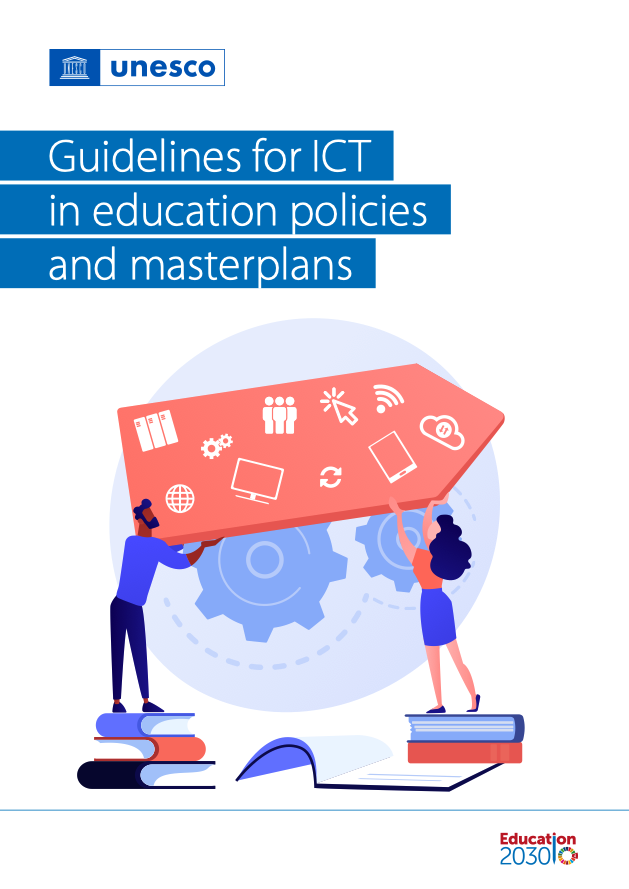 教育信息化政策和总体规划论纲 Year of publication: 2022 Author: Fengchun Miao | Juan Enrique Hinostroza | Molly Lee | Shafika Isaacs | Dominic Orr | Fabio Senne | Ana-Laura Martinez | Ki-Sang Song | Alexander Uvarov | Wayne Holmes | Benjamin Vergel de Dios Corporate author: UNESCO 几十年来,全球各国都在尝试利用信息与通信技术(Information and Communication Technologies,ICTs)促进教育发展。这些由公共 机构推动并涉及商业技术公司的行动计划却产生了诸如数字不平等 进一步加剧以及高质量数字学习机会不均衡等矛盾。新冠疫情危机 加剧了这一趋势:在2020年新冠疫情危机最严峻的时期,全球至少 三分之一的学生无法获得远程教育。本出版物旨在引导政策制定者在采用技术时提供人 权保障;将包容、公平和性别平等视为解决方案的 核心;将技术创新视为共同利益。 基于以上原则, 本出版物采用以人为本的视角, 审视从低带宽技术到人工智能和互联网3.0或“元宇宙”等新兴技术的潜能。本出版物倡导国家政策应保护教师和学生的数字健康, 减少和中和数字碳排放足迹,并避免“技术解决方案主义”。本出版物提出了一个教育信息化政策规划框架以及 迭接式政策规划路线图,以引导对各地教育系统的数字化准备状态 的评估、对学习者和教师的需求分析,进而规划有充足的配套资源 支持的国家教育信息化方案。随后,本出版物还深入剖析了在教育 的不同领域实施教育信息化的国家总体规划的典型范例。
  Recommendation on Education for Peace and Human Rights, International Understanding, Cooperation, Fundamental Freedoms, Global Citizenship and Sustainable Development Year of publication: 2023 Corporate author: UNESCO Building more peaceful, just, and sustainable societies starts with education. It influences all aspects of our daily lives and our overall prospects while being impacted by our health and environment. In the global landscape of worsening climate change, democratic backsliding, persistent inequalities, rising discrimination, hate speech, violence and conflict, it can be a tool to address and prevent these problems in the future. And it can also be a long-term investment with increasing returns if shaped and deployed effectively. The new UNESCO Recommendation on Education for Peace and Human Rights, International Understanding, Cooperation, Fundamental Freedoms, Global Citizenship and Sustainable Development, which is commonly referred to as the Recommendation on Education for Peace, Human Rights and Sustainable Development is a landmark guidance document that defines what needs to evolve in and through education to accomplish these goals.