
Resources
Explore a wide range of valuable resources on GCED to deepen your understanding and enhance your research, advocacy, teaching, and learning.
3,126 Results found
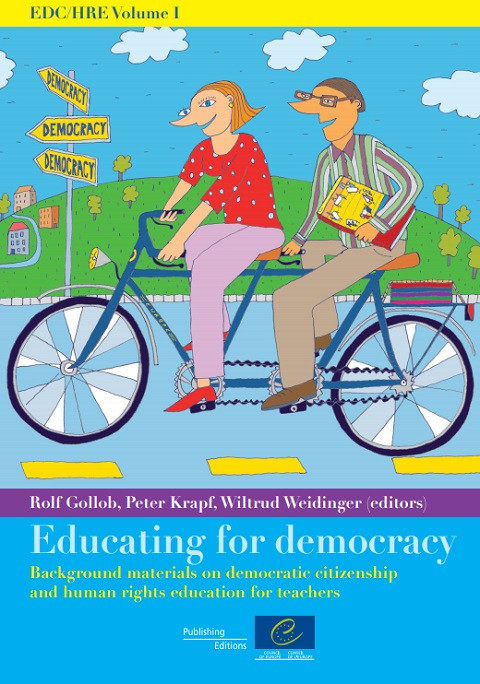 Educating for Democracy: Background Materials on Democratic Citizenship and Human Rights Education for Teachers Year of publication: 2010 Author: Rolf Gollob | Peter Krapf | Ólöf Ólafsdóttir | Wiltrud Weidinger Corporate author: Council of Europe The objective of this manual is to support teachers and practitioners in Education for Democratic Citizenship and Human Rights Education (EDC/HRE). It addresses key questions about EDC and HRE, including competences for democratic citizenship, the objectives and basic principles of EDC/HRE, and a whole school approach to education for democracy and human rights. The manual consists of three parts. Part I outlines the basic principles of EDC/HRE as far as they are helpful and meaningful for the practitioner. Part II gives guidelines and tools to design, support and assess the students’ processes of constructivist and interactive learning. Part III provides toolboxes for teachers and students in EDC/HRE. The other volumes in this series offer concrete teaching models and materials in EDC/HRE for pupils from elementary to upper secondary level. Eduquer à la démocratie: Matériaux de base sur l’éducation à la citoyenneté démocratique et aux droits de l’homme pour les enseignants Year of publication: 2010 Author: Rolf Gollob | Peter Krapf | Ólöf Ólafsdóttir | Wiltrud Weidinger Corporate author: Conseil de l'Europe Ce manuel a pour objectif d’accompagner les enseignants et les professionnels dans les domaines de l’éducation à la citoyenneté démocratique et de l’éducation aux droits de l’homme (ECD/EDH). Il aborde des questions clés au sujet de l’ECD et de l’EDH, y compris les compétences nécessaires à une citoyenneté démocratique, les objectifs et les principes fondamentaux de l’ECD/EDH ainsi qu’une approche scolaire globale de l’éducation à la démocratie et aux droits de l’homme. L’ouvrage est constitué de trois parties. La partie I expose les principes fondamentaux de l’ECD/EDH, dont l’utilité et l’intérêt pour les professionnels sont incontestables. La partie II présente des orientations et des outils pour concevoir, accompagner et évaluer les processus d’apprentissage constructif des élèves. La partie III contient des boîtes à outils, respectivement pour les enseignants et les élèves, dans le domaine de l’ECD/EDH. Les autres volumes de cette collection proposent des modèles ainsi que des supports d’apprentissage concrets pour l’ECD/EDH destinés aux élèves depuis le niveau élémentaire jusqu’au deuxième cycle du secondaire. Обучаем демократии: Базовые материалы для обучения демократической гражданственности и правам человека для учителей Year of publication: 2010 Author: Rolf Gollob | Peter Krapf | Ólöf Ólafsdóttir | Wiltrud Weidinger Corporate author: Council of Europe Цель данного пособия заключается в поддержке учителей и специалистов-практиков по образованию для демократического общества и образованию по правам человека (ОДГ/ОПЧ)– учителей, директоров школ, инспекторов, авторов учебников и редакторов.
  Democracy and Human Rights: Start with Us; Charter for All Year of publication: 2012 Corporate author: Council of Europe The brochure for children explores the principles of human rights and democracy, what we can all do to make them possible, and how education can be of help. La democratie et les droits de l’homme; A nous de les faire vivre; La charte pour tous Year of publication: 2012 Corporate author: Conseil de l'Europe La brochure pour les enfants explore les principes des droits de l'homme et de la démocratie, ce que nous pouvons tous faire pour que cela devienne une réalité, et comment l'éducation y contribue. Демократия и права человека: Начинаются с нас; Хартия для всех Year of publication: 2012 Corporate author: Council of Europe Настоящий вариант Хартии ("Хартия для всех") ориентирован на всех тех, и прежде всего молодежь, кто хотел бы узнать о том, чему посвящен данный международный юридический документ, и как он может быть использован для содействия демократии и правам человека в классе, в молодежных организациях и в обществе в целом.
  Digital Citizenship Education Project (DCE): 10 Domains Year of publication: 2018 Corporate author: Council of Europe The aim of the DCE project launched by the Council of Europe’s Education Policy Division is to empower children to participate actively in digital society. This involves providing them with an education that develops a sense of critical analysis and the effective use of digital technologies while fostering a notion of citizenship based on respect for human rights and democratic culture. Éducation à la citoyenneté numérique (ECN): Les 10 thématiques Year of publication: 2018 Corporate author: Conseil de l'Europe Le projet ECN de la Division des Politiques Educatives du Conseil de l’Europe a pour objectif de permettre aux enfants de participer activement et de manière autonome à la société numérique. Ceci passe par une éducation qui développe un sens d’analyse critique et l’utilisation efficace des technologies numériques intégrant une notion de citoyenneté fondée sur le respect des droits de l’homme et la culture démocratique.
 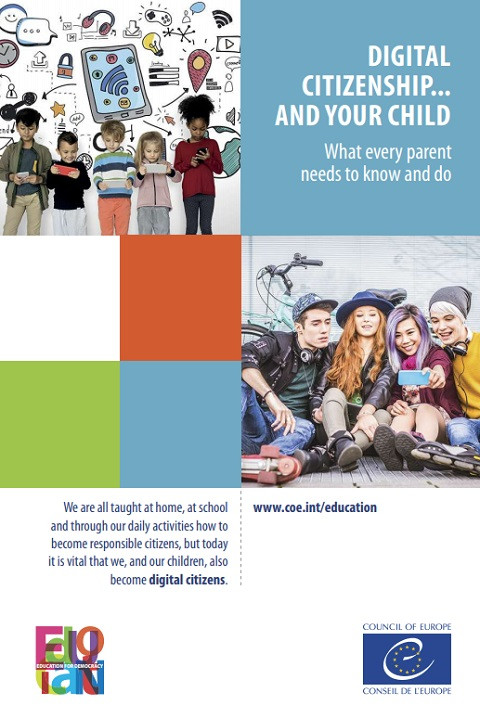 Digital Citizenship... and Your Child What Every Parent Needs to Know and Do Year of publication: 2019 Corporate author: Council of Europe The Council of Europe has created this guide to help you: better understand digital citizenship, and how it shapes online behaviour discuss digital citizenship with your children take steps to help your children master the competences digital citizenship is built on encourage your children’s school to play its role in educating competent young digital citizens. La citoyenneté numérique... et votre enfant: Ce que tout parent a besoin de savoir et de faire Year of publication: 2019 Corporate author: Conseil de l'Europe Le Conseil de l’Europe a préparé le présent guide pour vous aider : à mieux comprendre la citoyenneté numérique et ses effets sur les comportements en ligne; à parler de la citoyenneté numérique avec vos enfants; à agir pour aider vos enfants à maîtriser les compétences indispensables à la citoyenneté numérique; à encourager les établissements scolaires de vos enfants à s’associer avec compétence à l’éducation à la citoyenneté numérique.