
Resources
Explore a wide range of valuable resources on GCED to deepen your understanding and enhance your research, advocacy, teaching, and learning.
3,126 Results found
 Inequidad de género en los logros de aprendizaje en educación primaria ¿Qué nos puede decir TERCE?; resumen ejecutivo Year of publication: 2016 Author: Denisse Gelber, Ernesto Treviño, Pamela Inostroza Corporate author: UNESCO Santiago This premise of work clearly establishes that promoting learning opportunities for all will be one of the priorities in the Education 2030. Within this framework, UNESCO Santiago has its own instrument that allows delivering diagnosis and analysis in depth about the learning inequality within the region; the Thrid Regional Comparative and Explanatory Study, TERCE - carried out by the Latin American Laboratory for Assessment of the Quality of Education, LLECE, body bringing together 15 countries and coordinated by our Office.
 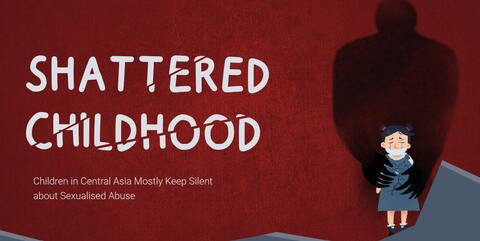 Shattered Childhood: Children in Central Asia Mostly Keep Silent about Sexualised Abuse Author: Katerina Afanasieva | Aleksandra Vasilkova | Mazkhab Dzhumaev | Aida Dzhaksybaeva Corporate author: Central Asian Bureau for Analytical Reporting (CABAR) No one really knows the scope of sexualised abuse of children in Central Asia. According to estimates of human rights activists, only one case of 10 goes reported to law enforcement bodies at best. Once it is reported, the investigation and courts often cause another trauma to children, while proceedings may take years.
  Singapore’s educational reforms toward holistic outcomes: (Un)intended consequences of policy layering Year of publication: 2023 Author: Dennis Kwek | Jeanne Ho | Hwei Ming Wong Corporate author: Center for Universal Education at Brookings In the transition from economic imperatives to holistic drivers, there has been a gradual move over five policy phases (from 1965 to 2022 and beyond) toward curriculum and school diversification to cater to different students, with more autonomy given to schools to innovate their pedagogy and improve instructional quality to meet their students’ unique needs. Importantly, there has been a shift in policy rhetoric from focusing on educational structures to focusing on pedagogy and instructional quality. To shift pedagogy from being mainly didactic in nature—with emphasis on preparing students for national examination—the Singapore government recognized the need to focus on school leaders’ and teachers’ capacity building to enable new curricula and teaching practices. The school cluster structure was initiated in 1997 to enable collaboration and learning among school leaders, key personnel, and teachers. Opportunities for collaborative teacher learning are provided at different ecological levels: professional learning communities (PLCs) within schools and networked learning communities (NLCs) across schools. Beyond the education system, the Singapore government works with other ministries and community organizations, such as ethnic self-help organizations, to tackle educational equity issues. Ultimately, even though the official policy narrative post-1997 has been a de-emphasis on examination results and educational infrastructure to help improve the instructional quality in schools toward holistic outcomes and improved student well-being have been developed, education systems building co-exists with an alternative underlying shadow education system valued by parents who continue to chase narrow academic outcomes. Tuition and enrichment centers in Singapore constitute the shadow education system.
  The Comprehensive Learning Diagnosis: Chile’s approach to assess socio-emotional learning in schools Year of publication: 2023 Author: José Weinstein | Juan Bravo Corporate author: Center for Universal Education at Brookings Education in Chile has important challenges of quality, equity, and social integration. For decades, policies tried to respond to these concerns with a high-stakes accountability institutional framework, which has not had success. The underlying vision of educational quality was limited. The assessment system in place privileged cognitive and academic dimensions of educational results. Socio-emotional learning had been neglected or considered secondary, without an infrastructure of assessment tools that allowed teachers and principals to diagnosis students’ situations and monitor their progress. The COVID-19 crisis was an opportunity for change: Students’ socioemotional needs were a main concern for schools and society, and the regular accountability system based on standardized tests was interrupted. Subsequently, the Comprehensive Learning Diagnosis (DIA) was launched by the Education Quality Agency. The DIA is a voluntary assessment tool made available to all Chilean schools. The DIA promotes the comprehensive development of students, providing timely information and guidance to internally monitor students’ learning in the academic and socio-emotional domains at several points during the school year. Specifically, with respect to socio-emotional learning, three areas were considered: personal, community, and citizenship. In each of these areas, a set of socioemotional skills were defined, operationalized, and became possible to monitor by school communities. The DIA also collects students’ opinions of school management practices regarding socio-emotional skills. The DIA has received a wide acceptance in school communities. Despite being voluntary, an ample majority of schools decided to participate. The information collected from the DIA allows for practical use by principals and teachers. Moreover, the DIA provides the opportunity for students to inform school management. The new Chilean government has decided to strengthen DIA as an important component in a four-year national plan for reactivating academic and socio-emotional learning in schools. The previous high-stakes accountability system, which involved external assessments, has been suspended and is under discussion. The DIA experience has shown that critical social and educational situations can provide fertile ground to motivate deep and rapid transformation, if an educational actor (in this case the Education Quality Agency) is capable of enacting a pertinent, timely, and practical response to school needs. The DIA is not only an example of productive uses of students´ assessment by schools, but also a demonstration that it is possible to build an institutional arrangement among local, intermediate, and national levels of school systems, where a vertical hierarchy is changed by a collaborative relationship based on local agency, mutual trust, and differentiated technical contributions.
  교사. 인권교육. 하다: 교사를 위한 학교 인권교육 안내서 Year of publication: 2021 Corporate author: 국가인권위원회 이 자료는 「초·중등 학교 인권교육 내용 체계화 및 개정 교육과정 적용 방안 연구」 보고서 내용을 바탕으로, 교육 현장에서 인권교육을 실천하고 있거나 해보려는 많은 교사를 위해 학교 인권교육에 관한 이해를 높이고 실천 방법에 대한 유용한 정보를 제공하기 위해 만든 발간물로서 인권 과목의 지향점 및 교육과정 내용 체계 등을 간명하게 보여 줌으로써, 인권 과목을 통한 인권교육을 구체화할 수 있도록 했다. 또한 인권교육을 처음 시도하는 교사들이 부담 없이 접근할 수 있도록 읽을거리, 볼거리, 생각할 거리 등 다양한 자료를 제공한다. Осколки детства: В Центральной Азии дети чаще всего молчат о сексуализированном насилии Author: Katerina Afanasieva | Aleksandra Vasilkova | Mazkhab Dzhumaev | Aida Dzhaksybaeva Corporate author: Central Asian Bureau for Analytical Reporting (CABAR) Никто не знает реальные масштабы сексуализированного насилия в отношении детей в Центральной Азии. По оценке правозащитников, в лучшем случае только 1 кейс из 10 доходит до правоохранительных органов. А если это и происходит, то недружественное к детям следствие и суды часто наносят повторную травму, а дела длятся порой годами.
 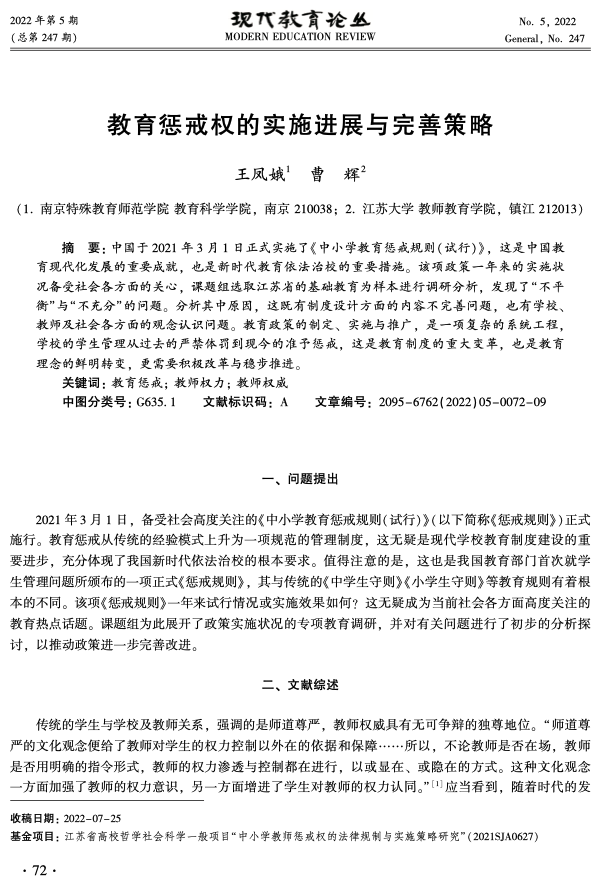 教育惩戒权的实施进展与完善策略 Year of publication: 2022 Author: 王凤娥 | 曹辉 中国于 2021年 3月 1日正式实施了《中小学教育惩戒规则(试行)》,这是中国教育现代化发展的重要成就,也是新时代教育依法治校的重要措施。该项政策一年来的实施状况备受社会各方面的关心,课题组选取江苏省的基础教育为样本进行调研分析,发现了"不平衡"与"不充分"的问题。分析其中原因,这既有制度设计方面的内容不完善问题,也有学校、教师及社会各方面的观念认识问题。教育政策的制定、实施与推广,是一项复杂的系统工程,学校的学生管理从过去的严禁体罚到现今的准予惩戒,这是教育制度的重大变革,也是教育理念的鲜明转变,更需要积极改革与稳步推进。
  Stepping Forward: Parliaments in the Fight Against Hate Speech Year of publication: 2023 Author: Kevin Deveaux | Tim Baker | Mary O’Hagan | David Ennis Corporate author: United Nations Development Programme (UNDP) This brief provides an overview of the background, drivers, enablers and the impact of hate speech and identifies strategies to counter it, with a focus on the role of parliaments as a positive force for change. Of particular relevance are the concrete actions parliaments can take to address and mitigate the prevalence and impact of hate speech on those who are most vulnerable in society, including women, minorities and other underrepresented groups. The objective of this brief is to provide meaningful and practical guidance for parliaments and parliamentarians, as well as those who programmatically support them, on steps they can take to reduce and counter hate speech while fostering peace, constructive dialogue and trust.
  Asia and the Pacific SDG Progress Report 2025: Engaging Communities to Close the Evidence Gap Year of publication: 2025 Corporate author: UN. Economic and Social Commission for Asia and the Pacific (UN. ESCAP) The SDG progress report 2025 presents the latest data and insights on progress toward the Sustainable Development Goals (SDGs) in the Asia-Pacific region. While celebrating regional achievements, it also highlights persistent challenges—such as climate change, natural disasters, and critical data gaps—that risk leaving marginalized communities behind. By showcasing innovative community-level partnerships, the report explores how local efforts can help bridge the evidence gap, ensuring that progress toward the SDGs is inclusive and leaves no one behind.
 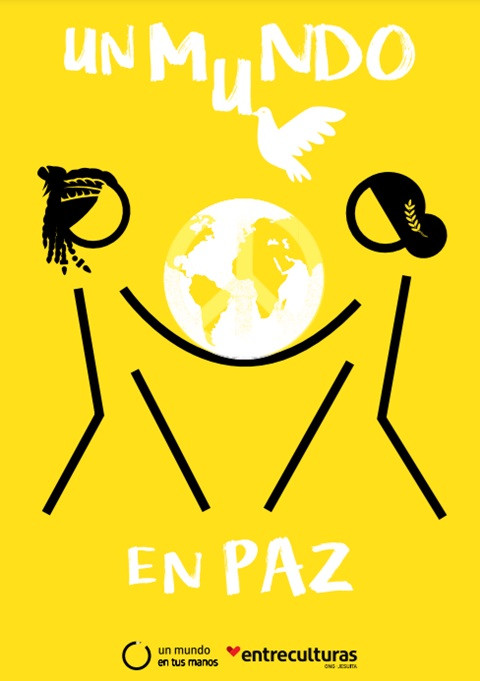 A World at Peace Year of publication: 2022 Corporate author: Entreculturas A world in peace is part of “A world in your hands”, Entreculturas’ pedagogical proposal to educate in global citizenship. With it we aim to contribute to the training of people capable of exercising active and committed citizenship, of transforming their environment and of assuming as their own the global challenges of our time such as the fulfillment of the 2030 Agenda and the Sustainable Development Goals. In this publication we collect proposals to work on the culture of peace and develop knowledge, values and social and civic skills that allow people who work on them to actively commit to coexistence, conflict resolution and the creation of a culture of peace in their environments and at a global level.