
Resources
Explore a wide range of valuable resources on GCED to deepen your understanding and enhance your research, advocacy, teaching, and learning.
3,126 Results found
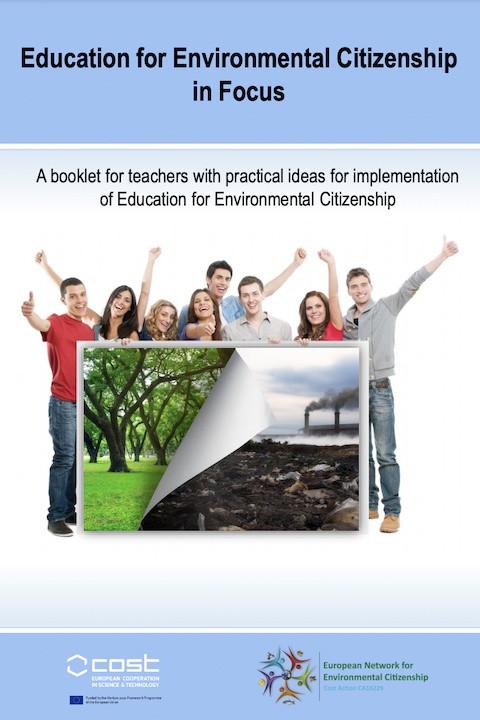 Focus sur l’Éducation à la Citoyenneté Environnementale: Un livret pour les enseignants avec des idées pratiques pour l’éducation à la citoyenneté environnementale (EEC) Year of publication: 2019 Corporate author: European Network for Environmental Citizenship (ENEC) Le réseau européen pour la citoyenneté environnementale – European Network for Environmental Citizenship (ENEC) – financé en tant qu’Action COST (CA16229-Horizon 2020) – a réuni plus de 120 experts venant de 38 pays dans l’objectif d’améliorer la compréhension, la pratique et l’évaluation de la Citoyenneté Environnementale en Europe et dans lespays participants. La Citoyenneté Environnementale a été un concept influant dans de nombreux champs – économie, politique, philosophie, management organisationnel et entrepreneurial, marketing – et pourrait également être mieux exploitéeet davantage établie dans le champ de l’éducation. La crise environnementale contemporaine avec le changement climatique, perte de la biodiversité, pollution de l’air et tous les autres problèmes environnementaux locaux et globaux exigent une éducation à même d’habiliter des citoyens environnementaux. L’éducation joue un rôle clé dans la construction des futurs citoyens environnementaux. L’approche pédagogique de l’Éducation à la Citoyenneté Environnementale est une proposition qui va dans ce sens. L’approche recommande des éléments spécifiques tels des stades et étapes, mais il n’est pas obligatoire de tous les suivre ou de les appliquer selon un ordre linéaire particulier. Selon le problème environnemental à l’étude, le niveau d’éducation (par ex. primaire ou secondaire) et le mode éducatif (par ex. formel ou non-formel), les différenciations et adaptations nécessaires peuvent être faites.
 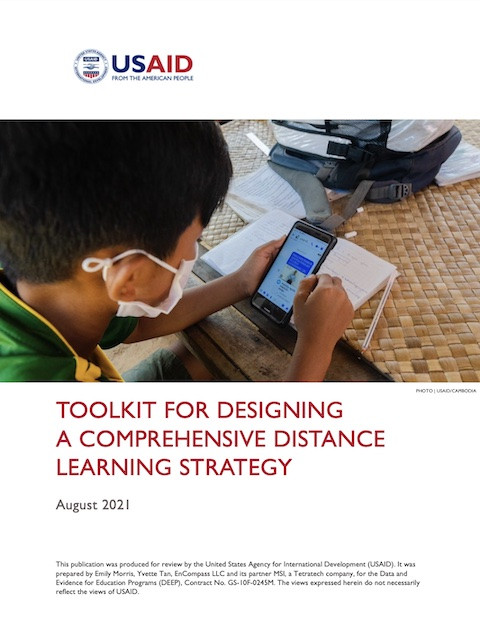 Toolkit for Designing a Comprehensive Distance Learning Strategy Year of publication: 2021 Author: Emily Morris | Yvette Tan Corporate author: United States Agency for International Development (USAID) The purpose of this toolkit is to provide practical guidance (tools, examples, and resources) for designing a comprehensive distance learning strategy that covers an entire education sector or system.
  민주시민교육의 이해와 실천 Year of publication: 2017 Author: 주선미 | 이광식 | 신은영 | 강병덕 Corporate author: 중앙선거관리위원회 선거연수원 본 자료는 민주시민교육의 개념 및 방법에 대한 체계적인 지침과 안내를 목적으로 발간되었으며, 민주시민교육 강의에 필요한 기본 이론학습서이다. 민주시민교육의 의의 및 내용과 방법, 외국의 민주시민교육 사례, 민주시민교육의 현황과 과제 등을 주요 내용으로 담았다.본 저작물은 선거연수원에서 2017년 작성하여 공공누리 제 2유형으로 개방한 ‘민주시민교육의 이해와 실천’ 을 이용하였으며 해당 저작물은 선거연수원 (www.civicedu.go.kr)에서 무료로 다운받으실 수 있습니다.
 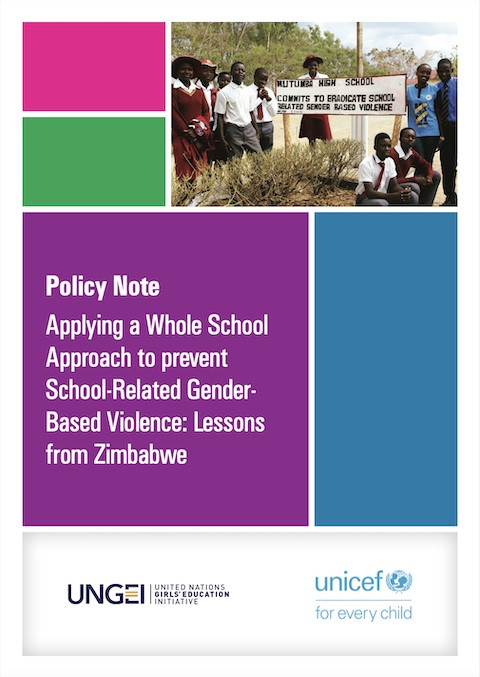 Applying a Whole School Approach to Prevent School-Related Gender-Based Violence: Lessons From Zimbabwe Year of publication: 2021 Corporate author: United Nations Girls' Education Initiative (UNGEI) In 2018, the United Nations Girls’ Education Initiative (UNGEI) along with the Forum for African Women Educationalists Zimbabwe Chapter (FAWEZI), with support from UNICEF, launched a pilot initiative to test whether and how the eight domains and minimum standards can be operationalized in schools. Miske Witt & Associates (MWAI), a technical partner in the initiative, supported FAWEZI to design and monitor interventions aligned to the minimum standards. The pilot was implemented in ten schools (five primary and five secondary) across two districts in Zimbabwe.Implemented over the period October 2018 – December 2020, including during the COVID-19 lockdown, this policy note briefly describes the pilot, highlights what worked and lessons and recommendations for policy action. The target audience for this policy note are education practitioners, policymakers, researchers and donors.
 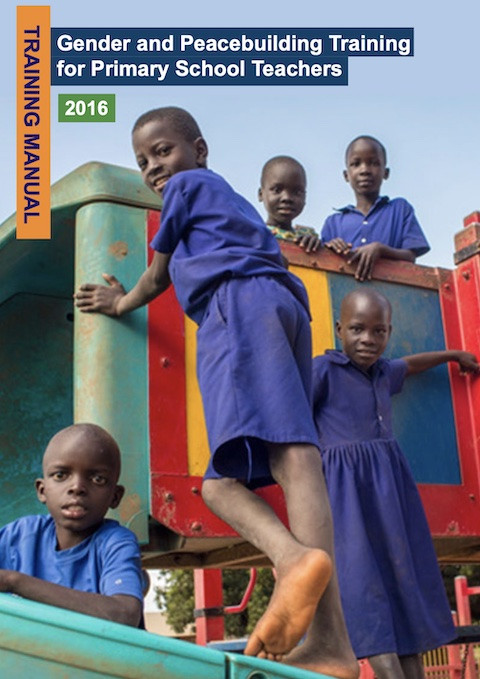 Gender and Peacebuilding Training for Primary School Teachers: Training Manual Year of publication: 2016 Corporate author: United Nations Children's Fund (UNICEF) The Gender and Peacebuilding training material is intended to be used for teachers teaching in primary or secondary school. It is shaped by a participatory approach. This is because the discussion of gender and conflict issues requires participants to sit back and reflect on their diverse experiences and knowledge. The training encourages the participants to learn from one another by sharing their thoughts, discussing their views and concerns, analysing situations and, most importantly, questioning attitudes and behaviours.
 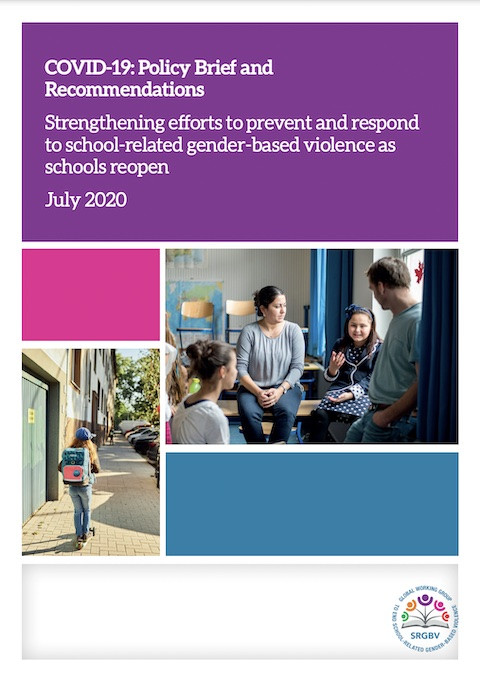 COVID-19: Policy Brief and Recommendations; Strengthening Efforts to Prevent and Respond to School-Related Gender-Based Violence as Schools Reopen Year of publication: 2020 Corporate author: United Nations Girls' Education Initiative (UNGEI) This policy brief is targeted at policymakers and practitioners working in gender, education and child protection fields. It draws from emerging evidence on the gendered implications of COVID-19 on violence as well as research from previous health emergencies regarding the impacts of school closures on gender-based violence. Working on the principle of ‘Build Back Better’, this brief may be used to advocate for improved attention to school- related gender-based violence (SRGBV).
 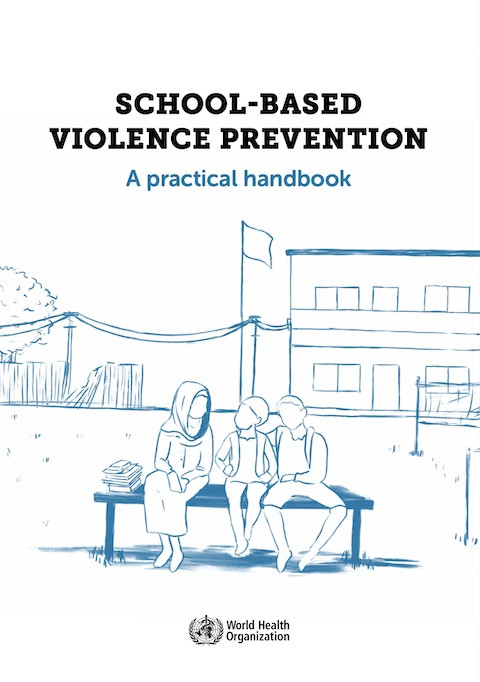 School-Based Violence Prevention: A Practical Handbook Year of publication: 2019 Corporate author: World Health Organization (WHO) School-based violence prevention: a practical handbook is a World Health Organization (WHO) resource for school officials and educators to help prevent violence in and around schools. The handbook gives advice on how schools can embed violence prevention within their routine activities and across the points of interaction schools provide with children, parents and other community members. Prevención de la violencia en la escuela: Manual práctico Year of publication: 2019 Corporate author: World Health Organization (WHO) Este recurso, Prevención de la violencia en la escuela: manual práctico, trata sobre la escuela, la educación y la prevención de la violencia. Ofrece orientación a los funcionarios escolares y a las autoridades de Educación sobre el modo en que las escuelas pueden incorporar la prevención de la violencia a sus actividades habituales y en todos los puntos de interacción facilitan con los niños, los progenitores y otros miembros de la comunidad. La puesta en práctica del manual contribuirá en gran medida a la consecución de los ODS y otros objetivos mundiales de salud y desarrollo. Prévention de la violence à l’école : Guide pratique Year of publication: 2019 Corporate author: World Health Organization (WHO) Cette ressource intitulée Prévention de la violence à l’école : guide pratique, porte sur l’école, l’éducation et la prévention de la violence. Ce guide conseille le personnel des écoles et les autorités chargées de l’éducation quant à la façon dont les établissements scolaires peuvent intégrer la prévention de la violence dans leurs activités de routine. Il leur propose également de réfléchir au lieu même qu’est l’école, à savoir un espace d’interaction et de communication entre parents, enfants et les autres membres de la communauté. S’il est mis en œuvre, ce manuel contribuera grandement à la réalisation des ODD et d’autres objectifs mondiaux en matière de santé et de développement.
 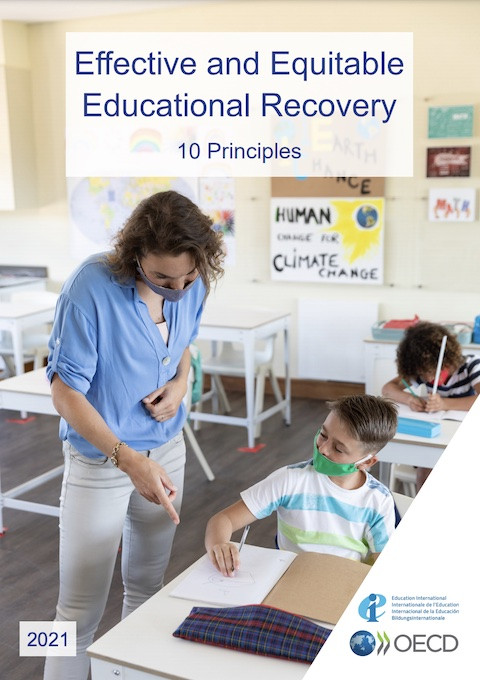 Effective and Equitable Educational Recovery: 10 Principles Year of publication: 2021 Corporate author: Education International (EI) | Organisation for Economic Co-operation and Development (OECD) The COVID-19 pandemic has led to the frequent closure of school buildings in most countries in the world and has interrupted the school attendance of at least 1.2 billion students in 2020 and 2021. Although many education systems have been able to adapt in varying degrees, the pandemic has shown that countries’ current learning infrastructures are highly vulnerable to external shocks.While schools have shown great resilience in trying to compensate for the crisis, they need to be better prepared for similar challenges. Education systems must ensure the continuity of learning which must be the centrepiece of all considerations.Acknowledging the disruption that the health crisis has brought about and its likely impact on educational quality and equity, the OECD Secretariat and Education International have, based on their respective work during the pandemic, jointly established 10 principles that can facilitate the collaboration of education authorities, the teaching profession and their organisations to navigate the crisis effectively and reshape education systems after the pandemic to reach greater levels of educational quality and equity.Education systems around the world have been facing similar challenges but generated diverse approaches and experiences. The intention is also for these principles to contribute to a framework for international cooperation and peer learning.