
Resources
Explore a wide range of valuable resources on GCED to deepen your understanding and enhance your research, advocacy, teaching, and learning.
3,128 Results found
 Technical Guidelines for the Return to Educational Establishments Year of publication: 2020 Author: Ximena Bugueño Corporate author: United Nations Children's Fund (UNICEF) This document presents the guiding principles of the return to schools process and recommendations to prepare as an educational team. It offers guidelines to call for participation and communication with families and students, organize learning, reception and socio-emotional support activities in mixed modality, and to implement measures that care for the health of the community. Orientaciones técnicas para el retorno: A los establecimientos educacionales Year of publication: 2020 Author: Ximena Bugueño Corporate author: United Nations Children's Fund (UNICEF) Este documento presenta losprincipios rectores del proceso de retorno y recomendaciones para prepararse como equipo educativo. Ofrece lineamientops para convocar a participar y comunicarse con las familias y estudiantes, organizar las actividades de aprendizaje, acogida y apoyo socioemocional en modalidad mixta, y para implementar las medidas que cuidan la salud de la comunidad.
  Don’t Play With Me Year of publication: 2018 Corporate author: Sociescuela This animation presents a situation of bullying in a school, clearly and in accessible language. It includes features to understand the phenomenon and know how to act to stop it, from a third party perspective. Corto de animación sobre bullying: No juegues conmigo Year of publication: 2018 Corporate author: Sociescuela Esta animación presenta una situación de bullying en un colegio, de manera clara y en un lenguaje accesible. Incluye características para entender el fenómeno y saber cómo actuar para detenerlo, desde una perspectiva de terceros.
  Learning About Emotions: Manual of Emotional Education Year of publication: 2012 Author: Monica Calderón Rodríguez | Gabriela González Mora | Patricia Salazar Segnini | Stephanie Washburn Madrigal Corporate author: Central America Coordination Bureau for Education and Culture (CECC) | Central American Integration System This is an emotional education manual for teacher training that aims to provide innovative strategies that complement the daily work carried out in the classroom, strengthening the subject of emotions and their education. Aprendiendo sobre emociones: Manual de educación emocional Year of publication: 2012 Author: Monica Calderón Rodríguez | Gabriela González Mora | Patricia Salazar Segnini | Stephanie Washburn Madrigal Corporate author: Central America Coordination Bureau for Education and Culture (CECC) | Central American Integration System Este es un manual de educación emocional para la formación de docentes que pretende brindar estrategias innovadoras que complementen la labor cotidiana que se realiza en las aulas, fortaleciendo el tema de las emociones y la educación de las mismas.
  Anti-racist, Inclusive and Rights Education in the Development of Professional Competencies for School Staff and Student Abilities (Éthique en éducation et en formation; no. 3) Year of publication: 2017 Author: Maryse Potvin Corporate author: Université du Québec à Montréal (UQAM) This article examines the differences and convergences that emerge from the major theoretical trends in the area of education for ethnocultural (inter/multicultural, anti-racist/critical, civic, inclusive) diversity regarding the professional skills school personnel must acquire to achieve the major objectives of equity, effectiveness of rights, harmonious living and the development of students’ capabilities. The article is based on a review of the national and international literature, which aimed to identify the skills (knowledge, expertise, soft skills) that are essential for knowing how to act in the context of diversity and that, according to theoreticians, should be developed in all teacher training programs. These issues are discussed from a crosscutting perspective rather than from a disciplinary angle related to the Quebec curriculum (ethics and religious culture, history and education for citizenship). The article begins by providing some background on these trends in order to identify their common objectives and convergence toward an integrated and inclusive global approach. It then examines two objectives supported by all theoreticians in terms of the core professional skills needed by school personnel for developing students’ capabilities: 1) taking into account the realities, needs and rights of students, particularly those in minority or vulnerable groups, and 2) preparing students to live together in a pluralistic and democratic society. As well, it identifies the key challenges involved in the consideration and implementation of these two goals. L’éducation antiraciste, inclusive et aux droits dans le développement des compétences professionnelles du personnel scolaire et des capabilités des élèves (Éthique en éducation et en formation; no. 3) Year of publication: 2017 Author: Maryse Potvin Corporate author: Université du Québec à Montréal (UQAM) Cet article porte un regard sur les différences et convergences qui se dégagent des grands courants théoriques dans le champ de l’éducation à la diversité ethnoculturelle (inter/multiculturel, antiraciste /critique, civique, inclusif) quant aux compétences professionnelles à développer par le personnel scolaire pour atteindre les grandes finalités de l’équité, de l’effectivité des droits, du vivre-ensemble et du développement des capabilités des élèves. L’article s’appuie sur une revue de la littérature nationale et internationale, qui visait à dégager les éléments de compétences (savoirs, savoir-faire, savoir-être essentiels) pour savoir-agir en contexte de diversité, et qui, selon les théoriciens, devraient être développés dans tous les programmes de formation à l’enseignement. Il n’aborde pas ces enjeux sous un angle disciplinaire, lié au curriculum québécois (éthique et culture religieuse, histoire et éducation à la citoyenneté), mais dans une perspective transversale. L’article présente d’abord quelques fondements de ces courants afin de dégager leurs objectifs communs et leur convergence vers une approche globale et inclusive intégrée. Il porte ensuite une attention particulière aux deux finalités centrales qui font consensus parmi les théoriciens et qui sont au coeur des compétences professionnelles du personnel scolaire pour développer les capabilités des élèves : 1) prendre en compte les réalités, besoins et droits des élèves, particulièrement ceux des groupes minoritaires ou vulnérables, pour développer leurs capabilités, et 2) les préparer à vivre ensemble dans une société pluraliste et démocratique. Il dégage aussi les principaux défis liés à la prise en compte et à la mise en oeuvre de ces deux finalités.
 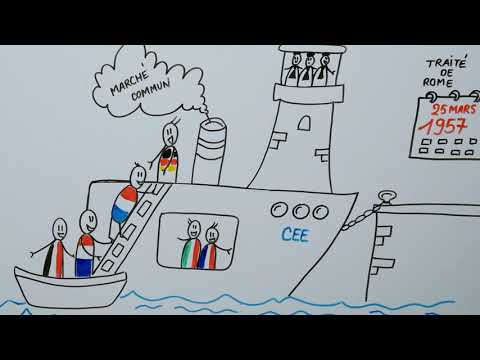 European Citizenship Year of publication: 2020 Corporate author: Laboratoire d'innovation pédagogique sur l'Europe (LIPE) The participation of the peoples in European construction has always been questioned since the 1970s, when the Member States wanted to relaunch the process of political unification. The election of the European Parliament by universal suffrage is a first step. Citizens' Europe, initiated in 1975 and relaunched in 1985, should make it possible to bring the peoples of the Community closer together, but remains symbolic and without much practical significance. The States are waiting for the Maastricht Treaty to establish true European citizenship within the framework of political Union. Secondary citizenship limited to a few rights, its scope remains limited and its political effectiveness questionable. La citoyenneté européenne Year of publication: 2020 Corporate author: Laboratoire d'innovation pédagogique sur l'Europe (LIPE) La participation des peuples à la construction européenne a toujours posé question à partir des années 1970, lorsque les États membres souhaitent relancer le processus d’unification politique. L’élection du Parlement européen au suffrage universel est un premier pas. L’Europe des citoyens, initiée en 1975 et relancée en 1985, doit permettre de rapprocher les peuples de la Communauté, mais reste symbolique et sans grande portée pratique. Les États attendent le traité de Maastricht pour mettre en place une véritable citoyenneté européenne dans le cadre de l’Union politique. Citoyenneté seconde limitée à quelques droits, sa portée reste limitée et son efficacité politique discutable.