
Resources
Explore a wide range of valuable resources on GCED to deepen your understanding and enhance your research, advocacy, teaching, and learning.
3,158 Results found
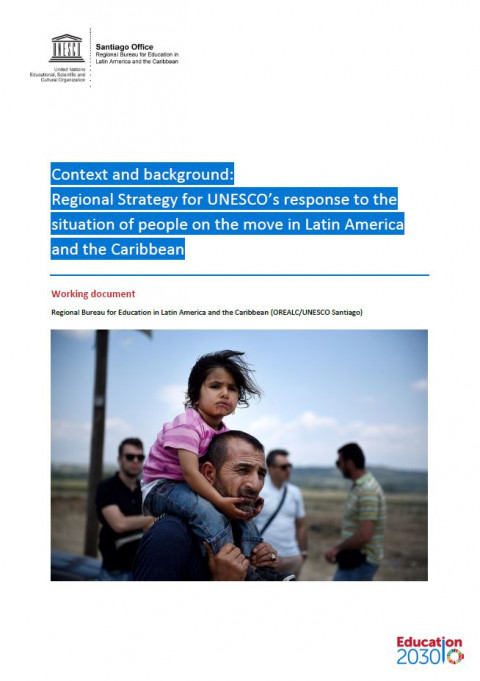 Context and Background: Regional Strategy for UNESCO’s Response to the Situation of People on the Move in Latin America and the Caribbean Year of publication: 2019 Corporate author: UNESCO Santiago The UNESCO offices in Latin America and the Caribbean, under the coordination of the Regional Bureau for Education in Latin America and the Caribbean OREALC/UNESCO Santiago, have proposed the development of a regional strategy that provides a response from UNESCO based on the needs of the region’s countries for guaranteeing the right to education of migrants, refugees, asylum seekers and returnees. The purpose of this document is to present key information for the development of the regional strategy. It reviews a set of information that contextualizes human mobility in Latin America and the Caribbean, recognizing contemporary trends, identifying their driving factors and describing the main demographic qualities that characterize them.The authors then address the needs for protection of individuals in the context of mobility in the region, particularly those associated with the exercise of their fundamental rights and processes of inclusion in social protection systems in the destination society. They then present the right to education as a multiplier right in contexts of human mobility, reviewing the main obstacles faced by migrants, refugees, asylum seekers and returnees. Finally, the text presents a discussion of UNESCO’s role in this context based on the review of international regulatory instruments and frameworks, institutional frameworks, the work agenda at the regional level and the migratory institutional structure in Latin America and the Caribbean. Antecedentes para una estrategia regional de respuesta de la UNESCO a la situación de personas en contexto de movilidad en América Latina y el Caribe: documento de trabajo Year of publication: 2019 Corporate author: UNESCO Santiago Las oficinas de la UNESCO en América Latina y el Caribe, bajo la coordinación de la Oficina Regional de Educación OREALC/UNESCO Santiago, se han propuesto el desarrollo de una estrategia regional que estructure una respuesta de la UNESCO en función de las necesidades de los países de la región para garantizar el derecho a la educación de personas migrantes, refugiados, solicitantes de asilo y retornados. El presente documento tiene como objetivo presentar antecedentes relevantes para la elaboración de la estrategia regional. En él, se revisa un conjunto de antecedentes que contextualizan la movilidad humana en América Latina y el Caribe, reconociendo tendencias contemporáneas, identificando los factores que la impulsan y revisando las principales cualidades demográficas que la caracterizan. Posteriormente, se abordan las necesidades de protección de las personas en contexto de movilidad en la región, especialmente aquellas asociadas al ejercicio de sus derechos fundamentales y a los procesos de inclusión a los sistemas de protección social en la sociedad receptora. Luego, se presenta el derecho a la educación como derecho multiplicador en los contextos de movilidad humana, revisando los principales obstáculos para su realización que deben enfrentar las personas migrantes, refugiadas, solicitantes de asilo y retornadas. Finalmente, se discute el rol de la UNESCO en este escenario a partir de la revisión de los instrumentos y marcos normativos a nivel internacional, marcos institucionales, la agenda de trabajo a nivel regional y la institucionalidad migratoria de América Latina y el Caribe.
 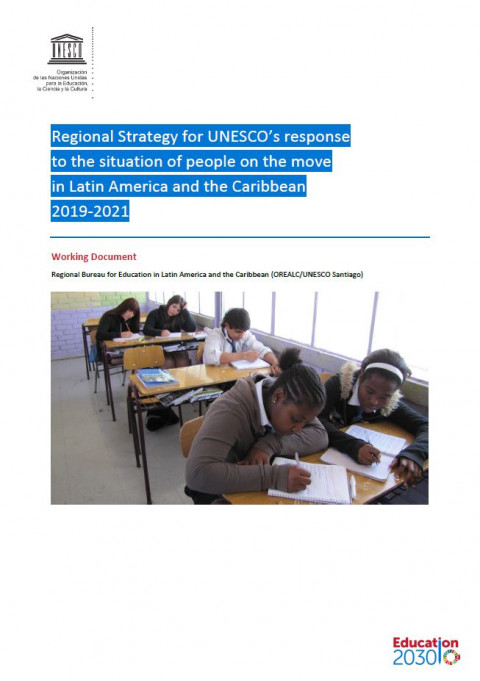 Regional Strategy for UNESCO’s Response to the Situation of People on the Move in Latin America and the Caribbean 2019-2021: Working Document Year of publication: 2019 Corporate author: UNESCO Santiago This document introduces the three priority strategic areas, defined in coherence with those analyzed in the document Background for a Regional Strategy of UNESCO, as well as the components and initiatives of each of them. In addition, the following strategic dimensions are established: coordination and implementation mechanisms, advocacy and communications, planning and financing, and finally, the consolidation of resources, tools and existing publications of UNESCO, a product of the aforementioned intersectoral consultation process. Estrategia regional de respuesta de la UNESCO a la situación de personas en contexto de movilidad en América Latina y el Caribe 2019-2021: documento de trabajo Year of publication: 2019 Corporate author: UNESCO Santiago En este documento se presentan las tres áreas estratégicas prioritarias, definidas en coherencia con los analizado en el documento Antecedentes para una Estrategia Regional de la UNESCO, así como los componentes e iniciativas de cada una de ellas. Asimismo, se establecen las siguientes dimensiones estratégicas: mecanismos de coordinación e implementación, abogacía y comunicaciones, planificación y financiamiento y, finalmente, una consolidación de recursos, herramientas y publicaciones ya existentes de la UNESCO, resultado del proceso de consulta intersectorial antes mencionado.
 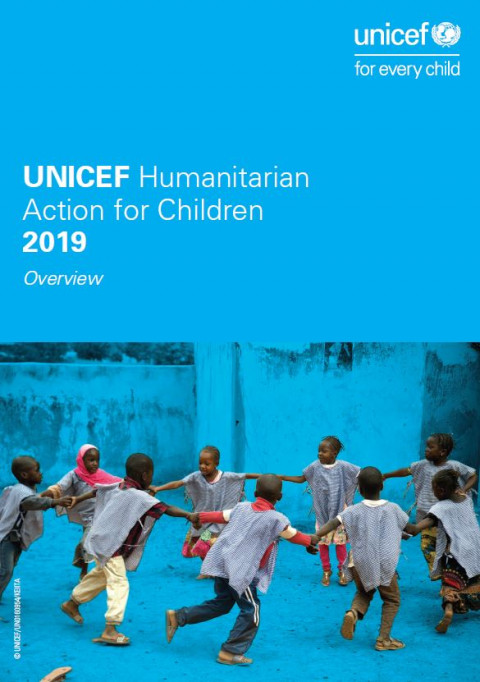 Humanitarian Action for Children 2019: Overview Year of publication: 2019 Corporate author: United Nations Children's Fund (UNICEF) This edition of UNICEF’s report on requirements for humanitarian action highlights major emergencies affecting children and families around the world, and the results achieved by UNICEF and partners in response to those crises. Noting that more violent conflicts are raging today than at any time since the adoption of the Convention on the Rights of the Child 30 years ago, the report also describes UNICEF initiatives to improve the quality of its humanitarian response in 2019 – particularly in high-threat contexts. Additional information about humanitarian action and UNICEF funding appeals at the country and regional levels is available online atwww.unicef.org/appeals.
 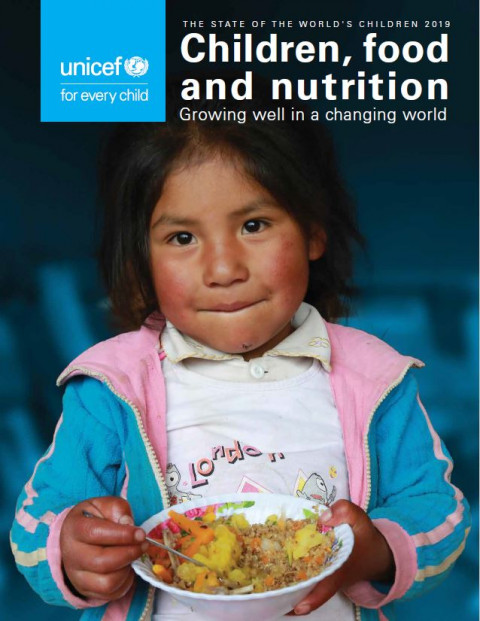 Children, Food and Nutrition: Growing Well in a Changing World Year of publication: 2019 Corporate author: United Nations Children's Fund (UNICEF) This 2019 edition of The State of the World’s Children (SOWC) examines the issue of children, food and nutrition, providing a fresh perspective on a rapidly evolving challenge. Despite progress in the past two decades, one third of children under age 5 are malnourished – stunted, wasted or overweight – while two thirds are at risk of malnutrition and hidden hunger because of the poor quality of their diets. At the center of this challenge is a broken food system that fails to provide children with the diets they need to grow healthy. This report also provides new data and analyses of malnutrition in the 21st century and outlines recommendations to put children’s rights at the heart of food systems.
 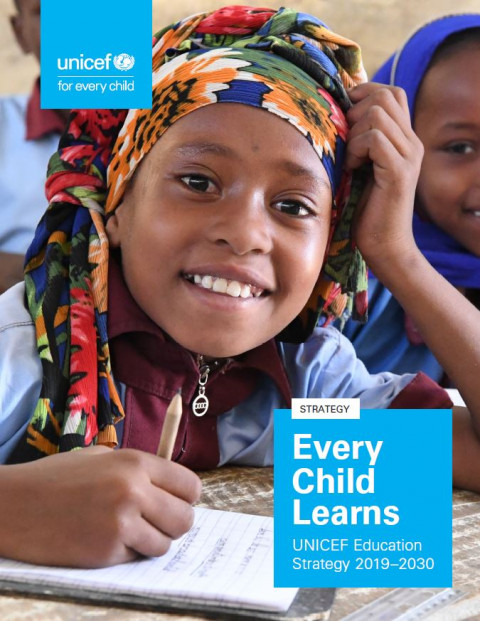 Every Child Learns: UNICEF Education Strategy 2019–2030 Year of publication: 2019 Corporate author: United Nations Children's Fund (UNICEF) The gap between the levels of learning that education systems are providing and what children, communities and economies need, is growing. The breadth and depth of this learning crisis constitute the greatest global challenge to preparing children and adolescents for life, work and active citizenship. The lesson of the learning crisis is clear: the conventional assembly of education inputs is not improving learning outcomes. This presents a fundamental challenge to the way that governments, development partners and communities are managing and supporting education systems. A new, more radical approach that focusses on enhancing learning outcomes is long overdue and forms the basis for this strategy.The report also outlines the shift towards a greater focus on improving learning outcomes, including supporting the breadth of skills that allow young people to become agile, adaptive learners and citizens, equipped to navigate personal, social, academic, economic and environmental challenges.
  "It is Very Painful to Talk About”: The Impact of Attacks on Education on Women and Girls Year of publication: 2019 Author: Holly Cartner Corporate author: Global Coalition to Protect Education from Attack (GCPEA) This report presents the key findings of GCPEA’s multi-country study on the impact of attacks on education on women and girls.10 GCPEA’s research focuses on the types and causes of abuse most typically committed against female students in the context of attacks on education, and the long-term consequences that female students may face as a result of such attacks.11 GCPEA initiated this study to contribute to a better understanding of the implications for girls and women when education is attacked and to inform our advocacy for better strategies to protect girls and women, prevent attacks and abuse, and diminish harmful consequences against them.This report relies on previous GCPEA research, including Education Under Attack 2018 and 2014, and updates, and the organization’s field research in Nigeria and the Democratic Republic of Congo, which focused specifically on the experiences of women and girls when education is attacked. In addition, the report draws from interviews with numerous country and regional experts and an extensive review of secondary data sources, including reports by United Nations (UN) agencies, development and humanitarian non-governmental organizations (NGOs), human rights organizations, government bodies, and think tanks, including numerous contributions from GCPEA’s member organizations.
  Charlevoix Declaration on Quality Education for Girls, Adolescent Girls and Women in Developing Countries Year of publication: 2018 Corporate author: G7 The Charlevoix Declaration is a commitment from the Leaders of the G7 to work towards inclusive, quality, equitable education for girls, adolescent girls, and women in developing countries and crisis contexts.The Charlevoix Declaration on Quality Education for Girls, Adolescent Girls and Women in Developing Countries represents a joint effort from the Leaders of G7 countries to step up for girls and women in conflict and crisis contexts. Focusing both on dismantling the barriers to education and improving the quality of education, the G7 have committed to promote and improve learning outcomes for both refugees and host communities, while also working to reduce the time children and youth, especially girls, are out of school as a result of conflict and displacement.To support the implementation of the Charlevoix Declaration, Canada also led the mobilization of CDN $3.8+ billion. With contributions from the World Bank, the European Union, Japan, Germany, and the United Kingdom, this initiative represents the single largest investment in education for girls in conflict and crisis settings.
 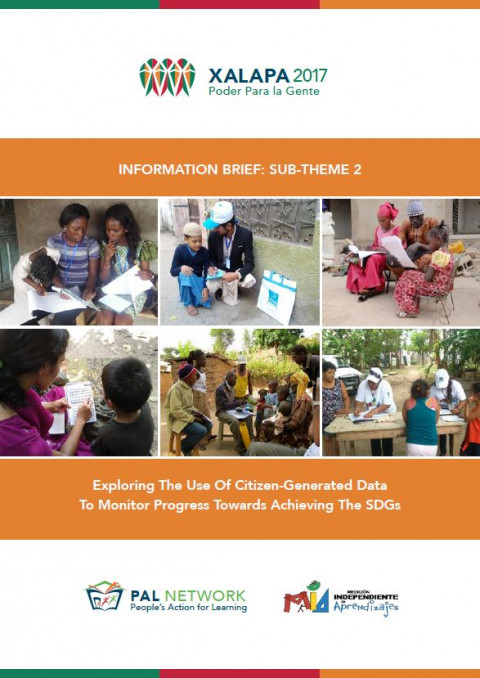 Exploring the Use of Citizen-generated Data to Monitor Progress Towards Achieving the SDGs Year of publication: 2017 Corporate author: People's Action for Learning Network The 5th Annual PAL Network meeting was held in Xalapa, Mexico from 13th to 16th March 2017. The meeting was jointly hosted by Medición Independiente de Aprendizajes (MIA) and the PAL Network. The meeting provided structured opportunities for deep exploration of this year’ theme: ‘Power to the People’. The theme was critically explored by over 80 participants from more than 19 Global South countries in four different sub‑theme groups. Each sub-theme focused on a different aspect of citizen participation in conducting household-based learning assessments with a focus on value, potential and next steps.