
Resources
Explore a wide range of valuable resources on GCED to deepen your understanding and enhance your research, advocacy, teaching, and learning.
3,500 Results found
 Challenges and Perspectives of Inclusive Education: A Regional Perspective Year of publication: 2024 Corporate author: National Commission for the Continuous Improvement of Education (Mejoredu) | Organization of Ibero-American States for Education, Science and Culture (OEI) This work compiles the four analysis tables Challenges and perspectives of inclusive education, which, to contribute to this purpose, were constituted as spaces for reflection and plural and democratic dialogue. During the analysis tables held in June 2023, the prominent speakers gave life to a space for reflection and plural and democratic dialogue, seeking to contribute through conversations to a topic of debate that cannot be postponed in the life of schools, speaking about the current situation of populations historically violated in their fundamental rights, the challenges of inclusive education in the region, experiences in educational care for historically disadvantaged populations and proposals for actions that contribute to educational systems moving towards inclusive education. Retos y perspectivas de la educación inclusiva: Una mirada regional Year of publication: 2024 Corporate author: National Commission for the Continuous Improvement of Education (Mejoredu) | Organización de Estados Iberoamericanos para la Educación, la Ciencia y la Cultura (OEI) Esta obra compila las cuatro mesas de análisis Retos y perspectivas de la educación inclusiva, las cuales, para contribuir a este propósito, se constituyeron en espacios de reflexión y diálogo plural y democrático. Durante las mesas de análisis realizadas en junio de 2023, los destacados ponentes dieron vida a un espacio de reflexión y diálogo plural y democrático, buscando aportar mediante conversatorios a un tema de debate inaplazable en la vida de las escuelas, hablando sobre la situación actual de las poblaciones históricamente vulneradas en sus derechos fundamentales, los desafíos de la educación inclusiva en la región, experiencias en atención educativa de poblaciones históricamente desfavorecidas y propuestas de acciones que contribuyan a que los sistemas educativos avancen hacia una educación inclusiva.
  Minutes World Heritage Education: Education in Times of Digital, Sustainable, Inclusive and Fair Transformation Year of publication: 2024 Corporate author: University of Alcala | Organization of Ibero-American States for Education, Science and Culture (OEI) Document obtained from the XVII International and Interuniversity Congress of the Ibero-American Education Meeting. The University of Alcalá (UAH) in Madrid (Spain) and the Organization of Ibero-American States (OEI) organize the XVII Ibero-American Education Meeting (EIDE 2023) with the purpose of continuing to offer a scientific, rigorous and committed space for discussion and interdisciplinary exchange , interuniversity and international, with the focus on the Ibero-American geographical and cultural context, responding to the need to continue analyzing the educational reality from a global and collaborative perspective, as demanded by all professional and academic fields of education, at a time of great transformation challenges in the digital field, sustainability, inclusion, social justice and interculturality. Actas la educación patrimonio mundial: La educación en tiempos de transformación digital, sostenible, inclusiva y Justa Year of publication: 2024 Corporate author: University of Alcala | Organización de Estados Iberoamericanos para la Educación, la Ciencia y la Cultura (OEI) Documento obtenido del Congreso Internacional e Interuniversitario XVII Encuentro Iberoamericano de Educación. La Universidad de Alcalá (UAH) en Madrid (España) y la Organización de Estados Iberoamericanos (OEI) organizan el XVII Encuentro Iberoamericano de Educación (EIDE 2023) con el propósito de seguir ofreciendo un espacio científico, riguroso y comprometido de discusión e intercambio interdisciplinar, interuniversitario e internacional, con el foco puesto en el contexto geográfico y cultural iberoamericano, dando respuesta a la necesidad de seguir analizando la realidad educativa desde una perspectiva mundial y colaborativa, como demandan todos los ámbitos profesionales y académicos de la educación , en un momento de grandes retos de transformación en el ámbito digital, la sostenibilidad, la inclusión, la justicia social y la interculturalidad.
 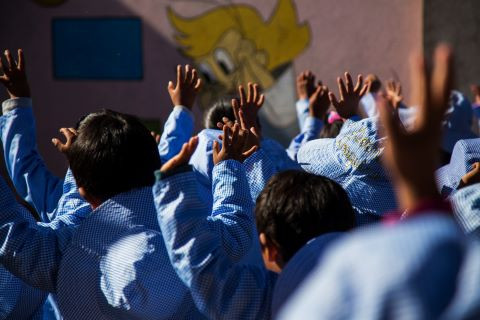 Weaving Education and Equity in Ibero-America Year of publication: 2024 Author: Ricardo Cuenca Corporate author: Organization of Ibero-American States for Education, Science and Culture (OEI) Addressing the complex relationship between education and inequality in Latin America is a challenge. Economic and social disparities create a complex network in the region. Despite progress, access remains an obstacle for many. During its 75-year history, the OEI has been working to break down the barriers that hinder equitable education for all. Ricardo Cuenca, member of the OEI Advisory Board, explains to what extent educational policies can contribute to mitigating these inequalities in Latin America. Tejiendo educación y equidad en Iberoamérica Year of publication: 2024 Author: Ricardo Cuenca Corporate author: Organización de Estados Iberoamericanos para la Educación, la Ciencia y la Cultura (OEI) Abordar la compleja relación entre educación y desigualdad en Iberoamérica es todo un desafío. Las disparidades económicas y sociales tejen un entramado complejo en la región. A pesar de los avances, el acceso sigue siendo un obstáculo para muchos. En esta travesía, la OEI ha venido trabajando durante sus 75 años de historia para derribar las barreras que obstaculizan una formación equitativa para todos. Ricardo Cuenca, miembro del Consejo Asesor de la OEI, nos explica hasta qué punto las políticas educativas pueden contribuir a mitigar esas desigualdades en Iberoamérica.
  Mercosur Reads Year of publication: 2023 Corporate author: Argentina. Ministry of Education | National Library of Teachers | Organization of Ibero-American States for Education, Science and Culture (OEI) This relaunch brings together stories by prominent authors from Argentina, Brazil, Bolivia, Chile, Paraguay and Uruguay. Its purpose is to contribute to the process of regional integration, encourage knowledge of the official languages (Spanish, Portuguese and Guaraní) and the development of quality education for all. Mercosur lee Year of publication: 2023 Corporate author: Argentina. Ministry of Education | National Library of Teachers | Organización de Estados Iberoamericanos para la Educación, la Ciencia y la Cultura (OEI) Este relanzamiento reúne los relatos de destacadas y destacados autores de Argentina, Brasil, Bolivia, Chile, Paraguay y Uruguay. Su propósito es contribuir al proceso de integración regional, incentivar el conocimiento de las lenguas oficiales (español, portugués y guaraní) y el desarrollo de una educación de calidad para todas y todos.
 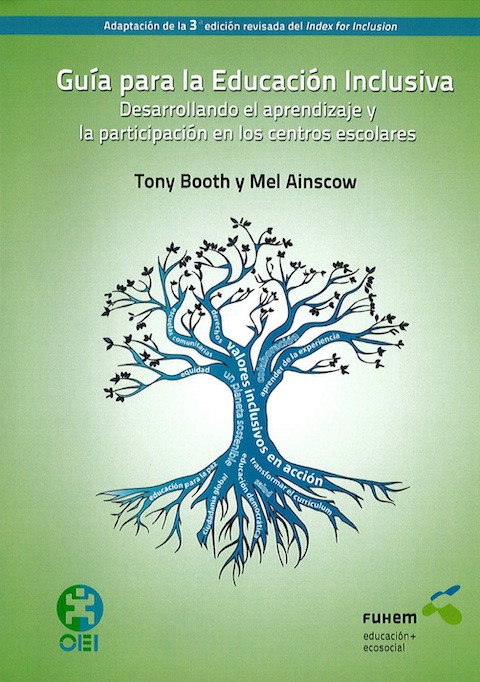 Index for Inclusion: Developing Learning and Participation in Schools Year of publication: 2015 Author: Tony Booth | Mel Ainscow Corporate author: Organization of Ibero-American States for Education, Science and Culture (OEI) | FUHEM Education This guide provides a set of support materials for self-assessment of all aspects of a school, related to inclusive education, including activities at recess and in the classroom, as well as in the communities and in the context in which it's found. All staff, parents and guardians, as well as the students themselves (whether children, adolescents, or youth) are invited to contribute to the implementation of a plan for inclusion. Guía para la Educación Inclusiva: Desarrollando el aprendizaje y la participación en los centros escolares Year of publication: 2015 Author: Tony Booth | Mel Ainscow Corporate author: Organización de Estados Iberoamericanos para la Educación, la Ciencia y la Cultura (OEI) | FUHEM Education Está guía brinda un conjunto de materiales de apoyo a la autoevaluación de todos los aspectos de un centro escolar, relacionados con la educación inclusiva, incluyendo las actividades en el recreo y en las aulas, así como en las comunidades y en el contexto en el que se encuentra. Se invita a que todo el personal, los padres y tutores, así como los propios estudiantes (sean niños, adolescentes o jóvenes), contribuyan a la implementación de un plan para la inclusión.