
Resources
Explore a wide range of valuable resources on GCED to deepen your understanding and enhance your research, advocacy, teaching, and learning.
3,559 Results found
 Qué es Educación para el Desarrollo Year of publication: 2019 Corporate author: UNAQUÍ El blog de Unaquí informa que desde la Federación Aragonesa de Solidaridad se entiende a la Educación para el Desarrollo (EpD) como un proceso encaminado a generar una ciudadanía global, crítica y activa que esté comprometida en la construcción de una sociedad solidaria, justa y equitativa. También informa que las organizaciones integrantes de la FAS se sienten corresponsables en la tarea de educar para transformar por lo que crearon ese espacio de Educación para el Desarrollo llamado UNAQUÍ para contribuir a la formación integral de la ciudadanía como clave para el Desarrollo. En el blog colocan información sobre distintos proyectos que son llevados a cabo.
 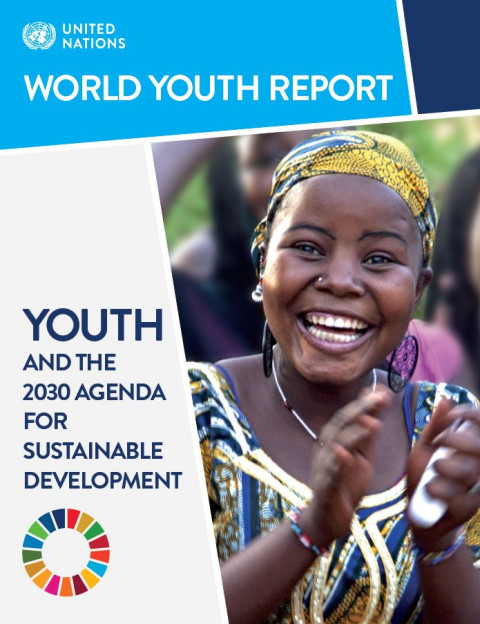 [Summary] World Youth Report: Youth and the 2030 Agenda for Sustainable Development Year of publication: 2019 Corporate author: United Nations (UN) The World Youth Report on “Youth and the 2030 Agenda for Sustainable Development”, prepared by the United Nations Department of Economic and Social Affairs (UN DESA), examines the mutually supportive roles of the new agenda and current youth development efforts. The report provides insight into the role of young people in sustainable development in the context of the implementation of the 2030 Agenda for Sustainable Development and related frameworks, in particular, the Addis Ababa Action Agenda of the Third International Conference on Financing for Development and the World Programme of Action for Youth.The Report considers the role the 2030 Agenda can play in enhancing youth development efforts and examines how evidence-based youth policies can help accelerate youth-related objectives. It explores the critical role young people have in the implementation of sustainable development efforts at all levels. This publication is a summary of the World Youth Report on “Youth and the 2030 Agenda for Sustainable Development”. [요약문] 세계청소년보고서: 청소년과 2030 지속가능발전 의제 Year of publication: 2019 Corporate author: United Nations (UN) UN 경제사회국이 작성한 『세계청소년보고서: 청소년과 2030 지속가능발전 의제(World Youth Report: Youth and the 2030 Agenda for Sustainable Development)』는 청소년 개발에 대한 현재의 노력과 새로운 의제 간의 상호 보완적인 역할을 다루고 있습니다. UN 경제사회국은 경제, 사회 및 환경 분야 글로벌 정책과 국가적 실천 사이의 연결고리를 제공하고 있습니다. 2년마다 발간되는 본 보고서는 회원국 및 기타 이해관계자들이 청소년 문제 해결에 대한 진전 사항을 파악하고, 정책과 현실의 격차를 평가하고, 가능한 정책 대안을 마련하기 위한 정보와 분석 결과를 제공합니다.본 보고서는 2030 지속가능발전 의제 및 관련 프레임워크 이행의 맥락, 특히 제3차 개발재원총회 아디스아바바 행동의제 (Ababa Action Agenda of the Third International Conference on Financing for Development) 및 세계청소년행동계획 (World Programme of Action for Youth) 의 이행과 관련하여 지속가능발전을 위한 청소년의 역할에 대한 통찰을 제시합니다. 2030 의제는 청소년개발 노력을 증진하고 증거기반(evidence ― based) 청소년정책이 청소년 목표 증진에 이바지하는 바를 검토하는 데 있어 중요한 역할을 할 수 있습니다. 본 보고서는 이를 통해 모든 수준에서의 지속가능발전 이행에 있어 결정적으로 중요한 청소년의 역할을 살펴봅니다. 이 간행물은 『세계청소년보고서: 청소년과 2030 지속가능발전 의제(World Youth Report: Youth and the 2030 Agenda for Sustainable Development)』의 요약본입니다.
 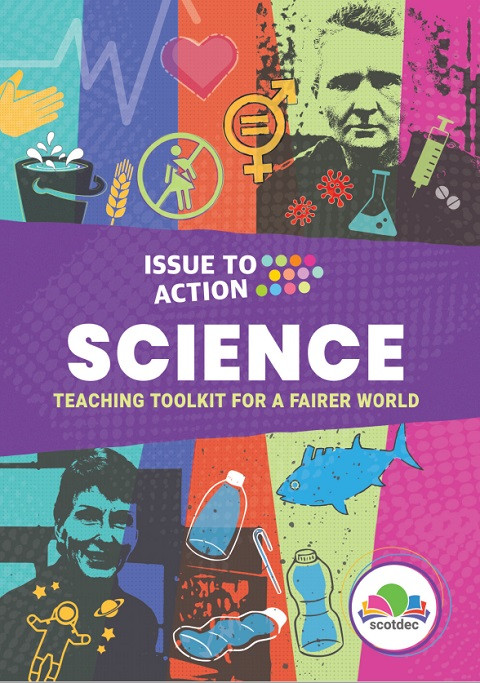 Issue to Action: Science; Teaching Toolkit for a Fairer World Year of publication: 2020 Author: Tracey Shaw | Claire Tatar | Krissie Davis Corporate author: Scotdec | European Union (EU) Global Citizenship Education is essential in enabling young people to access and participate in shaping modern society. All teachers and subjects have a role to play in educating young people to enable them to participate as fully as possible in building a fair and just world for all. Global Citizenship provides a wealth of real-life contexts for learning Science. By using relevant and meaningful topics, young people are more motivated to learn and understand the key role Science plays in driving change for a more sustainable future. The materials in this resource have been written by Science teachers and tested in Scottish classrooms. They focus on sustainability, plastic waste, health and wellbeing and women in Science.
  Responding to Covid-19: Online Classes in Korea - A Challenge Toward the Future of Education Year of publication: 2020 Corporate author: Korea R. Ministry of Education Korea is effectively responding to the outbreak of COVID-19 by adopting a whole-of-government approach, under the leadership of the Central Disaster and Safety Countermeasures Headquarters to prevent and contain the pandemic with the principle of “openness, transparency and democratic process.” The nationwide introduction of the online classes to respond to COVID-19 was a huge challenge and a path that we have never trodden before. The Ministry of Education of the Republic of Korea introduced Korean education with the world in response to COVID-19 and shared experiences and challenges of distance learning and online education. COVID-19 is a universal challenge which requires joint response, and the global community should be committed to strong solidarity and close cooperation to overcome this crisis and take a leap forward to a brighter future. 코로나19 대응: 한국의 온라인개학 - 미래교육을 위한 도전 Year of publication: 2020 Corporate author: Korea R. Ministry of Education 대한민국 교육부가 한국의 온라인 개학을 통한 교육분야의 코로나19 대응을 해외에 소개하고 경험을 공유하기 위해 발간한 자료로 원격교육과 온라인 교육의 사례와 미래교육이 당면한 도전과제에 대해서 다루고 있다. 코로나19는 세계가 함께 극복해 나가야 할 공동 과제로서 모든 국가가 상호 연대와 협력을 통해 난관을 극복하고 도약할 수 있을 것이라고 전망한다.
 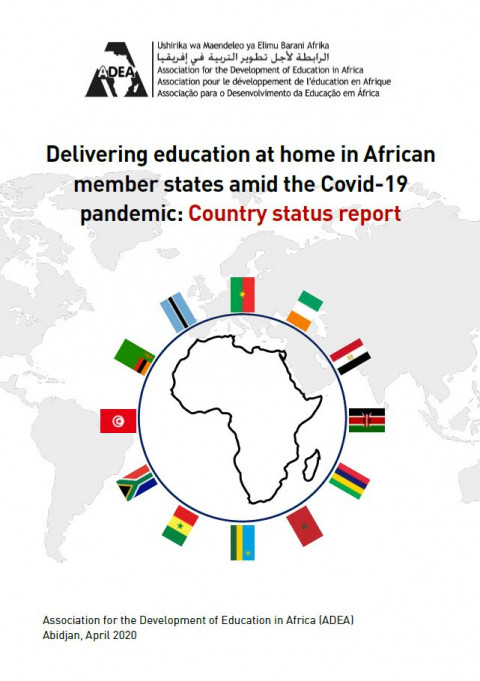 Assurer l’éducation à domicile dans les États membres africains dans le contexte de la pandémie de COVID-19 : rapport sur la situation dans les pays Year of publication: 2020 Corporate author: Association for the Development of Education in Africa (ADEA) Depuis son émergence à la fin de 2019, la maladie à coronavirus 2019 (COVID-19) est devenue une pandémie, affectant fortement la vie de milliards de personnes à travers le monde, avec un impact énorme prévu sur l'économie mondiale et l'Afrique en particulier. L'éducation est l'un des secteurs les plus touchés, la fermeture des établissements d'enseignement dans de nombreux pays africains risquant d'affecter négativement la qualité de l'éducation.Afin d'obtenir une vision plus claire de l'état de l'apprentissage au cours de cette période et de mieux soutenir les pays dans l'immédiat, à court et à long terme, l'ADEA a engagé en mars 2020 certains des pays africains les plus touchés pour schématiser la situation nationale du secteur de l'éducation. Ce qui précède est un résumé des commentaires reçus par l'Afrique du Sud, le Burkina Faso, la Côte d'Ivoire, l'Égypte, le Ghana, le Kenya, l’île Maurice, le Maroc, le Rwanda, le Sénégal, la Tunisie et la Zambie en termes de stratégies nationales, de plateformes, d'outils ou d'applications d’apprentissage, de lacunes et défis, d’engagement des partenaires, de bonnes pratiques et d’enseignements tirés avec quelques recommandations.
  Palestine & Israel: How Will There Be a Just Peace?; A Citizenship Education Resource for Transition Year and Key Stage 4 based on Human Rights and International Law Year of publication: 2012 Author: Mary Gannon | Elaine Murtagh Corporate author: City of Dublin Vocational Education Committee (CDVEC). Curriculum Development Unit | Centre for Cross Border Studies This resource is an important development in helping post-primary students throughout the island of Ireland to explore the Palestinian Israeli situation within the context of Human Rights and International Law.The resource addresses key issues underlying the origins of the conflict and current obstacles to bringing about a just peace.
  우리는 세계시민: 나눔을 위한 배움; 중등 편 Year of publication: 2013 Author: 고아라 | 고영주 | 김영미 | 성은경 | 홍지영 Corporate author: KOICA ODA 교육원 | 국제개발협력민간협의회 우리는 세계시민(중등편)은 상호연계성, 인권, 빈곤, 국제개발 진로 등을 주제로 한 세계시민교육 교사용 교수학습자료이다. 학생용 워크북 및 선택활동이 포함되어 있다.
  Thinkpiece: Are We Changing the World?; Reflections on Development Education, Activism and Social Change Year of publication: 2015 Author: Stephen McCloskey Corporate author: Centre for Global Education (CGE) This article has been published as part of a one year development education project delivered by the Centre for Global Education and funded by Trócaire. It aims to support reflection and debate on how development educators engage the public on international development issues. The article comes on the back of recent research, most notably Oxfam’s Finding Frames report, which suggests that the development sector is struggling to enhance and sustain citizenship engagement on the structural causes of poverty and inequality. The article probes some of the factors that may underpin this lack of engagement both within the development education sector specifically and the wider development sector more generally. It examines some of the challenges involved in engaging learners in actions on global issues. Some of these challenges relate to the sectors and environmental pressures in which development educators operate which can thwart in-depth engagement with learners.