
Resources
Explore a wide range of valuable resources on GCED to deepen your understanding and enhance your research, advocacy, teaching, and learning.
3,559 Results found
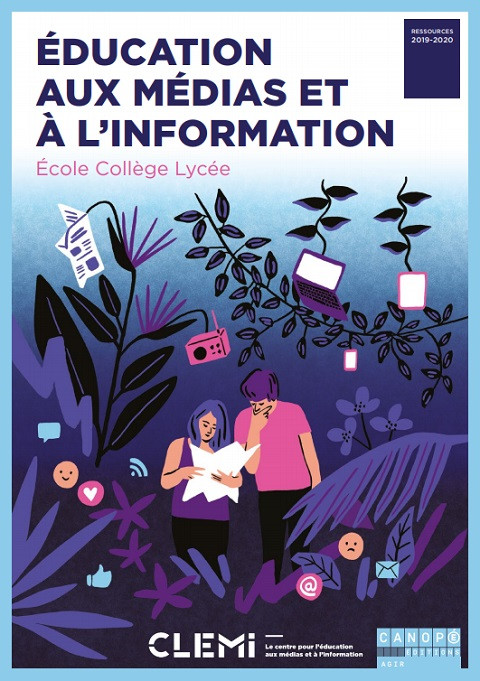 Éducation aux médias et à l’information: École collège lycée Year of publication: 2019 Corporate author: Centre pour l’éducation aux médias et à l’information (CLEMI) | Réseau Canopé Cette édition 2019-2020 a été entièrement revue et augmentée afin d'approcher au mieux les besoin des nouveaux enseignants. Elle s'adresse aussi bien au 1er qu'au 2nd degré.Vous y trouverez notamment : Les informations pratiques (socle commun, textes réglementaires...) et les dispositifs du CLEMI (Semaine de la presse et des médias dans l'école, Concours Médiatiks, #ZéroCliché...), afin de présenter les enjeux de l'Éducation aux médias et à l'information et les moyens proposés par le CLEMI pour la mettre en œuvre .Le focus Déclic' Critique, qui présente des exemples d'ateliers proposés en classe par le CLEMI et explique comment utiliser ces séquences pour développer l'esprit critique des élèves.Une partie est consacrée aux médias scolaires, à la fois pour encourager cette pratique mais aussi mieux la valoriser.Dans la partie 1er degré, vous trouverez les ressources nécessaires pour découvrir la presse, vérifier les images sur internet ou encore analyser un journal télévisé.La partie 2nd degré va s'intéresser à la publicité cachée, au journalisme de vérification, mais aussi aux nouveaux formats de l'info, comme la «story».
 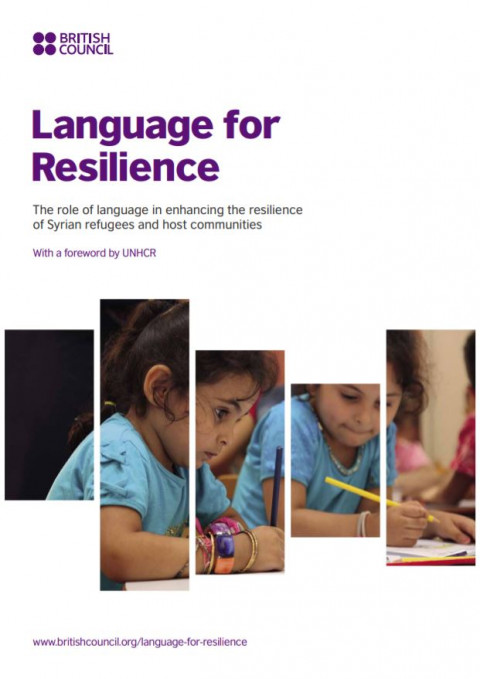 اللغة لتعزيز القدرة على مواجهة الأزمات: فهم الدور الذي تؤديه اللغة في تعزيز قدرة اللاجئين السوريين والمجتمعات المستضيفة لهم على مواجهة الأزمات Year of publication: 2018 Author: Tony Capstick | Marie Delaney Corporate author: British Council | UN. Office of the United Nations High Commissioner for Refugees (UNHCR) يستند التقرير الى دروس مستفادة من برامج اللغة الانجليزية التي يقدمها المجلس الثقافي البريطاني، ويستخدم كمرجع في تطوير البرامج المستقبلية الخاصة بتعليم اللغات للمتأثرين بالأزمة السورية. Language for Resilience: The Role of Language in Enhancing the Resilience of Syrian Refugees and Host Communities Year of publication: 2018 Author: Tony Capstick | Marie Delaney Corporate author: British Council | UN. Office of the United Nations High Commissioner for Refugees (UNHCR) The Language for Resilience report examines the impact of language on refugees and host communities affected by the Syrian crisis, identifying the different ways that language skills enhance resilience and providing suggestions for programme responses that address key needs.The report shows that for children and young people attending schools or post-school education, and for educators in host communities handling influxes of refugee students, quality language learning improves attainment and attendance and builds safer and more inclusive classrooms. It also illustrates how creative approaches to language education can support the development of life skills and help meet psycho-social needs.
  Global Education for Ontario Learners: Practical Strategies; A Summary of Research Year of publication: 2018 Author: Caroline Manion | Nadya Weber Corporate author: Ontario (Canada). Ministry of Education This summary report flows from the policy outlined in Ontario’s Strategy for K–12 International Education (OME, 2015). The report highlights current knowledge about good and/or promising practices in global education in order to suggest practical strategies for improved teaching, learning, and achievement. The intended audience for this piece includes all education stakeholders – community members, parents, learners, system leaders, school leaders, and educators – as active agents of change in support of an education strategy designed to integrate global perspectives, cultures, and experiences in the curriculum and learning environment. The purpose is to enable students to develop the competencies they will need to thrive as citizens in an increasingly globalized world.
  Manual for Teachers and Educators: To Empower Young People on Sdgs and Migration Year of publication: 2018 Corporate author: Start the Change | European Union (EU) The Start the Change project aims to improve education provision linked to the Sustainable Development Goals (SDGs) in 12 European countries, with a special emphasis on the relationship between migration and global inequality, and contributing to the fulfilment of the 2030 Agenda for Sustainable Development.The first part of the guide (THINK) describes the educational model proposed by Start the Change. Service Learning gives an overview of a pedagogical approach that promotes a new perspective to acquiring global citizenship knowledge, skills and attitudes - not just in the classroom but also through direct experience of working on real issues in the community. MANUAL TO INSPIRE: START THE CHANGE 11 Participative methodologies are the basis of all good global citizenship education, and youth empowerment can be enhanced through peer to peer approaches. The second part of the guide (LEARN) is dedicated to enhancing teachers’ and educators’ knowledge of the contents of the project: the Sustainable Development Goals, inequality and migration issues. Storytelling can be used to develop short film storylines on Start the Change issues. Educational activities can be enriched by using ICT to promote global learning and include voices and experiences from the Global South. The third part of the guide (DO) is dedicated to activities and methodologies to help young people explore these issues and inspire them to take action in their communities.
  An Analysis of the Cultural Position of Educational Reform in the Context of Multiculturalism Year of publication: 2019 Author: Xu Zusheng | Yang Zhaoshan Corporate author: Theory Monthly In the context of the multicultural era, education reforms based on the requirements of political and economic development and reform also need to pay attention to attitudes and tendencies toward different cultures. Upholding the main position of Chinese culture and properly handling relationships with Western cultures are the prerequisites for successful education reform. The cultural standpoint of China’s educational reform has undergone nearly a hundred years of historical evolution, and finally precipitated the cultural position of China’s educational reform: we must adhere to the cultural position of opening to the outside world, the cultural standpoint of Marxist guidance, and the cultural position of Chinese educational subjectivity. To establish the cultural standpoint of China’s educational reform, it is necessary to take “Ma Xue as the soul, middle school as the body and western learning as the method” as the correct path for the cultural position of China’s educational reform. 多元文化背景下教育改革的文化立场分析 Year of publication: 2019 Author: Xu Zusheng | Yang Zhaoshan Corporate author: Theory Monthly 在多元文化的时代背景下,基于政治经济发展变革要求的教育改革也需要关注对待不 同文化的态度和倾向性,秉持中国文化的主体立场处理好与西方文化的关系,是教育改革取得成 功的前提。我国教育改革的文化立场经历了近百年的历史演变,最终沉淀出中国教育改革的文 化立场:要坚持对外开放的文化立场、坚持马克思主义指导的文化立场、坚持中国教育主体性的 文化立场。确立中国教育改革的文化立场需要将“马学为魂、中学为体、西学为用”作为中国教育 改革文化立场选择的正确道路。
  Modern Context and Education Choice of Multi-culture Year of publication: 2019 Author: Yuanmei | Sun Jieyuan Corporate author: Contemporary Education and Culture Multi-culture is a generic term for diverse cultures existing in a society, country or nation, which is a nation that reflexes differences in value standards, thoughts and ideas, and behaviors and actions among varied people. Multi-culture, in modern context, is to face cultural differences hold that different groups of people have basic rights and that people with different classes and cultures should all be accepted and understood, and highlight the main role, relatively and complementary of all quality, education fairness, a balanced education as well as educational dynamism. Therefore, we should create multicultural teachers. Besides, we should implement multicultural courses and positively foster more multicultural teaching, adopt diverse assessment and evaluation methods and promote appropriate and efficient multicultural education, thus addressing the problems of unbalanced and inadequate educational development, creation more dynamic education environment and delivering more fair and quality education. 多元文化的现代语境与教育选择 Year of publication: 2019 Author: Yuanmei | Sun Jieyuan Corporate author: Contemporary Education and Culture 多元文化指在一个社会、国家或民族中所存在的多种文化的总称,反映了人类不同群体之间价值规范、思 想观念乃至行为方式上的差异。现代意义上的多元文化正视文化差异,坚持不同团体都拥有基本的权利,不 同 阶 层、 不同文化的人都应被接受、被理解,强调文化的主体性、相对性与互补性。现代多元文化教育具有积极的价值,有助 于提升教育质量、促进教育公平、推进教育均衡、增强教育活力。因此,需要通过创建多元文化校园环境、深入开发 多元文化课程、自觉培养多元文化教师、积极实施多元文化教学、采取多样化的考核评价等方式,积极推进合理有效 的多元文化教育,以促进教育发展不平衡不充分问题的解决,创造充满活力的教育和提供公平优质的教育。
  Review on the Localization of Multicultural Education Theory in China Year of publication: 2019 Author: Xu Kefeng | Hupaio Corporate author: Contemporary Education and Culture According to the quantitative statistics and content analysis of the literature, the localization of the multicultural education theory in China has gone through three stages: the main achievement is the translation and introduction of the western multicultural education thought; the second stage is the high-speed growth period, the main achievement is the multicultural education theory. At present, it is in the third stage and the growth rate of literature slows down, which means that new theoretical breakthroughs are being sought in this field.