
Resources
Explore a wide range of valuable resources on GCED to deepen your understanding and enhance your research, advocacy, teaching, and learning.
3,559 Results found
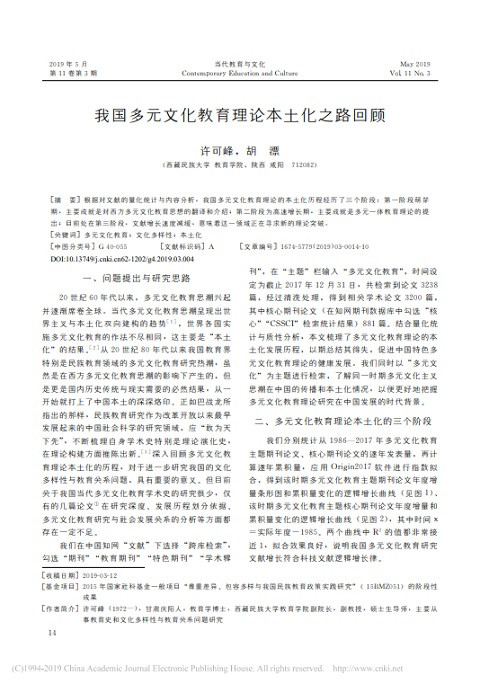 我国多元文化教育理论本土化之路回顾 Year of publication: 2019 Author: Xu Kefeng | Hupaio Corporate author: Contemporary Education and Culture 根据对文献的量化统计与内容分析,我国多元文化教育理论的本土化历程经历了三个阶段:第 一 阶 段 萌 芽 期,主要成就是对西方多元文化教育思想的翻译和介绍;第二阶段为高速增长期,主要成就是多元一体教育理论的提 出;目前处在第三阶段,文献增长速度减缓,意味着这一领域正在寻求新的理论突破。
  Development Education: What Is It and Why Get Involved? Year of publication: 2017 Corporate author: WorldWise Global Schools (WWGS) Global Citizenship Education (GCE) is an educational process aimed at increasing awareness and understanding of the rapidly changing, interdependent and unequal world in which we live. This video explores what we mean by Development Education (DE), as also known as Global Citizenship Education, what value it has for students and what supports are available to help schools doing it.
 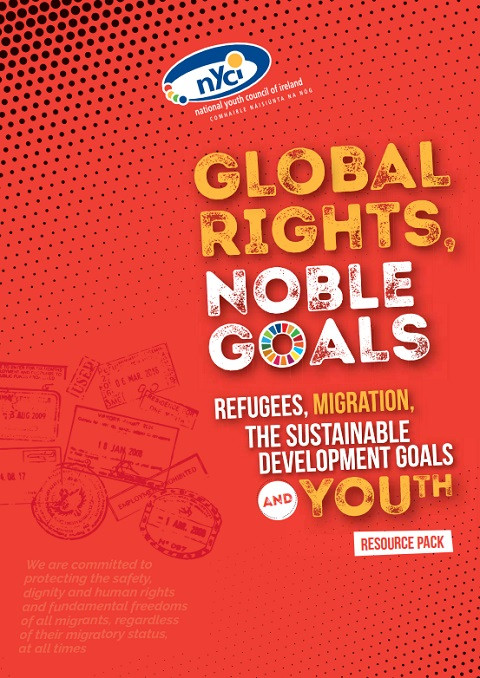 Global Rights, Nobel Goals: Refugees, Migration, the Sustainable Development Goals and Youth; Resource Pack Year of publication: 2016 Author: Valerie Duffy | Leo Gilmartin | Grace McManus | Dermot O’Brien Corporate author: National Youth Council of Ireland (NYCI) This resource pack explores the terms around migration (asylum seeker, refugee, internally displace peoples etc), the reasons that people choose or are forced to migrate and makes connections with the SDGs. It also includes a great selection of activities for young people at different ages and stages.
  Mosaico Metodológico: Camino 5; La escuela como sujeto colectivo en el conflicto armado y la construcción de paz Year of publication: 2019 Corporate author: EDUCAPAZ Esta publicación recoje el trabajo desarrollado por el Programa Nacional de Educación para la Paz EDUCAPAZ y a Comisión de la Verdad en Colombia, para el trabajo pedagógico en escuelas que quieran reflexionar sobre el valor de la verdad en la reconstrucción de la memoria, el perdón y la reconciliación. Este módulo explora la relación de la escuela con el conflicto armado.
  Methodological Mosaic: Path 1; The Value of Truth in School Coexistence Year of publication: 2019 Corporate author: EDUCAPAZ This publication reflects the work carried out by the National Program of Education for Peace EDUCAPAZ and the Truth Commission in Colombia, for education in schools that want to reflect on the value of truth in the reconstruction of memory, forgiveness and reconciliation. This module explores the relationship with school coexistence.
 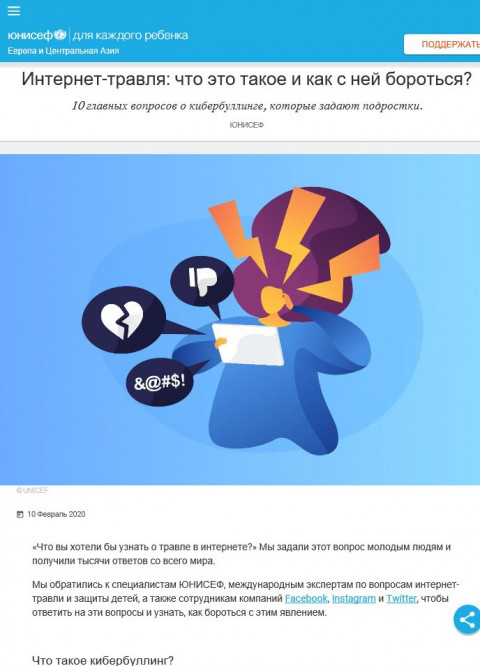 Internet Bullying: What is It and How to Deal with It? ; Top 10 Cyberbullying Questions Asked by Teens Year of publication: 2020 Corporate author: UNICEF Europe and Central Asia In the article, UNICEF experts, international experts on Internet bullying and child protection, as well as employees of Facebook, Instagram and Twitter, answer questions about how to deal with Internet bullying. Top 10 Cyberbullying Questions: How to understand that I am being harassed on the Internet? How to distinguish a joke from bullying? How does Internet bullying affect a person? Who should I talk to if someone is chasing me on the Internet? Why is it important to report bullying? I am being harassed by the Internet, but I’m afraid to talk to my parents about it. How do I turn to them for help? How can I help my friends report online bullying, especially if they don’t want to do this? The Internet gives me access to a lot of information, but it also means that I can become a victim of online violence. How can you protect yourself from cyberbullying without refusing to use the Internet? How to avoid using my personal information to manipulate or humiliate me on social networks? Is there any punishment for Internet harassment? Internet companies are not trying to solve the problem of cyberbullying. Are they responsible for this? Are there any online tools to combat bullying of children or youth? Интернет-травля: что это такое и как с ней бороться? ; 10 главных вопросов о кибербуллинге, которые задают подростки Year of publication: 2020 Corporate author: UNICEF Europe and Central Asia В статье специалисты ЮНИСЕФ, международные эксперты по вопросам интернет-травли и защиты детей, а также сотрудники компаний Facebook, Instagram и Twitter отвечают на вопросы о том, как бороться с интернет травлей. 10 главных вопросов о травле в интернете: Как понять, что меня преследуют в интернете? Как отличить шутку от травли? Как интернет-травля влияет на человека? С кем мне поговорить, если кто-то преследует меня в интернете? Почему важно сообщать о случаях травли? Я подвергаюсь интернет-травле, но боюсь поговорить с родителями об этом. Как мне обратиться к ним за помощью? Как мне помочь друзьям сообщить об интернет-травле, особенно, если они не хотят этого делать? Интернет дает мне доступ к большому количеству информации, но это также означает, что я могу стать жертвой насилия в сети. Как можно оградить себя от кибербуллинга, не отказываясь от использования интернета? Как избежать использования моей личной информации для манипуляции или унижения меня в соцсетях? Существует ли какое-то наказание за интернет-травлю? Интернет-компании не пытаются решить проблему кибербуллинга. Несут ли они за это ответственность? Существуют ли какие-нибудь онлайн-инструменты для борьбы с травлей детей или молодёжи?
  Action on Global Citizenship: Teacher Toolkit Year of publication: 2017 Author: Gráinne Ryan | Deirdre Walsh Corporate author: Global Action Plan (GAP) Ireland | Irish Aid This toolkit aims to support educators to empower their students in becoming active global citizens in their schools and communities, with a range of activities and resources which align to the Irish Curriculum, whilst using active learning methodologies in an engaging and fun way.
  A How-to Guide to Global Citizenship Education: Teacher Handbook Year of publication: 2019 Corporate author: WorldWise Global Schools (WWGS) | Irish Aid This guide is for post-primary schools that are working to embed Global Citizenship Education (GCE) into their school community, and are part of the WorldWise Global Schools (WWGS) Programme. It aims to support schools to integrate Global Citizenship Education and create global citizens in their schools. Whether you are just starting to explore, or you are experienced in Global Citizenship Education, this handbook will help to guide your GCE practice and offer some suggestions as to how you can approach your GCE work and engage with the WWGS programme.
 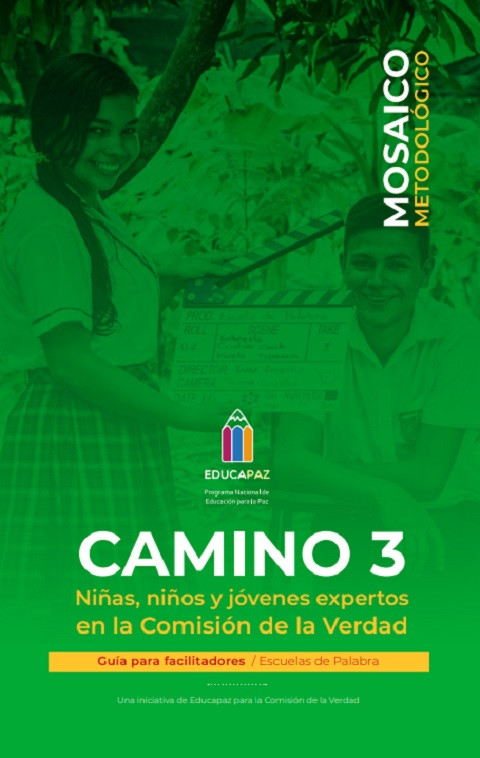 Mosaico Metodológico: Camino 3; Niñas, niños y jóvenes expertos en la Comisión de la Verdad Year of publication: 2019 Corporate author: EDUCAPAZ Esta publicación recoje el trabajo desarrollado por el Programa Nacional de Educación para la Paz EDUCAPAZ y a Comisión de la Verdad en Colombia, para el trabajo pedagógico en escuelas que quieran reflexionar sobre el valor de la verdad en la reconstrucción de la memoria, el perdón y la reconciliación. Este módulo presenta estrategias para educar a niños, niñas y jóvenes sobre la comisión de la verdad.