
Resources
Explore a wide range of valuable resources on GCED to deepen your understanding and enhance your research, advocacy, teaching, and learning.
3,559 Results found
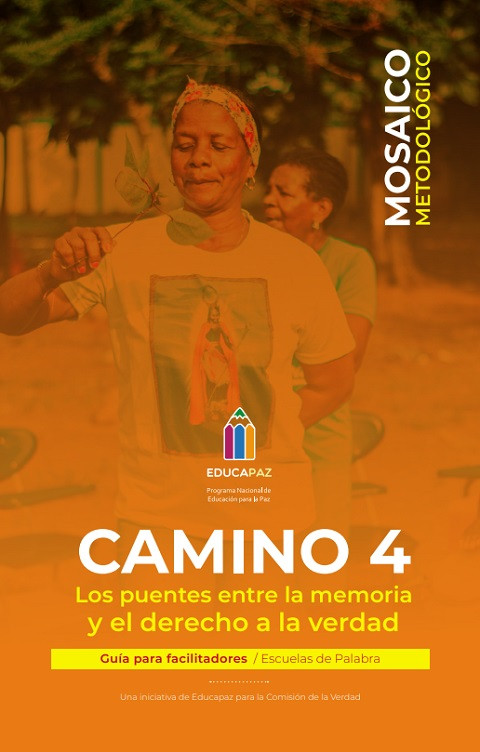 Methodological Mosaic: Path 4; The Bridges Between Memory and the Right to the Truth Year of publication: 2019 Corporate author: EDUCAPAZ This publication reflects the work carried out by the National Program of Education for Peace EDUCAPAZ and the Truth Commission in Colombia, for education in schools that want to reflect on the value of truth in the reconstruction of memory, forgiveness and reconciliation. This module investigates the relationship between truth and memory. Mosaico Metodológico: Camino 4; Los puentes entre la memoria y el derecho a la verdad Year of publication: 2019 Corporate author: EDUCAPAZ Esta publicación recoje el trabajo desarrollado por el Programa Nacional de Educación para la Paz EDUCAPAZ y a Comisión de la Verdad en Colombia, para el trabajo pedagógico en escuelas que quieran reflexionar sobre el valor de la verdad en la reconstrucción de la memoria, el perdón y la reconciliación. Este módulo indaga sobre la relación entre la verdad y la memoria.
 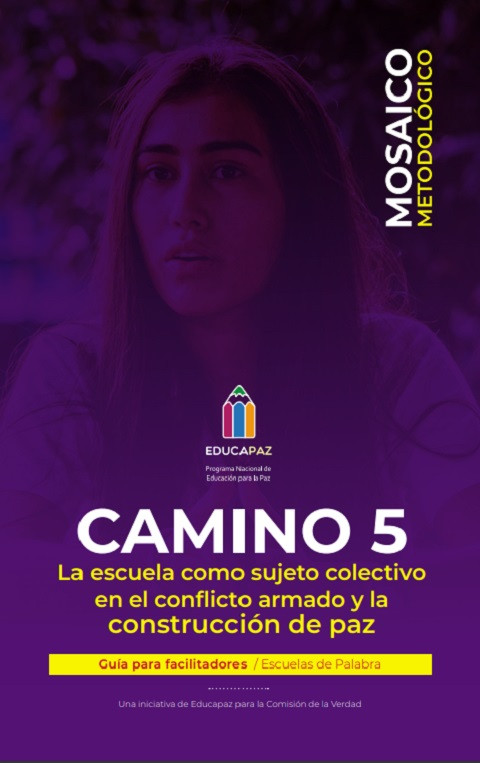 Methodological Mosaic: Path 5; The School as a Collective Subject in the Armed Conflict and Peace Building Year of publication: 2019 Corporate author: EDUCAPAZ This publication reflects the work carried out by the National Program of Education for Peace EDUCAPAZ and the Truth Commission in Colombia, for education in schools that want to reflect on the value of truth in the reconstruction of memory, forgiveness and reconciliation. This module explores the relationship of the school to the armed conflict.
 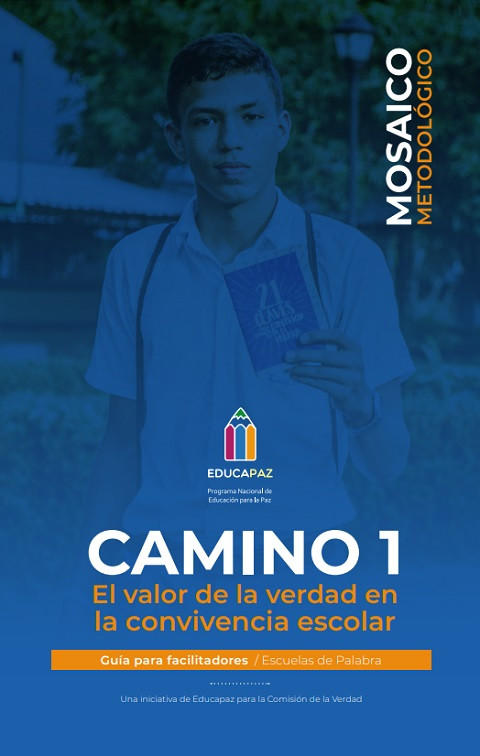 Mosaico Metodológico: Camino 1; El valor de la verdad en la convivencia escolar Year of publication: 2019 Corporate author: EDUCAPAZ Esta publicación recoje el trabajo desarrollado por el Programa Nacional de Educación para la Paz EDUCAPAZ y a Comisión de la Verdad en Colombia, para el trabajo pedagógico en escuelas que quieran reflexionar sobre el valor de la verdad en la reconstrucción de la memoria, el perdón y la reconciliación. En este módulo se explora la relación con la convivencia escolar.
 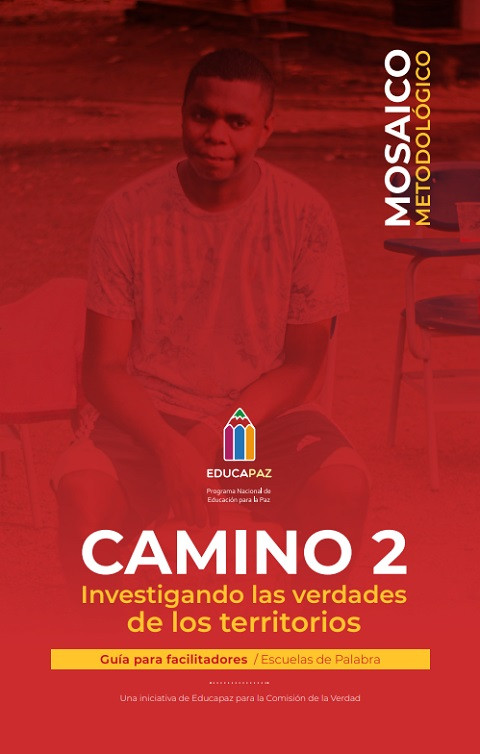 Methodological Mosaic: Path 2; Investigating the Truths of the Territories Year of publication: 2019 Corporate author: EDUCAPAZ This publication reflects the work carried out by the National Program of Education for Peace EDUCAPAZ and the Truth Commission in Colombia, for education in schools that want to reflect on the value of truth in the reconstruction of memory, forgiveness and reconciliation. This module explores the relationship with territories and the construction of truth. Mosaico Metodológico: Camino 2; Investigando las verdades de los territorios Year of publication: 2019 Corporate author: EDUCAPAZ Esta publicación recoje el trabajo desarrollado por el Programa Nacional de Educación para la Paz EDUCAPAZ y a Comisión de la Verdad en Colombia, para el trabajo pedagógico en escuelas que quieran reflexionar sobre el valor de la verdad en la reconstrucción de la memoria, el perdón y la reconciliación. Este módulo explora la relación con los territorios y la construcción de la verdad.
 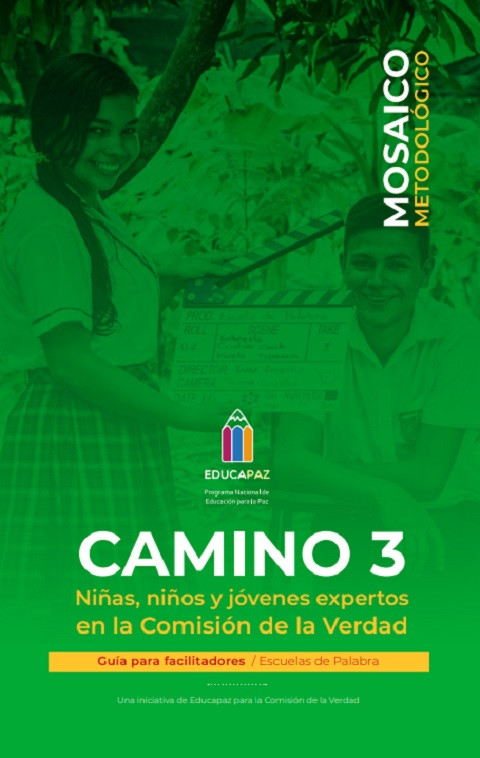 Methodological Mosaic: Path 3; Girls, Boys and Young Experts in the Truth Commission Year of publication: 2019 Corporate author: EDUCAPAZ This publication reflects the work carried out by the National Program of Education for Peace EDUCAPAZ and the Truth Commission in Colombia, for education in schools that want to reflect on the value of truth in the reconstruction of memory, forgiveness and reconciliation. This module presents strategies to educate children and young people about the truth commission.
 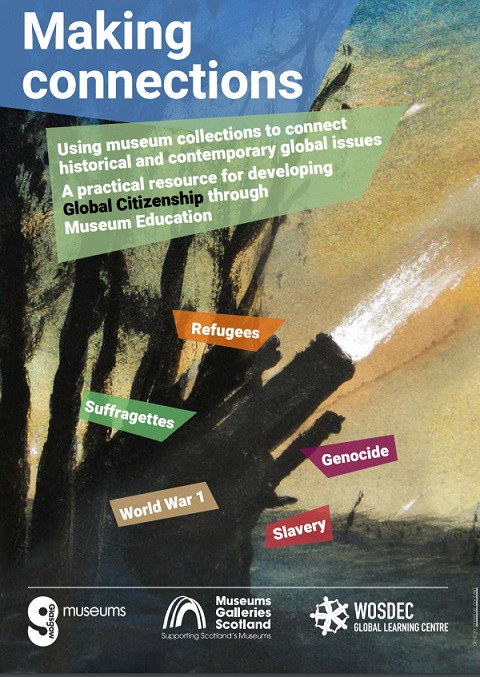 Making Connections: Using Museum Collections to Connect Historical and Contemporary Global Issues; A Practical Resource for Developing Global Citizenship through Museum Education Year of publication: 2019 Corporate author: Glasgow Museums | Museums Galleries Scotland | West of Scotland Development Education Centre (WOSDEC) Looking at Refugees, Genocide, World War I, Suffragettes and Slavery, this is a practical resource to support educators to connect historical and contemporary global issues and develop the skills, values and attitudes of Global Citizenship through museum collections. The tasks and activities contained within this resource are aimed at providing ideas for museum educators and can work either in a gallery or classroom setting. Many of the techniques and approaches are transferrable to a range of different themes and collections.
  Audacious Education Purposes: How Governments Transform the Goals of Education Systems Year of publication: 2020 Author: Fernando Reimers This open access book offers a comparative study of eight ambitious national reforms that sought to create opportunities for students to gain the necessary breath of skills to thrive in a rapidly changing world. It examines how national governments transform education systems to provide students opportunities to develop such skills. It analyses comprehensive education reforms in Brazil, Finland, Japan, Mexico, Peru, Poland, Portugal and Russia and yields original and important insights on the process of educational change. The analysis of these 21st century skills reforms shows that reformers followed approaches which are based on the five perspectives: cultural, psychological, professional, institutional and political. Most reforms relied on institutional and political perspectives. They highlight the systemic nature of the process of educational change, and the need for alignment and coherence among the various elements of the system in order. They underscore the importance of addressing the interests of various stakeholders of the education system in obtaining the necessary impetus to initiate and sustain change. In contrast, as the book shows, the use of a cultural and psychological frame proved rarer, missing important opportunities to draw on systematic analysis of emerging demands for schools and on cognitive science to inform the changes in the organization of instruction. Drawing on a rich array of sources and evidence the book provides a careful account of how education reform works in practice.
 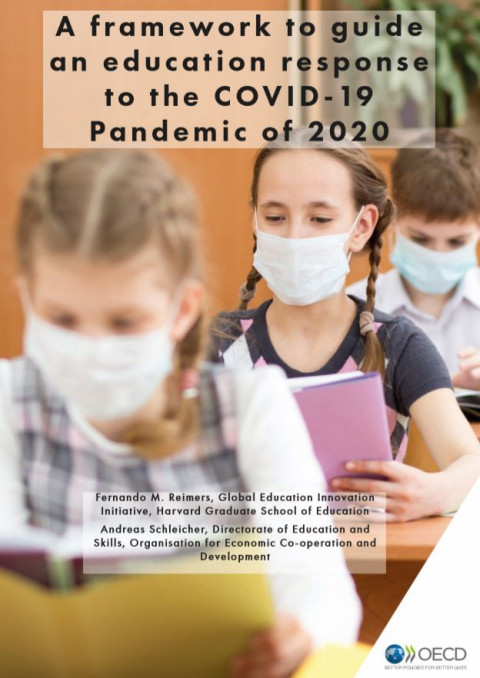 A Framework to Guide an Education Response to the COVID-19 Pandemic of 2020 Year of publication: 2020 Author: Fernando Reimers | Andreas Schleicher Corporate author: Organisation for Economic Co-operation and Development (OECD) This report aims at supporting education decision making to develop and implement effective education responses to the COVID-19 Pandemic. The report explains why the necessary social isolation measures will disrupt school-based education for several months in most countries around the world. Absent an intentional and effective strategy to protect opportunity to learn during this period, this disruption will cause severe learning losses for students.The report proposes that leaders of education systems and organizations develop plans for the continuation of education through alternate modalities, during the period of necessary social isolation. It offers a framework of areas to be covered by such plans.