
Resources
Explore a wide range of valuable resources on GCED to deepen your understanding and enhance your research, advocacy, teaching, and learning.
3,559 Results found
 Un cadre pour guider une réponse éducative à la Covid-19 en cas de pandémie de 2020 Year of publication: 2020 Author: Fernando Reimers | Andreas Schleicher Corporate author: Organisation for Economic Co-operation and Development (OECD) Ce rapport vise à appuyer la décision de l'éducation faisant de développer et mettre en œuvre des réponses éducatives efficaces au Covid-19 en cas de pandémie. Le rapport explique pourquoi les mesures d'isolement social nécessaires perturberont l'éducation en milieu scolaire pendant plusieurs mois dans la plupart des pays à travers le monde. En l'absence d'une stratégie délibérée et efficace pour protéger l'occasion d'apprendre au cours de cette période, cette perturbation entraîne des pertes sévères d'apprentissage pour les étudiants.Le rapport propose que les dirigeants des systèmes d'éducation et les organisations à élaborer des plans pour la poursuite de l'éducation des modalités alternatives, au cours de la période d'isolement social nécessaire. Il offre un cadre de zones à couvrir par ces plans.
  [Summary] Teaching and Learning for the Twenty-first Century: Educational Goals, Policies, and Curricula From Six Nations Year of publication: 2016 Author: Fernando Reimers | Connie K. Chung Corporate author: Global Education Innovation Initiative The book aims to foster discussions on how national education policies support students to prepare for life, work and civic participation in the 21st century. It examines six countries—Chile, China, India, Mexico, Singapore, and the United States—exploring how each one defines, supports, and cultivates those competencies that students will need in order to succeed in the current century. [Resumen] Enseñanza y aprendizaje en el siglo XXI : Metas, políticas educativas y currículo en seis países Year of publication: 2016 Author: Fernando Reimers | Connie K. Chung Corporate author: Global Education Innovation Initiative Este libro pretende promover discusiones sobre cómo las políticas educativas nacionales ayudan a los estudiantes a prepararse para la vida, el trabajo y la participación ciudadana en el siglo XXI. Revisa además cómo los objetivos educativos, los retos y las oportunidades que se perciben, reflejan los contextos histórico, político, y cultural de los sistemas educativos, los cuales a su vez varían en tamaño, mecanismos de gobernanza y condiciones demográficas, entre otros factores.
  Supporting the Continuation of Teaching and Learning during the COVID-19 Pandemic: Annotated Resources for Online Learning Year of publication: 2020 Author: Fernando Reimers | Andreas Schleicher | Jaime Saavedra | Saku Tuominen Corporate author: Organisation for Economic Co-operation and Development (OECD) | Global Education Innovation Initiative | HundrED This resource discusses the second module of a series which presents the results of a comparative analysis of emerging educational needs and responses as the pandemic unfolds across countries around the world. The overall goal of this series is to facilitate the rapid design process and implementation of adaptive responses to the emerging education challenges, and to protect young people’s educational opportunities during and following the pandemic. This second module presents a first set of online educational resources to support the continuity of teaching and learning during the 2019-20 COVID-19 Pandemic with education leaders around the world. The resources were compiled from responses to the same survey used to produce the first module: A framework to guide an education response to the COVID-19 Pandemic, and additional online sources were included to enhance the list in order to support the continuity of learning for students who have access to the internet and digital devices.
  Connecting Classrooms through Global Learning: Education for Sustainable Development and Global Citizenship; Preparing Pupils for Life in an Interconnected World Year of publication: 2020 Corporate author: British Council | UK aid This resource contributes to the development of pupils’ core skills, enabling them to think critically, to consider how to resolve problems, to take informed and reflective action and to develop personal leadership skills. During the course, pupils will analyse global issues, and will plan, implement and evaluate action. This course can be linked to a variety of curriculum areas, including English, Social Studies, Geography, Modern Foreign Languages, Maths, History and Art and Design. It can be used with or without an overseas partner school.
  Teach the Change: 8 Steps to Be a Global Teacher Year of publication: 2018 Corporate author: Start the Change | European Union (EU) These guidelines are a result of consultation with 45 teachers from across Europe, drawing on their combined experiences to reflect on the main challenges of developing educational activities on global issues and with a particular focus on the Sustainable Development Goals (SDGs) and migration.
 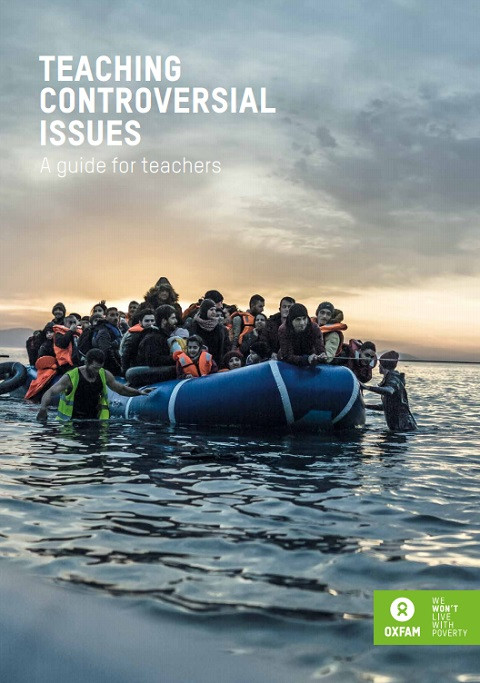 Teaching Controversial Issues: A Guide for Teachers Year of publication: 2018 Corporate author: Oxfam GB This revised and updated version of Oxfam’s popular guide recognises the changes in social and political contexts in recent years and seeks to support educators in their discussions with young people in this complex environment. In increasingly divisive and polarised times, the need for young people to feel confident in tackling controversial issues is more pressing than ever. Advances in technology and the rise of social media mean that it is more important than ever for young people to think critically to become effective global citizens.This guide explores:• What controversial issues are.• Reasons for teaching controversial issues.• The value of a global citizenship education approach.• Guidance and classroom strategies for handling and exploring controversial issues.• Some practical activities for teaching controversial issues.
  Issue to Action: English; Teaching Toolkit for a Fairer World Year of publication: 2020 Author: Stephanie Flett | Lesley Bloomer Corporate author: Scotdec | European Union (EU) These materials were created by English teachers in Scotland. The first activity introduces the need to hear multiple stories of the world and our place in it. There then follows three units with a focus on climate change, refugees and how we engage with the ‘other’. They include short introductory activities as well as a series of lessons exploring the topics in more detail. A range of stimuli is included – poetry, biography, images and film clips. All activities are mapped to Curriculum for Excellence benchmarks and reference the relevant SDG.
 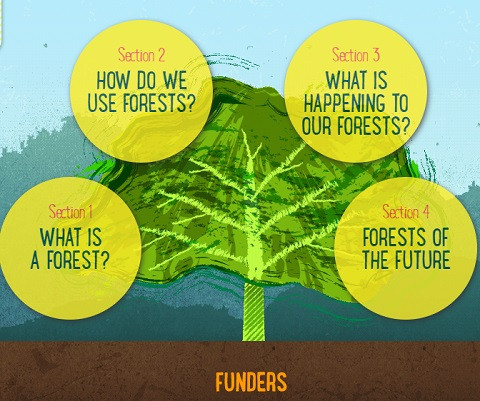 Our Forest, Our Future Corporate author: Scotdec This material helps teachers and pupils to explore the interdependence of people and forests and the vital role forests play in sustaining our environment – in the past, the present and hopefully the future. The Scots Pine forests in Scotland and the Congo Basin rainforest in Africa provide case studies through which pupils will begin to understand why our forests are under threat and the implications for our planet.In making connections between consumerism, people and the environment, pupils will be encouraged to see how they and their actions have an impact on the lives of others globally. It encourages reflection on the possible futures of the world's forests and ways of taking positive actions for a future where people and forests co-exist in a sustainable way. The resource is structured around a global citizenship framework devised by Oxfam.
 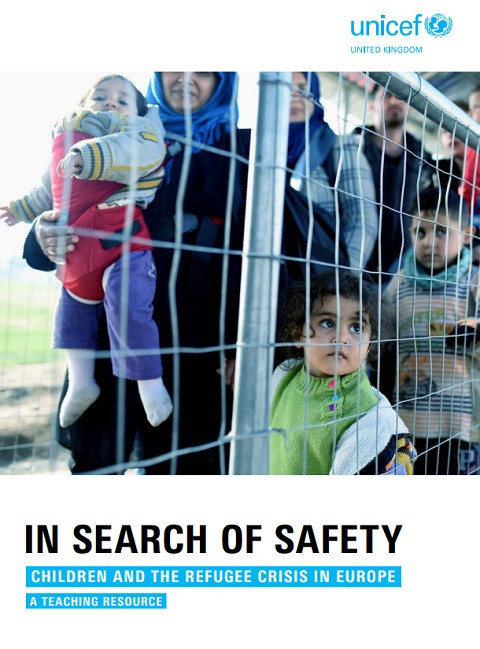 In Search of Safety: Children and the Refugee Crisis in Europe; A Teaching Resource Year of publication: 2016 Author: Carolyne Willow Corporate author: UNICEF UK This resource aims to allow teachers to help their students – primary (age seven upwards) and secondary – make sense of the current refugee and migrant crisis in Europe, within a children’s rights framework. It provides an historical overview of migration, contextualising the challenges we face today with a reminder of what has gone before. Guidance is provided to help you prepare for potentially difficult conversations and situations, and to enable you to be ready to access help for any child that needs it. The resource also includes ideas for extra activities by curriculum area, and ideas for whole-school activities. A range of films, images and information is provided and sign-posted to help you bring these activities to life.