
Resources
Explore a wide range of valuable resources on GCED to deepen your understanding and enhance your research, advocacy, teaching, and learning.
3,500 Results found
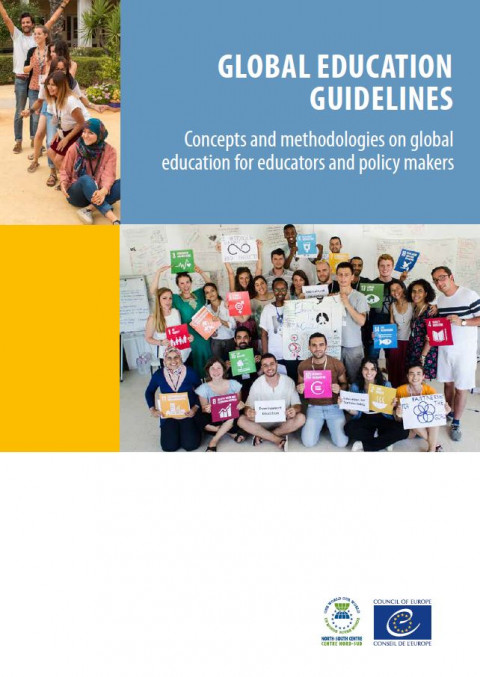 Guide Pratique sur l’Éducation à la Citoyenneté Mondiale 2019: Concepts et méthodologies en matière d’éducation à la citoyenneté mondiale à l’usage d’éducateurs et de responsables politiques Year of publication: 2019 Corporate author: North-South Centre of the Council of Europe | Conseil de l'Europe Ce guide pratique sur l’éducation à la citoyenneté mondiale répond à un besoin exprimé par les praticiens du réseau de la Semaine de l’éducation à la citoyenneté mondiale du Centre Nord-Sud du Conseil de l’Europe (CNS), lesquels ont manifesté leur désir de disposer d’un instrument commun, façonné à la lumière de l’expérience acquise par le réseau et d’autres partenaires, susceptibles d’aider les éducateurs à concevoir et à mener à bien des initiatives en matière d’ECM. La présente édition mise à jour du Guide inclut des nouveautés et répond aux défis inhérents à la rédaction d’un manuel facile à utiliser en : (i) introduisant le concept d’apprentissage fondé sur les compétences, conformément au Cadre de référence des compétences pour une culture démocratique du Conseil de l’Europe et au concept de compétence globale de l’OCDE, et en recourant à des exemples pratiques détaillés et à des outils conviviaux pour expliquer comment l’éducation à la citoyenneté mondiale peut utiliser l’apprentissage fondé sur les compétences pour autonomiser les apprenants; (ii) élargissant le contenu du chapitre sur la méthodologie et les méthodes par le biais d’un guide étape par étape conçu pour aider les praticiens, les éducateurs et les facilitateurs dans leur travail quotidien et d’une meilleure illustration des avantages inhérents au concept d’apprentissage fondé sur les compétences; et (iii) en incluant un nouveau chapitre sur l’éducation aux médias pour aider les praticiens et les apprenants à relever les défis actuels associés à la communication et au numérique.
  UNESCO Framework for Culture and Arts Education: Implementation Guidance Year of publication: 2025 Corporate author: UNESCO Culture and the arts are integral to inclusive, equitable and quality education. They nurture creativity, critical thinking, and respect for cultural diversity, empowering learners to engage meaningfully with the world and to build more just, sustainable and peaceful societies. Yet, countries have not systematically incorporated culture and arts education across all levels of education. This Implementation guidance for the UNESCO Framework for Culture and Arts Education is a collective invitation to reimagine education by placing culture and the arts at its heart and advancing a transformative vision of education for all.Through a holistic approach, the Guidance supports the integration of culture and the arts across formal, non-formal and informal education, throughout life. It offers practical orientations to help Member States fulfil the commitment enshrined in the UNESCO Framework for Culture and Arts Education, adopted by Ministers of Culture and Education in 2024. With a global perspective, this Guidance will equip policy-makers, educators and cultural actors in developing inclusive, context-relevant policies, curricula and learning environments.The Guidance is a milestone on a shared journey, inviting countries to harness their cultural strengths, respond to emerging challenges, and work together towards a more inclusive education for all. Pautas para una Educación Global: Manual para que las y los educadores entiendan e implementen una educación global Year of publication: 2019 Corporate author: North-South Centre of the Council of Europe | Council of Europe Esta guía práctica para la educación para la ciudadanía mundial responde a una necesidad expresada por los profesionales de la red de la Semana de Educación para la Ciudadanía Mundial del Centro Norte-Sur (CNS) del Consejo de Europa, quienes expresaron su deseo de tener un instrumento común, configurado a la luz de la experiencia adquirida por la red y otros socios, que pueden ayudar a los educadores a diseñar y llevar a cabo iniciativas en GCED. Esta guía práctica para la educación para la ciudadanía mundial responde a una necesidad expresada por los profesionales de la red de la Semana de Educación para la Ciudadanía Mundial del Centro Norte-Sur (CNS) del Consejo de Europa, quienes expresaron su deseo de tener un instrumento común, configurado a la luz de la experiencia adquirida por la red y otros socios, que pueden ayudar a los educadores a diseñar y llevar a cabo iniciativas en GCED.
 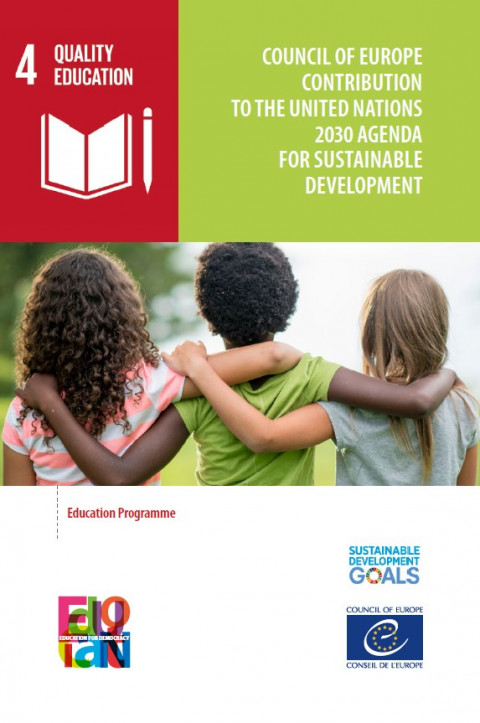 COUNCIL OF EUROPE CONTRIBUTION TO THE UNITED NATIONS 2030 AGENDA FOR SUSTAINABLE DEVELOPMENT Corporate author: Council of Europe On 1 January 2016, the World started implementing the “UN 2030 Agenda for Sustainable Development”, an ambitious and universal vision, based on 17 Sustainable Development Goals (SDGs) and 169 associated targets, which are all integrated, indivisible and interlinked. They apply universally to all and are highly relevant for the Council of Europe; countries are expected to take ownership and establish national frameworks for the achievement of the 17 goals. Most, if not all, of the Council of Europe’s activities are relevant and contribute to the implementation of the UN 2030 Agenda and the achievement of the SDGs. Recognising the intrinsic links between sustainable development and the protection of human rights, the Council of Europe is committed to working with and supporting its 47 member states in implementing the UN 2030 Agenda through a wide range of actions. CONTRIBUTION DU CONSEIL DE L'EUROPE AU PROGRAMME DE DÉVELOPPEMENT DURABLE A L’HORIZON 2030 DE L’ONU Corporate author: Conseil de l'Europe Le 1er janvier 2016, le monde a entrepris la mise en œuvre du «Programme de développement durable de l’ONU à l’horizon 2030», vision ambitieuse et universelle axée sur 17 Objectifs de Développement Durable (ODD) assortis de 169 cibles intégrées, indissociables et intimement liées. Les objectifs ont une application universelle et sont très pertinents pour le Conseil de l'Europe ; les États s’engagent à se les approprier et à définir des cadres nationaux de réalisation des 17 objectifs. La plupart des activités du Conseil de l'Europe, sinon toutes, peuvent contribuer à la mise en œuvre du Programme 2030 de l’ONU et à la réalisation des ODD. Reconnaissant les liens intrinsèques entre développement durable et protection des droits de l’homme, le Conseil de l'Europe s’attache à travailler avec ses 47 États membres et à les soutenir dans la mise en œuvre du Programme 2030 pour toute une série de mesures.
 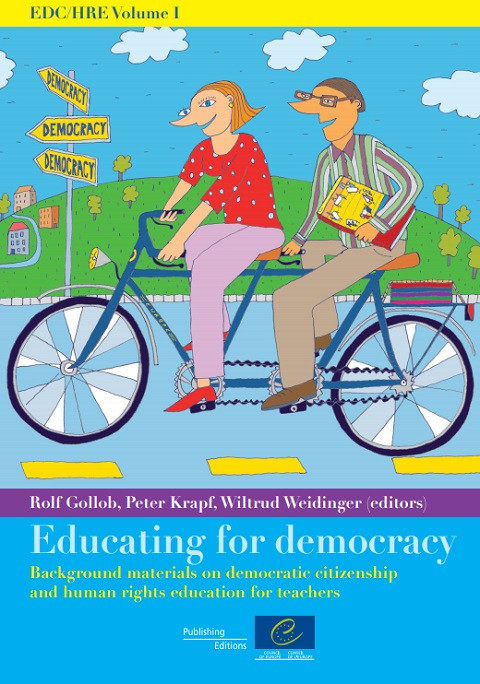 Educating for Democracy: Background Materials on Democratic Citizenship and Human Rights Education for Teachers Year of publication: 2010 Author: Rolf Gollob | Peter Krapf | Ólöf Ólafsdóttir | Wiltrud Weidinger Corporate author: Council of Europe The objective of this manual is to support teachers and practitioners in Education for Democratic Citizenship and Human Rights Education (EDC/HRE). It addresses key questions about EDC and HRE, including competences for democratic citizenship, the objectives and basic principles of EDC/HRE, and a whole school approach to education for democracy and human rights. The manual consists of three parts. Part I outlines the basic principles of EDC/HRE as far as they are helpful and meaningful for the practitioner. Part II gives guidelines and tools to design, support and assess the students’ processes of constructivist and interactive learning. Part III provides toolboxes for teachers and students in EDC/HRE. The other volumes in this series offer concrete teaching models and materials in EDC/HRE for pupils from elementary to upper secondary level. Eduquer à la démocratie: Matériaux de base sur l’éducation à la citoyenneté démocratique et aux droits de l’homme pour les enseignants Year of publication: 2010 Author: Rolf Gollob | Peter Krapf | Ólöf Ólafsdóttir | Wiltrud Weidinger Corporate author: Conseil de l'Europe Ce manuel a pour objectif d’accompagner les enseignants et les professionnels dans les domaines de l’éducation à la citoyenneté démocratique et de l’éducation aux droits de l’homme (ECD/EDH). Il aborde des questions clés au sujet de l’ECD et de l’EDH, y compris les compétences nécessaires à une citoyenneté démocratique, les objectifs et les principes fondamentaux de l’ECD/EDH ainsi qu’une approche scolaire globale de l’éducation à la démocratie et aux droits de l’homme. L’ouvrage est constitué de trois parties. La partie I expose les principes fondamentaux de l’ECD/EDH, dont l’utilité et l’intérêt pour les professionnels sont incontestables. La partie II présente des orientations et des outils pour concevoir, accompagner et évaluer les processus d’apprentissage constructif des élèves. La partie III contient des boîtes à outils, respectivement pour les enseignants et les élèves, dans le domaine de l’ECD/EDH. Les autres volumes de cette collection proposent des modèles ainsi que des supports d’apprentissage concrets pour l’ECD/EDH destinés aux élèves depuis le niveau élémentaire jusqu’au deuxième cycle du secondaire. Обучаем демократии: Базовые материалы для обучения демократической гражданственности и правам человека для учителей Year of publication: 2010 Author: Rolf Gollob | Peter Krapf | Ólöf Ólafsdóttir | Wiltrud Weidinger Corporate author: Council of Europe Цель данного пособия заключается в поддержке учителей и специалистов-практиков по образованию для демократического общества и образованию по правам человека (ОДГ/ОПЧ)– учителей, директоров школ, инспекторов, авторов учебников и редакторов.
  Digital Citizenship Education Project (DCE): 10 Domains Year of publication: 2018 Corporate author: Council of Europe The aim of the DCE project launched by the Council of Europe’s Education Policy Division is to empower children to participate actively in digital society. This involves providing them with an education that develops a sense of critical analysis and the effective use of digital technologies while fostering a notion of citizenship based on respect for human rights and democratic culture. Éducation à la citoyenneté numérique (ECN): Les 10 thématiques Year of publication: 2018 Corporate author: Conseil de l'Europe Le projet ECN de la Division des Politiques Educatives du Conseil de l’Europe a pour objectif de permettre aux enfants de participer activement et de manière autonome à la société numérique. Ceci passe par une éducation qui développe un sens d’analyse critique et l’utilisation efficace des technologies numériques intégrant une notion de citoyenneté fondée sur le respect des droits de l’homme et la culture démocratique.