
Resources
Explore a wide range of valuable resources on GCED to deepen your understanding and enhance your research, advocacy, teaching, and learning.
3,530 Results found
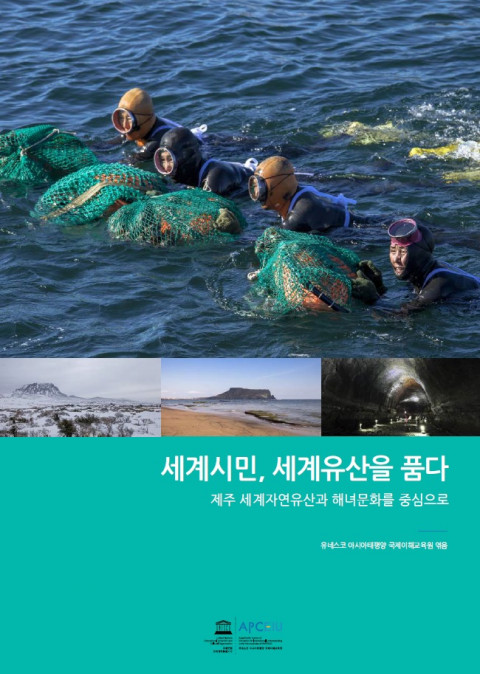 세계시민, 세계유산을 품다 - 제주 세계자연유산과 해녀문화를 중심으로 Year of publication: 2018 Corporate author: 유네스코 아시아태평양 국제이해교육원 유네스코 아시아태평양 국제이해교육원은 세계유산을 활용한 세계시민교육 교재개발 사업으로 “세계시민, 세계유산을 품다”를 출간하였다. 이 책은 세계유산을 단순한 관광의 대상으로 소개하는 것이 아니라, 현장체험, 토론, 조사 등의 다양한 활동을 통해 세계유산이 가진 가치와 의미를 깨달아 세계시민으로 성장하도록 하는 내용으로 구성했다. 세계유산을 통해 국제이해, 평화, 인권, 문화다양성, 지속가능한 발전 등의 보편적 가치를 배우고 내재화하도록 돕는 교재이다.한국의 세계유산을 활용한 이번 세계시민교육 자료는 제주를 중심으로 구성하였다. 제주도는 현재 유네스코 세계자연유산과 인류무형문화유산을 가지고 있다. 이 책은 세계자연유산 ‘제주 화산섬과 용암동굴’과 인류무형문화유산 ‘제주 해녀문화’의 가치를 세계시민교육으로 연계하여 교육함으로써 세계시민의식 함양의 길잡이가 되고자 한다. 특히 유형유산과 무형유산을 통합적으로 연계하여 소개하는 시도를 하였다.이 책의 세계시민교육은 제주세계자연유산과 더불어 제주 해녀문화의 공동체 의식에 주목하고 이를 소개했다. 또한 이 책은 학교 현장의 교사가 세계유산 교육과 세계시민교육을 동시에 하고자 할 때 학습자료로서 도움이 될 것이다. 또한 학생이 세계유산을 통하여 지속가능성을 이해하고, 이를 통하여 세계시민으로 성장하는데 기여할 것이다.
  Training Tools for Curriculum Development: A Resource Pack for Global Citizenship Education (GCED) Year of publication: 2018 Corporate author: UNESCO International Bureau of Education (IBE) | APCEIU The overarching objective of ‘A Resource Pack for Global Citizenship Education (GCED)’ is to share a broader understanding of GCED theory and practice, in order to support its effective development and implementation at the policy, school and classroom levels. The Resource Pack provides comprehensive guidance for national policymakers, curriculum specialists and developers, teacher educators, teachers, school leaders and district level administrators.The key topics covered are:Module 1: IntroductionModule 2: National PoliciesModule 3: CurriculumModule 4: Teaching, Learning and AssessmentModule 5: Teaching and Learning ResourcesModule 6: Whole School ApproachModule 7: Teacher Education and Professional Development
  Europe and North America Regional GCED Network Meeting: Final Report (21-22 November 2018, Lisbon, Portugal) Year of publication: 2018 Corporate author: APCEIU This meeting report is for the meeting, held on 21-22 November 2018 in Lisbon, Portugal, which aimed to strengthen global action on Global Citizenship Education. The event was jointly organized by the Asia-Pacific Centre of Education for International Understanding (APCEIU) under the auspices of UNESCO, the UNESCO Venice Office and ANGEL project partners GENE.The meeting brought together over 50 GCED-related stakeholders, including those from academia, nongovernmental organizations (NGOs), intergovernmental organizations, ministries, and the National Commissions for UNESCO. The meeting featured a range of presentations and reflections from partners and provided a platform to discuss action to strengthen GCED networking strategies within and beyond the region. It also offered participants the opportunity to share experiences, insights and knowledge with one another, and encouraged them to explore areas of collaboration in the future.
  A Study on the Monitoring Framework of GCED in South Korea Year of publication: 2020 Author: Hwanbo Park | Daehoon Jho | Kyunghee Park | Jeongmin Eom Corporate author: APCEIU The purpose of this study is to establish a feasible monitoring system for the implementation of Global Citizenship Education (GCED) in South Korea that can both align itself with the global indicator (SDG 4.7.1) and reflect the domestic context and feasibility. The study further builds upon previous studies carried out by the Asia-Pacific Centre of Education for International Understanding (APCEIU). Particularly, it aims to refine and validate the GCED indicator system for domestic monitoring as proposed in the previous studies, which are also in line with SDG 4.7.1, the global indicator to monitor the mainstreaming of GCED/ESD.To this end, the study involved a Delphi survey and expert consultation to build the refined list and classification of GCED related thematic areas and keywords contextualized in Korea, and aligned these with global indicators so that it could establish a set of sub-indicators for the South Korean context. Then, it pilot-tested the sub-indicators by codifying and statistically analyzing key policy documents and the curricula of Teacher Education Institutes (TEIs) to validate the sub-indicators and to examine the extent to which GCED is mainstreamed in the given domains of the Korean context. Case analyses with focused interviews for some TEI curricula were also added to enrich the study. Lastly, the study draws key implications and proposes some recommendations for the establishment of a feasible and sustainable GCED monitoring system in South Korea. Considering the importance of national input in initiating the SDG agenda, the research concluded with a proposal on how to manage the global citizenship indicators in South Korea. 2020 세계시민교육 국내 모니터링 체제 구축 연구 Year of publication: 2020 Author: 박환보 | 조대훈 | 박경희 | 엄정민 Corporate author: 유네스코 아시아태평양 국제이해교육원 유네스코 아태교육원은 세계시민교육의 국내 모니터링을 체계화하기 위한 노력의 일환으로 “2020 세계시민교육 국내 모니터링 체제 구축 연구”를 실시, 결과물을 보고서로 발간하였다. 본 연구는 지속가능발전목표 글로벌 지표(4.7.1)에 부합하면서 국내 맥락과 실효성이 반영된 세계시민교육 이행 모니터링 체제 구축 방안을 모색하는데 목적이 있다.이를 위하여 첫째, 아태교육원의 선행 연구에서 제안한 세계시민교육 지표체계를 델파이 조사 및 전문가 협의를 통해 정교화하고 타당도를 높였으며, 둘째, 고도화된 하위지표 체계를 적용하여 국내 교육정책 및 교사교육 분야에 있어 세계시민교육 주류화 정도를 문헌연구, 통계자료 분석 등을 통하여 시범적으로 분석하였고, 이와 함께, 정책 및 교원양성교육의 사례도 제시하고 있다. 마지막으로 이러한 연구 결과를 토대로 국내 세계시민교육 모니터링 체제 구축 방안에 대한 시사점을 도출하였으며, 특히 SDGs에서 강조하는 국가별 자율적 이행을 고려하여, 한국에서 어떻게 세계시민교육 지표를 관리할 것인지에 대해 제언하였다.
 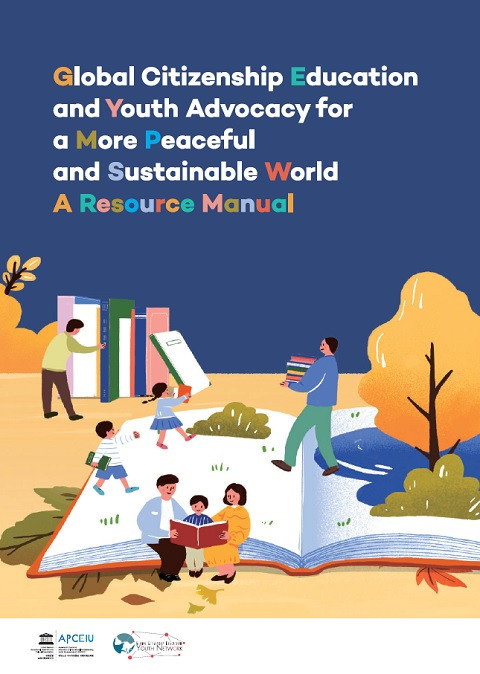 Global Citizenship Education and Youth Advocacy for a More Peaceful and Sustainable World: A Resource Manual Year of publication: 2020 Author: Dylan Wray | Lisa Van Wyk | Rigoberto D. Banta Jr. | Roy Hellenberg | Anna Susarenco | Diego Manrique | Guranda Bursulaia | Noora Elkenawi | Shawgi Ahmed | Tshering Zangmo | Valeriia Moroz Corporate author: APCEIU Since 2016 the Global Citizenship Education (GCED) Youth Network and UNESCO Asia-Pacific Centre of Education for International Understanding(APCEIU) have been working together to support young people to take action to make their communities and the world a better place.This manual, which is the outcome of a joint initiative by the GCED Youth Network and APCEIU, is intended to provide a useful resource for those who teach GCED, for youth organisations that are engaged in advocacy on themes that relate to global citizenship, and those who are supporting youth advocacy.The manual is organized in three main sections: Section 1 focuses on GCED and the teaching of history as a strategy for building a peaceful world.Section 2 provides step by step practical guidelines and ideas for youth advocacy organisations to help them plan advocacy initiatives.Section 3 includes background information and practical ideas for youth advocacy on a series of themes that are relevant to GCED, including empowerment of vulnerable communities, media literacy and peace building. It also considers the role of GCED, and young people, in global crises, using the example of the COVID-19 pandemic, and provides suggestions to help youth advocacy and other organisations to prepare for and respond to such crises
 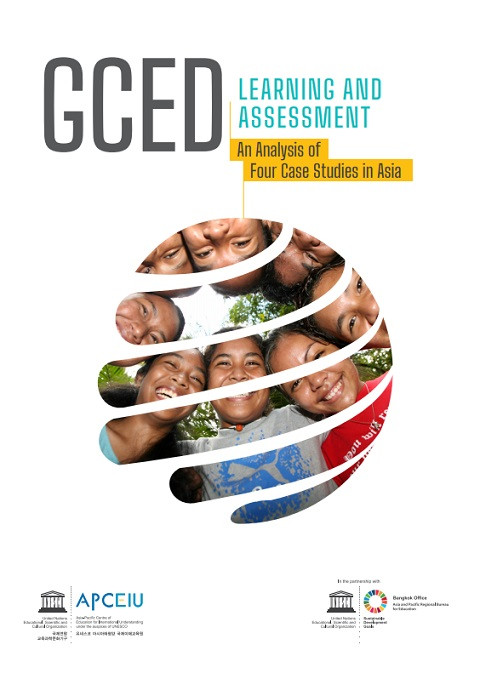 GCED Learning and Assessment: An Analysis of Four Case Studies in Asia Year of publication: 2020 Corporate author: APCEIU | UNESCO Bangkok “GCED Learning and Assessment: An Analysis of Four Case Studies in Asia” is a result report of research jointly led by UNESCO Asia-Pacific Regional Bureau for Education, the Asia-Pacific Centre of Education for International Understanding (APCEIU) and the Asia-Pacific Regional GCED Network. The report encompasses four case studies of GCED Learning in the region and its assessment. Four leading researchers in the field of GCED, Satya Bushan from the National Council of Educational Research and Training (NCERT), India; Sayaka Matsukura of Ageo Oishi Junior High School, Japan; Dawon Kim from Gwangju National University of Education, Republic of Korea; and Le Anh Vinh from the Vietnam National Institute of Educational Science (VNIES), Viet Nam, contributed to this research. Through presenting and sharing the cases of India, Japan, Republic of Korea and Viet Nam, the publication is expected to shed light on the assessment on how GCED is implemented in the region and further inspire and encourage the GCED practitioners on the ground to take another step forward to reflect GCED in their respective educational systems. <List of Contents>ForewordAcknowledgementsAcronymsExecutive summaryChapter 1: IntroductionChapter 2: Schoollevel approaches at integrating GCEDChapter 3: Assessment of GCED learning Chapter 4: Reflections on GCED learning assessment Chapter 5: Conclusions and recommendations References
 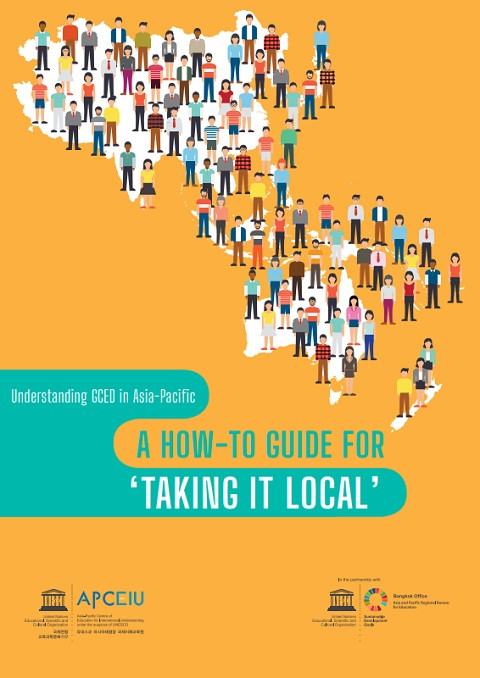 Understanding GCED in Asia-Pacific: A How-to Guide for ‘Taking It Local’ Year of publication: 2020 Corporate author: APCEIU | UNESCO Bangkok The Asia-Pacific Centre of Education for International Understanding (APCEIU), in partnership with UNESCO Bangkok, has published “Understanding GCED in Asia-Pacific: A How-To Guide for ‘Taking It Local’”, a guidebook for GCED-themed workshop organizations in the region. The publication is developed by UNESCO Asia-Pacific Regional Bureau for Education under the framework of the Asia-Pacific Regional GCED Network that is coordinated by UNESCO Bangkok and APCEIU. Taking stock of the key data from the 2019 publication titled “GCED: Taking it Local in Asia-Pacific”, the guidebook presents full-detailed guidelines on preparing and conducting a ‘Taking it Local’ workshop on GCED with particular focuses on the three core notions of GCED – respect for diversity, solidarity and a shared sense of humanity. The purpose of the publication is to promote GCED in local contexts and support active GCED practitioners on the ground to design and carry out GCED workshops that are translated and designed fully within the local context of the Asia-Pacific region. <Contents>Chapter 1: Introduction1.1 What is GCED?1.2 Purpose of the Guidebook1.3 Pedagogical ApproachChapter 2: Preparing a ‘Taking it Local’ Workshop on GCED2.1 Workshop Objectives2.2 Target Audiences2.3 Workshop Preparation2.4 Tips for a Successful Workshop2.5 Sample Agenda for the WorkshopChapter 3: Conducting a ‘Taking it Local’ Workshop on GCED3.1 Welcome, Overview, and Agreements3.2 Introduction Exercise: Story Circles3.3 GCED in AsiaPacific Exercise3.4 Optional Activities for the Workshop 3.5 Application Exercise 3.6 Closing 3.7 Final Reflection and Workshop Evaluation 3.8 Sharing Reflections 3.9 FollowUp of the WorkshopReferences
 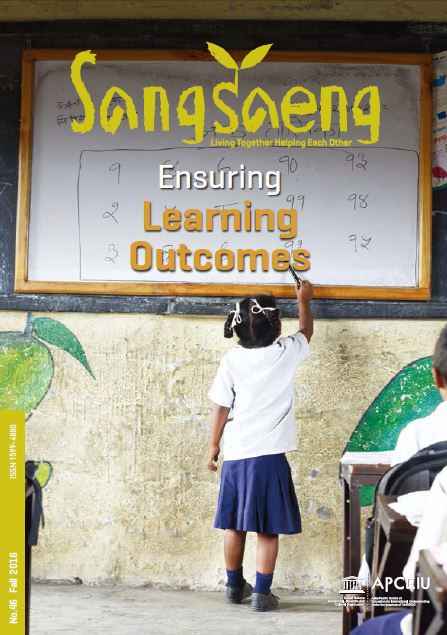 학습 성과의 강화 (상생 제46호 2016년 가을호) Year of publication: 2016 Corporate author: 유네스코 아시아태평양 국제이해교육원 46호 <상생>이 “학습 성과의 강화 (Ensuring Learning Outcomes)”라는 주제로 발간되었다. 교육 2030 실행계획에서 양질의 교육을 확보하고 평가하는 업적에 집중함에 따라, 이번 <상생> 가을호는 현재의 교육 평가 시스템을 재검토하고 더 나은 평가 체계를 개발하기 위한 다양한 연구와 노력을 소개하고자 한다. 3 발간사4 스페셜 칼럼상생하기: 교육의 기둥은 ‘학습’에서 시작한다8 포커스: 학습 성과의 강화8 새로운 미래에 대비하기: 신교육시대의 지속가능개발과 세계시민의식을 위한 모니터링14 학습 성과물 개선을 위한 지식의 모니터링: ‘동남아시아권 기초교육 학습지표’의 세계시민의식 지수 측정18 민주적 문화의 역량강화: 민주적 역량의 교육과 측정을 위한 유럽의회 프로젝트24 21세기 역량, 그리고 세계시민의식과 글로벌 역량 28 스페셜 리포트키르기스스탄 학생들의 사회문화적 역량 강화하기34 국제이해교육 모범사례34 지속가능성 받아들이기: 여러분도 변화를 만들 수 있다39 가치의 실천을 통한 학생 역량강화 (SEVA): 학교에서 의견 표출, 비판적 사고, 관용의 정신 가르치기44 APCEIU에 보내는 편지따뜻한 마음으로 세계시민이 되어요46 내 기억 속의 평화21세기 평화를 위한 식생활50 교육원 활동
 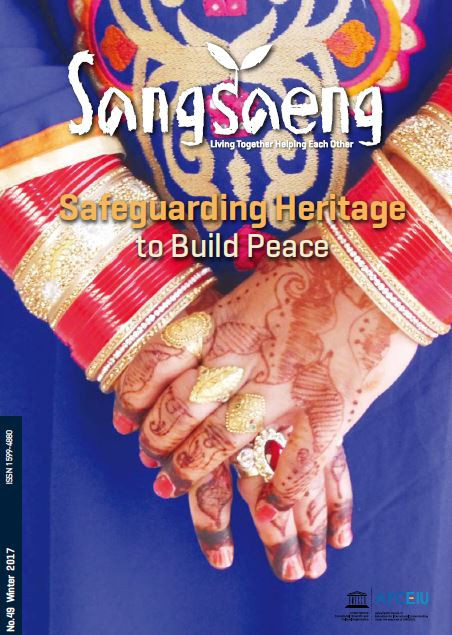 Safeguarding Heritage to Build Peace (SangSaeng no. 49 Winter 2017) Year of publication: 2017 Corporate author: APCEIU The 49h issue of SangSaeng, “Safeguarding Heritage to Build Peace,” has been published. All ancient civilizations have contributed in some way to the development of modern society. Therefore, all are equally deserving of study. This edition of SangSaeng aims to examine heritage in its different contexts and to help identify our responsibilities as a global community to understand and tolerate other people’s heritages. 3 Director’s Message4 Special Column4 Taking Stewardship of Our Planet8 Focus: Heritage8 Heritage for Peace and Prosperity12 Heritage Education: Opportunity to Enhance Cultural Literacy17 Photo Essay: World Heritage Sites of 2017 21 Special ReportUNAI Impacts Scholarship, Research for Greater Good24 Best Practices24 Frontier Education on the Frontier for Life29 Encouraging the Heart of the Matter33 InterviewGCED Challenge Issued36 Youth NetworkYouth Building Peace 40 LetterJourney to the Heart of Peace42 Peace in My MemoryPeace in a World of Violence46 Understanding the Asia-Pacific RegionEgg, Tambourine and Commemoration49 APCEIU in Action