
Resources
Explore a wide range of valuable resources on GCED to deepen your understanding and enhance your research, advocacy, teaching, and learning.
3,530 Results found
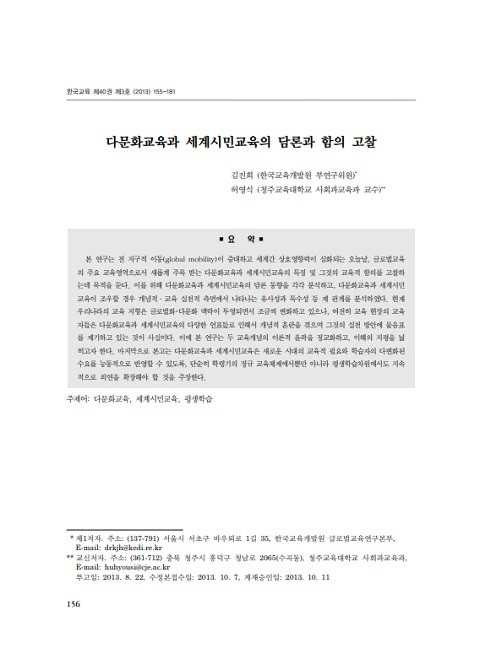 Understanding Multicultural Education and Global Citizenship Education: Characteristics, Conceptual Relations and Educational Implications (Journal of Korean Education; Vol. 40, No. 3) Year of publication: 2013 Author: Jinhee Kim | Jinhee Kim Corporate author: Korean Educational Development Institute (KEDI) Thanks to the impact of globalized educational discourses and the resulting changes, much attention has been paid to multicultural education and global citizenship education in Korea. This study attempted to demonstrate the characteristics and conceptual relations of similarity and differences between multicultural education and global citizenship education. Finally, the study sought to produce educational implications and policy recommendations in response to a change in global education discourse and the accompanying practices. The major findings of the study showed that multicultural education and global citizenship education could be conceptualized as mechanisms for “learning to live together,” emphasizing diversity, equality and involvement in a global community. This type of education should be promoted while espousing an epistemology of lifelong learning, not only within the formal education system, but also in society as a whole. Despite the differences between multicultural education and global citizenship education, both fields are capable of continuously complementing each other. The study shows that multicultural education and global citizenship education emphasize critical reflection and engagement (praxis) by the learner rather than the formulation of knowledge and skills. It was argued that teacher education and teacher training is a very important part of nurturing multicultural education and global citizenship education in practice, which can bring about changes for the better in the current field of education. As democratic citizenship education, both educations could play an important role in reshaping Korean education. 다문화교육과 세계시민교육의 담론과 함의 고찰 (한국교육; Vol. 40, No. 3) Year of publication: 2013 Author: 김진희 | 허영식 Corporate author: 한국교육개발원 본 연구는 전 지구적 이동(global mobility)이 증대하고 세계간 상호 영향력이 심화되는 오늘날, 글로벌교육의 주요 교육 영역으로서 새롭게 주목받는 다문화교육과 세계시민교육의 특징 및 그것의 교육적 함의를 고찰하는데 목적을 둔다. 이를 위해 다문화교육과 세계시민교육의 담론 동향을 각각 분석하고, 다문화교육과 세계시민교육이 조우할 경우 개념적·교육 실천적 측면에서 나타나는 유사성과 특수성 등 제 관계를 분석하였다. 현재 우리나라의 교육 지형은 글로벌화・다문화 맥락이 투영되면서 조금씩 변화하고 있으나, 여전히 교육 현장의 교육자들은 다문화교육과 세계시민교육의 다양한 언표들로 인해서 개념적 혼란을 겪으며 그것의 실천 방안에 물음표를 제기하고 있는 것이 사실이다. 이에 본 연구는 두 교육개념의 이론적 윤곽을 정교화하고, 이해의 지평을 넓히고자 한다. 마지막으로 본고는 다문화교육과 세계시민교육은 새로운 시대의 교육적 필요와 학습자의 다변화된 수요를 능동적으로 반영할 수 있도록, 단순히 학령기의 정규 교육체제에서 뿐만 아니라 평생학습차원에서도 지속적으로 외연을 확장해야 할 것을 주장한다.
 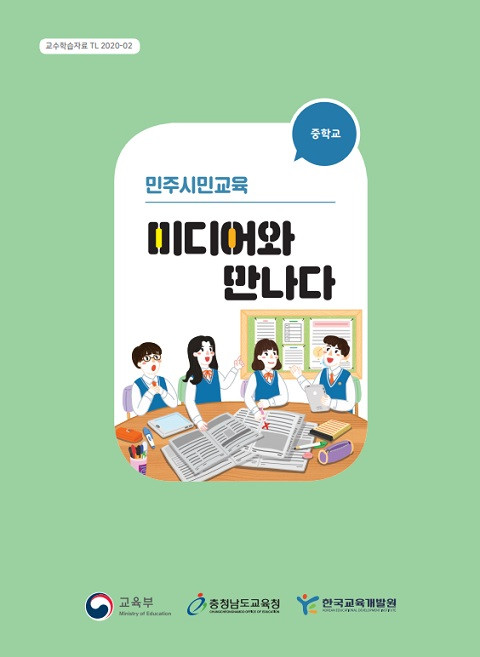 민주시민교육, 미디어와 만나다: 중학교 Year of publication: 2020 Author: 주민정 | 고선화 | 이연희 | 전현영 | 최연주 Corporate author: 한국교육개발원 | 대한민국 교육부 | 충청남도교육청 본 자료는 민주시민교육과 미디어리터러시 교육 간의 연계성을 강화하여 민주시민교육과 관련한 수업에 활용하도록 개발된 교수·학습 자료이다. 자율, 존중, 연대, 정의, 평화 등 민주시민교육의 주요 주제들을 기반으로 총 5개 단원, 15개 차시로 구성되어, 교과 및 창의적 체험활동 등 교육 활동 전반에서 활용할 수 있다. 또한, 2015 개정교육과정과 연계하여 활용할 수 있도록 국어, 도덕, 사회(일반사회), 역사, 미술 교과의 성취 기준을 토대로 내용과 활동을 편성하고, 활동 중심 수업을 통해 학생이 실천적인 민주시민의식을 함양할 수 있도록 단원을 구성하였다. 수업 대상은 중학교 1학년에서 3학년이다.
 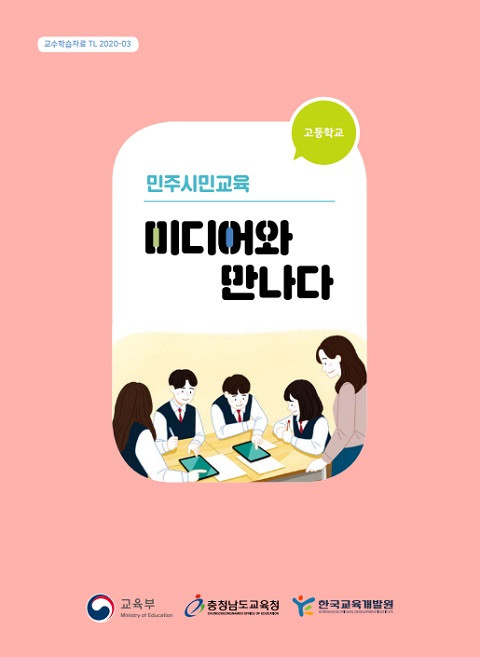 민주시민교육, 미디어와 만나다: 고등학교 Year of publication: 2020 Author: 나윤숙 | 김태현 | 임지예 | 정병연 | 조미옥 Corporate author: 한국교육개발원 | 대한민국 교육부 | 충청남도교육청 ‘민주시민교육, 미디어와 만나다’는 민주시민교육과 미디어리터러시 교육 간의 연계성을 강화하여 민주시민교육과 관련한 수업에 손쉽게 활용할 수 있도록 개발된 자료이다. 이를 통해 민주시민교육에 관심이 있는 선생님들에게 교과, 창의적 체험활동 등 교육활동 전반에 활용할 수 있는 교수-학습 자료를 제공하고자 하였다. 아울러 민주시민교육의 주제별 협력학습, 토론 수업 및 프로젝트 학습 등에 활용 가능한 교육 콘텐츠를 지원하고자 한다. 수업 대상은 고등학교 1학년이다. 다만 학습 주제, 성취기준, 학교 및 교실 여건 등을 고려하여 적용 대상을 달리하여 활용 가능하다.
  The Theoretic Relationship Between Global Citizenship and Moral Education: An Analysis of Global Citizenship and the Moral Education Curriculum for Middle School Students in South Korea (The Journal of Korean Education; Vol.43, No.3) Year of publication: 2016 Author: Jinhee Kim | Seunghan Cha Corporate author: Korean Educational Development Institute (KEDI) This study explores the theoretical relationship between global citizenship and moral education to enhance global citizenship as espoused within a moral education context. 세계시민의식과 도덕 교육의 이론적 관계 정립: 세계시민이론과 중학교 도덕 교육과정 분석 (한국교육; Vol.43, No.3) Year of publication: 2016 Author: 김진희 | 차승한 Corporate author: 한국교육개발원 본 연구는 국제사회에서 세계시민교육이 강조되고 있는 오늘날 세계시민의식과 밀접한 연관을 가지고 있는, 도덕 교육을 통한 세계시민성의 개념 정립이 필요하다는 문제의식에서 출발하였다. 세계시민의식 함양이 도덕교육에 주는 의미를 분석하고, 현행 중학교 도덕 교육에 세계시민의식의 내용을 얼마나 반영되어 있는지 진단하고자 하였다. 이를 위해 칸트, 아렌트, 너스봄, 아피아를 중심으로 세계시민과 도덕의 관계에 대한 이론을 분석하였고, 각 이론에서 중시한 ‘세계관찰자, 도덕적 공동체, 뿌리내린 세계시민’ 담론을 세계시민적 정체성(belonging), 세계시민적 태도(attitude), 세계시민적 개입(engagement)과 연계지어 논리적으로 정련함으로써 도덕 교육에서 세계시민의식을 측정할 수 있는 분석틀을 도출하였다. 분석결과, 세계문제에 대한 다양한 쟁점을 다루는 글로벌 윤리 개념이 세계시민의식과 도덕 교육 사이에서 징검다리 역할을 할 수 있다는 점을 밝혔다. 한국의 현행 도덕 교육과정은 세계시민의식과 관련한 내용을 직간접적으로 반영하고 있으나 ‘공적 영역에 대한 헌신’을 반영하는 내용 요소는 빈약한 것으로 드러났다. 본 연구는 한국교육의 상황에 맞는 세계시민의식의 개념 정립을 위해 학교 교육의 장면 중 중학교 도덕 교육에서 세계시민교육을 내실화하는 단초를 이론적으로 제시하였다.
 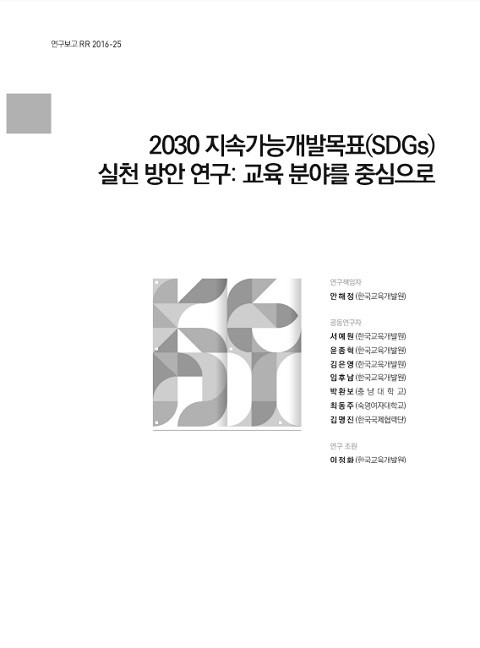 2030 지속가능개발목표(SDGs)실천 방안 연구: 교육 분야를 중심으로 Year of publication: 2016 Author: 안혜정 | 서예원 | 윤종혁 | 김은영 | 염후남 | 박환보 | 최동주 | 김명진 | 이정화 Corporate author: 한국교육개발원 이 연구는 새천년개발목표(MDGs)의 이행종료와 더불어 향후 2030년까지 국제사회가 함께 성취해야 할 개발목표로 채택된 지속가능개발목표(SDGs) 중 네 번째 목표인 교육 목표(SDG 4)의 전략적 실천방안을 마련하기 위하여 수행되었다. 현 정부는 “ODA 지속 확대 및 모범적・통합적 개발협력 추진”을 국정과제로 삼고, 개도국 소녀교육 및 아프리카 직업/ICT 교육을 포함한 4대 구상을 선정하는 등 교육 분야 개발협력의 중요성과 필요성을 강조한 바 있다. 이에 본 연구에서는 우리나라 교육개발협력 사업의 현황과 수행주체별 참여 실태 및 인식 조사를 토대로 실효성 있는 정책방안을 도출하고 SDG 4의 실천 방안을 제시하였다.
 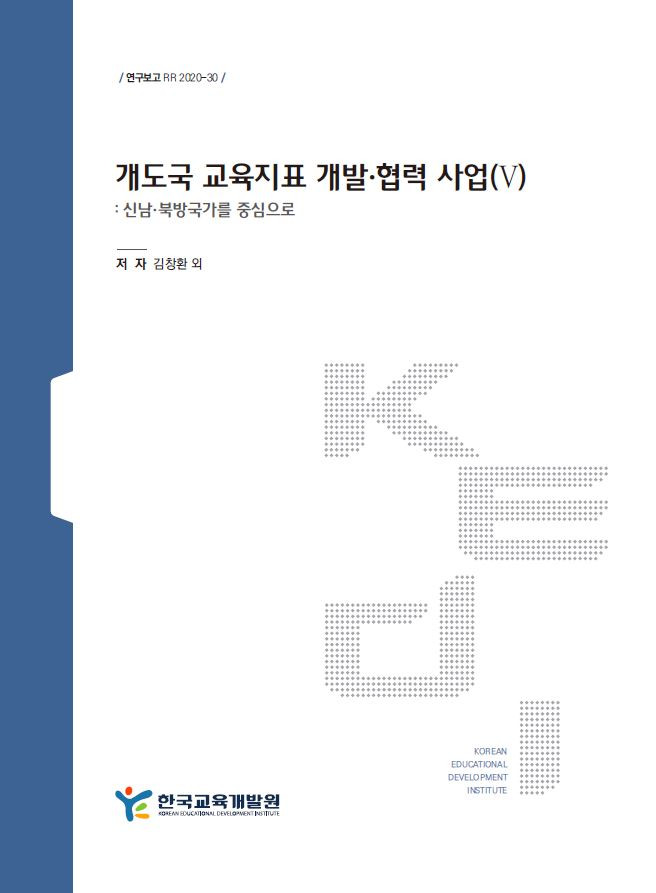 A Study on Education Indicator Development and Statistical Capacity Building focused on New Southern and Northern Policy (V) Year of publication: 2020 Author: Changhwan Kim | Kijun Lee | Geunyoung Park | Sungho Park | Hoonam Lim | Hyojung Han | Nayoung Kim | Yewon Seo | Joo Heo | Hanseung Lee | Yoseop Oh | Jihye Son | Sangtae Noh | Hyojung Kim Corporate author: Korean Educational Development Institute (KEDI) This study has a purpose to be carried out to develop education statistics capacity of developing countries through establishment a comprehensive consulting plan according to determine current status of education statistics of three Asian countries and conduct a demand survey and statistics survey. 개도국 교육지표 개발·협력 사업(V): 신남·북방국가를 중심으로 Year of publication: 2020 Author: 김창환 | 이기준 | 박근영 | 박성호 | 임후남 | 한효정 | 김나영 | 서예원 | 허주 | 이한승 | 오요섭 | 손지혜 | 노상태 | 김효정 Corporate author: 한국교육개발원 본 연구사업은 정부가 추진 중인 신남ㆍ북방 정책과 밀접한 관련을 맺고 있다. 그동안 한국의 발전은 선진국과 교역하면서 부를 창출하는 방식으로 이루어졌다. 그러나 선진국 시장의 성장이 한계에 도달하면서 새로운 시장 개척이 필요한 상황을 맞고 있다. 더욱이 미ㆍ중 무역전쟁 여파로 탈중국이 현실화 되면서 글로벌 밸류체인이 변하고 있다. 이러한 상황에서 대체시장으로 신남ㆍ북방 국가의 중요성이 부각되고 있는 상황이다. 즉, 미래 한국의 지속가능한 성장을 위해서는 신남ㆍ북방 국가와의 협력이 매우 중요한 것이다.본 연구사업은 정부의 정책에 적극 부응하기 위해 2주기에서 신남ㆍ북방 국가를 중점 협력 국가로 선정하고 사업을 추진하고 있다. 2주기 연구사업이 추진되는 과정 속에서, 연구사업이 종료되었을 때 신남ㆍ북방 국가와의 협력이 더욱 증가하게 될 것으로 전망되고, 이를 통해 국익에도 기여할 것으로 기대되고 있다.본 저작물은 한국교육개발원에서 2020년 작성하여 공공누리 제4유형으로 개방한 ‘개도국 교육지표 개발·협력 사업(V): 신남·북방국가를 중심으로(김창환)’ 를 이용하였으며 해당 저작물은 한국교육개발원 홈페이지(www.kedi.re.kr)에서 무료로 다운받으실 수 있습니다.
 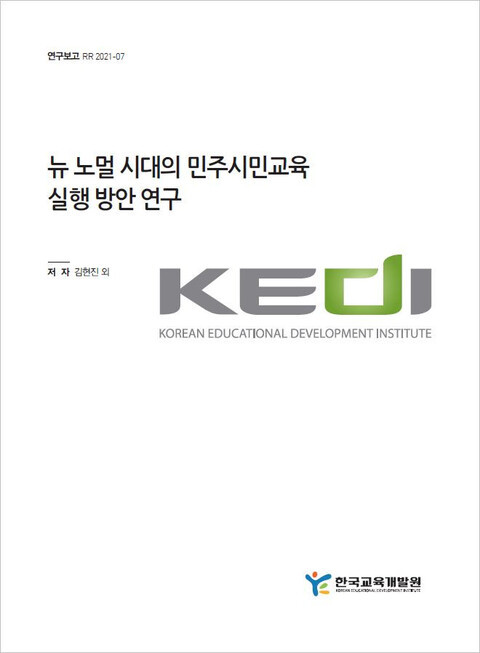 뉴 노멀 시대의 민주시민교육 실행 방안 연구 Year of publication: 2021 Author: 김현진 | 이선호 | 이선영 | 김진희 | 양희준 | 조윤정 | 조혜진 Corporate author: 한국교육개발원 이 연구는 뉴노멀 시대 민주시민교육의 실행 전략을 도출하기 위해 학교 운영 전반의 현황뿐만 아니라, 정책 추진에 대한 인식 등 민주시민교육 전반에 대한 실증적 자료를 수집하여, 이를 기반으로 뉴노멀 시대의 민주시민교육을 위한 실행 전략을 도출하였다. 이 연구를 통해 민주시민교육은 교육목표 수립부터 학교구성원이 함께 공유하고 학교 전반의 교육 활동에서 민주성을 지향하는 것이라는 점을 확인하였다. 본 저작물은 한국교육개발원에서 2021년 작성하여 공공누리 제4유형으로 개방한 ‘뉴 노멀 시대의 민주시민교육 실행 방안 연구(김현진 외)’를 이용하였으며 해당 저작물은 한국교육개발원 홈페이지 (www.kedi.re.kr)에서 무료로 다운받으실 수 있습니다.