
Resources
Explore a wide range of valuable resources on GCED to deepen your understanding and enhance your research, advocacy, teaching, and learning.
3,500 Results found
 Los efectos del desplazamiento climático sobre el derecho a la educación Year of publication: 2020 Corporate author: UNESCO Ce rapport tente d'expliquer les conséquences du réchauffement climatique sur l'éducation des populations, vouées à se déplacer pour fuir la dégradation de leur environnement, ce qui empêche les enfants de suivre une scolarisation complète et de qualité. This report attempts to explain the consequences of global warming on the education of populations, who are forced to move to escape the degradation of their environment, preventing children from receiving a complete, quality education. L’impact du déplacement climatique sur le droit à l’éducation Year of publication: 2020 Corporate author: UNESCO Ce rapport tente d'expliquer les conséquences du réchauffement climatique sur l'éducation des populations, vouées à se déplacer pour fuir la dégradation de leur environnement, ce qui empêche les enfants de suivre une scolarisation complète et de qualité. This report attempts to explain the consequences of global warming on the education of populations, who are forced to move to escape the degradation of their environment, preventing children from receiving a complete, quality education.
 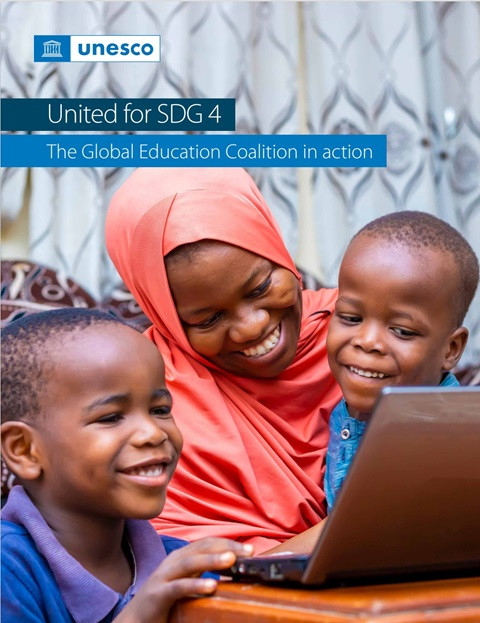 United for SDG 4: The Global Education Coalition in Action Year of publication: 2024 Corporate author: UNESCO The Global Education Coalition, launched by UNESCO, is a platform for collaboration and exchange to protect the right to education and serves as a transformative accelerator towards SDG 4. This progress report of the Coalition builds on documents published in September 2020, March 2021, and March 2023 and covers activity between March 2023 and March 2024. Four years in and moving into its fifth, the Coalition works together to ensure all learners are empowered equally in and through education.
 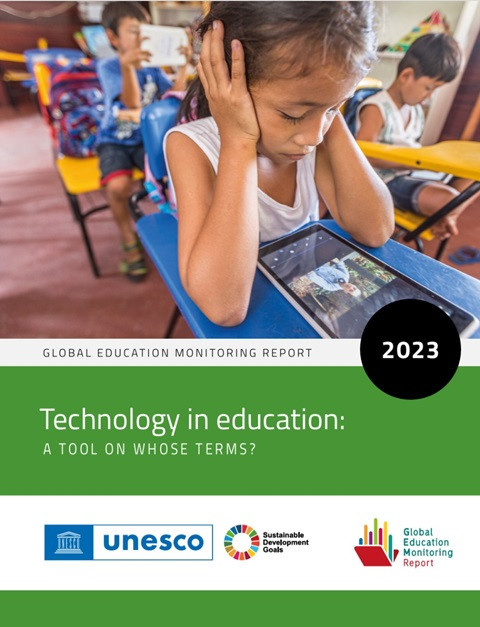 Global Education Monitoring Report 2023: Technology in Education; A Tool on Whose Terms? Year of publication: 2023 Corporate author: UNESCO | Global Education Monitoring Report Team This report recommends that technology should be introduced into education on the basis of evidence showing that it would be appropriate, equitable, scalable and sustainable. In other words, its use should be in learners’ best interests and should complement face-to-face interaction with teachers. It should be seen as a tool to be used on these terms. Midway to the deadline, the 2023 Global Education Monitoring Report assesses the distance still to go to reach the 2030 education targets. Education is the key to unlocking the achievement of other development objectives, not least the goal of technological progress.
 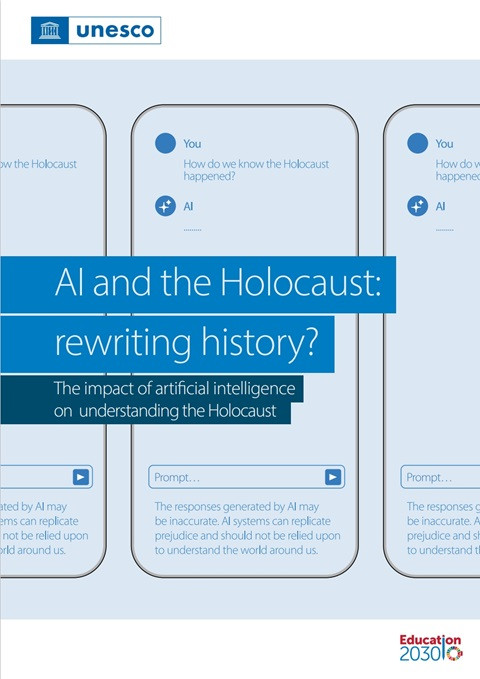 AI and the Holocaust: Rewriting History?; The Impact of Artificial Intelligence on Understanding the Holocaust Year of publication: 2024 Author: Mykola Makhortykh | Heather Mann Corporate author: UNESCO The threats associated with AI on safeguarding the record of the Holocaust are manifold, including the potential for manipulation by malicious actors, the introduction of falsehoods or dissemination of biased information, and the gradual erosion of public trust in authentic records. This paper provides a warning of what is at stake for the preservation of historical truth in a digital era increasingly mediated by AI. It highlights five major concerns:1. AI automated content may invent facts about the Holocaust2. Falsifying historical evidence: Deepfake Technology3. AI models can be manipulated to spread hate speech4. Algorithmic bias can spread Holocaust denial5. Oversimplifying history While there are some benefits to be gained, such as enhanced engagement and interaction opportunities for learners, as well as more efficient data processing capabilities for researchers, to navigate these challenges and capitalize on the benefits, it’s essential for AI designers, policymakers, educators, and researchers to collaborate closely. Only AI systems equipped with robust safeguards and human rights assessments, coupled with an increased focus on developing digital literacy skills, can uphold the integrity of historical truth and ensure the responsible use of artificial intelligence.
  Recommendation on the Ethics of Artificial Intelligence Year of publication: 2022 Corporate author: UNESCO This Recommendation addresses ethical issues related to the domain of Artificial Intelligence to the extent that they are within UNESCO’s mandate. The protection of human rights and dignity is the cornerstone of this Recommendation. It is based on the advancement of fundamental principles such as transparency and fairness, and remembers the importance of human oversight of AI systems. However, what makes the Recommendation exceptionally applicable are its extensive Policy Action Areas, which allow policymakers to translate the core values and principles into action with respect to data governance, environment and ecosystems, gender, education and research, and health and social wellbeing, among many other spheres.
  Recomendación sobre la ética de la inteligencia artificial Year of publication: 2022 Corporate author: UNESCO La presente Recomendación trata de las cuestiones éticas relacionadas con el ámbito de la inteligencia artificial en la medida en que competen al mandato de la UNESCO. Aborda la ética de la IA como una reflexión normativa sistemática, basada en un marco integral, global, multicultural y evolutivo de valores, principios y acciones interdependientes, que puede guiar a las sociedades a la hora de afrontar de manera responsable los efectos conocidos y desconocidos de las tecnologías de la IA en los seres humanos, las sociedades y el medio ambiente y los ecosistemas, y les ofrece una base para aceptar o rechazar las tecnologías de la IA. Considera la ética como una base dinámica para la evaluación y la orientación normativas de las tecnologías de la IA, tomando como referencia la dignidad humana, el bienestar y la prevención de daños y apoyándose en la ética de la ciencia y la tecnología.
  Recommandation sur l’éthique de l’intelligence artificielle Year of publication: 2022 Corporate author: UNESCO La présente Recommandation traite des questions éthiques soulevées dans le domaine de l’intelligence artificielle, dans la mesure où celles-ci relèvent du mandat de l’UNESCO. Elle aborde l’éthique de l’IA en tant que réflexion normative systématique, basée sur un cadre global, détaillé, multiculturel et évolutif de valeurs, de principes et d’actions interdépendants de nature à orienter les sociétés pour qu’elles apportent des réponses responsables aux conséquences connues et inconnues des impacts des technologies de l’IA sur les êtres humains, les sociétés, l’environnement et les écosystèmes, et leur offre une base pour accepter ou rejeter les technologies de l’IA. Elle considère l’éthique comme une base dynamique pour l’évaluation et l’orientation normatives des technologies de l’IA, en faisant de la dignité humaine, du bien-être et de la prévention des dommages des repères et en s’appuyant sur l’éthique des sciences et des technologies.
  人工智能伦理问题建议书 Year of publication: 2022 Corporate author: UNESCO 本建议书述及与人工智能领域有关且属于教科文组织职责范围之内的伦理问题。建议书以能指导社会负责任地应对人工智能技术对人类、社会、环境和生态系统产生的已知和未知影响并相互依存的价值观、原则和行动构成的不断发展的整体、全面和多元文化框架为基础,将人工智能伦理作为一种系统性规范考量,并为社会接受或拒绝人工智能技术提供依据。建议书将伦理视为对人工智能技术进行规范性评估和指导的动态基础,以人的尊严、福祉和防止损害为导向,并立足于科技伦理。
 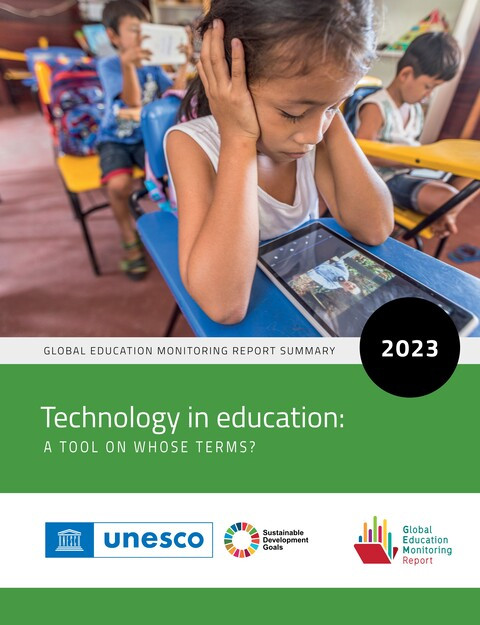 [ملخص] ملخص التقرير العالمي لرصد التعليم 2023: التكنولوجيا في التعليم؛ أداة بشروط من؟ Year of publication: 2023 Corporate author: UNESCO | Global Education Monitoring Report Team دور التكنولوجیا في التعلیم قد أثار جدلاً شدیداً لفترة طویلة. ھل تدیمقراطیة المعرفة أو تھدد ً الدیمقراطیة من خلال السماح للقلة بالسیطرة على المعلومات؟ ھل توفر فرصا لا حدود لھا أم تقود إلى مستقبل یعتمد على التكنولوجیا دون رجوع؟ ھل تعمل على مستوى المیدان أم تزید من التفاوت؟ ھل یجب استخدامھا في تعلیم ا ً لأطفال الصغار أم أن ھناك خطرا على تطورھم؟ تم تأجیج ھذا الجدل بسبب إغلاق المدارس بسبب جائحة كوفید-19 وظھور الذكاء الاصطناعي الذي یولد ذاتیًا . ولكن نظرا لأن المطورین غالبًا ما یتقدمون على صانعي القرار بخطوة، فإن البحث في تكنولوجیا التعلیم معقد. تكاد الأدلة القویة والمحایدة تكون نادرة. ھل المجتمعات تطرح حتى الأسئلة الصحیحة حول التعلیم قبل أن تلجأ إلى التكنولوجیا كحلاً؟ ھل تدرك المخاطر المرتبطة بھا بینما تسعى إلى استثمار فوائدھا ؟ للتكنولوجیا وسائل كبیرة لدعم العدالة والشمول من حیث الوصول إلى المتعلمین المحرومین ونشر المزید من المعرفة بتنسیقات جذابة وبأسعار معقولة. في سیاقات معینة ولبعض أنواع التعلم، یمكن ً لرقمیة جزءا من أن تحسن جودة التدریس وتعلم المھارات الأساسیة. بلا شك، أصبحت المھارات ا حزمة المھارات الأساسیة. یمكن للتكنولوجیا ا ً لرقمیة أیضا دعم الإدارة وزیادة الكفاءة عن طریق مساعدة في التعامل مع أحجام أكبر من بیانات التعلی م ولكن قد تستبعد التكنولوجیا أیضا وقد تكون غیر ذات صلة وعبئاً، إن لم تكن ضارة على الإطلاق. یحتاج الحكومات إلى ضمان الشروط المناسبة لتمكین الوصول العادل للتعلیم للجمیع، وتنظیم استخدام التكنولوجیا لحمایة المتعلمین من تأثیراتھا السلبیة، وتأھیل المعلمی ن. یوصي ھذا التقریر بأن تُ ً قدم التكنولوجیا في التعلیم استنادا إلى الأدلة التي تظھر أنھا ستكون مناسبة وعادلة وقابلة للتوسیع ومستدامة. بعبارة أخرى، یجب أن یكون استخدامھا في مصلحة المتعلمین وأن تكمل التفاعل الشخصي مع المعلمین. یجب أن تُعتبر أداة للاستخدام على ھذه الش روط. في منتصف المدة نحو الموعد النھائي، یقیّم تقریر المراقبة العالمي للتعلیم لعام 2023 المسافة التي لا یزال علیھا أن تقطع للوصول إلى أھداف التعلیم لعام 2030 .التعلیم ھو المفتاح لتحقیق أھداف التنمیة الأخرى، ولا سیما ھدف التقدم التكنولوجي.