
Resources
Explore a wide range of valuable resources on GCED to deepen your understanding and enhance your research, advocacy, teaching, and learning.
3,500 Results found
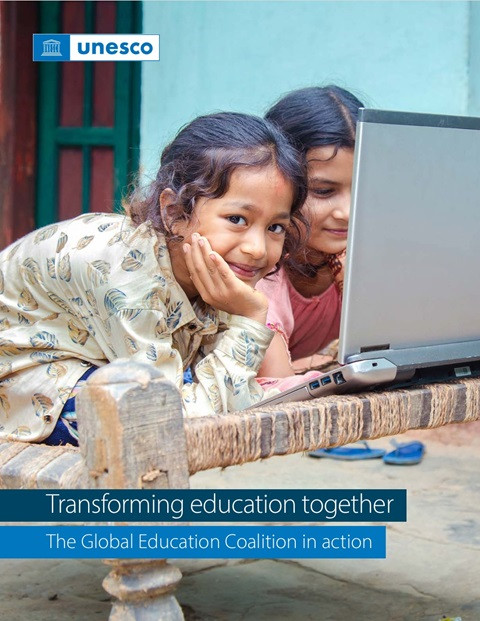 Transforming Education Together: The Global Education Coalition in Action Year of publication: 2023 Corporate author: UNESCO The Global Education Coalition, launched by UNESCO, is a platform for col-laboration and exchange to protect the right to education during this unprec-edented disruption and beyond. This is the fourth progress report of the Coalition and builds on the inaugural document released in September 2020 and the first annual report published in March 2021. This document covers activity between November 2021 and March 2023.
 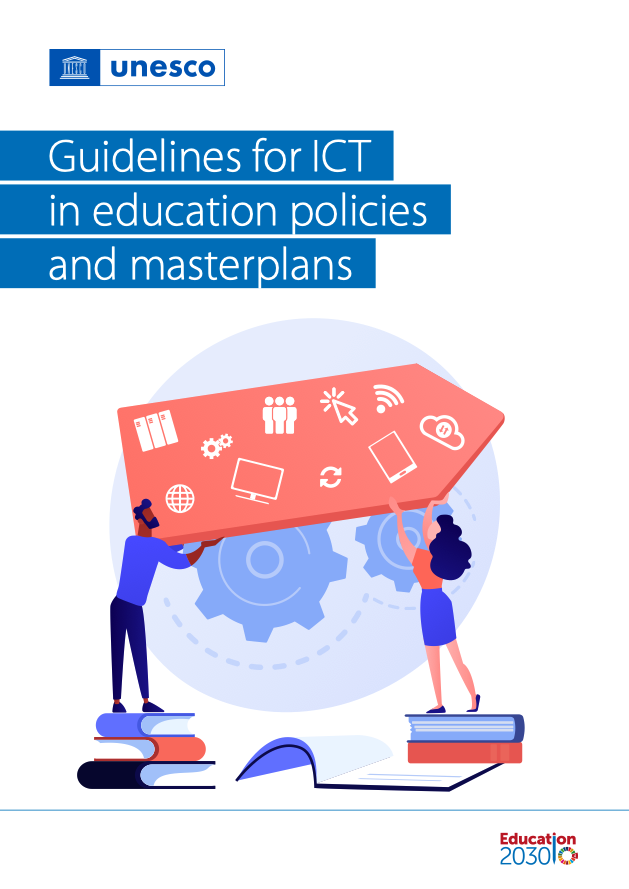 教育信息化政策和总体规划论纲 Year of publication: 2022 Author: Fengchun Miao | Juan Enrique Hinostroza | Molly Lee | Shafika Isaacs | Dominic Orr | Fabio Senne | Ana-Laura Martinez | Ki-Sang Song | Alexander Uvarov | Wayne Holmes | Benjamin Vergel de Dios Corporate author: UNESCO 几十年来,全球各国都在尝试利用信息与通信技术(Information and Communication Technologies,ICTs)促进教育发展。这些由公共 机构推动并涉及商业技术公司的行动计划却产生了诸如数字不平等 进一步加剧以及高质量数字学习机会不均衡等矛盾。新冠疫情危机 加剧了这一趋势:在2020年新冠疫情危机最严峻的时期,全球至少 三分之一的学生无法获得远程教育。本出版物旨在引导政策制定者在采用技术时提供人 权保障;将包容、公平和性别平等视为解决方案的 核心;将技术创新视为共同利益。 基于以上原则, 本出版物采用以人为本的视角, 审视从低带宽技术到人工智能和互联网3.0或“元宇宙”等新兴技术的潜能。本出版物倡导国家政策应保护教师和学生的数字健康, 减少和中和数字碳排放足迹,并避免“技术解决方案主义”。本出版物提出了一个教育信息化政策规划框架以及 迭接式政策规划路线图,以引导对各地教育系统的数字化准备状态 的评估、对学习者和教师的需求分析,进而规划有充足的配套资源 支持的国家教育信息化方案。随后,本出版物还深入剖析了在教育 的不同领域实施教育信息化的国家总体规划的典型范例。
  Recommendation on Education for Peace and Human Rights, International Understanding, Cooperation, Fundamental Freedoms, Global Citizenship and Sustainable Development Year of publication: 2023 Corporate author: UNESCO Building more peaceful, just, and sustainable societies starts with education. It influences all aspects of our daily lives and our overall prospects while being impacted by our health and environment. In the global landscape of worsening climate change, democratic backsliding, persistent inequalities, rising discrimination, hate speech, violence and conflict, it can be a tool to address and prevent these problems in the future. And it can also be a long-term investment with increasing returns if shaped and deployed effectively. The new UNESCO Recommendation on Education for Peace and Human Rights, International Understanding, Cooperation, Fundamental Freedoms, Global Citizenship and Sustainable Development, which is commonly referred to as the Recommendation on Education for Peace, Human Rights and Sustainable Development is a landmark guidance document that defines what needs to evolve in and through education to accomplish these goals. 평화, 인권, 국제이해, 협력, 기본적 자유, 세계시민성, 지속가능발전을 위한 교육 권고 Year of publication: 2023 Corporate author: 유네스코 이 권고는 ‘국제이해, 협력, 평화를 위한 교육과 인권, 기본적 자유에 관한 교육 권고(1974)’를 개정하여 2023년 제42차 유네스코 총회가 채택한 것이다.
  الإرشادات التوجيهية لتخضير مناهج التعليم والتعلّم من أجل العمل المناخيّ Year of publication: 2024 Corporate author: UNESCO This Guidance responds to the calls from young people for a holistic approach to climate change and sustainability in the curriculum. It outlines a common language on how quality climate change and sustainability can be reflected in the curriculum by setting expected learning outcomes per age group (from 5-year olds and up to 18+ age group, including a lifelong learning approach).This is crucial for accelerating country-level action and ensuring joint monitoring of progress. The objective is to have 90 per cent of all countries include climate change in their curricula by 2030, as established by the Greening Education Partnership.This Guidance aims to support countries, schools or individual practitioners in reassessing their ongoing practices to adopt a more action-oriented, holistic, scientifically accurate, justice-driven and lifelong learning approach to climate change.
  Greening Curriculum Guidance: Teaching and Learning for Climate Action Year of publication: 2024 Corporate author: UNESCO This Guidance responds to the calls from young people for a holistic approach to climate change and sustainability in the curriculum. It outlines a common language on how quality climate change and sustainability can be reflected in the curriculum by setting expected learning outcomes per age group (from 5-year olds and up to 18+ age group, including a lifelong learning approach).This is crucial for accelerating country-level action and ensuring joint monitoring of progress. The objective is to have 90 per cent of all countries include climate change in their curricula by 2030, as established by the Greening Education Partnership.This Guidance aims to support countries, schools or individual practitioners in reassessing their ongoing practices to adopt a more action-oriented, holistic, scientifically accurate, justice-driven and lifelong learning approach to climate change.
  Guía para hacer verdes los currículos: enseñanza y aprendizaje para la acción climática Year of publication: 2025 Corporate author: UNESCO Hacer verdes los currículos con el fin de preparar a todos los estudiantes para el cambio climático. La educación es una herramienta poderosa para transformar el mundo e impulsar la acción contra el cambio climático a largo plazo.Esta guía responde a los llamados de las juventudes en favor de un enfoque holístico del cambio climático y la sostenibilidad en los planes de estudio. Define un lenguaje en común sobre cómo debe reflejarse con calidad el cambio climático y la sostenibilidad en los planes de estudio, mediante el establecimiento de los resultados de aprendizaje esperados por grupo etario (grupos de 5 años hasta mayores de 18 años, incluyendo un enfoque de aprendizaje a lo largo de toda la vida).Esto es crucial para acelerar la acción a nivel de los países y garantizar el seguimiento conjunto de los progresos. La meta es lograr que el 90 por ciento de todos los países incluyan el cambio climático en sus planes de estudio para el año 2030, según lo establecido por la Alianza para una Educación Verde.Esta guía tiene el propósito de apoyar a países, escuelas y profesionales en la revisión de las prácticas que tienen en marcha para adoptar un enfoque del cambio climático más orientado a la acción, holístico, científicamente preciso, impulsado por la justicia y con una perspectiva de aprendizaje a lo largo de toda la vida.
  “I Don’t Have a Gender, Consciousness, or Emotions. I’m Just a Machine Learning Model” Year of publication: 2023 Corporate author: UNESCO | International Research Centre on Artificial Intelligence (IRCAI) An introduction to a forthcoming Gender bias in Artificial Intelligence report coming out on March 8, 2024. As we stand on the precipice of a technological revolution driven by Artificial Intelligence (AI), it is imperative to ensure that this future is shaped equitably, representing all genders. With this essay we are excited to announce our forthcoming in-depth report on Gender and Artificial Intelligence in a partnership between IRCAI and UNESCO, set for release on March 8, 2024. As we prepare for this milestone event, we extend an invitation to experts, scholars, and all interested stakeholders to join us in our research.
  Missing Links in AI Governance Year of publication: 2023 Corporate author: UNESCO | Mila – Quebec Artificial Intelligence Institute Over the next decade, Artificial Intelligence (“AI”) will continue to significantly impact societies. While these scientific and technological advances take place at an extraordinary pace, it is necessary that we simultaneously stimulate a global and inclusive conversation around their development and governance. It is in this context that Mila and UNESCO join forces to steer a collective work to identify and understand missing links in AI governance. This publication is a compilation of 18 selected submissions from a global open call for proposals launched in 2021. The works featured cross disciplinary and geographical boundaries, and include the perspectives of academics, civil society representatives, and innovators to help shift the conversation on AI from what we do know and foresee to what we do not, the missing links. The topics covered are wide ranging, including AI and Indigenous rights, Deepfakes, Third-Party Audits of AI Systems, AI alignment with SDGs, and the centralization of decision-making power AI allows. Policymakers and civil society members will benefit from the insightful perspectives brought forward to face the immense task they are presented with – which is to ensure the development of AI in a human-centred, responsible and ethical way, in accordance with human rights. Angles morts de la gouvernance de l’IA Year of publication: 2023 Corporate author: Organisation des Nations Unies pour l'éducation, la science et la culture (UNESCO) | Mila – Quebec Artificial Intelligence Institute Au cours de la prochaine décennie, l’intelligence artificielle (IA) continuera d’avoir une influence et un effet considérables sur nos sociétés. Alors que ces avancées scientifiques et technologiques se succèdent à un rythme soutenu, il est essentiel de poursuivre et accélérer la conversation mondiale et inclusive sur leur développement et leur gouvernance.C’est dans ce contexte que Mila et l’UNESCO unissent leurs forces pour mener un travail collectif pour cerner des questions importantes et novatrices quant à la gouvernance de l’IA. La présente publication est une compilation de 18 chapitres sélectionnés à la suite d’un appel à contributions lancé mondiale-ment en 2021. Les articles présentés traversent les frontières disciplinaires et géographiques en plus d’inclure différentes perspectives, incluant celles d’universitaires, de membres de la société civile et d’innovateurs et innovatrices. Cette publication vise à influencer la conversation sur l’IA pour que celle-ci porte moins sur ce que nous savons déjà que sur ce qui échappe à notre regard : les angles morts de l’IA. Les sujets abordés sont donc variés et incluent notamment la perspective du droit international et des droits des peuples autochtones, les audits des systèmes d’IA, l’alignement de ces technologies avec les objectifs de développement durable des Nations Unies et la centralisation du pouvoir décisionnel que permet cette technologie de rupture.Les membres des milieux politiques, de la recherche et de la société civile engagés dans cette conversation mondiale sur l’IA bénéficieront des perspectives présentées pour faire face à l’immense tâche qui leur incombe : assurer un développement de l’IA qui soit éthique, inclusif et conforme aux droits humains.« Les guerres prenant naissance dans l’esprit des hommes et des femmes, c’est dans l’esprit des hommes et des femmes que doivent être élevées les défenses de la paix »18 propositions sélectionnées offrant une approche pluraliste, informée et critique de la gouvernance de l’IA.