
Resources
Explore a wide range of valuable resources on GCED to deepen your understanding and enhance your research, advocacy, teaching, and learning.
3,500 Results found
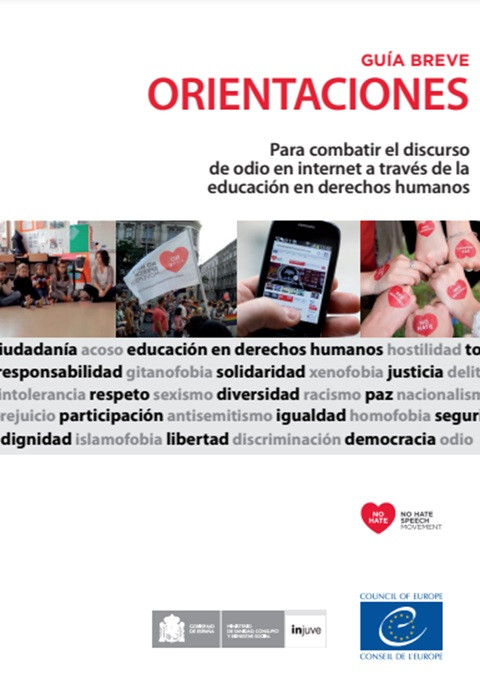 Brief Guidance Guide: To Combat Hate Speech on the Internet Through Human Rights Education Year of publication: 2016 Author: Ellie Keen | Mara Georgescu Corporate author: Youth Institute | Council of Europe The Youth Institute has published “Bookmarks”, a guide to combat hate speech on the Internet, which aims to be a brief and useful manual for the dissemination of concepts related to human rights and freedom of expression, as well as to raise and face the challenge of defending these rights on the Internet from a young perspective. It also aims to become a practical tool for action, training and awareness-raising work, aimed at both young people themselves and trainers, to establish in a simple way the essential concepts related to online hate speech and provide mechanisms to combat it. Guía breve orientaciones: Para combatir el discurso de odio en internet a través de la educación en derechos humanos Year of publication: 2016 Author: Ellie Keen | Mara Georgescu Corporate author: Youth Institute | Council of Europe El Instituto de la Juventud ha editado “Orientaciones”, una guía para luchar contra el odio en internet que pretende ser un breve manual útil para la difusión de los conceptos relacionados con los derechos humanos y la libertad de expresión, así como plantear y afrontar el reto de defender estos derechos en internet desde una perspectiva joven. También nace con el objetivo de convertirse en una herramienta práctica para la acción, el trabajo formativo y de sensibilización, dirigida tanto a los propios jóvenes como a los formadores, para fijar de manera sencilla los conceptos esenciales relacionados con el discurso de odio online y aportar mecanismos para combatirlo.
  Ensuring Well-Being through Social-Emotional Learning in the Digital World Year of publication: 2023 Corporate author: Mahatma Gandhi Institute of Education for Peace and Sustainable Development (MGIEP) This document aims to identify the important elements addressed during the various TAGe discussions (social media discussion and live event) in addition to offering key recommendations for decision-makers. Concretely, this document has sought to highlight two social and emotional challenges faced today by youth, with a third issue present in each of them –(1) educational and employment disparities (economic exclusion),(2) poor civic engagement, and(3) the impact of the digital divide and misuse of social media platforms– in addition to showing how SEL competencies can be a tool to address the social and emotional challenges that may be encountered, supported by technological tools.
  Thinking Beyond What I See: What Is Critical Thinking? Year of publication: 2018 Corporate author: Siente, Piensa y Actua This video is intended to exemplify critical thinking. We also share some strategies that will allow you to promote it in boys and girls. Pensando más allá de lo que veo: ¿Qué es el pensamiento crítico? Year of publication: 2018 Corporate author: Siente, Piensa y Actua Este video tiene la finalidad de ejemplificar el pensamiento crítico. Además te compartimos algunas estrategias que te permitirán promoverlo en niños y niñas.
 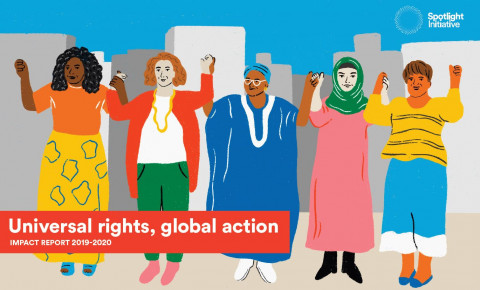 Universal Rights, Global Action: Impact Report 2019-2020 Year of publication: 2020 Corporate author: Spotlight Initiative Universal rights, global action is a shortened, visual adaptation of the 2019 Global Annual Narrative Progress Report. The Spotlight Initiative is a global, multi-year partnership between the European Union and the United Nations to eliminate all forms of violence against women and girls by 2030. This report outlines the Spotlight Initiative’s key signature results from 2019.The 32-page document highlights the ways the Spotlight Initiative country and regional programmes have meaningfully reached women and girls, including those facing multiple and intersecting forms of discrimination.
  Gender Violence in Childhood and Adolescence: Challenges and Realities Year of publication: 2022 Corporate author: Red Papaz In this space, the guests talk about the challenges that girls face in their daily lives and how the school and the family together can build strategies to respond to them. In addition, they will invite us to reflect on the important role of boys and men in the consolidation of protective environments free of gender-based violence. Las violencias de género en la infancia y la adolescencia: retos y realidades Year of publication: 2022 Corporate author: Red Papaz En este espacio los invitados conversan sobre los retos a los que se enfrentan las niñas en sus cotidianidades y cómo la escuela y la familia en conjunto pueden construir estrategias para responder ante ellos. Además, nos invitarán a reflexionar sobre el papel importante de los niños y hombres para la consolidación de entornos protectores libres de violencias de género.
 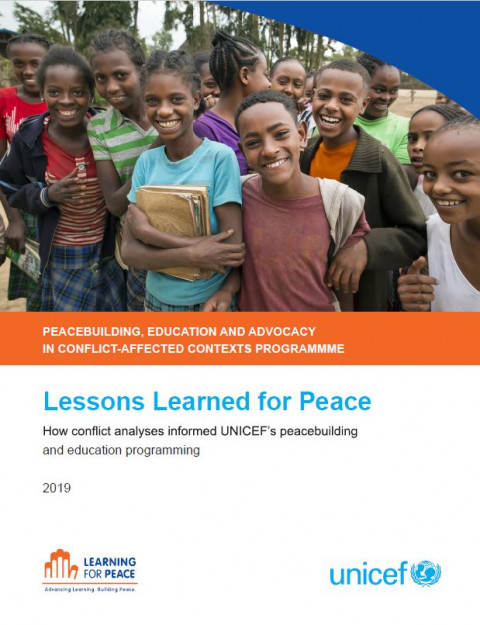 Lessons Learned for Peace Year of publication: 2019 This resource is part of a collection of resources compiled by UNICEF’s 2012-2016 Peacebuilding, Education and Advocacy Programme (PBEA), known as Learning for Peace, which was funded by the Government of the Netherlands. The purpose of Lessons Learned for Peace is to share UNICEF’s experience in conducting conflict analyses as a prerequisite for social services programming in fragile and conflict-affected contexts. As part of UNICEF’s Peacebuilding, Education and Advocacy programme, supported by the Government of the Netherlands from 2012-2016, UNICEF commissioned conflict analyses in 14 countries that informed education and other social services interventions at the system, institutional, community and individual levels. The challenges, opportunities and lessons-learned of conflict analysis research in fragile and post-conflict contexts are illustrated and discussed.
 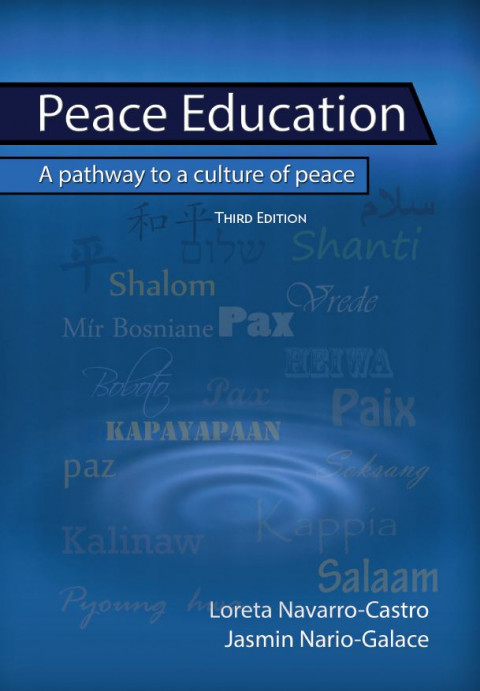 Peace Education: A Pathway to a Culture of Peace; Third Edition Year of publication: 2019 Author: Loreta Navarro-Castro | Jasmin Nario-Galace Corporate author: Miriam College. Center for Peace Education This book is based on author's study and research as well as on experiences as teachers and trainers. By writing about what the authors have come to know and experienced. It is their hope that the ideas contained in this book will circulate widely and promote enthusiasm for both education and action for peace.This book is organized into three sections. Part I aims to develop a holistic understanding of peace and peace education; Part II discusses key peace education themes; Part III focuses on the peaceable learning environment. A "vision for the future" is presented in conclusion.