
Resources
Explore a wide range of valuable resources on GCED to deepen your understanding and enhance your research, advocacy, teaching, and learning.
3,530 Results found
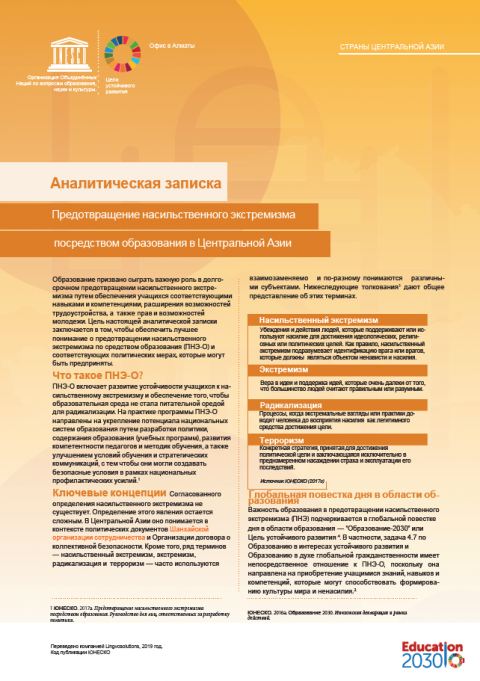 Policy Brief: Prevention of Violent Extremism Through Education in Central Asia Year of publication: 2019 Corporate author: UNESCO Almaty Education has a powerful role to play in long-term prevention of violent extremism by equipping learners with the right skills and competencies, increasing employment opportunities and empowering youth. This policy brief aims to provide a better understanding of Preventing Violent Extremism through Education (PVE-E) and the relevant policy interventions that could be taken. Аналитическая записка: предотвращение насильственного экстремизма посредством образования в Центральной Азии Year of publication: 2019 Corporate author: UNESCO Almaty Образование призвано сыграть важную роль в долго-срочном предотвращении насильственного экстре-мизма путем обеспечения учащихся соответствующими навыками и компетенциями, расширения возможностейтрудоустройства, а также прав и возможностеймолодежи. Цель настоящей аналитической записки заключается в том, чтобы обеспечить лучшее понимание о предотвращении насильственного экстремизма по средством образования (ПНЭ-О) и соответствующих политических мерах, которые могут быть предприняты.
 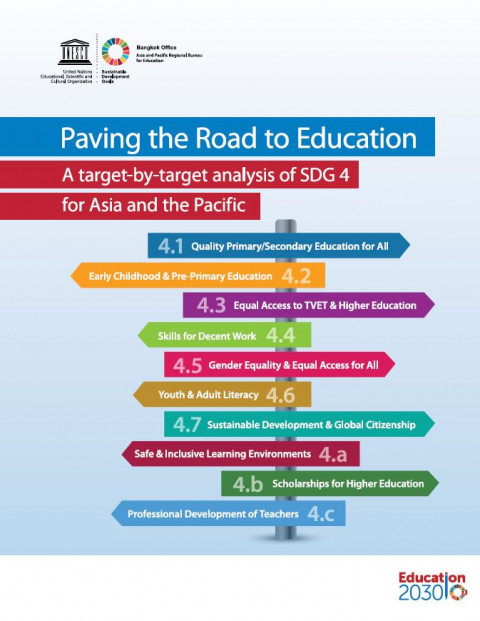 Paving the Road to Education: A Target-by-Target Analysis of SDG 4 for Asia and the Pacific Year of publication: 2018 Corporate author: UNESCO Bangkok The globally adopted development agenda “Transforming our World: the 2030 Agenda for Sustainable Development” has established ambitious intentions that build on the past Millennium Development Goals but also expand on their achievements.The Sustainable Development Goal 4 on education propels forward the vision of ensuring inclusive and equitable quality education and to promote lifelong learning opportunities for all through a holistic, aspirational and systematic education agenda. Education monitoring is an integral part in this process.This publication delivers a data-rich snapshot of Sustainable Development Goal 4, its targets and their monitoring indicators while analyzing available data through a lens of inequality.Assessing the progress which countries have made in the recent past as well as where countries currently stand, this publication sets a baseline against which Member States from Asia and the Pacic are able to monitor progress in achieving the Goal 4 over time but at latest by 2030.Finally, after discussing emerging opportunities and remaining challenges in the region, this publication seeks to assist Member States in identifying what steps can be taken to ensure that the region will achieve the new education agenda.
  ENVISION 4.7: ROADMAP IN SUPPORT OF SDG TARGET 4.7 Year of publication: 2019 Corporate author: Bridge 47 In November 2019, 200 policy makers, civil society members and researchers from all over the world got together in Helsinki to make a roadmap for the future implementation of SDG Target 4.7 in Europe. The participants of the Envision 4.7 event held in Helsinki, 6th and 7th November 2019, made this document to contribute to the achievement of Target 4.7 of the universal Sustainable Development Goals (SDGs). This document was shaped and influenced by the expertise and insight of everyone who came to the conference. Bridge 47 is calling on this collective knowledge and community of experts to continue moving these recommendations forward as we all aim to achieve SDG Target 4.7 and use transformative education as a mechanism for achieving all of the Sustainable Development Goals.
 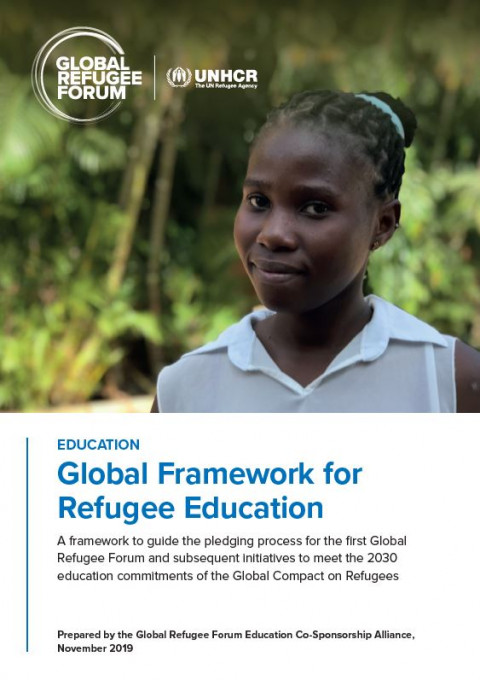 Global Framework for Refugee Education Year of publication: 2019 Corporate author: Global Refugee Forum Education Co-Sponsorship Alliance | UN. Office of the United Nations High Commissioner for Refugees (UNHCR) This Global Framework for Refugee Education has been produced by the Global Refugee Forum’s Education Co-Sponsorship Alliance, comprising more than 60 partners. It aims to help partners to translate the Global Compact on Refugees and the Refugee Education 2030: A Strategy for Refugee Inclusion into pledges for concrete action to help achieve inclusive and equitable quality education for all by 2030.
 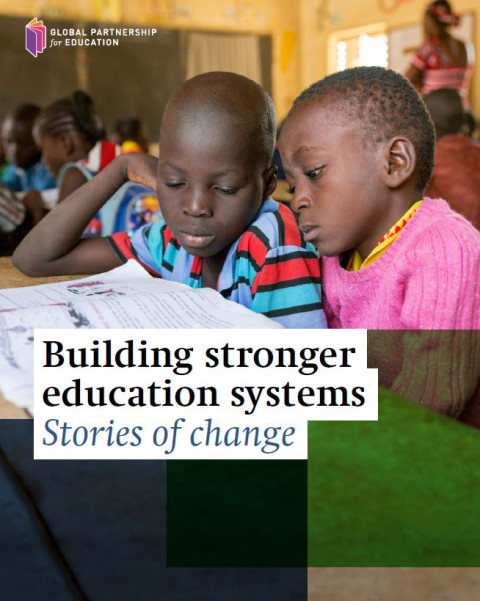 Building Stronger Education Systems: Stories of Change Year of publication: 2019 Corporate author: The Global Partnership for Education (GPE) A compilation of results stories which show the progress that GPE's developing country partners are making in getting more children, especially girls, in school and learning. The brochure includes stories from Afghanistan, Benin, Burkina Faso, Djibouti, Eritrea, Ethiopia, Guyana, Kenya, Pakistan, Papua New Guinea and Sudan. Construire des systèmes éducatifs plus performants : parcours de réussite Year of publication: 2019 Corporate author: The Global Partnership for Education (GPE) Cette brochure présente des parcours de réussite attestant des progrès accomplis par les pays en développement partenaires du PME pour que davantage d’enfants, et en particulier de filles, aillent à l’école et bénéficient d’une éducation de qualité.Elle met en évidence les cas des pays tels que l'Afghanistan, le Bénin, le Burkina Faso, Djibouti, l’Érythrée, l’Éthiopie, le Guyana, le Kenya, le Pakistan, la Papouasie-Nouvelle-Guinée et le Soudan.
  تقرير التنمية الإنسانية العربية للعام 2016: الشباب وآفاق التنمية واقع متغير Year of publication: 2016 Corporate author: UNDP Arab States يتناول تقرير "التنمية الإنسانية العربية للعام 2016: الشباب وآفاق التنمية واقع متغير" بالدراسة التحديات والفرص التي تواجه الشباب في المنطقة العربية، وخاصة منذ عام 2011، ويسعى لتقديم لمحة عامة عن الشباب في المنطقة، ولتحفيز نقاش جاد يشارك فيه الشباب أنفسهم مع أهم الأطراف الأخرى في المجتمع حول حول مستقبل التنمية في المنطقة بالنظر إلى وضع الشباب ودورهم باعتبارهم قضية محورية في هذا الوقت بالذات.ينطلق التقرير من حقيقة أن جيلُ الشباب الحالي يمثل أكبرُ كتلة شبابيّة تشهدها المنطقة على مدى السنوات الخمسين الماضية، إذ يكون 30 في المئة من سكّانها الذين يبلغ عددُهم 370 مليونَ نسمة. وينبِّه التقرير إلى أن البلدان العربية تستطيع تحقيقَ طفرة حقيقية ومكاسب كبيرة في مجالي التنمية، وتعزيزَ الاستقرار، وتأمينَ هذه المكاسب على نحوٍ مستدام إذا تبنَّت سياساتٍ تُعطي الشبابَ حصةً يستحقونها في تشكيل مجتمعاتِهم وتَجعلهم محطَّ الاهتمام - سياسيًّا واجتماعيًّا واقتصاديًّا.ويدعو تقرير التنمية الإنسانية العربية 2016 دول المنطقة إلى الاستثمار في شبابها وتمكينهم من الانخراط في عمليات التنمية، كأولوية حاسمة وملحة في حد ذاتها وكشرط أساسي لتحقيق التنمية المستدامة. وتكتسب هذه الدعوة أهمية خاصة اليوم إذ تشرع كافة البلدان زمنها الدول العربية في إعداد خططها الوطنية لتنفيذ خطة 2030 للتنمية المستدامة. كما يدعو التقرير إلى تبني نموذجِ تنميةٍ ذي تَوجُّهٍ شبابي، يُركِّز في آن واحد على بناء قدرات الشباب وتوسيعِ الفرص المتاحةِ لهم، ويعتبر أن تحقيقَ السلام والأمن على الصعيدَين الوطنيِّ والإقليمي شرطًا أساسيًّا لمستقبلٍ جدير بالشباب. Arab Human Development Report 2016: Youth and Development Prospects Year of publication: 2016 Corporate author: UNDP Arab States AHDR 2016 examines challenges and opportunities facing youth in the Arab region, especially since 2011, and seeks to provide an overview on youth in the region and stimulate a broad dialogue between youth and key stakeholders on the future of development in the region, focusing on the role of youth as critical partners at this very point in time.The point of departure of the report is the demographic fact that the current youth generation is the largest youth cohort this region has had over the past 50 years, making up 30% of its population of 370 million. The report argues that Arab countries can achieve a great leap forward in development, reinforce stability and secure such gains in a sustainable manner, if they adopt policies that give youth a stake in shaping their societies and put them at the centre—politically, socially and economically.The AHDR 2016 calls upon Arab countries to invest in their young people and empower them to engage in the development process as an urgent and critical priority in its own right and prerequisite to achieving sustainable development –a call that is particularly timely as Arab countries embark on formulating their plans to meet the goals of the Sustainable Development Agenda 2030. The report also calls for a youth-oriented development model that focuses simultaneously on building young people’s capabilities and expanding opportunities available to them, considering the achievement of peace and security at national and regional levels as a prerequisite for a future fit for youth.
 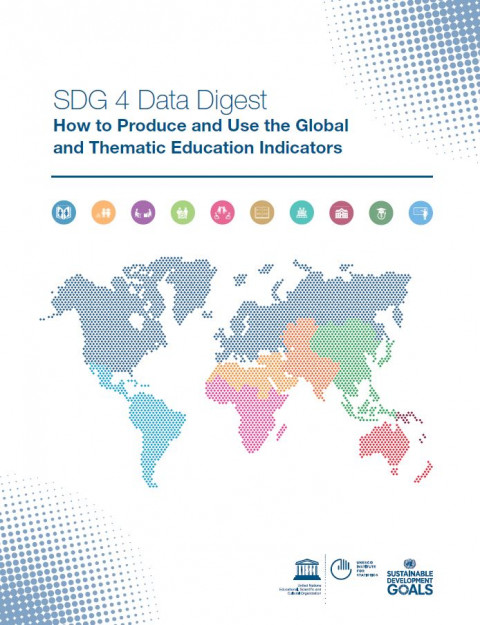 SDG 4 Data Digest: How to Produce and Use the Global and Thematic Education Indicators Year of publication: 2019 Corporate author: UNESCO Institute for Statistics (UIS) This edition of the SDG 4 Data Digest from the UNESCO Institute for Statistics (UIS) aims to help countries develop and report the indicators needed to deliver on the promise of Sustainable Development Goal 4 – a quality education for all by 2030.It stresses the urgency: every child in the generation that should finish secondary education by the deadline should be in a primary classroom right now. Yet if current trends continue, and without a rapid shift from “business as usual”, one in six children aged 6 to 17 will still be out of school in 2030 while just six in ten youth will be completing secondary education. Moreover, there is an urgent need to improve the quality of education on offer. According to UIS estimates, 55% of children and adolescents of primary and lower secondary school age are not achieving minimum proficiency levels in reading and 60% are not acquiring critical skills in mathematics The investment case for education is clear and has been repeated time and time again: education reduces poverty, improves health and nutrition, advances equity and drives national prosperity. But education systems cannot function effectively without a clear picture of progress – or the lack of it – and without knowing who is missing out on education and why.To help ll such gaps, the Digest focuses on new methodologies to help countries build a full and accurate understanding of their own education successes and challenges while generating the internationally comparable data needed for global monitoring. Through these methodological tools, countries can track and accelerate progress on their own education priorities and contribute to the global achievement of SDG4.