
Resources
Explore a wide range of valuable resources on GCED to deepen your understanding and enhance your research, advocacy, teaching, and learning.
2,813 Results found
 Культурное пространство Центральной Азии: единство в многообразии Year of publication: 2010 Corporate author: Swiss Agency for Development and Cooperation (SDC) Доклад представляет собой материалы регионального форума «Культурное пространство Центральной Азии: единство в разнообразии», состоявшегося в Душанбе, Таджикистан в 2010 году.
  Central Asian integration in the context of a single cultural and civilizational space Year of publication: 2013 Author: Erkin Baydarov The article discusses the prospects for regional integration in Central Asia, the need to understand the unity of the historical, cultural and civilizational heritage of the region. Центральноазиатская интеграция в контексте единого культурно-цивилизационного пространства Year of publication: 2013 Author: Erkin Baydarov В статье рассматривается перспективы региональной интеграции в Центральной Азии, необходимость понимания единства исторического, культурного и цивилизационного наследия региона.
  The role of the education system in preventing manifestations of religious extremism in Central Asia Year of publication: 2013 Author: A. Abdirayymova | R. Zharkynbaeva The article discusses the role of the education system in preventing the manifestation of religious extremism through the prism of social, economic and cultural development. Роль системы образования в предотвращении проявлений религиозного экстремизма в Центральной Азии Year of publication: 2013 Author: A. Abdirayymova | R. Zharkynbaeva В статье рассматривается роль системы образования предоствращения проявления религиозного экстремизма через призму социального, экономического и культурного развития.
  Review of best practices in education for sustainable Development in Central Asia in the light of the implementation of the UN Decade of ESD and the UNECE Strategy on ESD Year of publication: 2009 Corporate author: Regional Environmental Centre for Central Asia (CAREC) “A review of the best practices in education for sustainable development in Central Asia in the light of the implementation of the UN Decade on ESD and the UNECE Strategy on ESD” was prepared by CAREC in 2008-2009 in the framework of the “Subregional Education for Sustainable Development Network” project, in collaboration with experts from Central Asian countries. Обзор лучших практик по образованию для устойчивого развития в Центральной Азии в свете реализации Декады ООН по ОУР и Стратегии ЕЭК ООН по ОУР Year of publication: 2009 Corporate author: Regional Environmental Centre for Central Asia (CAREC) «Обзор лучших практик по образованию для устойчивого развития в Центральной Азии в свете реализации Декады ООН по ОУР и Стратегии ЕЭК ООН по ОУР» подготовлен РЭЦЦА в 2008-2009 гг. в рамках проекта «Субрегиональная сеть по образованию для устойчивого развития», в сотрудничестве с экспертами стран Центральной Азии
 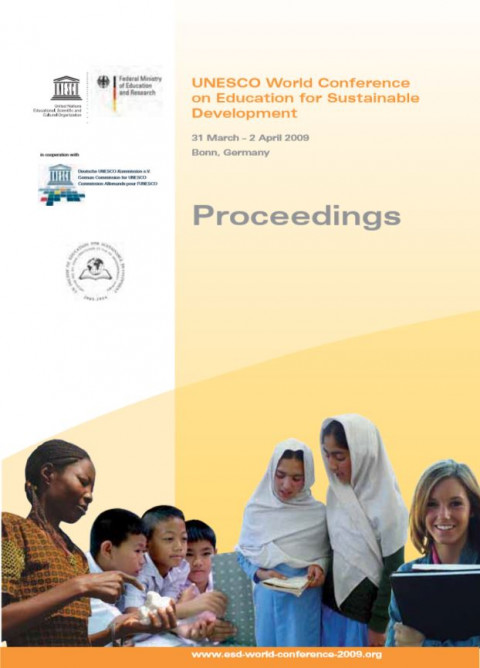 UNESCO World Conference on Education for Sustainable Development Year of publication: 2009 Corporate author: German Commission for UNESCO | Germany. Federal Ministry of Education and Research UNESCO held its Conference on Education for Sustainable Development, which highlighted the main contribution of education to sustainable development in education and its quality . This booklet contains a detailed overview of the meetings and proceedings of the International Conference. مؤتمر اليونيسكو العالمي للتعليم من اجل التنمية المستدامة Year of publication: 2009 Corporate author: German Commission for UNESCO | Germany. Federal Ministry of Education and Research عقدت المنظمة الدولية اليونيسكو مؤتمرها الخاص بالتعليم من أجل التنمية المستدامة والذ سلط الضوء على المساهمة الرئيسية للتعليم في التنمية المستدامة في التعليم وجودته ، ويتضمن هذا الكتيب عرضا مفصلا للجلسات ووقائع المؤتمر الدولي
  Identity, DNA Typing and Citizenship: Philosophical Reflections Year of publication: 2010 Author: Marie-Hélène Parizeau Corporate author: Sociologie et sociétés In a context of globalization, migratory flows and the hunt for terrorists, how are biometrics, and, more specifically, the notion of the human DNA Typing, changing the individual’s relationship to his or her citizenship ?To try to answer this question, we review some of the theoretical aspects of citizenship and briefly outline the history of identification measures linked to the advent of citizenship. We then examine the current context of the use of biometrics for identification purposes and the reasons for its use as cited by the European Community and the United States. We more particularly look at the case of the human DNA Typing, using examples from Canada and the United States. The genetic footprint is related to personal identity based on Paul Ricoeur’s concept of narrative identity. We show how the ethno-racial criteria used by biometrics, together with the ideology of multiculturalism, are constructing, in the West, a new narration of the Other, of foreigners, which excludes them from the sphere of citizenship.