
Resources
Explore a wide range of valuable resources on GCED to deepen your understanding and enhance your research, advocacy, teaching, and learning.
2,817 Results found
 Fondations durables: Un Guide d’enseignement des objectifs de développement durable Year of publication: 2018 Author: Keana Rellinger | Grace Van Mil Corporate author: Manitoba Council for International Cooperation (MCIC) Ce guide est conçu pour les éducateurs ou toute personne qui aimerait enseigner aux jeunes les objectifs de développement durable des Nations Unies. Les objectifs de développement durable – également connus sous l’acronyme ODD ou les objectifs mondiaux – couvrent un large éventail de questions relatives à la durabilité, et mettent en lumière les zones de priorité internationale pour mettre fin à la pauvreté et à la faim, améliorer la santé et l’éducation, rendre les villes plus durables et combattre le changement climatique. Ce guide vous donne des informations claires, des ressources pédagogiques et d’autres soutiens pour appuyer vos efforts d’éducation et de motivation des jeunes pour qu’ils appuient les objectifs de développement durable et se sentent inspirés à transformer leur appui en action. Ce guide explore aussi comment vous pouvez incorporer à vos cours les divers sujets couverts par chaque objectif dans de multiples matières.
  从教书匠到燃灯者: 教师公民教育自觉的蒙昧与唤醒 (当代教育论坛; No. 296) Year of publication: 2020 Author: Hu Chaoxia | Tang Songlin Corporate author: Hunan Academy of Educational Science 从课程角度来看,目前我国学校公民教育存在两个不充分:公民学科教 育以公民认知代替完整的公民教育,路径开发不充分;其他各类课程协同的公民教育同 向聚焦不足,路径拓展不充分。从教师角度思考其原因,是“教书匠”的职业定位蒙昧了其 现代教育背景下职能的自觉,拘囿了其教育视域的拓展。教师要以公民教育自觉,为社会 和谐与公民幸福而教,拓展公民教育的场域,结成学习共同体,向自然、向社会、向生活开 发,搭建全景、多层交错衔接式育公民的大世界;拓展学科教学视域,在学科课程资源中 发掘或显或隐的公民教育课程资源,构建全员、全课程育公民的大格局。
  Treaties on Teachers for Global Citizenship Education (Korean Journal of Teacher Education; Vol. 31, No. special) Year of publication: 2015 Author: Kioh Jeong Corporate author: Korea National University of Education This article examines the nature of Global Citizenship Education (GCE) and the qualification of the teacher for the GCE. GCE means post-modern education beyond modern public education. In the latter, teachers used to have been affiliated with nation-building mission, professional service to learners, and sometimes teacher unionism. These affiliations are typically of modern nationalism and industrialism. Teachers for GCE stand on different ground for their professional practice: global civil right to teach, global civil right to learn, and finally peoples’ fundamental right for development. Their sight extends beyond national territory up to global world and cyber space. They overcome modernity to practice transformative pedagogy accommodating multi-cultural dimensions. The image can be summarized as a model global citizen who serves highly for the benefit of mankind, which characterizes Korean educational ideal as provided by the foundation law of education Korea. 세계시민교육을 위한 교사론 (교원교육; Vol. 31, 특별호) Year of publication: 2015 Author: Kioh Jeong Corporate author: Korea National University of Education 세계시민교육은 국경과 국가와 결부된 근대적 성격의 교육을 넘어선 포스트모던 교육을 지 향한다. 이 논문은 이러한 세계시민교육을 담당하고 발전시켜갈 교사들의 성격이나 교사관에 대한 논의를 전개한다. 세계시민교육을 담당할 교사들의 성격은 성직자관 전문직관 노동자관으 로 요약되는 기존 교직관의 틀을 벗어난다. 세계시민교사로 요약된 이러한 교사상은 세계시민권으로서 가르칠 권리와 세계시민권으로서의 학습권에 기초한 교육을 보편적 인권으로서 개발 에의 권리에 입각한 모든 인류의 발전과 성장을 지향하는 교사를 필요로 한다. 이러한 교사는 세속적인 교육을 견지하며, 영토를 넘어 전 지구생태계와 사이버세계에 시야를 넓히고, 근대성을 벗어나 포스트모던 패러다임에 입각한 변혁적 교수법과 다문화교육을 지향한다. 이러한 교사상을 선도적 세계시민으로서의 교사라고 요약할 수 있다. 선도적 세계시민으로서의 교사상은 우리 한국교육이 지향해온 교육이념인 홍익인간의 인간상과 일치한다. 홍익인간의 이념은 한국 교육이 세계시민교육논의에 적극 참여하는 배경의 하나를 이루고 있다.
 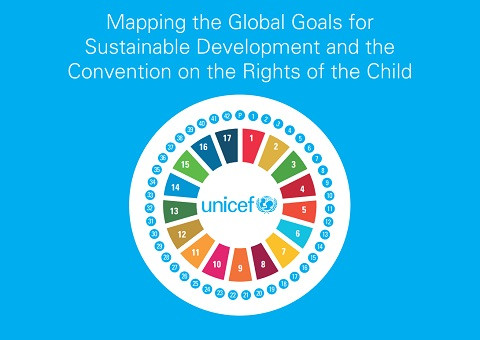 Mapping the Global Goals for Sustainable Development and the Convention on the Rights of the Child Year of publication: 2016 Author: Marie Wernham Corporate author: United Nations Children's Fund (UNICEF) This interactive document aims to encourage an in-depth and broad-based exploration of the links and synergies between the Global Goals for Sustainable Development and the Convention on the Rights of the Child.
  Accelerating Education for the SDGs in Universities: A Guide for Universities, Colleges, and Tertiary and Higher Education Institutions Year of publication: 2020 Corporate author: Sustainable Development Solutions Network (SDSN) The aim of this guide is to help accelerate the institutional process of mainstreaming ESDGs in universities, by helping stakeholders within and outside universities understand why they should pursue this goal, and how. It aims to expand, update and refine the information provided in the previous guide based on new resources, tools, thinking, and learnings from universities working to implement ESDGs, to consider what ESDGs mean for universities. The guide touches on the pedagogical aspects of ESDGs, in terms of how they affect institutional approaches to ESDGs, but does not attempt to provide a comprehensive review of them. The Guide outlines the case for mainstreaming education for the SDGs at universities, what this does and could look like in practice, and the processes and activities universities can take to support implementation. It also provides practical guidance, resources, and case studies to inspire universities to take action and deepen their practice.
  Opening Eyes and Minds: Inspiring, Educating and Engaging Third Level Students in Global Education (Policy and Practice: A Development Education Review; Vol. 19, Autumn) Year of publication: 2014 Author: Joanne Malone | Gráinne Carley | Meliosa Bracken Corporate author: Centre for Global Education (CGE) Suas has worked since its inception to engage Irish third level students in global citizenship education. This article focuses on the Suas Global Citizenship Programme, setting out the purpose and context of the programme, its innovative design and educational approach and its comprehensive monitoring and evaluation framework. The article presents an analysis of key findings from Suas’ evaluation process and a summary of our learning to date on the challenges of supporting third level students in reflecting, learning and acting on global justice issues.
  Sustainable Development in the European Union: Monitoring Report on Progress Towards the SDGs in an EU Context (2020) Year of publication: 2020 Corporate author: European Union (EU) Sustainable development is firmly anchored in the European Treaties and has been at the heart of European policy for a long time. The 2030 Agenda for Sustainable Development and its 17 Sustainable Development Goals (SDGs), adopted by the UN General Assembly in September 2015, have given a new impetus to global efforts for achieving sustainable development. The EU is fully committed to playing an active role to maximise progress towards the Sustainable Development Goals. This publication is the fourth of Eurostat’s regular reports monitoring progress towards the SDGs in an EU context. The analysis in this publication builds on the EU SDG indicator set, developed in cooperation with a large number of stakeholders. The indicator set comprises around 100 indicators and is structured along the 17 SDGs. For each SDG, it focuses on aspects which are relevant from an EU perspective. The monitoring report provides a statistical presentation of trends relating to the SDGs in the EU over the past five years (‘short-term’) and, when sufficient data are available, over the past 15 years (‘long-term’). The indicator trends are described on the basis of a set of specific quantitative rules.
  Role of Universities in Implementing the SDGs in Afghanistan: Conference Report (2019) Year of publication: 2019 Corporate author: Kateb University On August 29, 2019, Kateb University, in partnership with the Sustainable Development Solutions Network (SDSN) and Ministry of Economy of Afghanistan (MoEC), UNDP, and Afghanistan Research and Evaluation Unit (AREU), organized a one-day conference titled ‘Role of Universities in Implementation of the SDGs in Afghanistan’. The event was held at Government Media and Information Center with over 250 participants from different universities, CSOs, Development Organizations and the government organizations. They came together to discuss the current status quo of the SDGs in Afghanistan and to discuss the role universities can play in achieving the SDGs in Afghanistan. The conference was a gateway for further cooperation among universities in Afghanistan to play their roles in the fields of Teaching and Learning, Research, External Leadership and Operation and Governance. This report provides a summary of the key issues discussed at the conference and abstracts every presentation.
  Study on Singapore’s Character and Citizenship Education Curriculum Reform: Discuss the Design of the Integration of Moral Education Curriculum from Primary School to University (Global Education; Vol. 48, No. 2) Year of publication: 2019 Author: Wu Xiaowei Corporate author: East China Normal University Strengthening the integration of moral education curriculum is an important part of the overall planning of a moral education system from primary school to university, which also is an important method to improve the effectiveness of moral education. Singapore’s curriculum reform reviving around character and citizenship education can provide reference and enlightenment for the integration of moral curriculum from primary school to university in China. Using the socialist core values to lead and plan the moral education curriculum system, we should focus on the systematic of curriculum objectives, the organic integration of curriculum structure and content, the rational use of teaching methods and strategies and evaluation models, so as to promote the coordinated connection and development of moral education courses from primary school to university.