
Resources
Explore a wide range of valuable resources on GCED to deepen your understanding and enhance your research, advocacy, teaching, and learning.
2,839 Results found
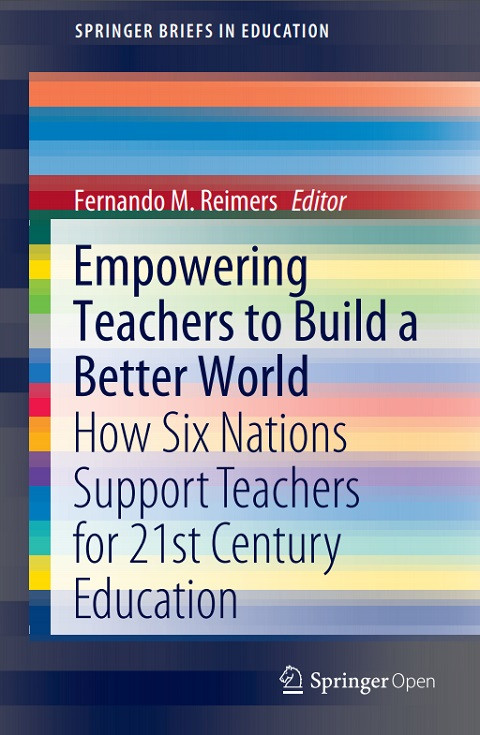 Empowering Teachers to Build a Better World: How Six Nations Support Teachers for 21st Century Education; Springer Briefs in Education Year of publication: 2020 Author: Fernando Reimers This open access book presents a comparative study on how large-scale professional development programs for teachers are designed and implemented. Around the world, governments and educators are recognizing the need to educate students in a broad range of higher order cognitive skills and socio-emotional competencies, and providing effective opportunities for teachers to develop the expertise needed to teach these skills is a crucial aspect of effective implementation of curricula which include those goals. This study examines how large-scale efforts to empower teachers for deeper instruction have been designed, how they have been implemented, and their outcomes. To do so, it investigates six programs from England, Colombia, Mexico, India, and the United States. Though all six are intended to broaden and deepen students’ curricular aspirations, each takes this expansion of curricular goals in a different direction.The ambitious education reforms studied here explicitly focus on building teachers’ capacity to teach on a broader set of goals. Through a discerning analysis of program documents, evaluations, and interviews with senior leaders and participants in the programs, the book identifies the various theories of action used in these programs, examines how they were implemented, and discusses what they achieved. As such, it offers an indispensable resource for education leaders interested in designing and implementing professional development programs for teachers that are aligned with ambitious instructional goals.
 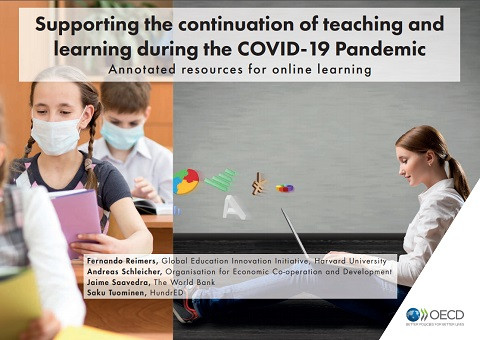 Supporting the Continuation of Teaching and Learning during the COVID-19 Pandemic: Annotated Resources for Online Learning Year of publication: 2020 Author: Fernando Reimers | Andreas Schleicher | Jaime Saavedra | Saku Tuominen Corporate author: Organisation for Economic Co-operation and Development (OECD) | Global Education Innovation Initiative | HundrED This resource discusses the second module of a series which presents the results of a comparative analysis of emerging educational needs and responses as the pandemic unfolds across countries around the world. The overall goal of this series is to facilitate the rapid design process and implementation of adaptive responses to the emerging education challenges, and to protect young people’s educational opportunities during and following the pandemic. This second module presents a first set of online educational resources to support the continuity of teaching and learning during the 2019-20 COVID-19 Pandemic with education leaders around the world. The resources were compiled from responses to the same survey used to produce the first module: A framework to guide an education response to the COVID-19 Pandemic, and additional online sources were included to enhance the list in order to support the continuity of learning for students who have access to the internet and digital devices.
  Teach the Change: 8 Steps to Be a Global Teacher Year of publication: 2018 Corporate author: Start the Change | European Union (EU) These guidelines are a result of consultation with 45 teachers from across Europe, drawing on their combined experiences to reflect on the main challenges of developing educational activities on global issues and with a particular focus on the Sustainable Development Goals (SDGs) and migration.
 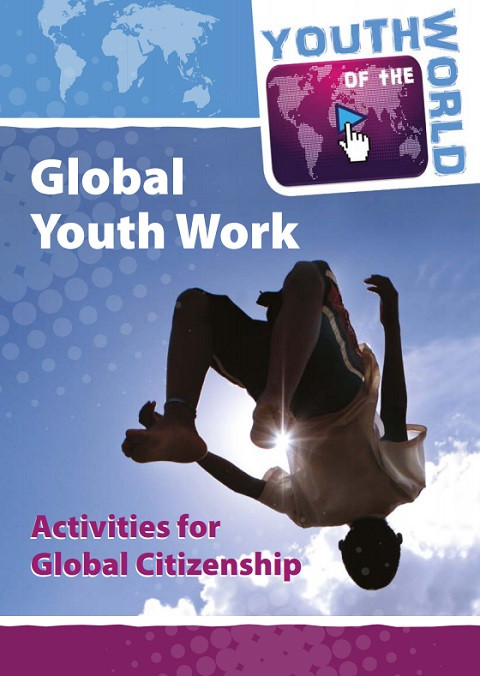 Global Youth Work: Activities for Global Citizenship Year of publication: 2014 Author: Kate Allen | Charlotte Dwyer Corporate author: Scotdec | European Union (EU) | Government of Scotland This resource has been designed for youth workers and other professionals working with young people to promote global youth work as a mainstream practice across Scotland. Each chapter contains practical activities, background information and resources aimed at encouraging young people to think about their own lives and how they connect with others. Examining these topics within the framework of social justice, human rights and sustainable development enables young people to reflect on how their behaviour and actions impact on people and issues locally and globally.
 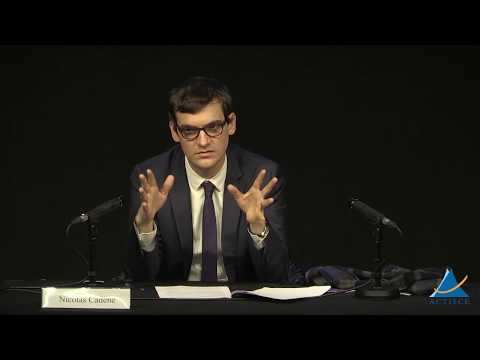 Citoyenneté mondiale et laïcité Year of publication: 2018 Author: Nicolas Cadène Corporate author: ACTISCE Patronage Laique Jules Vallès La laïcité fait, de chacune et de chacun d’entre nous, au-delà de nos appartenances ou de nos origines, des citoyennes et des citoyens à égalité de droits et de devoirs. Elle nous permet d’aller au-delà de nos différences et de les dépasser tout en les respectant. Par la volonté de vivre ensemble, notre laïcité garantit la liberté de croire ou de ne pas croire et la possibilité de l’exprimer dans les limites de la liberté d’autrui. Elle permet la pluralité dans le respect mutuel et assise sur une citoyenneté commune. Au travers de nombreux exemples dont les cas de la Belgique, la Turquie, l’Inde, le Brésil, le Mexique et le Sénégal, Nicolas Cadène nous montre en quoi la laïcité est source de liberté pour tous les peuples.
  Отчет об общественном мониторинге законодательства и правоприменительной практики местной полицейской службы в сфере предупреждения и профилактики бытового насилия в РК Year of publication: 2017 Author: S.V. Korneytchuk | N.S. Gladyr Corporate author: OSCE. Programme Office in Astana Основной целью настоящего мониторинга является деятельность по оценке и прогнозированию законодательства путем выявления противоречий в законодательстве, устаревших, коррупциогенных и неэффективно реализуемых норм права, а также выработка предложений по совершенствованию законодательства и механизмов его реализации подразделениями местной полицейской службы. Это издание опубликовано при финансовой поддержке Офиса программ ОБСЕ в Астане в рамках проекта «Общественный мониторинг законодательства и правоприменительной практики местной полицейской службы в сфере предупреждения и профилактики бытового насилия в РК».
 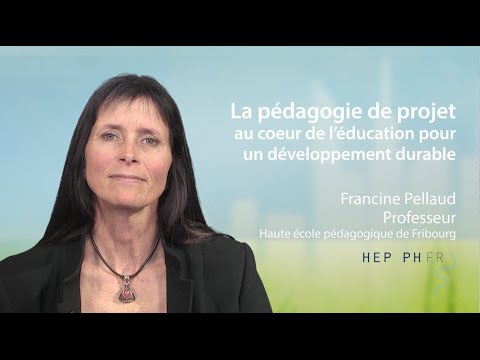 La pédagogie de projet au cœur de l'éducation pour un développement durable Year of publication: 2016 Corporate author: Université Virtuelle Environnement et Développement durable (UVED) Dans cette vidéo, Francine Pellaud discute des intérêts et des conditions de réussite de la pédagogie de projet, dans le cadre d'une éducation à l'environnement et au développement durable.
 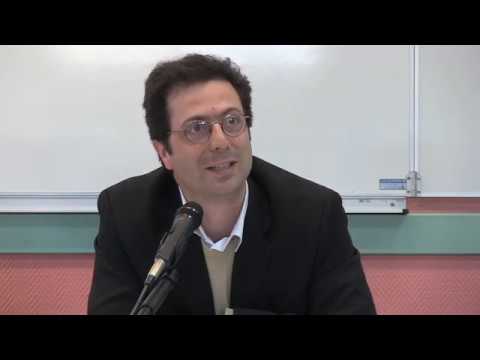 Qu'est ce qu'être citoyen du monde aujourd'hui? Year of publication: 2017 Author: Louis Lourme Corporate author: Rendez-vous Philosophiques Orléans-Tours Il y a des questions fondamentales à partir desquelles il devient possible de définir notre époque comme un nouvel âge de la citoyenneté mondiale. Quels sont les changements de l’époque contemporaine? Comment se manifeste cette citoyenneté mondiale? Et que reste-t-il de l’ancien idéal du cosmopolitisme lorsqu’il gagne ce nouveau sens politique?
  Towards Compassionate Global Citizenship: Educating the Heart through Development Education and Cognitively-Based Compassion Training (Vol. 19, Autumn, 2014) Year of publication: 2014 Author: Caroline Murphy | Brendan Ozawa-de Silva | Michael Winskel Corporate author: Centre for Global Education (CGE) The authors present an argument for developing emotional literacy which can be applied to critical development education to bring about active citizens who have capacity to take compassionate action for global justice. It is argued that both emotional skills and critical thinking skills are mutually essential, and in fact it is only by cultivating a symbiosis between these, can pedagogy be developed that presents a true transformational agency to people. The paper attempts to synthesise development education (DE) with Cognitively-Based Compassion Training (CBCT), and argues that these are potentially compatible to acquire such pedagogy. While DE can provide individuals with the skills to think critically and react to injustice, CBCT can provide the skills and emotional capacity to intervene for change, without giving in to despair, anger, or burnout. In short, it is argued that DE and CBCT can provide the emotional and intellectual skills necessary for productive social activism and change. Throughout this article it is highlighted how the international development organisation, Children in Crossfire (CIC), has been grappling with the above mentioned and related disciplines, and how it has been working, in partnership with researchers from Emory University and Life University’s Center for Compassion and Secular Ethics, to evolve its DE teacher training practice, Teachers in Development and Learning (TIDAL), towards such a transformative pedagogy, entitled ‘Educating the Heart for Compassionate Global Citizenship’.
  Preparing Our Youth for an Inclusive and Sustainable World: The OECD PISA Global Competence Framework Year of publication: 2018 Corporate author: Organisation for Economic Co-operation and Development (OECD) OECD Programme for International Student Assessment (PISA), the global yardstick for educational success, includes global competence in its metrics for quality, equity and effectiveness in education. The global competence assessment in PISA 2018 is composed of two parts: a cognitive assessment and a background questionnaire. The cognitive assessment is designed to elicit students' capacities to critically examine global issues; recognise outside influences on perspectives and world views; understand how to communicate with others in intercultural contexts; and identify and compare different courses of action to address global and intercultural issues. In the background questionnaire, students will be asked to report how familiar they are with global issues; how developed their linguistic and communication skills are; to what extent they hold certain attitudes, such as respect for people from different cultural backgrounds; and what opportunities they have at school to develop global competence. Answers to the school and teacher questionnaires will provide a comparative picture of how education systems are integrating global, international and intercultural perspectives throughout the curriculum and in classroom activities.