
Resources
Explore a wide range of valuable resources on GCED to deepen your understanding and enhance your research, advocacy, teaching, and learning.
2,839 Results found
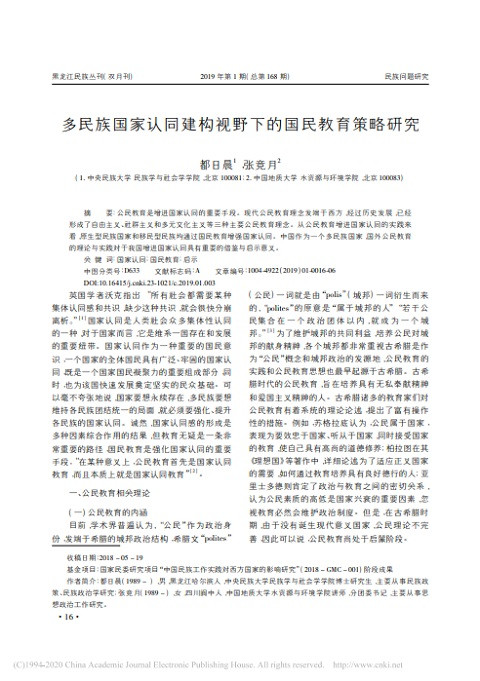 多民族国家认同建构视野下的国民教育策略研究 (黑龙江民族丛刊; No. 1) Year of publication: 2019 Author: Du Richen | Zhang Jingyue Corporate author: Heilongjiang National Research Institute 公民教育是增进国家认同的重要手段。现代公民教育理念发端于西方,经过历史发展,已经 形成了自由主义、社群主义和多元文化主义等三种主要公民教育理念。从公民教育增进国家认同的实践来 看,原生型民族国家和移民型民族均通过国民教育增强国家认同。中国作为一个多民族国家,国外公民教育 的理论与实践对于我国增进国家认同具有重要的借鉴与启示意义。
  The Status and Issues of Peace Education: Focussing on Its Interactions with Unification Education Year of publication: 2019 Author: Jeongah Cho | Ellie Kim | Ahyoung Moon | Boyoung Yoon Corporate author: Korea Institute for National Unification To lay the groundwork to explore the accessibility of peace education and unification education in an era of peace cooperation on the Korean Peninsula, this study takes a look at the history of peace education and the current situation and issues of both peace education and unification education. Against the backdrop of the division on the Korean Peninsula, unification education and peace education have been established as educational sectors of conflict resolution between the North and the South and of means of mediation for violence caused by the division. The two sectors have developed commonalities along the way. The origin of peace education and unification education is rooted on the division of the Korean Peninsula and the subsequent unification issues. In the current educational practices, there are different characteristics and emphasis in terms of the direction, contents, and subject of education between peace education and unification education. Efforts of creating “peace·unification education” are recently being made which focuses more on issues of peace than existing unification education. Peace education and unification education exhibit differences when it comes to the relationship between peace and unification in realizing a peaceful Korean Peninsula, whether unification is justified as an ultimate goal, how issues of ‘positive peace’ and security are handled, and how much initiatives the learners have. This study asserts that the issues between peace education and unification education should be clarified and that the two sectors should expand the overlapping areas under the principal of dealing with unification issues on the basis of value of peace. 평화교육의 실태와 쟁점: 통일교육과의 접점을 중심으로 Year of publication: 2019 Author: 조정아 | 김엘리 | 문아영 | 윤보영 Corporate author: 통일연구원 이 연구는 한반도 평화협력의 시대에 평화교육과 통일교육의 접근 가능성을 모색하기 위한 기초작업이다. 평화교육의 역사를 고찰하고 평화 교육과 통일교육 실태와 쟁점을 살펴보았으며, 이에 기초하여 평화교육과 통일교육의 과제를 도출하였다. 통일교육과 평화교육은 분단의 역사 속에서 분단과 남북 간의 대립, 분단으로 인한 폭력과 비평화를 해소하기 위한 교육으로 자리매김하였고, 그 과정에서 접점을 형성하고 공동의 영역을 만들어왔다. 평화교육의 역사 고찰에서 나타난 바와 같이, 한국의 평화교육은 그 태생에서부터 분단의 극복과 민족화해라는 문제를 중심에 놓았다. 한국에서 평화교육은 우리 사회의 폭력의 주요한 원인 중 하나인 분단문제를 고민하지 않고 이루어질 수는 없는 것이었다. 그 점에서 평화교육과 통일교육은 태생에서부터 한반도의 분단과 통일이라는 출발점을 공유하고 있다. 그럼에도 불구하고, 평화교육이라는 이름으로 불리는 교육실천과 통일교육이라는 이름으로 불리는 교육실천의 현재 모습 속에는 교육의 방향성, 내용, 주체 등의 측면에서 서로 다른 특성과 강조점이 나타난다. 특히 통일교육 영역에서 최근 평화‧ 통일교육이라는 명칭으로 기존 통일교육과의 차별화를 시도하고 있지만, 한반도 평화에서 통일의 위상, 통일의 당위성 문제, 적극적 평화와 안보문제, 학습자의 주도성 등을 다루는 관점에서 평화교육과의 차이가 존재한다. 이에, 이 연구에서는 평화교육과 통일교육 중 어느 하나가 다른 쪽을 대체하거나 양자를 통합해야 한다고 주장하기보다는, 평화교육과 통일 교육이 양자의 문제의식을 공유하면서 한반도 분단과 통일문제를 평화의 관점과 가치에 입각해서 다루어야 한다고 보았다. 이를 위한 정책과 평화교육의 실태와 쟁점: 통일교육과의 접점을 중심으로 제로 ① 교육 방향성 정립과 이를 위한 사회적 논의, ② 역량중심으로 평화교육 및 통일교육 내용체계 개편, ③ 민간 영역의 자율성 확대와 거버넌스 구축, ④ 시대적 과제와 평화지향성을 반영한 통일교육 관계 법령 정비를 제시하였다.
  Time to Reach for the Moon: The EU Needs to Step up Action and Lead the Transformation to Sustainability; Civil Society SDG Monitoring Report Year of publication: 2020 Author: Sylvia Beales | George Gelber Corporate author: SDG Watch Europe | Make Europe Sustainable for All This report explains why the EU’s SDG reporting creates an illusion of sustainability and makes concrete proposals for meaningful monitoring to become a stronger foundation for transformative policies. The report flags up serious gaps, bringing them to life with 17 individual stories. It also offers 17 solutions, real-life examples of progressive policies, innovative initiatives and truly sustainable business models.
  Educate for Life: The Development of Socio-Emotional Skills and the Role of Teachers Year of publication: 2020 Author: Elena Arias Ortiz | Diana Hincapié | Diana Paredes Corporate author: Inter-American Development Bank This technical note presents a diagnosis on the incorporation of socio-emotional skills in 12 countries in Latin America and the Caribbean, and the training that teachers receive to develop these skills in students. Although progress has been made, we highlight the main challenges that must be faced to develop socio-emotional skills.
 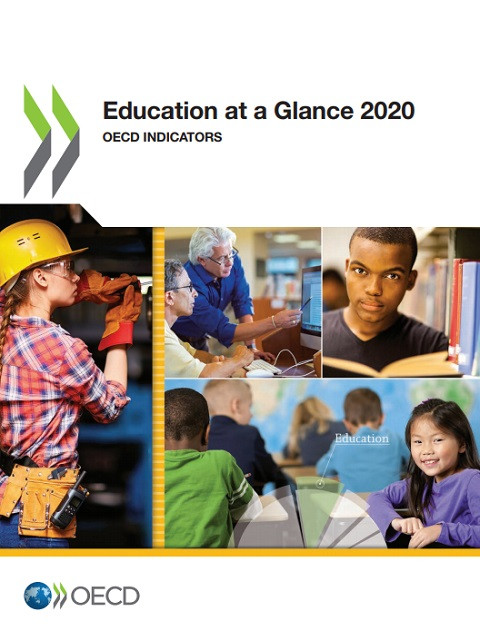 Education at a Glance 2020: OECD Indicators Year of publication: 2020 Corporate author: Organisation for Economic Co-operation and Development (OECD) Education at a Glance is the authoritative source for information on the state of education around the world. It provides data on the structure, finances and performance of education systems across OECD countries and a number of partner economies. More than 100 charts and tables in this publication – as well as links to much more available on the educational database – provide key information on the output of educational institutions; the impact of learning across countries; access, participation and progression in education; the financial resources invested in education; and teachers, the learning environment and the organisation of schools.The 2020 edition includes a focus on vocational education and training, investigating participation in vocational education and training at various levels of education, the labour market and social outcomes of vocational graduates as well as the human and financial resources invested in vocational institutions. Two new indicators on how vocational education and training systems differ around the world and on upper secondary completion rate complement this topic. A specific chapter is dedicated to the Sustainable Development Goal 4, and investigates the quality and participation in secondary education.
 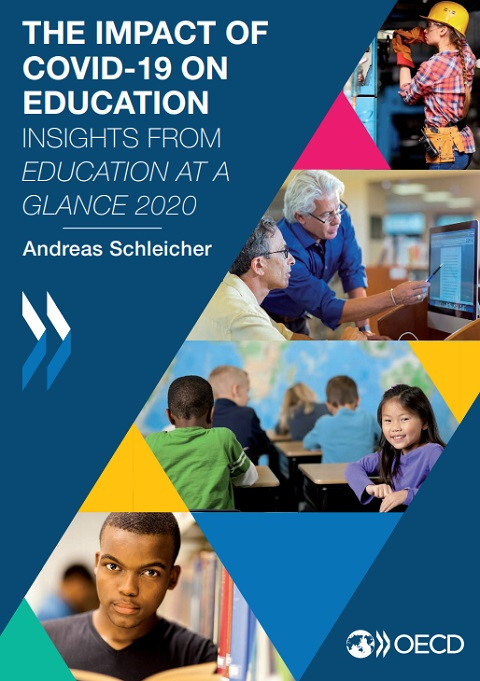 The Impact of COVID-19 on Education: Insights From Education at a Glance 2020 Year of publication: 2020 Author: Andreas Schleicher Corporate author: Organisation for Economic Co-operation and Development (OECD) OECD Director for Education and Skills Andreas Schleicher gives his insights and interpretations from the OECD’s Education at a Glance 2020 report – the go-to source for information on the state of education around the world. This brochure focuses on a selection of indicators from Education at a Glance, selected for their particular relevance in the current context. Their analysis enables the understanding of countries’ response and potential impact from the COVID-19 containment measures.
 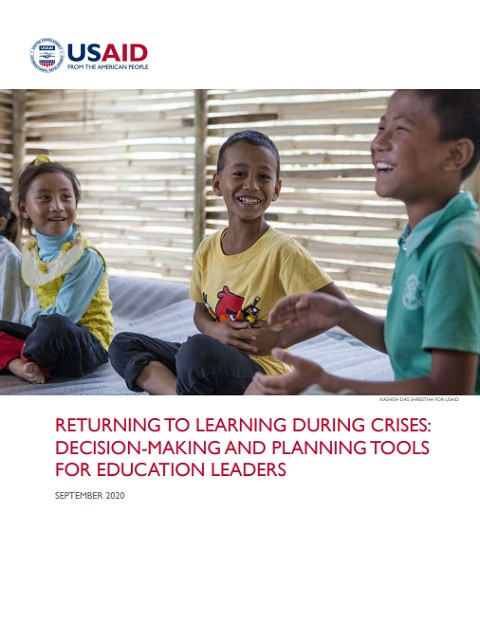 Returning to Learning During Crises: Decision-Making and Planning Tools for Education Leaders Year of publication: 2020 Corporate author: United States Agency for International Development (USAID) This toolkit is for USAID Mission staff and their partner national and local education officials, implementing partners, and administrators and educators of education institutions. It helps education planners plan and make key decisions on the return to learning during and after education disruptions caused by crises, such as COVID-19, in a way that is equitable, inclusive, and builds the resilience of education systems. To provide timely support to the field, this toolkit includes a first set of tools and identifies several tools that are forthcoming. The toolkit is expected to be updated with the full set of tools in late 2020.
 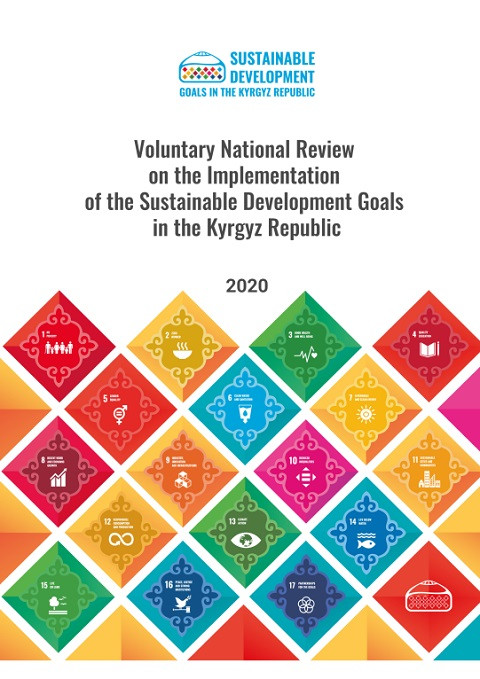 Национальный добровольный обзор достижений Целей устойчивого развития в Кыргызской Республике 2020 Year of publication: 2020 Corporate author: Kyrgyzstan. Ministry of Economy | United Nations (UN) Данный добровольный обзор содержит в себе информацию по выполнению Кыргызской Республикой целей устойчивого развития 2030, задачи и направления дальнейшей деятельности. Отдельное внимание уделено ЦУР 4 "Образование", где приоритетом является повышение качества и охвата образованием на всех уровнях, а также развитие системы непрерывного образования. Voluntary National Review on the Implementation of the Sustainable Development Goals in the Kyrgyz Republic 2020 Year of publication: 2020 Corporate author: Kyrgyzstan. Ministry of Economy | United Nations (UN) This voluntary review contains information on the implementation of the 2030 Sustainable Development Goals by the Kyrgyz Republic, objectives and directions for further activities. Special attention is paid to SDG 4 "Education", where the priority is to improve the quality and coverage of education at all levels, as well as the development of the lifelong education system.