
Resources
Explore a wide range of valuable resources on GCED to deepen your understanding and enhance your research, advocacy, teaching, and learning.
2,839 Results found
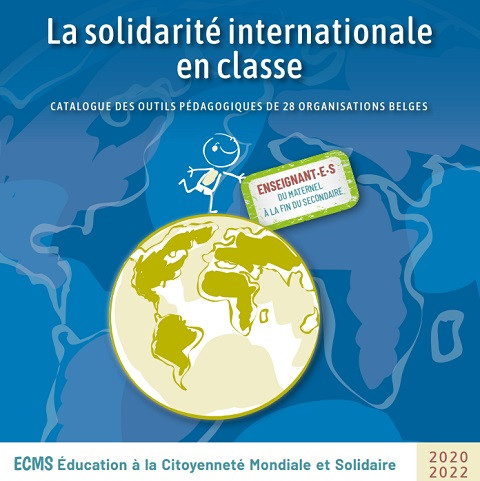 La solidarité internationale en classe: Catalogue des outils pédagogiques de 28 organisations belges; Éducation à la Citoyenneté Mondiale et Solidaire (ECMS) Year of publication: 2020 Corporate author: Îles de Paix Plus d’une centaine d’outils pédagogiques abordant chacun une ou plusieurs des thématiques en lien avec l’éducation à la citoyenneté mondiale et solidaire (ECMS). Dans ce catalogue, vous trouverez des dossiers pédagogiques, des livrets illustrés, des jeux interactifs, des fiches d’activités, des sites internet, etc. Bref, une grande diversité d’outils de qualité, ancrés dans l’actualité mondiale. Ils sont des supports indispensables pour mener à bien une foule de projets avec vos élèves, de la maternelle jusqu’à la fin du secondaire. Encartée dans ce catalogue, vous trouverez également une brochure destinée aux Hautes Écoles Pédagogiques.
 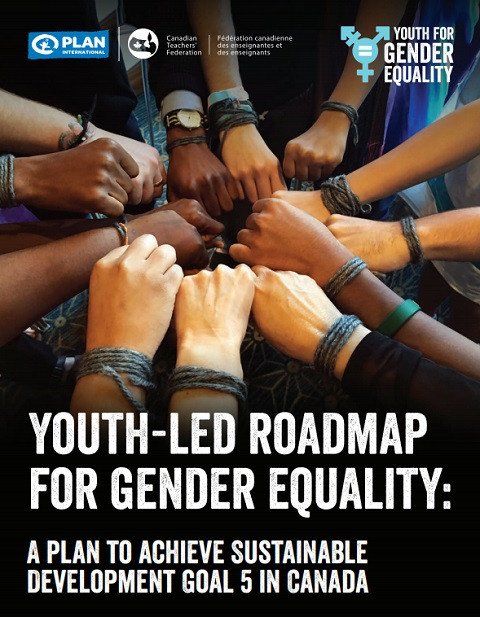 Youth-Led Roadmap for Gender Equality: A Plan to Achieve Sustainable Development Goal 5 in Canada Year of publication: 2019 Corporate author: Plan International Canada | Canadian Teachers’ Federation The uniquely youth-led Roadmap – launched at the Women Deliver 2019 Global Conference in Vancouver, on Tuesday, June 4, 2019. It reflects the powerful perspectives of over 300 youth from all over Canada with diverse experiences and backgrounds, such as youth who have experienced homelessness, Indigenous youth, young people of colour, newcomers to Canada and members of the 2SLGBTQIA+ community, among others, as well as individuals from remote and rural communities in Canada.The Roadmap includes 20 recommendations that individual Canadians can take today to achieve gender equality within their homes, communities and beyond. It also includes more than 40 additional recommendations targeted at public institutions, the private sector and governments to help Canada achieve Sustainable Development Goal 5: Gender equality, by the goals’ end date of 2030.
  Quand l’art et la citoyenneté mondiale se rencontrent: Histoire d’une expérience menée au Conservatoire Royal de Bruxelles; Section arts de la parole 2019-2020 Year of publication: 2020 Corporate author: Annoncer la Couleur (ALC) | Enabel Aujourd’hui, le monde scolaire entame un grand réaménagement de son fonctionnement avec la mise en place du Pacte pour un Enseignement d’Excellence. Dans cette nouvelle architecture se dessine l’ECA, Éducation Culturelle et Artistique, qui renforce les liens entre les disciplines traditionnelles et le monde artistique.Au cour de l’année scolaire 2019-2020, Annoncer la couleur s’est demandé comment pratiquement mettre en lien les artistes avec les nouvelles attentes des écoles. Il lui a semblé que l’enjeu pourrait être de familiariser les futur·e·s artistes avec les nouveaux fonctionnements du monde scolaire, et de conscientiser le lien entre une approche artistique et des thématiques de citoyenneté mondiale abordées dans les écoles. Elle s’est donc dirigée vers l’Enseignement Supérieur Artistique et plus précisément vers le Conservatoire royal de Bruxelles, section arts de la parole, où le projet s’est construit en partenariat avec les professeur.e.s. La brochure « Quand l’art et la citoyenneté mondiale se rencontrent » retrace cette expérience, en détaille la genèse, les étapes les résultats et les extensions possibles.
 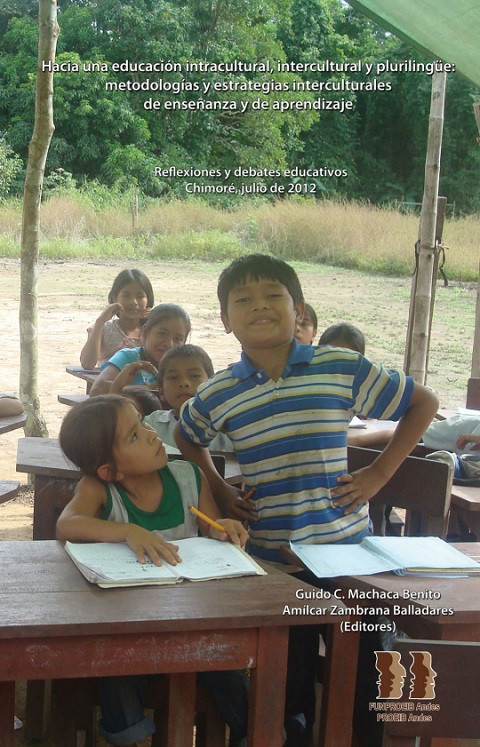 Towards an Intracultural, Intercultural and Multilingual Education: Intercultural Teaching and Learning Methodologies and Strategies Year of publication: 2013 Author: Guido C. Machaca Benito | Amílcar Zambrana Balladares Corporate author: FUNPROEIB Andes This document presents the memories of the seminar - workshop "Towards an intracultural, intercultural and multilingual education: intercultural teaching and learning methodologies and strategies" held in Chimoré, Cochabamba in July 2012. Hacia una educación intracultural, intercultural y plurilingüe: metodologías y estrategias interculturales de enseñanza y de aprendizaje Year of publication: 2013 Author: Guido C. Machaca Benito | Amílcar Zambrana Balladares Corporate author: FUNPROEIB Andes Este documento presenta las memorias del seminario - taller con el "Hacia una educación intracultural, intercultural y plurilingüe: metodologías y estrategias interculturales de enseñanza y de aprendizaje" realizado en Chimoré, Cochabamba en julio de 2012.
  민주시민이 미래다 Year of publication: 2017 Corporate author: 중앙선거관리위원회 선거연수원 이 책자에 실린 내용은 중앙선거관리위원회 선거연수원의 「이종희 정치살롱」 (http://blog.naver.com/jongheesalon)에 지난 1여 년간 블로그에 축적된 다양한 선거·정치이야기 등을 모아서 제작한 것이다.
 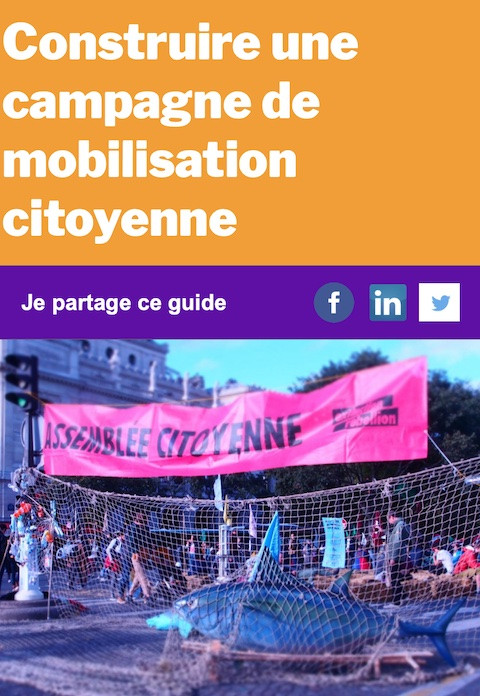 Construire une campagne de mobilisation citoyenne: Je partage ce guide Corporate author: L'accélérateur de la mobilisation (France) Ce kit est pour partager les bases de la création de campagnes de mobilisation citoyenne, générer de l’inspiration et donner l’envie à des groupes de citoyen.ne.s d’aller gagner des victoires concrètes.
 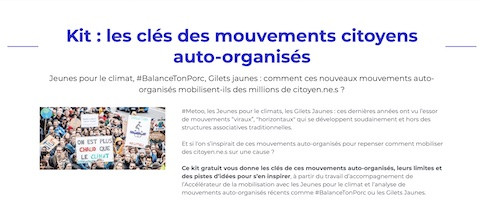 Kit: Les clés des mouvements citoyens auto-organisés Corporate author: L'accélérateur de la mobilisation (France) Ce kit gratuit vous donne les clés de ces mouvements auto-organisés, leurs limites et des pistes d’idées pour s’en inspirer, à partir du travail d’accompagnement de l’Accélérateur de la mobilisation avec les Jeunes pour le climat et l’analyse de mouvements auto-organisés récents comme #BalanceTonPorc ou les Gilets Jaunes.
 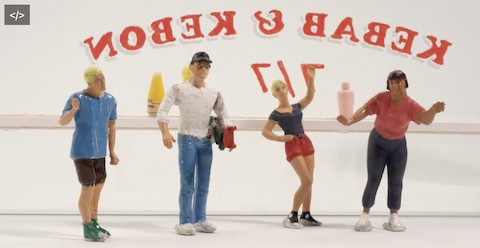 C'est quoi une information? Year of publication: 2015 Author: Olivier Marquézi | Mathieu Decarli Corporate author: Radio France | Réseau Canopé | France Télévisions | La Generale de Production Un film d’animation qui aborde des questions telles que « Qu’est-ce qu’un média », « Qu’est-ce qu’une information », « Qu’est-ce qu’une source ?... ». Autant de sujets pour amener les élèves à une pratique raisonnée autour des écrans, de l’information, du métier de journaliste.
 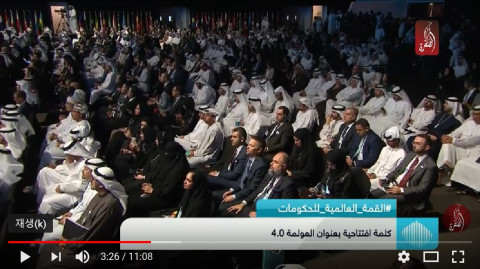 Speech by Professor Klaus Schwab Entitled Globalization 4.0 at the Opening Session of the #World Summit of Governments 2019 Year of publication: 2019 Corporate author: Al Dhafra TV Professor Klaus Schwab, Founder and CEO of the World Economic Forum: We must move to globalization in line with the modern world and the Fourth Industrial Revolution.