
Resources
Explore a wide range of valuable resources on GCED to deepen your understanding and enhance your research, advocacy, teaching, and learning.
2,839 Results found
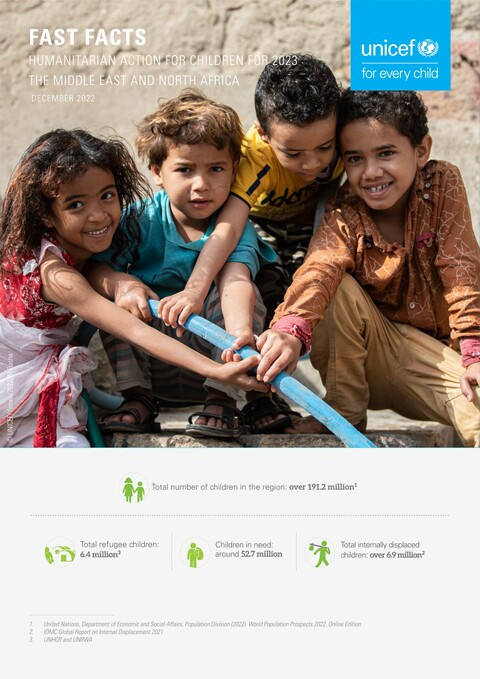 العمـل الإنسـاني مـن أجـل الأطفـال في الشـرق الأوسـط وشـمال أفريقيا للعام ٢٠٢٣; حقائـق سـريعة Year of publication: 2022 Corporate author: UNICEF Middle East and North Africa إجمالي عدد الأطفال في المنطقة: أكثر من 191.2 مليون طفلالأطفال المحتاجون: 52.7 مليون طفلمجموع النازحين من الأطفال: أكثر من 6.4 ملايين طفلمجموع اللاجئين من الأطفال: 6.4 مليون طفلتطلق اليونيسف نداءً للحصول على 2,6 مليار دولار أمريكي للاستجابة للأزمات الإنسانية المستمرة واحتياجات الأطفال الإنسانية في المنطقة.
  Progress on the Sustainable Development Goals: The Gender Snapshot 2021 Year of publication: 2021 Corporate author: United Nations Entity for Gender Equality and the Empowerment of Women (UN Women) | UN. Department of Economic and Social Affairs (UN. DESA) The pandemic has tested and even reversed progress in expanding women’s rights and opportunities. Women have not recovered lost jobs and income, hunger is on the rise, and school closures threaten girls’ educational gains. Women’s participation in government, research and resource management remains far from equal. Vulnerable groups of women, including migrants, those with disabilities and those affected by conflict, are frequently left behind. Disparities between rich and poor countries are preventing equal access to lifesaving COVID-19 vaccines and treatments, putting women in poorer countries at disproportionate risk. Moreover, despite women’s central roles in responding to COVID-19, including as front-line health workers, they do not have the leadership positions they deserve. Building forward differently and better will require placing women and girls at the centre of all aspects of response and recovery, including through gender- responsive laws, policies and budgeting.Progress on the Sustainable Development Goals: The Gender Snapshot 2021 presents the latest evidence on gender equality across all 17 Sustainable Development Goals, highlighting the progress made since 2015 but also the continued alarm over the COVID-19 pandemic, its immediate effect on women’s well-being and the threat it poses to future generations. Progrès vers la réalisation des objectifs de développement durable: Gros plan sur l’égalité des sexes 2021 Year of publication: 2021 Corporate author: United Nations Entity for Gender Equality and the Empowerment of Women (UN Women) | UN. Department of Economic and Social Affairs (UN. DESA) La pandémie a mis à l’épreuve et même inversé les progrès dans l’élargissement des droits et des opportunités des femmes. Les femmes n’ont pas récupéré les emplois et les revenus perdus, la faim augmente et les fermetures d’écoles menacent les progrès scolaires des filles. La participation des femmes au gouvernement, à la recherche et à la gestion des ressources est loin d’être égale. Les groupes de femmes vulnérables, y compris les migrants, les personnes handicapées et celles touchées par les conflits, sont souvent laissés pour compte. Les disparités entre les pays riches et les pays pauvres empêchent l’égalité d’accès aux vaccins et aux traitements vitaux contre la COVID-19, ce qui expose les femmes des pays les plus pauvres à un risque disproportionné. De plus, malgré le rôle central des femmes dans la réponse à la COVID-19, y compris en tant que professionnelles de santé de première ligne, elles n’ont pas les postes de direction qu’elles méritent. Pour aller de l’avant différemment et mieux, il faudra placer les femmes et les filles au centre de tous les aspects de la réponse et de la relance, notamment par le biais de lois, de politiques et d’une budgétisation sensibles au genre. Le rapport Progrès vers la réalisation des objectifs de développement durable : Gros plan sur l’égalité des sexes, 2021 présente les dernières données probantes sur l’égalité des sexes dans l’ensemble des 17 Objectifs de développement durable, soulignant les progrès réalisés depuis 2015, mais aussi l’inquiétude continue liée la pandémie de COVID-19, son effet immédiat sur le bien-être des femmes et la menace qu’elle représente pour les générations futures. El progreso en el cumplimiento de los Objetivos de Desarrollo Sostenible: Panorama de género 2021 Year of publication: 2021 Corporate author: United Nations Entity for Gender Equality and the Empowerment of Women (UN Women) | UN. Department of Economic and Social Affairs (UN. DESA) La pandemia puso a prueba e incluso revirtió el progreso alcanzado en la expansión de los derechos y las oportunidades de las mujeres. Las mujeres no han recuperado el empleo y los ingresos perdidos, el hambre ha aumentado, y el cierre de las escuelas supone una amenaza para los logros de las niñas en la esfera educativa. La participación de las mujeres en el Gobierno, la investigación y la gestión de los recursos sigue lejos de ser igualitaria. Los grupos vulnerables de mujeres, incluidas las migrantes, aquellas con discapacidad, y las afectadas por los conflictos, con frecuencia quedan rezagadas. Las disparidades entre países ricos y pobres impiden el acceso a los tratamientos y vacunas tan vitales contra el COVID-19, lo que pone a los países más pobres frente a un riesgo desproporcionado. Por otra parte, pese al papel central de las mujeres en la respuesta al COVID-19, incluidas las trabajadoras sanitarias de la primera línea, estas no ocupan los puestos de liderazgo que merecen. En adelante, una reconstrucción mejor y diferente exigirá colocar a las mujeres y las niñas en el centro de todos los aspectos de la respuesta y la reconstrucción, entre otras cosas, a través de leyes, políticas y presupuestos con perspectiva de género. En El progreso en el cumplimiento de los Objetivos de Desarrollo Sostenible: Panorama de Género 2021 se presenta la evidencia más reciente sobre igualdad de género en la totalidad de los 17 Objetivos de Desarrollo Sostenible. Se destaca el progreso alcanzado desde 2015, así como la alarma continua de la pandemia del COVID-19, sus efectos inmediatos en el bienestar de las mujeres y la amenaza que supone para las generaciones futuras.
  Crisis Centers - A Pillar of Activism Against Gender-Based Violence Year of publication: 2021 Author: Bermet Baryktabasova | Gaziya Moldakulova | Dina Smailova | Elena Tkacheva | Zulfia Baysakova | Margarita Uskembaeva | Nazgul Turdubekova | Oksana Ibragimova | Raushan Khudayishukurova | Sanzhar Kurmanov | Tatyana Musagalieva | Ukei Murataliyeva | Khurshida Ibragimova | Shakhnoza Khasanova Corporate author: United Nations Entity for Gender Equality and the Empowerment of Women (UN Women) The publication is based on the speeches of 14 experts from Kazakhstan, Kyrgyzstan, and Uzbekistan, who shared their approaches to responding to domestic violence and the experience of crisis centers and gave recommendations on facilitating the work of crisis centers and other services. Кризисные центры - опора активизма против гендерного насилия Year of publication: 2021 Author: Bermet Baryktabasova | Gaziya Moldakulova | Dina Smailova | Elena Tkacheva | Zulfia Baysakova | Margarita Uskembaeva | Nazgul Turdubekova | Oksana Ibragimova | Raushan Khudayishukurova | Sanzhar Kurmanov | Tatyana Musagalieva | Ukei Murataliyeva | Khurshida Ibragimova | Shakhnoza Khasanova Corporate author: United Nations Entity for Gender Equality and the Empowerment of Women (UN Women) Публикация составлена на основе выступлений 14 экспертов из Казахстана, Кыргызстана и Узбекистана, которые поделились своими подходами в реагировании на бытовое насилие и опытом кризисных центров, дали рекомендации по содействию работе кризисных центров и других услуг.
 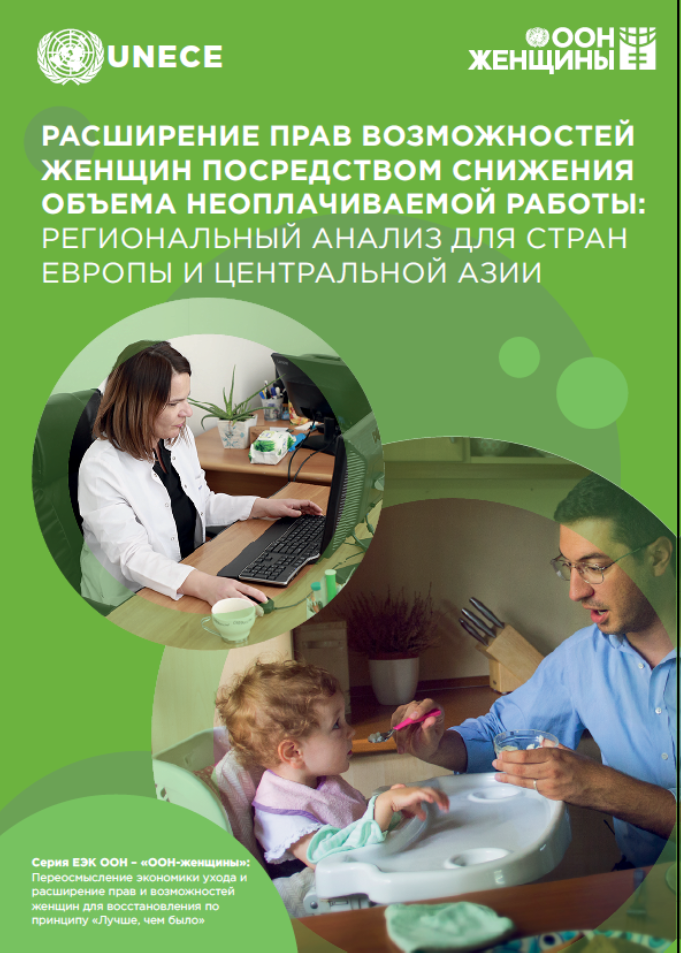 Empowering Women Through Reducing Unpaid Work: A Regional Analysis of Europe and Central Asia Year of publication: 2021 Author: Sara Cantillon | Nina Teasdale Corporate author: United Nations Economic Commission for Europe (UNECE) | United Nations Entity for Gender Equality and the Empowerment of Women (UN Women) This report is part of a series of information products designed to strengthen social protection in response to the pandemic. It focuses on rethinking the economics of nursing and women's empowerment. This report presents a thematic regional analysis of unpaid work in the countries of Eastern Europe and Central Asia and the empowerment of women due to the reduction of women's responsibility for such work. Расширение прав и возможностей женщин посредством снижения объема неоплачиваемой работы: Региональный анализ для стран Европы и Центральной Азии Year of publication: 2021 Author: Sara Cantillon | Nina Teasdale Corporate author: United Nations Economic Commission for Europe (UNECE) | United Nations Entity for Gender Equality and the Empowerment of Women (UN Women) Данный отчет является частью серии информационных продуктов, разработанных в целях укрепления социальной защиты в ответ на пандемию . Он фокусируется на вопросах переосмысления экономики ухода и расширения прав и возможностей женщин. В настоящем отчете представлен тематический региональный анализ неоплачиваемого труда в странах Восточной Европы и Центральной Азии и расширения прав и возможностей женщин, обусловленного уменьшением женской ответственности за выполнение такой работы.
  Gender mainstreaming principles, dimensions and priorities for PVE Year of publication: 2019 Author: Katherine Brown | Jayne Huckerby | Laura J. Shepherd Corporate author: United Nations Entity for Gender Equality and the Empowerment of Women (UN Women) This guidance note offers comprehensive background information and resources, along with guidelines and guidance for the UN system, in supporting Member States in their efforts to prevent and counter violent extremism and terrorism (P/CVE)—with a primary focus on preventing violent extremism (PVE). It proposes a model for gender mainstreaming across PVE efforts that is human rights–compliant.The objective of this document is not to provide a single template or one-size-fits-all approach for PVE—in part because a wide range of activities potentially falls under PVE—but more significantly because, to be successful, each context requires a human rights–compliant, gender-responsive, bespoke, and locally derived set of practices and policies.
  Turning Promises into Action: Gender Equality in the 2030 Agenda for Sustainable Development Year of publication: 2018 Corporate author: United Nations Entity for Gender Equality and the Empowerment of Women (UN Women) “Turning promises into action: Gender equality in the 2030 Agenda for Sustainable Development” provides a comprehensive and authoritative assessment of progress, gaps and challenges in the implementation of the Sustainable Development Goals (SDGs) from a gender perspective. This report monitors global and regional trends in achieving the SDGs for women and girls based on available data, and provides practical guidance for the implementation of gender-responsive policies and accountability processes. As a source of high-quality data and policy analysis, the report is a key reference and accountability tool for policymakers, women’s organizations, the UN system, and other stakeholders.