
Resources
Explore a wide range of valuable resources on GCED to deepen your understanding and enhance your research, advocacy, teaching, and learning.
2,839 Results found
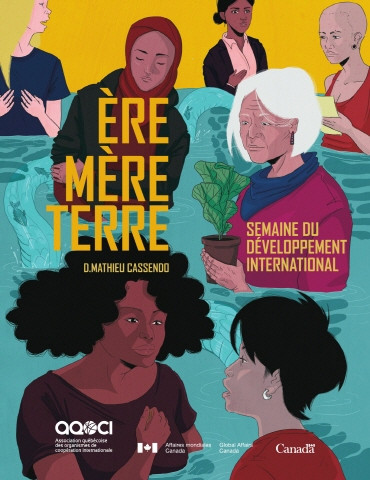 Ère, Terre, Mer: Semaine du développement international Year of publication: 2020 Author: Dimani Mathieu Cassendo Corporate author: Association québécoise des organismes de coopération internationale (AQOCI) La Semaine du développement international (SDI) permet chaque année de souligner un enjeu international qui interpelle les sociétés. Au Québec, c’est l’Association québécoise des organismes de coopération internationale (AQOCI) qui organise cette semaine de sensibilisation auprès du public. Le CRÉDIL participe activement à cette campagne et a participé à la production de bandes dessinées comme outil pédagogique comme “Ère, Terre, Mer” en 2021 qui traite de l'impact de la crise de l'environnement sur les différentes populations.
 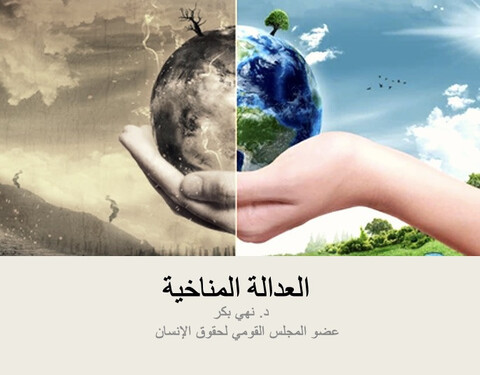 Climate Justice and Human Rights Year of publication: 2022 Author: Noha Bakr Climate justice is linking the impacts of global warming with principles of justice, specifically environmental justice and social justice, by exploring issues resulting from global warming such as equality, human rights, collective rights, and historical responsibilities. العدالة المناخية و حقوق الأنسان Year of publication: 2022 Author: Noha Bakr العدالة المناخية هي ربط تأثيرات الاحتباس الحراري مع مبادئ العدالة، تحديدًا العدالة البيئية والعدالة الاجتماعية، وعن طريق استكشاف بعض القضايا الناجمة عن الاحتباس الحراري مثل المساواة وحقوق الإنسان والحقوق الجماعية والمسؤوليات التاريخية.
  Quiz climat: êtes-vous chaud pour démêler le vrai du faux? Year of publication: 2023 Corporate author: Le Monde Quelle est la source d’énergie la plus polluante au monde ? De quand date la première conférence sur le climat ? Avec ce test, Le Monde vous invite à faire le point sur le réchauffement climatique et son impact sur la planète. Vous pourrez en savoir plus sur les grands enjeux environnementaux grâce à l'application de culture générale «Mémorable», conçue par les journalistes du Monde pour développer vos savoirs et pour stimuler votre mémoire de manière agréable et efficace. Chaque leçon, consacrée à un thème donné, propose des extraits d’articles tirés de nos archives depuis 1944, des infographies ou des vidéos, suivis de questions. A vous d’y répondre, avant de profiter de corrections immédiates et personnalisées, d’articles d’approfondissement, puis de révisions. what is the world's most polluting energy source? When was the first climate conference held? With this test, Le Monde invites you to take stock of global warming and its impact on the planet. Learn more about major environmental issues with the "Mémorable" general knowledge application, designed by Le Monde's journalists to develop your knowledge and stimulate your memory in a pleasant and effective way. Each lesson, devoted to a given theme, features excerpts from articles in our archives dating back to 1944, infographics or videos, followed by questions. It's up to you to answer them, before benefiting from immediate, personalized corrections, in-depth articles and revision.
  Imagining and Practising Global Citizenship Education Year of publication: 2020 Corporate author: UNESCO Venice This methodological guide illustrates the ways in which the International Cooperation Centre (ICC) has been promoting and practicing Global Citizenship Education in Italy for more than ten years. The training work developed by the ICC in the field of GCED, presented here in its theoretical articulation and in its practical outlining in some concrete experiences, may offer some reflections in the form of useful recommendations for continuing and strengthening the promotion of GCED.
 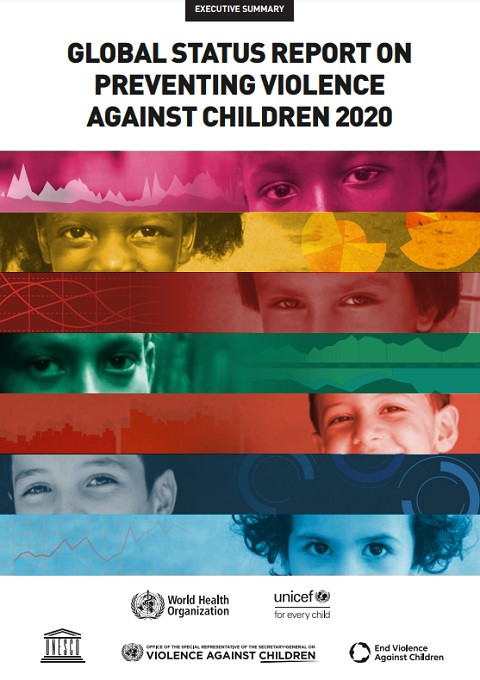 Global Status Report on Preventing Violence Against Children 2020: Executive Summary Year of publication: 2020 Corporate author: World Health Organization (WHO) The Global status report on preventing violence against children 2020 charts countries’ progress towards the SDGs aimed at ending violence against children. Jointly published by WHO, UNICEF, UNESCO, the UN Secretary-General’s Special Representative on Violence against Children, and the Global Partnership to End Violence against Children, it collates inputs from over 1000 decision-makers in 155 countries who assessed their violence prevention status against the evidence-based approaches set out in INSPIRE: Seven strategies for ending violence against children. The report shows that while many of the participating countries are taking some action, government officials from these same countries acknowledge that their efforts are clearly insufficient to achieve the SDG targets. The report concludes with recommendations for boosting INSPIRE implementation efforts and accelerating national progress. [Résumé] Rapport de situation 2020 sur la prévention de la violence à l’encontre des enfants dans le monde Year of publication: 2020 Corporate author: World Health Organization (WHO) Le Rapport de situation 2020 sur la violence à l’encontre des enfants dans le monde présente les progrès accomplis par les pays en vue d’atteindre les ODD visant à mettre un terme à la violence dont sont victimes les enfants. Publié conjointement par l’OMS, l’UNICEF, l’UNESCO, le Représentant spécial du Secrétaire général de l’ONU chargé de la question de la violence contre les enfants et le Partenariat mondial pour mettre fin à la violence envers les enfants, il rassemble les contributions de plus d’un millier de décideurs de 155 pays qui ont évalué la situation de leur pays en matière de prévention de la violence à la lumière des approches basées sur des données factuelles proposées dans le cadre d’INSPIRE, un ensemble de sept stratégies pour mettre fin à la violence à l’encontre des enfants. Le rapport montre que si de nombreux pays ayant participé à l’enquête prennent des mesures, les autorités gouvernementales de ces mêmes pays reconnaissent que leurs efforts sont clairement insuffisants pour atteindre les cibles des ODD. Le rapport se conclut par des recommandations visant à intensifier les efforts de mise en œuvre des stratégies INSPIRE et à accélérer les progrès au niveau national. [Resumen] Informe sobre la situación mundial de la prevención de la violencia contra los niños de 2020 Year of publication: 2020 Corporate author: World Health Organization (WHO) En el Informe sobre la situación mundial de la prevención de la violencia contra los niños de 2020 se recogen los progresos realizados por los países en la aplicación de los Objetivos de Desarrollo Sostenible (ODS) en esta esfera. El documento, que publican conjuntamente la OMS, el UNICEF, la UNESCO, el Representante Especial del Secretario General de las Naciones Unidas sobre la violencia contra los niños y la Alianza Mundial para poner fin a la violencia contra los niños, reúne las aportaciones de más de 1000 instancias normativas procedentes de 155 países que evaluaron la situación nacional comparándola con los enfoques basados en datos probatorios que se presentan en las siete estrategias INSPIRE que tratan sobre este tema. El informe muestra que, si bien muchos de los países participantes están adoptando algunas medidas, sus propios funcionarios reconocen que son claramente insuficientes para alcanzar las metas de los ODS. En la parte final del documento se formulan recomendaciones para que los países potencien la aplicación de las estrategias INSPIRE y avancen más rápidamente hacia su consecución. [الملخص] تقرير الحالة العالمية بشأن منع العنف ضد الأطفال لعام 2020 Year of publication: 2020 Corporate author: World Health Organization (WHO) يتناول تقرير الحالة العالمي عن الوقاية من العنف ضد الأطفال لعام 2020 ما أحرزته البلدان من تقدّم في تحقيق أهداف التنمية المستدامة الرامية إلى وضع حدّ للعنف ضد الأطفال. ويستند هذا التقرير الصادر بشكل مشترك عن منظمة الصحة العالمية واليونسيف واليونسكو والممثلة الخاصة للأمين العام للأمم المتحدة المعنية بالعنف ضد الأطفال والشراكة العالمية من أجل إنهاء العنف ضد الأطفال، إلى مدخلات تم تجميعها مما يزيد على 1000 من صنّاع القرار في 155 بلداً، استناداً إلى تقييم حالة الوقاية من العنف في بلدانهم من خلال تطبيق النُهج المسندة بالبيّنات المحددة في حزمة إنسباير: الاستراتيجيات السبع لإنهاء العنف ضد الأطفال. ويُظهر التقرير أنه في حين اتخذت العديد من البلدان المشاركة إجراءات بالفعل في هذا الصدد، فإن المسؤولين الحكوميين من هذه البلدان نفسها يعترفون بأن جهودهم لا تكفي بكل وضوح لبلوغ غايات أهداف التنمية المستدامة ذات الصلة.ويخلص التقرير إلى توصيات ترمي إلى تعزيز الجهود الرامية إلى تطبيق إجراءات حزمة إنسباير وتسريع وتيرة التقدم المحرز على المستوى الوطني. [摘要] 2020年关于预防暴力侵害儿童行为的全球状况报告 Year of publication: 2020 Corporate author: World Health Organization (WHO) 《2020年预防暴力侵害儿童行为全球状况报告》列出了各国在实现旨在终止暴力侵害儿童行为方面的可持续发展目标进展。报告由世卫组织、儿基会、教科文组织、联合国秘书长暴力侵害儿童问题特别代表和全球终止暴力侵害儿童行为伙伴关系联合出版,汇集了来自155个国家的1000多名决策者的意见,他们根据《INSPIRE:消除针对儿童的暴力行为的七项策略》中提出的基于证据的方法评估了预防暴力行为状况。报告显示,许多参与国正在采取一些行动,而这些国家的政府官员承认,他们做出的努力显然不足以实现可持续发展目标。报告最后提出了努力促进INSPIRE的实施以及加快国家进展的建议。