
Resources
Explore a wide range of valuable resources on GCED to deepen your understanding and enhance your research, advocacy, teaching, and learning.
2,839 Results found
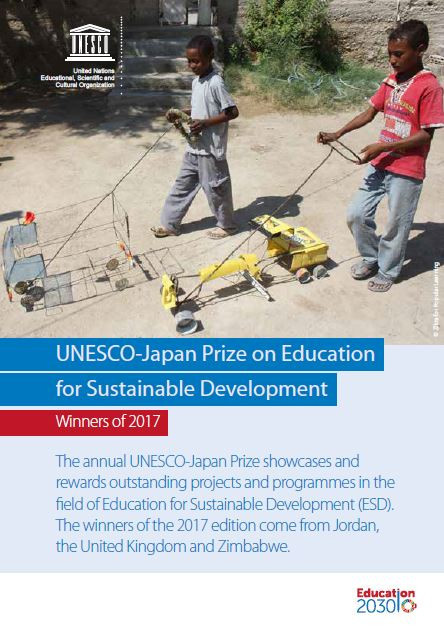 Prix UNESCO-Japon D'éducation en vue du Développement Durable: Lauréats de 2017 Year of publication: 2017 Corporate author: Organisation des Nations Unies pour l'éducation, la science et la culture (UNESCO) L’année 2017 marque la troisième édition du Prix UNESCO-Japon. Les lauréats ont été sélectionnés parmi plus de 100 candidatures présentées par des gouvernements d’États membres de l’UNESCO et par des organisations non gouvernementales en partenariat officiel avec l'UNESCO. Les candidatures ont été évaluées par un jury indépendant composé de cinq experts internationaux de l’EDD, qui ont recommandé les trois lauréats à la Directrice générale de l’UNESCO.Parmi les lauréats de cette année figurent une école, une entreprise et une organisation à but non lucratif oeuvrant à la promotion de l’EDD, respectivement à l’échelle locale, régionale et internationale : l’école primaire Sihlengeni (République du Zimbabwe) ; l’entreprise sociale Zikra (Royaume hachémite de Jordanie) ; et le projet Hard Rain (Royaume-Uni de Grande-Bretagne et d'Irlande du Nord). Chaque lauréat recevra une récompense d’un montant de 50,000 dollars des États-Unis.La Directrice générale de l’UNESCO et le Ministre de l’éducation japonais remettront le Prix aux trois lauréats au cours d’une cérémonie qui se tiendra le 3 novembre 2017 au Siège de l’UNESCO à Paris, lors de la 39e session de la Conférence générale. Premio UNESCO-Japon de Educacion para el Desarrollo Sostenible: Galardonados de 2017 Year of publication: 2017 Corporate author: Organización de las Naciones Unidas para la Educación, la Ciencia y la Cultura (UNESCO) En 2017 el Premio UNESCO-Japon llegaba a su tercera edicion. Los galardonados fueron elegidos de entre las mas de 100 candidaturas presentadas por gobiernos de Estados Miembros de la UNESCO y organizaciones no gubernamentales quecolaboran oficialmente con la Organizacion. Tras examinar las candidaturas, un jurado independiente formado por cinco especialistas internacionales en EDS recomendo los tres galardonados a la Directora General de la UNESCO.Este ano se ha concedido el premio a una escuela, una empresa y una organizacion sin animo de lucro que promueven la EDS a escala local, regional y mundial respectivamente: la escuela de primaria Sihlengeni, de la Republica de Zimbabwe; Zikra por el Aprendizaje Popular, del Reino Hachemita de Jordania; y el Proyecto Hard Rain, del Reino Unido de Gran Bretana e Irlanda del Norte. Cada una de estas entidades recibira un premio en metalico de 50,000 dolares estadounidenses.La Directora General de la UNESCO y el Ministro de Educacion del Japon haran entrega del Premio a los tres galardonados en el curso de una ceremonia que tendra lugar en la Sede de la UNESCO (Paris) el 3 de noviembre de 2017, coincidiendo con la celebracion de la 39ª reunion de la Conferencia General.
 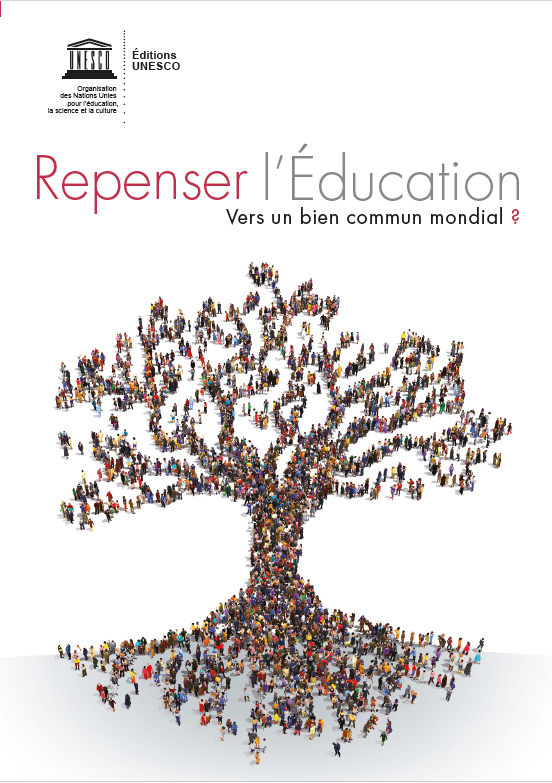 Repenser l'éducation: vers un bien commun mondial? Year of publication: 2015 Corporate author: Organisation des Nations Unies pour l'éducation, la science et la culture (UNESCO) Les changements dans le monde d'aujourd'hui sont caractérisés par de nouveaux niveaux de complexité et de contradiction. Ces changements génèrent des tensions pour lesquelles il est prévu l'éducation pour préparer les individus et les communautés en leur donnant la possibilité d'adaptation et de réponse. Cette publication contribue à repenser l'éducation et l'apprentissage dans ce contexte. Elle se fonde sur l'une des principales tâches de l'UNESCO comme un observatoire mondial de la transformation sociale dans le but de stimuler le débat sur les politiques publiques. Il est un appel au dialogue entre tous les intervenants. Il est inspiré par une vision humaniste de l'éducation et du développement, fondée sur le respect de la vie et la dignité humaine, l'égalité des droits, la justice sociale, la diversité culturelle, la solidarité internationale et la responsabilité partagée pour un avenir durable. Ce sont les fondements de notre humanité commune. Ce livre améliore la vision fournie par les deux publications de point de repère de l'UNESCO: Apprendre à être: Le monde de l'éducation aujourd'hui et demain (1972), le «Rapport Faure», et l'apprentissage: Le trésor est caché dedans (1996), le «Rapport Delors».
 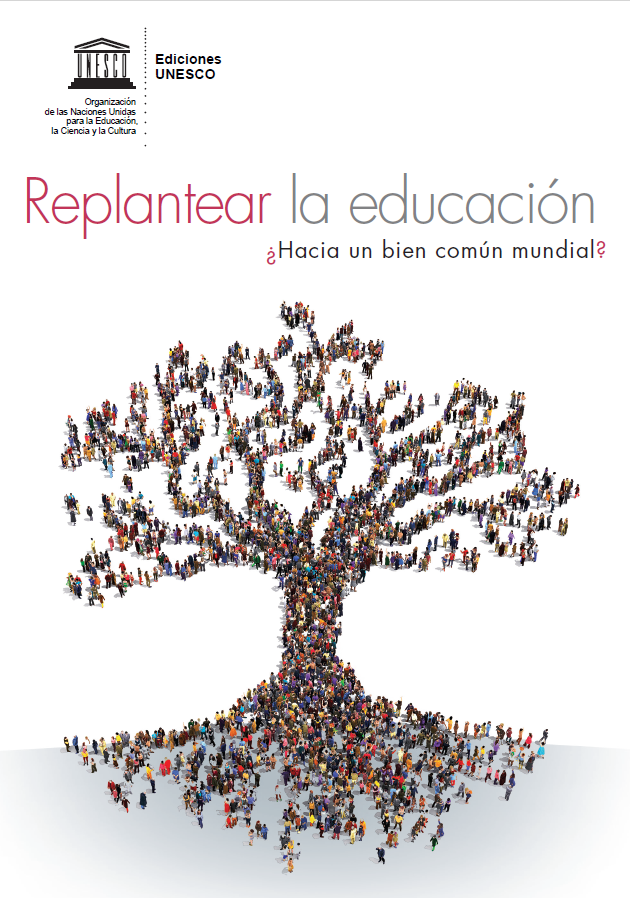 Replantear la educación: ¿Hacia un bien común mundial? Year of publication: 2015 Corporate author: Organización de las Naciones Unidas para la Educación, la Ciencia y la Cultura (UNESCO) Los cambios del mundo actual se caracterizan por niveles nuevos de complejidad y contradicción. Estos cambios generan tensiones para las que la educación tiene que preparar a los individuos y las comunidades, capacitándolos para adaptarse y responder. Esta publicación contribuye a replantear la educación y el aprendizaje en este contexto. Parte de una de las tareas principales que tiene encomendada la UNESCO como observatorio mundial de las transformaciones sociales y tiene como objetivo fomentar los debates públicos sobre políticas.Es una llamada al diálogo entre todos los interesados. Se inspira en una concepción humanista de la educación y el desarrollo, basada en el respeto a la vida y a la dignidad humana, la igualdad de derechos, la justicia social, la diversidad cultural, la solidaridad internacional y la responsabilidad compartida de un futuro sostenible. Éstos son los fundamentos de nuestra humanidad común. El presente libro ahonda en la visión que presentaban dos publicaciones memorables de la UNESCO: Aprender a ser: la educación del futuro (1972), el ‘Informe Faure’; y La educación encierra un tesoro (1996), el ‘Informe Delors’.
 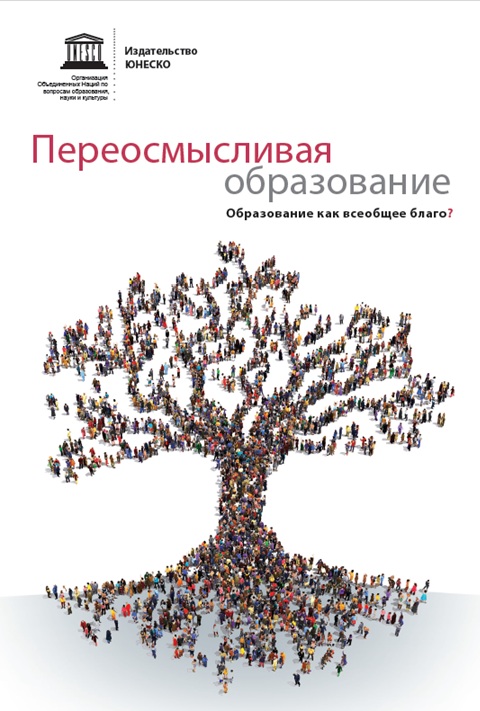 Переосмысливая образование: Образование как всеобщее благо? Year of publication: 2015 Corporate author: Организация Объединенных Наций по вопросам образования, науки и культуры (UNESCO) Происходящие сегодня в мире изменения характеризуются новым уровнем слож-ности и противоречивости. Предполагается, что готовить отдельного человека и сообщества в целом к тому, чтобы жить в этом меняющемся мире, полном противо-речий, должно образование через развитие у людей способности адаптироваться и реагировать на происходящее вокруг. Настоящая публикация является вкладом в усилия, направленные на переосмысление образования и обучения в данном контексте. Ее авторы ставили перед собой цель стимулировать дискуссии по вопросам государственной политики в данной области, руководствуясь одной из основных задач ЮНЕСКО в качестве глобальной обсерватории процессов социальных преобразований.Этот документ является призывом к диалогу между всеми заинтересованными сторонами. Он продиктован гуманистическими представлениями об образовании и развитии на основе принципов уважения человеческой жизни и достоинства, равенства прав, социальной справедливости, разнообразия культур, международной солидарности и коллективной ответственности за устойчивое будущее. Эти принципы являются основой существования человеческого сообщества. Данный документ развивает идеи, содержащиеся в двух важнейших публикациях ЮНЕСКО: «Учиться быть» («Доклад Фора», 1972 г.) и «Образование: сокрытое сокровище» («Доклад Делора», 1996 г.).
 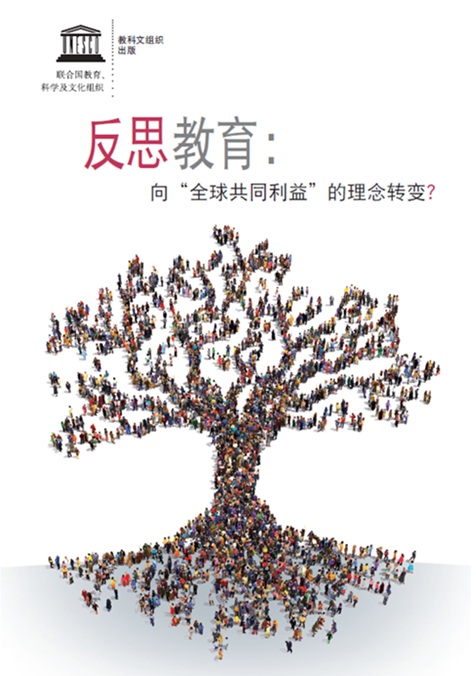 反思教育:向 “全球共同利益” 的理念转变? Year of publication: 2015 Corporate author: 联合国教科文组织 (UNESCO) 当今世界的错综复杂和矛盾冲突,达到了前所未有的程度。这些变化引发了紧张不安,人们寄希望于教育能够培养个人和社会掌握适应变化并做出反应的能力。本出版物有助于在这一背景下反思教育与学习。本书立足于教科文组织作为全球社会变革观测站的主要任务,目的是促进公共政策辩论。本书呼吁所有利益攸关方开展对话。这是一部在人文主义教育观和发展观的启迪下完成的作品,以尊重生命和人类尊严、权利平等、社会正义、文化多样性、国际团结和为创造可持续的未来承担共同责任为基础,而这些正是人性的基本共同点。本书彰显了教科文组织具有里程碑意义的两部出版物提出的愿景——《学会生存:教育世界的今天和明天》(《富尔报告》,1972年)和《学习:内在的财富》(《德洛尔报告》,1996年)。
 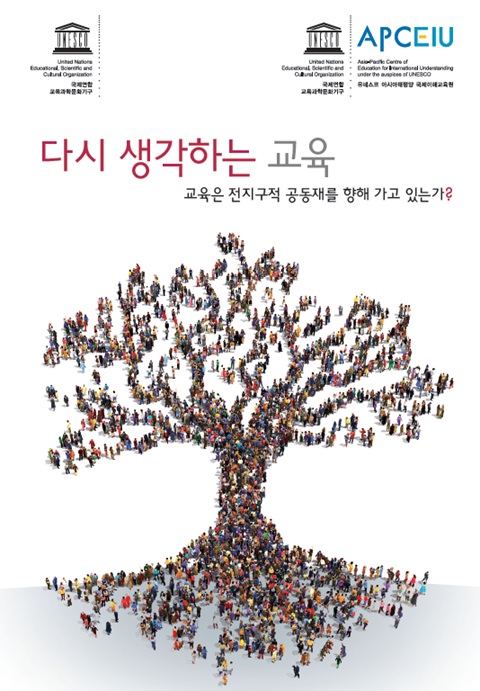 다시 생각하는 교육: 교육은 전지구적 공동재를 향해 가고 있는가? Year of publication: 2018 Corporate author: 유네스코 유네스코 아시아태평양 국제이해교육원은 유네스코와 공동으로 『다시 생각하는 교육: 교육은 전지구적 공동재를 향해 가고 있는가? (Rethinking Education: Towards a global common good?)』의 한국어판을 발간하였다. 본 한국어판은 영어 포함 13번째로 출간된 번역본이다.이 책은 새로운 전 지구적 학습 환경이 부상하는 가운데 교육의 목적이 무엇인지, 그리고 학습을 어떻게 조직할 것인지에 대해 다시 생각해야 한다고 강조하고 있다. 교육과 발전에 대한 인본주의적 비전에 영감을 받아 발간된 이 책은 복잡한 세계에서 집단적 사회 공동행동의 일환으로 학습목표와 학습조직 간의 조화를 이룩해내기 위해서는 교육과 지식을 전 지구적 공동재로 보아야 한다고 제안한다.
  [Summary] Accountability in Education: Meeting Our Commitments: Global Education Monitoring Report Summary, 2017/8 Year of publication: 2017 Corporate author: UNESCO This summary of the 2017/8 GEM Report shows the entire array of approaches to accountability in education. It ranges from countries unused to the concept, where violations of the right to education go unchallenged, to countries where accountability has become an end in itself instead of a means to inclusive, equitable and high-quality education and lifelong learning for all.The report emphasizes that education is a shared responsibility. While governments have primary responsibility, all actors – schools, teachers, parents, students, international organizations, private sector providers, civil society and the media – have a role in improving education systems. The report emphasizes the importance of transparency and availability of information but urges caution in how data are used. It makes the case for avoiding accountability systems with a disproportionate focus on narrowly defined results and punitive sanctions. In an era of multiple accountability tools, the report provides clear evidence on those that are working and those that are not. [Résumé] Rendre des Comptes en Matière Déducation: Tenir nos Engagements, Résumé du Rapport Mondial de Suivi sur l'éducation, 2017/8 Year of publication: 2017 Corporate author: Organisation des Nations Unies pour l'éducation, la science et la culture (UNESCO) La deuxième édition du Rapport mondial de suivi sur l’éducation (Rapport GEM) présente les dernières données disponibles sur les progrès accomplis à l’échelle mondiale dans la réalisation des cibles des objectifs de développement durable des Nations Unies relatives à l’éducation.À l’heure où des centaines de millions de personnes sont encore non scolarisées et où beaucoup quittent l’école sans avoir acquis les compétences fondamentales, il est évident que les systèmes éducatifs sont bien loin d’atteindre les objectifs mondiaux. Les populations marginalisées en supportent actuellement la plupart des conséquences, mais sont également celles qui bénéficieront le plus des résultats obtenus, pour peu que les décideurs prêtent suffisamment d’attention à leurs besoins. Face à de tels défis, et compte tenu des restrictions budgétaires et de l’importance accrue accordée à la rentabilité axée sur les résultats, les pays sont à la recherche de solutions. Parmi celles-ci, une plus forte obligation de rendre des comptesarrive souvent en tête de liste.Le présent résumé du Rapport GEM 2017/2018 passe en revue les différentes approches qui existent en matière de reddition de comptes dans l’éducation, depuis les pays qui ne sont pas familiarisés avec le concept et où les violations du droit à l’éducation sont monnaie courante, jusqu’aux pays où l’obligation de rendre des comptes constitue une fin en soi et non plus un moyen de parvenir à une éducation inclusive, équitable et de qualité et un apprentissage tout au long de la vie pour tous.Le rapport souligne que l’éducation est une responsabilité partagée. Si celle-ci incombe en premier lieu aux gouvernements, tous les acteurs – établissements scolaires, enseignants, parents, élèves, organisations internationales, prestataires du secteur privé, société civile et médias – ont un rôle à jouer dans l’amélioration des systèmes éducatifs. Le rapport insiste sur l’importance de la transparence et de la disponibilité des informations, mais appelle à une utilisation prudente desdonnées. Il préconise d’éviter les systèmes de reddition de comptes qui reposent dans une trop large mesure sur une évaluation restrictive des performances et sur des sanctions punitives. Enfin, à l’heure où les outils de reddition de comptes se multiplient, le rapport démontre clairement quels sont ceux qui sont efficaces et ceux qui ne le sont pas. [Resumen] Rendir Cuentas en el Ámbito de la Educación: Cumplir Nuestros Compromisos, Resumen del Informe de Seguimiento de la Educación en el Mundo, 2017/8 Year of publication: 2017 Corporate author: Organización de las Naciones Unidas para la Educación, la Ciencia y la Cultura (UNESCO) El segundo Informe de Seguimiento de la Educación en el Mundo (el Informe GEM) presenta las pruebas más recientes de los progresos alcanzados en el mundo en cuanto a la consecución de las metas relativas a la educación de los Objetivos de Desarrollo Sostenible de las Naciones Unidas.Puesto que hay centenares de millones de personas que todavía no están escolarizadas y muchas que no adquieren unas competencias mínimas en la escuela, es evidente que los sistemas educativos no llevan camino de alcanzar los objetivos mundiales. Las personas marginadas son quienes sufren actualmente la mayoría de las consecuencias, pero también son las que más se beneficiarán si los encargados de formular políticas prestan suficiente atención a sus necesidades. Ante estos retos, junto con presupuestos muy ajustados y una mayor importancia concedida a obtener rendimiento del dinero en forma de resultados, los países están buscando soluciones, entre las cuales a menudo la rendición de cuentas ocupa el primer lugar.Este resumen del Informe GEM 2017/18 muestra todos los diversos enfoques de la rendición de cuentas en el ámbito de la educación. Abarca desde los países que no están acostumbrados al concepto, en los que no se cuestionan las violaciones del derecho a la educación, hasta aquellos en los que la rendición de cuentas se ha convertido en un fin en sí misma, en lugar de un medio para alcanzar una educación y un aprendizaje a lo largo de toda la vida para todos que sean inclusivos, equitativos y de gran calidad.En el informe se recalca que la educación es una responsabilidad compartida.Aunque son los gobiernos los principales responsables de ella, a todos los actores – las escuelas, los docentes, los padres, los estudiantes, las organizaciones internacionales, los prestatarios del sector privado, la sociedad civil y los medios de comunicación – les corresponde desempeñar un papel en la mejora de los sistemas educativos. El informe recalca la importancia de la transparencia y la disponibilidad de la información, pero exhorta a manejar con prudencia los datos. Explica por qué debemos evitar unos sistemas de rendición de cuentas que den una importancia desproporcionada a unos resultados definidos de manera demasiado restringida y a sanciones punitivas. En una época en la que existen y se emplean múltiples instrumentos para rendir cuentas, el informe demuestra palmariamente con pruebas empíricas cuáles funcionan y cuáles no dan buenos resultados.