
Resources
Explore a wide range of valuable resources on GCED to deepen your understanding and enhance your research, advocacy, teaching, and learning.
2,768 Results found
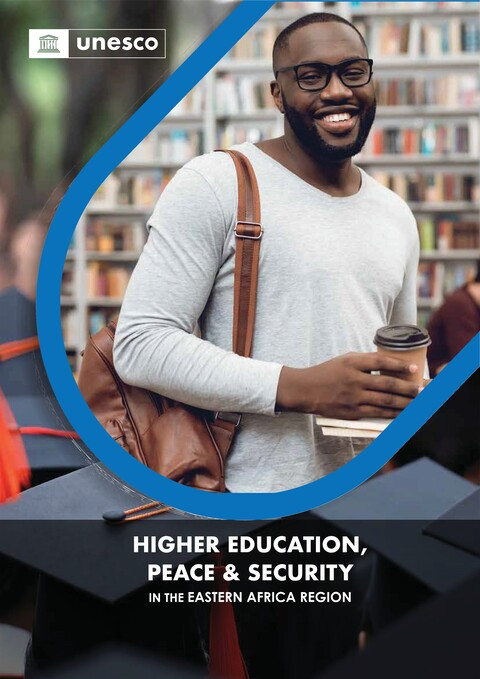 Higher Education, Peace & Security in the Eastern Africa Region Year of publication: 2023 Author: Sabiti Makara Corporate author: UNESCO Nairobi This paper stems from issues that were deliberated on at a regional conference titled, Emerging Issues in the Sciences, Climate Change, Peace and Security and Information and Communication Technologies (ICTs), organized in Djibouti, in May 2017 by UNESCO Regional Office for Eastern Africa. The paper examines the issues and challenges of peace and security in Eastern Africa region. It puts into perspective higher education in the region, in terms of assess, quality, relevance, knowledge and skill products, and capacity to solve social challenges of society. The May 2017 Djibouti Conference on Higher Education, Peace and Security aimed at placing higher education at the center of understanding the complex regional challenges with regard to peace and security in a broad context, including poverty, climate change and environment, intergenerational transfer of knowledge, colonial/neo-colonial heritage, regional integration, cultural resources, and unemployment. The centrality of education as a tool for social transformation in Africa, and elsewhere is a critical element of transforming society, however that very element is up for debate. Specifically, the impact of higher education as a means of accelerating the sciences (natural and social sciences) is due for robust debate, as to whether or not, it is leading to innovations, creativity, and research-led solutions to challenges of society. The critical issue for the Djibouti Conference deliberations was: could Science, technology and in more recent years, information and communications technology, lead to transformation of society in the region? The other issue was: is it only the natural sciences that have the greatest potential for that transformation, or that the social sciences and humanities are relevant in this context? Besides, since issues of peace and security are complex, could multidisciplinary approaches be appropriate? This paper is not a rapporteur's report of the Djibouti conference. It is a set of reflection and reframing of issues for further debate and discussion.
 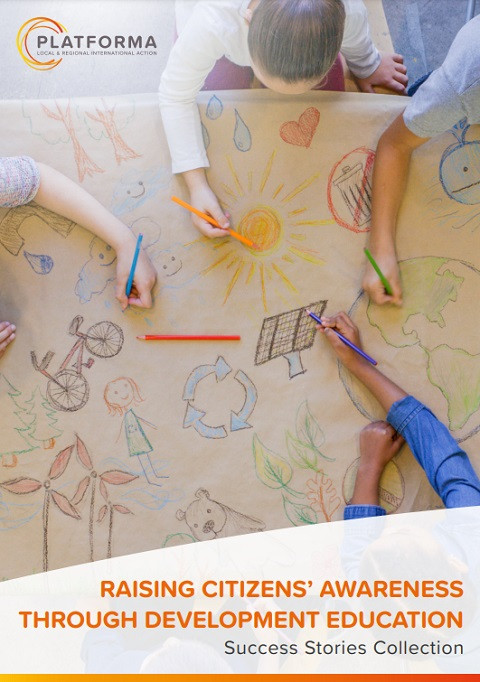 Raising Citizens' Awareness Through Development Education: Success Stories Collection Year of publication: 2020 Author: Lur Fernandez Salinas Corporate author: PLATFORMA Development Education and Awareness Raising (DEAR) are natural lines of action for local and regional governments active in development cooperation and tie in perfectly with their territorial strategies.Awareness-raising among citizens, through the action of municipalities and regions, remains a core component of the co-responsibility, solidarity, mutual knowledge and mutual understanding needed to mobilise and unite communities.Discover this Success Stories Collection which aims to showcase concrete, impactful and transformative experiences of local and regional governments and their associations actively engaged in DEAR projects and decentralised cooperation strategies. Sensibiliser les citoyens par l’éducation au développement : Exemples de réussites Year of publication: 2020 Author: Lur Fernandez Salinas Corporate author: PLATFORMA Le programme DEAR constitue une ligne d’action tout à fait naturelle pour les collectivités territoriales actives dans la coopération au développement et s’inscrit parfaitement dans leurs stratégies territoriales.La sensibilisation des citoyens, par l’action des municipalités et régions, reste une composante essentielle de la coresponsabilité, de la solidarité, de la connaissance et de la compréhension mutuelles nécessaires pour mobiliser et fédérer les communautés.Le présent recueil d’histoires de réussite vise à montrer les expériences concrètes, percutantes et transformatrices des collectivités territoriales et de leurs associations activement engagées dans des projets DEAR et des stratégies de coopération décentralisé
  Regulatory Authorities for Electronic Media and Media Literacy: Comparative Analysis of the Best European Practices Year of publication: 2018 Author: Robert Tomljenović Corporate author: Council of Europe Information event for stakeholders of the media community in Serbia on presentation of the Study “Regulatory Authorities for Electronic Media and Media Literacy - Comparative analysis of the best European practices” was organized by the Council of Europe Office in Belgrade, JUFREX Programme and the Embassy of Finland in Serbia, on 20 December 2018, in order to jointly point out the importance of the development of media literacy in Serbia and the Western Balkans region.The study analyzes and indicates challenges and issues that come with living in a digitalized, hypertechnological mediated world, in which we are faced with countless information, issues of disinformation and fake news, algorithmic separation in ideological echo chambers, hate speech, clickbait journalism, and decreased trust in both mainstream media and the level of journalistic professionalism. With such a media ecosystem, it is vital to define the position of a regulatory authority for electronic media as well as its responsibilities and obligations, and stress the regulator's role in promoting and developing media literacy, one of the key skills for living in the 21st century and the answer to many questions and challenges that come with the modern era."The Council of Europe considers media literacy one of the main tools for strengthening media pluralism and the quality of media content. All media actors in Serbia have the responsibility to promote media literacy to enable understanding and critical analysis of content offered by traditional and digital media. Especially children have the right to a safe and stimulating media environment" said Head of the Council of Europe Office in Belgrade, Tobias Flesenkemper.The study emphasizes that a prerequisite for every democratic process is a well-informed citizen. The Study presents several examples of best European practices and how to engage regulatory bodies and all other relevant actors to increase media literacy, with a particular focus on the Finnish model in this area. Media education is implemented in Finland wherever there are children and youth, not only in kindergartens and schools, but also in libraries, playrooms, youth centers, even in virtual communities and digital games.As pointed out by the Ambassador of Finland in Belgrade, Perti Ikonen, the high level of media literacy of citizens is what the media in Finland forces to adhere to high professional standards, and basically the work of the institutions responsible for the promotion of media literacy. Finland took over the chairmanship of the Committee of Ministers of the Council of Europe in November this year, and during its term of office, until May 2019, the priorities of the Finnish Presidency will be to strengthen the human rights and rule of law system in Europe, support equality as well as inclusiveness with a particular focus on youth and the prevention of radicalization.The study was developed within the framework of the Joint European Union and the Council of Europe Programme "Strengthening the Judicial Expertise on Freedom of Expression and Media in South-East Europe (JUFREX)".
  A Critically Informed Teacher Education Curriculum in Global Citizenship Education: Training Teachers as Field Experts and Contributors to Assessment and Monitoring of Goals (Journal of International Cooperation in Education; Vol.22-2/23-2) Year of publication: 2020 Author: Susan Wiksten Corporate author: CICE Hiroshima University A global market of education development has grown since the 1990s. As the circumstances and contexts of education change globally, there is both a need for shared references in teacher education as well as good reasons for contesting unitary efforts to implement policy goals. Specifically, shared global references for teacher education that can be used by teacher education programs, NGOs and civil society for responding to target 4c. of SDG 4.7 are needed. Accordingly, this article proposes guiding principles and outlines a teacher education curriculum for Global Citizenship Education (GCED) that can be adapted to low-income country contexts as well as high-income contexts. Some of the challenges, possibilities and limitations in the preparation of teachers with the skills needed for supporting the development of the next generation of global citizens are described. The analysis presented draws on data from the UNESCO Institute for Statistics, the OECD teacher survey, indicators developed by the World Bank, and policy efforts to develop a definition of global competence, among other sources. The concluding discussion proposes that an important possibility presents itself in efforts to involve teachers in the monitoring and evaluation of education development goals.
 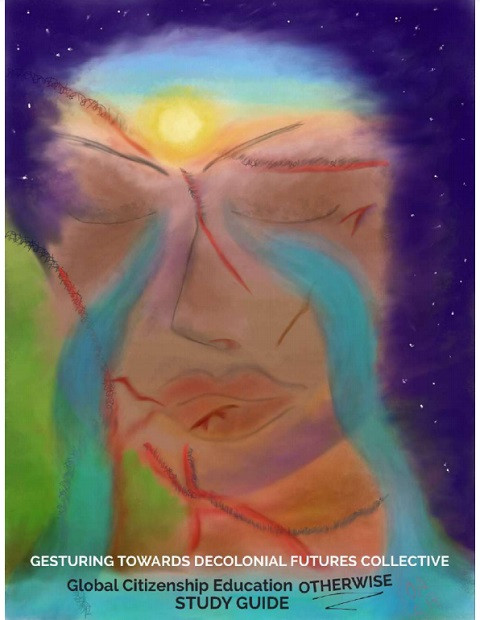 Gesturing Towards Decolonial Futures Collective: Global Citizenship Education Otherwise; Study Guide Year of publication: 2019 Author: Vanessa de Oliveira Andreotti | Sharon Stein | Rene Suša | Dani d’Emilia | Elwood Jimmy | Bill Calhoun | Sarah Amsler | Camilla Cardoso | Dino Siwek | Kyra Fay | Tereza Čajková Corporate author: Decolonial Futures Collective This booklet was developed with a specific audience in mind: educators working with global citizenship education in Europe. It presents an overview of the work of the collective and outlines two pedagogical experiments. The first pedagogical experiment, “Bare Basics” is a program for self or group study consisting of a collection of resources organized around 6 thematic areas (denial of violence, denial of unsustainability, denial of entanglement, how education has helped create the problem, so what/now what?, the difficulties/impossibilities of imagining otherwise). The second pedagogical experiment is an experiential learning program that we run by request (as a TTT or a residency). It involves mapping, imagination, body and land-based exercises. We invite you to engage with the outline of both programs, starting with our “broccoli seed agreement” on the back of the booklet.
  Developing Digital Citizens: Media Literacy Education for All Students Year of publication: 2020 Author: Jessica R. Wolff | Ann LoBue | Michael A. Rebell Corporate author: DemocracyReady NY Developing Digital Citizens: Media Literacy Education for All Students, a new report from DemocracyReady NY, calls for immediate and decisive steps to require media literacy education in schools throughout New York State. Stressing that “the internet has become the new public square,” it asserts that “to be democracy ready, all students must be media literate.”. The report defines what media literacy encompasses in an increasingly digital age, and establishes a clear framework to ensure that all students become media literate civic participants. This report includes recommendations for:Clear state standards for media literacy educationQualified personnel for teaching media literacySuitable MLE curricula and course offeringsUp-to-date facilities, instructional materials, and technologyTransparent monitoring and reporting of MLE resources and results.
 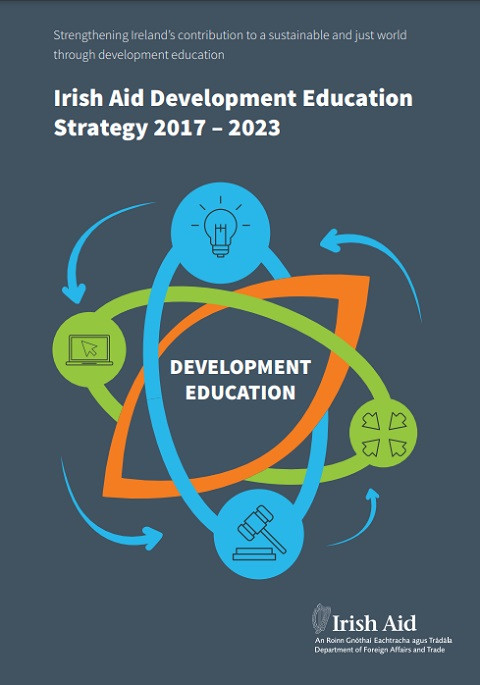 Irish Aid Development Education Strategy 2017-2023: Development Education Year of publication: 2016 Corporate author: Irish Aid Ireland has a long and proud history in development education thanks to many of the civil society organisations represented here today and which pre-dates the start of Ireland’s official aid programme which is itself now over 40 years old.The Development Education Strategy 2017-2023 aims to increase access to development education in Ireland, in schools and colleges, in local and community groups, and among the old and young.Development education is a lifelong educational process which encourages people to critically analyse and challenge the root causes and consequences of global hunger, poverty and injustice, challenge stereotypes and engage in action to bring about change in both their local and global communities.
  Internet Literacy Handbook: Supporting Users in the Online World Year of publication: 2017 Author: Janice Richardson | Elizabeth Milovidov | Martin Schmalzried Corporate author: Council of Europe Since the first edition of the Internet Literacy Handbook was issued in 2003 the world of the Internet has changed tremendously. The number of Internet users has risen; users are increasingly younger, trends in how people use the Internet and what they are looking for evolve, and new pitfalls in, for example, personal security arise seemingly overnight.This new edition takes into account the myriad changes, although the object of the Handbook still remains, namely to offer families, educators and policy-makers sufficient technical know-how to allow them to navigate, with young people, through communication technology. The new edition also expands the scope of the Fact sheets anchoring previously “new” concepts of digital citizenship and digital parenting. This edition includes 26 Fact sheets arranged under 6 thematic headings including a heading specifically dedicated to “Looking Forward” towards the future of the Internet. The Handbook is designed to be easy to use and helpful, as illustrated by the Fact sheet entitled “Finding quality information on the Web”. It is also available online, where it can be downloaded either in its full format or per individual factsheet. Manuel de maîtrise de l'internet: Accompagner les utilisateurs dans le monde en ligne Year of publication: 2017 Author: Janice Richardson | Elizabeth Milovidov | Martin Schmalzried Corporate author: Conseil de l'Europe Depuis la publication de la première édition du Manuel de maîtrise d’Internet en 2003, le monde en ligne a beaucoup changé. Les Internautes sont de plus en plus jeunes, leur nombre a augmenté, leurs usages d’Internet et l’objet de leurs recherches évoluent et de nouveaux dangers, par exemple en matière de sécurité individuelle, apparaissent chaque jour. Cette nouvelle édition tient compte de ces nombreux changements mais conserve son objectif, qui est de donner aux familles, aux enseignants et aux décideurs politiques des connaissances techniques suffisantes pour pouvoir naviguer, avec les jeunes, dans le monde des technologies de la communication. La nouvelle édition étend également le contenu des Fiches d’information aux concepts qui étaient alors «nouveaux» de citoyenneté numérique et de parentalité numérique, ce qui porte le nombre de fiches à 26, organisées en six thématiques dont l’une est spécialement consacrée à l’avenir d’Internet. Le manuel se veut convivial et pratique, comme l’illustre la fiche intitulée « Trouver de l’information de qualité sur le web ». Il est également accessible en ligne où il peut être téléchargé dans son intégralité ou fiche par fiche.