
Resources
Explore a wide range of valuable resources on GCED to deepen your understanding and enhance your research, advocacy, teaching, and learning.
2,813 Results found
 Guía para la igualdad de género en las políticas y prácticas de la formación docente Year of publication: 2015 Author: María C. Arango Restrepo | Esther Corona-Vargas Corporate author: Organización de las Naciones Unidas para la Educación, la Ciencia y la Cultura (UNESCO) La Guía para la Igualdad de Género en las Políticas y Prácticas de la Formación Docente, ha sido concebida como una herramienta práctica para impulsar una cultura organizacional con perspectiva de género en los centros de formación docente. Su objetivo es fortalecer las capacidades de los formadores de docentes, directores y estudiantes de pedagogía para reconocer y modificar en sus prácticas cotidianas los elementos que alientan la desigualdad de género.Asimismo, la guía busca contribuir a una mayor comprensión conceptual de la perspectiva de género y sirve de ayuda para identificar necesidades y opciones de cambio en las políticas institucionales, planes, estrategias y prácticas, según las características particulares de cada contexto.Esta guía está estructurada en torno a algunos de los aspectos críticos de la formación docente y el desarrollo temático destaca, en cada caso, las cuestiones de género. Tiene una organización modular y los módulos pueden ser consultados individualmente para una formación específica según la necesidad o el interés particular en un determinado momento. Sin embargo, dada la interconexión entre los temas de género debe considerarse, también, una interrelación entre los diferentes módulos.
 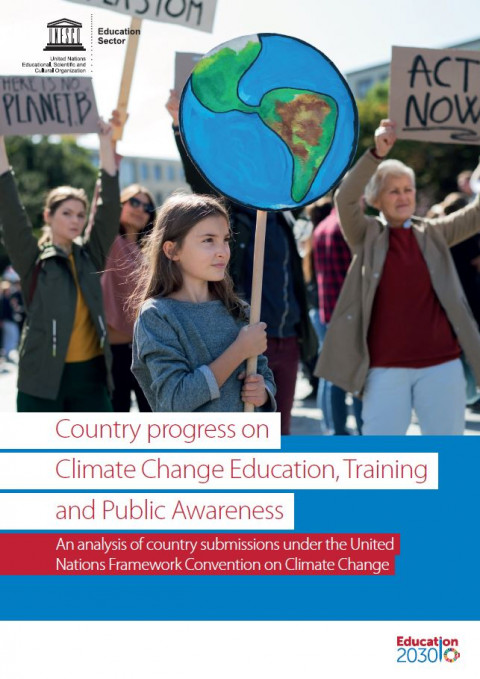 Country Progress on Climate Change Education, Training and Public Awareness: An Analysis of Country Submissions Under the United Nations Framework Convention on Climate Change Year of publication: 2019 Corporate author: UNESCO Since its entry into force, the 1992 United Nations Framework Convention on Climate Change (UNFCCC) in Article 6 has recognised the importance of ‘education, training and public awareness’ in mitigating ‘dangerous human interference with the climate system’. Article 12 of the Paris Agreement (2015) reaffirms this recognition.This document provides a status report on the implementation of climate change education in countries. It outlines key findings from an analysis of country submissions to the UNFCCC Secretariat as part of UNFCCC reporting processes and highlights achievements and remaining gaps in the area of climate change education.The analysis shows that almost all countries include some reference to climate change education in their country submissions under the UNFCCC reporting processes. This shows a certain level of commitment, which provides a good basis to further scale up educational responses to climate change. However, important gaps remain. Addressing them will be crucial in order to fully mobilize the power of education in response to this greatest challenge of our times. Progrès nationaux en matière d'éducation, de formation et de sensibilisation du public aux changements climatiques: Analyse des comptes rendus nationaux au titre de la Convention-cadre des Nations Unies sur les changements climatiques Year of publication: 2019 Corporate author: Organisation des Nations Unies pour l'éducation, la science et la culture (UNESCO) Depuis son entrée en vigueur, la Convention-cadre des Nations Unies sur les changements climatiques (CCNUCC, 1992) reconnaît, dans son article 6, l’importance de l’éducation, de la formation et de la sensibilisation du public pour atténuer toute perturbation anthropique dangereuse du système climatique. L’article 12 de l’Accord de Paris (2015) réaffirme cette prise de conscience.Le présent document dresse un état des lieux de la mise en place de l’éducation aux changements climatiques dans les pays. Il souligne les principaux résultats issusde l’analyse des comptes rendus nationaux présentés au Secrétariat de la CCNUCC dans le cadre du processus d’établissement des communications à ce titre. Il met en lumière les réalisations accomplies et les lacunes à combler dans le domaine de l’éducation aux changements climatiques.L’analyse démontre que pratiquement tous les pays mentionnent l’éducation aux changements climatiques dans leurs comptes rendus nationaux soumis dans le cadre du processus d’établissement des communications au titre de la CCNUCC. Cela démontre un certain niveau d’engagement, garantie d’une bonne base pour renforcer les actions éducatives face aux changements climatiques. Cependant, d’importantes disparités persistent. Il sera crucial de les résorber afin de mobiliser le plein potentiel de l’éducation pour affronter le plus grand défi de notre époque.
  Her Atlas: Girls’ and Women's Right to Education Atlas Year of publication: 2019 Corporate author: UNESCO Her Atlas, the online atlas of girls’ and women’s right to education, is developed as part of Her education, our future, UNESCO’s initiative to accelerate action for girls’ and women’s education by leveraging political and financial commitments. Her Atlas aims to enhance public knowledge and monitor the status of national constitutions, legislation and regulations related to girls’ and women’s education rights in order to encourage countries to improve their legal and policy frameworks.
 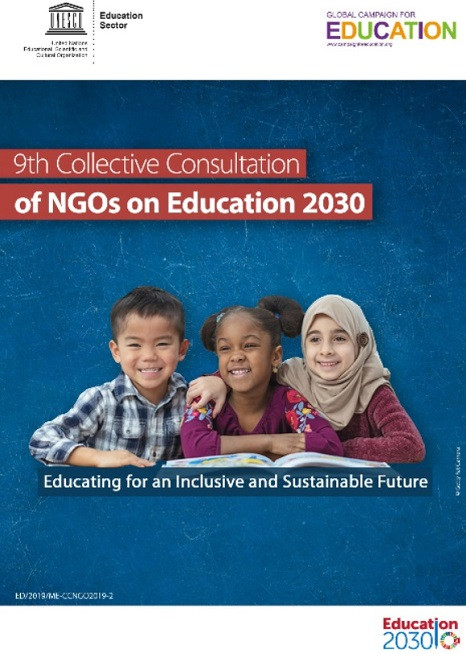 9th Collective Consultation of NGOs on Education 2030: Educating for an Inclusive and Sustainable Future Year of publication: 2020 Corporate author: UNESCO | Global Campaign for Education (GCE) This includes proceedings and key messages of the 9th Global meeting of the Collective Consultation of NGOs on Education 2030 (CCNGO 2019) organized by UNESCO from 2-5 December 2019 in Hammamet, Tunisia and generously hosted by the Global Campaign for Education (GCE), alongside the Arab Campaign for Education for All (ACEA) and the National Association of the Right to Education (ANDET). The CCNGO 2019 aimed to build on CSOs(Civil Society Organisations) experiences and strong commitments to strengthen collective initiatives towards the realisation of the SDGs and education related targets. The focus and major theme of the Meeting was the role and engagement of civil society organizations in supporting equity and inclusion in the implementation of SDG4-Education 2030 at national, regional and global level. 9e Consultation collective des ONG sur l’Éducation 2030: Éduquer pour un avenir inclusif et durable Year of publication: 2020 Corporate author: Organisation des Nations Unies pour l'éducation, la science et la culture (UNESCO) | Global Campaign for Education (GCE) Cela comprend les actes et les messages clés de la 9eRéunion mondialede la Consultation collective des ONG sur l’Éducation 2030(CCONG2019) a été organisée par l’UNESCO du 2 au 5 décembre2019 à Hammamet, Tunisie,où elle a été généreusement accueillie par la Campagne mondiale pour l’éducation(CME), la Campagne arabe pour l’éducation pour tous(ACEA) et l’Association nationale du droit à l’éducation(ANDET). La Réunion mondialede la CCONG2019 avait pour but derenforcer les initiatives collectives visant à la mise en œuvre des ODD et des cibles relatives à l’éducation ens’appuyantsur l’expérience des OSC et leur forte mobilisation. La réunion avait pour thèmecentral l’action et l’engagement des organisations de la société civile en faveur de l’équité et de l’inclusion dans le cadre dela mise en œuvre de l’ODD 4 –Éducation 2030aux niveaux national, régional et mondial.
 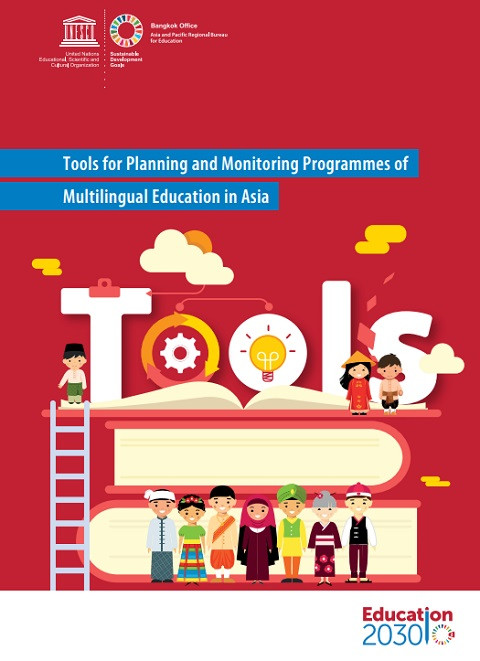 Tools for Planning and Monitoring Programmes of Multilingual Education in Asia Year of publication: 2020 Corporate author: UNESCO | UNESCO Bangkok This booklet provides some tools that programme personnel may use in the M&E of their multilingual education (MLE) programmes. This booklet complements the five booklets of UNESCO’s MTB MLE Resource Kit – Including the Excluded: Promoting Multilingual Education (2018).
 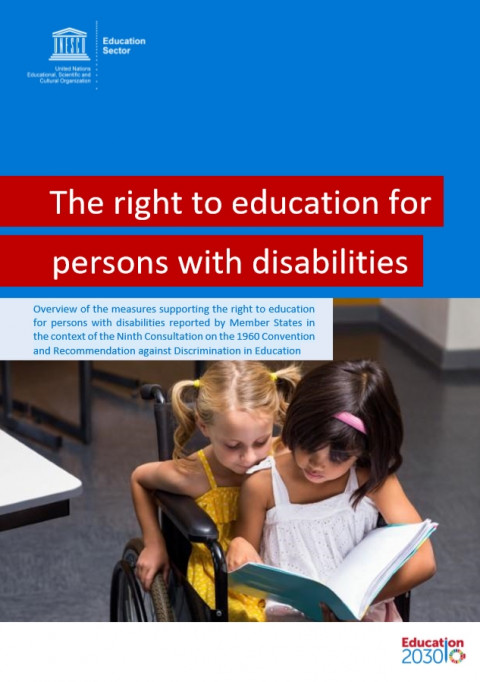 The Right to Education for Persons with Disabilities Year of publication: 2019 Corporate author: UNESCO Persons with disabilities are often excluded from the education system, whether out-of-school entirely, educated in separate institutions or participating in a mainstream system which is not adapted to their needs and abilities. The 2030 Agenda commitment to ‘leave no one behind’ has reinforced the global discourse towards inclusive, equitable education. As part of its mandate, UNESCO monitors the implementation of the 1960 Convention and Recommendation against Discrimination in Education. During the Ninth Consultation on the implementation of this instrument, almost all Member States reported upon measures that they have taken in relation to the right to education for persons with disabilities. This document compiles practical examples extracted from these reports for information sharing and advocacy.
  Guidelines on the Development of Open Educational Resources Policies Year of publication: 2019 Corporate author: UNESCO | Commonwealth of Learning Open educational resources (OER) – and to a greater extent, OER policies – can increase the quality and accessibility of teaching and learning as well as foster knowledge creation within a country.This publication provides detailed guidelines on how to develop systematic and effective policies on OER. Such policies are important to coordinate, strengthen and drive initiatives in a country; they involve government and institution actors on various levels working together to leverage OER toward achieving common goals under a national educational framework. OER policy provisions can be a part of a dedicated national masterplan, be under the framework of an overall education programme, or be elements incorporated into various strategies across multiple sectors.These guidelines lay out steps to review, analyse, develop, implement and monitor a context-relevant OER policy. They guide, but do not determine, what involved actors should do in a specific set of circumstances, providing a comprehensive framework for governments and institutions to set out vision and the scope of their policy.Each chapter introduces the purpose of the phase, provides background information and references practical examples for illustration. At the end of each chapter, specific tasks are set for the policy designer, which will help with the formulation of the final OER policy.
 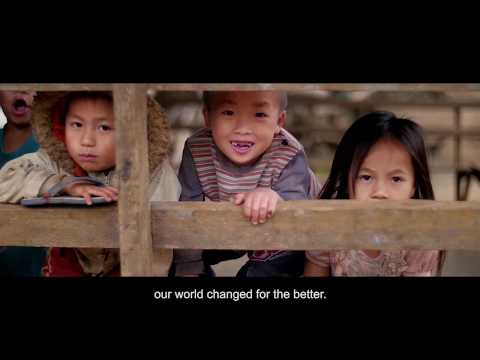 Education Transforms Lives Year of publication: 2019 Corporate author: UNESCO Education transforms lives every day and in every corner of society. This video explores the power of education and UNESCO’s role in leading and coordinating the Education 2030 Agenda, which is part of a global movement to eradicate poverty through 17 Sustainable Development Goals by 2030. Education is the right of every woman, man and child.Together, we’re shaping the global citizens of tomorrow, empowered on the path of education to build a more sustainable future. UNESCO – Building peace in the minds of men and women. www.unesco.org/education