
Resources
Explore a wide range of valuable resources on GCED to deepen your understanding and enhance your research, advocacy, teaching, and learning.
2,768 Results found
 Building Healthy Relationships With Media: A Parent’s Guide to Media Literacy Year of publication: 2020 Corporate author: National Association for Media Literacy Education (NAMLE) | Trend Micro This guide gives a few examples of how to incorporate questions into the conversation when discussing media and related topics with your children. It is vital for parents to model curiosity and skepticism in their discussions with their children. Teaching the next generation to be critical thinkers allows them to hone this important skill for navigating life in a digital world. Construyendo relaciones saludables con los medios de comunicación: Guía para los padres sobre la alfabetización mediática Year of publication: 2020 Corporate author: National Association for Media Literacy Education (NAMLE) | Trend Micro Esta guía ofrece ejemplos de cómo incorporar en una conversación con sus hijos preguntas sobre los medios de comunicación y otros temas relacionados. Es vital que en conversaciones con sus hijos los padres sean modelos de curiosidad y precaución. Enseñar a la próxima generación de jóvenes a hacer preguntas y ser pensadores críticos les permite desarrollar esta importante habilidad para navegar la vida en un mundo digital.
  Flexible Learning Pathways in Malaysian Higher Education: Balancing Human Resources Development and Equity Policies Year of publication: 2020 Author: Morshidi Sirat | Abdul Karim Alias | Hazri Jamil | Wan Zuhainis Saad | Muhamad Saiful Bahri Yusoff | Munir Shuib | Mahiswaran Selvanathan | Muhammad Muftahu | Majid Ghasemy | Mazlinawati Mohamed Corporate author: Commonwealth Tertiary Education Facility (CTEF) | UNESCO International Institute for Educational Planning (IIEP) Malaysia’s higher education system is highly centralized, with a set of legislations to govern and monitor public universities and regulate the private higher education sector. The latest discourse, the Sustainable Development Goals (SDGs), particularly SDG4, pitted against existing policies on lifelong learning, presented an opportunity to assess practices at the institutional level. In the national context, there is a need to confirm the extent to which the linkages between national policies on lifelong learning, strategies, instruments, and institutional practices in terms of flexible learning pathways (FLPs) have benefited nontraditional learners, disadvantaged and marginalized groups. Hence, this research aims to investigate how FLPs have benefited particularly the bottom 40 percent of households (B40 households), disadvantaged and marginalized groups, persons with disabilities, and also women in Malaysia.
  Media and Information Literacy: A Practical Guidebook for Trainers Year of publication: 2021 Author: Sylvia Braesel | Thorsten Karg Corporate author: DW Akademie Literacy is the ability to read and write. Media and information literacy (MIL) is the ability to understand how the media work and can be used to participate in public debate. MIL includes social media like Facebook, as well as traditional media like books, newspapers, radio and television.Media and information literacy - A practical guidebook for trainers provides MIL trainers with background information, training ideas, methods and worksheets. The book also provides sample training schedules to help you determine the length of time needed to teach individual aspects of media and information literacy.Download the Media and information literacy guidebook for trainers as well as the worksheets and guidelines.DW Akademie defines MIL as a composite of five core competencies:Access: The ability to find and access relevant media and information sources.Analyze: The ability to evaluate the credibility, accuracy and objectivity of media content, for example a news story.Create: The ability to create and produce media and information content, such as photos, texts, or videos.Reflect: The ability to think critically about media habits, experiences, trends, and technologies, and how they impact individuals and society.Act: The ability to use media to achieve specific goals, for example launching a social media campaign about health.Read more about DW Akademie's approach to Media and Information Literacy here.
  Citizenship and Lifelong Learning Monitor 2018 Year of publication: 2019 Author: Sara Gharsalli Corporate author: SOLIDAR Foundation Over the last couple of years, the world has witnessed the harsh impact of populist politics. In the European Union, this rise in nationalism and populism has translated into an old member state leaving the Union for good, and “illiberal” countries rising up against civil society which could bring a major overhaul in the European Parliament for the May 2019 elections. Struggling with how to deal with extremist parties and their leaders, the EU has nonetheless attempted to cautiously restrain possible conflicts by peaceful means and promotion of participation of its citizens to bring people together despite far-right challenges ahead of the next European Parliament elections in May 2019.To counter and prepare citizens to reinforce and strengthen core European democratic values, the Union has pledged to promote citizenship through education after ministers convened in Paris on March 2015 to set up common objectives. Having derived the 2017 report based on three thematic issues directly taken from the declaration’s objectives, this year the monitor aims to go further into understanding the processes and methods for the promotion and delivery of citizenship education in Europe by non-formal education providers.This Monitor is a contribution to further examine the relationship between citizenship and lifelong learning experiences and policy outcomes in and outside of the classroom in various European countries. Mapping the different approaches that SOLIDAR Foundation members have taken in promoting EU values in relation to citizenship education and lifelong learning for greater democratic participation of citizens, the outcomes will be disseminated towards European and national policy-makers and offers an array of best practices to collect, use and transfer among networks. The SOLIDAR Education and Lifelong Learning Forum will further work on the topic and develop a long term sustainable advocacy strategy for CSOs towards national and EU-wide authorities to influence the debate and revision of national curricula and education systems.
 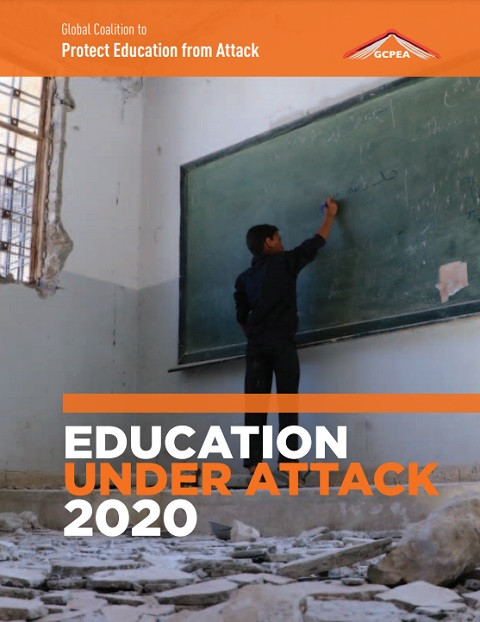 Education Under Attack 2020 Year of publication: 2020 Corporate author: Global Coalition to Protect Education from Attack (GCPEA) This study is published by the Global Coalition to Protect Education from Attack (GCPEA), which was formed in 2010 by organisations working in the fields of education in emergencies and conflict-affected contexts, higher education, protection, and international human rights and humanitarian law that were concerned about ongoing attacks on educational institutions, their students, and staff in countries affected by conflict and insecurity.GCPEA is a coalition of organizations that includes: co-chairs Human Rights Watch and Save the Children, the Council for At-Risk Academics (Cara), the Institute of International Education (IIE), the Office of the United Nations High Commissioner for Refugees (UNHCR), the Education Above All Foundation (EAA), Plan International, the United Nations Children’s Fund (UNICEF) and the United Nations Educational, Scientific and Cultural Organization (UNESCO). GCPEA is a project of the Tides Center, a non-profit 501(c)(3) organization. Education under Attack 2020 is the result of independent research conducted by GCPEA. It is independent of the individual member organizations of the Steering Committee of GCPEA and does not necessarily reflect the views of the Steering Committee member organizations.
  Envision 4.7 Event and Roadmap Year of publication: 2021 Corporate author: Bridge 47 Envision 4.7 took place in Helsinki in 2019, bringing together 200 education practitioners, civil society representatives and decision makes to create the Envision 4.7 Roadmap, a policy guideline to the future implementation of SDG Target 4.7 in Europe.
  Central Asia: Sustainable Development and Energy Cooperation Issues Year of publication: 2019 Author: Salygin V.I. | Petrova R.V. | Mustafinov R.K. The continuous intensification of anthropogenic activities leads to a number of ecological imbalances and negatively affects the carrying capacity of the biosphere. Synthesis of theoretical developments of the global environmental agenda and issues of socio-economic development is reflected in the theses of the concept of sustainable development. The paper provides a detailed analysis of optimal options for reducing environmental and social risks on a regional scale by adapting international experience to the existing fragmented hydro-energy system Central Asia.
  Leveraging Artificial Intelligence to Enhance Early Action towards the Kunming-Montreal Global Biodiversity Framework Year of publication: 2024 Author: Nicole DeSantis | Lea Phillips | Christina Supples | Julien Pigot | Jamison Ervin | Doley Tshering | Juan Calles Lopez | Dharshani Seneviratne | Enrique Paniagua | Monica Mora Corporate author: United Nations Development Programme (UNDP) This publication releases the methodology behind the National Biodiversity Strategies and Action Plans (NBSAP) Target Similarity Assessments and identifies key lessons learned and opportunities for future applications.
  Guidance Note on Uzbekistan Green Taxonomy Year of publication: 2023 Corporate author: World Bank This Guidance Note serves to support the government of Uzbekistan in the design of a national Green Taxonomy. A green taxonomy sets out rules for classifying environmentally sustainable activities and can be instrumental inthe transition to a Green Economy by guiding policies and public resource flows, and influencing the private sector’s investment response. The Guidance Note discusses methodological choices for the taxonomy and their policy implications, reviews existing international practices, and recommends a model taxonomy and roadmap for further development of the taxonomy. A key message in the note is the importance of setting clear strategic goals that will inform the selection of the taxonomy’s environmental objectives and its other features. Also discussed are theinstitutional arrangements to coordinate the actions and inputs of multiple stakeholders during the development process of the taxonomy, and the importance of strong oversight and consistent enforcement of taxonomy rules by a competent regulatory body.