
Resources
Explore a wide range of valuable resources on GCED to deepen your understanding and enhance your research, advocacy, teaching, and learning.
2,813 Results found
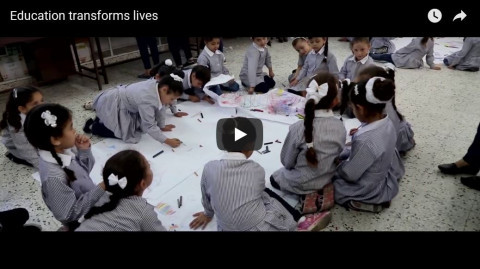 [Видео] Образование меняет жизни Year of publication: 2017 Corporate author: Организация Объединенных Наций по вопросам образования, науки и культуры (UNESCO) Образование преображает жизнь людей каждый день во всех слоях общества. Ролик повествует о важности образования и роли ЮНЕСКО в ведении и координации Повестки дня «Образование-2030», которая является частью глобального движения для искоренения бедности посредством достижения 17 Целей устойчивого развития до 2030 года.Каждая женщина, каждый мужчина и каждый ребенок имеют право на образование. Вместе мы создаем мировых сограждан завтрашнего дня и даем им силу образования для построения более устойчивого будущего.Кампания ЮНЕСКО "Образование преображает жизнь людей" направлена на то, чтобы нести мир в сознание мужчин и женщин.
  A Guide on Violence Prevention in Educational Settings in Eastern Europe and Central Asia Year of publication: 2015 Corporate author: UNESCO The emphasis is given to gender-based violence. This guide offers practical advice and proposes organizational and educational measures, as well as response schemes for the management and staff of education institutions in order to address acts of violence and provide assistance to the victims. The guide is advisory in nature: it can be used as a background material for developing a national recommendation on the prevention of violence in an education institution.Experts from the ministries of education, education institutions and public organizations of Eastern Europe and Central Asia, as well as the United Nations Educational, Scientific and Cultural Organization (UNESCO) and the United Nations Children's Fund (UNICEF) took part in discussions throughout the process of publication-writing. Предотвращение насилия в образовательных учреждениях: Методическое пособие для педагогических работников Year of publication: 2015 Corporate author: Организация Объединенных Наций по вопросам образования, науки и культуры (UNESCO) Методическое пособие предназначено для руководителей и сотрудников (учителей, психологов, социальных педагогов и др.), общеобразовательных школ и учреждений среднего профессионального образования. В нем представлена информация о природе и причинах насилия в образовательном учреждении, его видах и последствиях, вовлеченных сторонах.Особое внимание уделяется гендерному насилию. Пособие носит практический характер и предлагает организационные и воспитательные меры, а также алгоритмы действий руководства и персонала образовательного учреждения по реагированию на факты насилия и оказанию помощи пострадавшим. Пособие носит рекомендательный характер: на его основе могут быть разработаны национальные методические рекомендации по предотвращению насилия в образовательном учреждении.В обсуждении пособия в ходе его разработки приняли участие специалисты министерств образования, образовательных учреждений и общественных организаций стран Восточной Европы и Центральной Азии, а также Организации Объединенных Наций по вопросам образования, науки и культуры (ЮНЕСКО) и Детского фонда ООН (ЮНИСЕФ).
 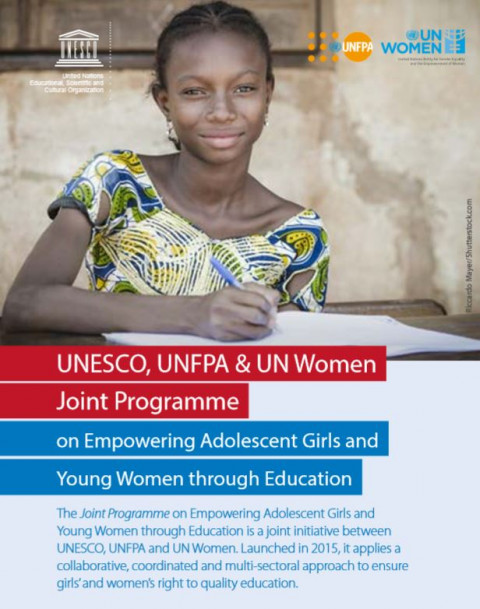 UNESCO, UNFPA & UN Women Joint Programme: on Empowering Adolescent Girls and Young Women through Education Year of publication: 2019 Corporate author: UNESCO | United Nations Population Fund (UNFPA) The Joint Programme on Empowering Adolescent Girls and Young Women through Education leverages the collective expertise, experience and networks of three United Nations agencies – UNESCO, UNFPA and UN Women.It aims to empower adolescent girls and young women aged 10 to 24 to make successful and healthy transitions into adulthood, in and through quality education.Taking a lifecycle perspective and a holistic approach, the Joint Programme strengthens the links between education, health and gender equality.
 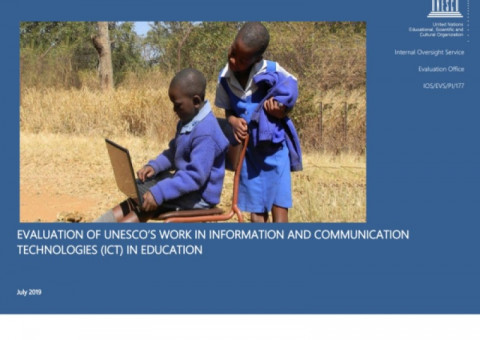 Evaluation of UNESCO's work in information and communication technologies (ICT) in education Year of publication: 2019 Author: Seán Ó Siochru and Graham Attwell Corporate author: UNESCO ICT in Education is a fast-growing area globally that offers many strategic opportunities. As the leader and coordinator of the SDG 4 – Education 2030 with the aim to “Ensure inclusive and equitable quality education and promote lifelong learning opportunities for all”, UNESCO has the mandate and expertise needed to strategically position itself as a world leader in this field. UNESCO’s work in ICT in Education aims at enhancing the quality and relevance of learning and at strengthening inclusion. While technology can facilitate wider access to education and bridge learning divides, can advance gender equality and inclusion as well as digital skills development, the rapidly changing technologies and work processes require the development of new pedagogies, both for the use of ICT for teaching and learning in the classroom and through open access and distance learning. Compared to other players, UNESCO leverages its comparative strengths in its ICT in Education interventions - especially its impartiality, convening power, and policy expertise - through an inclusive and humanistic approach to achieving quality education in coherence with Sustainable Development Agenda 2030. Its expertise across all levels of Education and its multidisciplinary potential of working across its Programme Sectors are also considered among UNESCO’s specific strengths. The evaluation revealed that UNESCO achieved important results, at the level of the learning environment, at the policy level and in institutional capacity building, but it also showed that UNESCO still needs to strengthen its positioning and visibility within the wider landscape of ICT in Education. For example, UNESCO has to continue positioning itself for producing forward-looking knowledge on ICT in Education and as a laboratory of ideas for future-oriented thinking. While the evaluation came across various specific interventions successfully addressing the needs of disadvantaged groups, the evaluation found that considerations of inclusion and gender equality were not consistently mainstreamed into policy-related and capacity building interventions. Other challenges are mainly linked to the current dispersion of resources and fragmentation of expertise across different entities within the Organization, which also leads to reduced visibility. While the key entities active in this area recognize that they are working within a common theme, collaboration and coordination still needs to be improved. The strategic measures proposed by the evaluation towards an overall organizational framework for ICT in Education aim at establishing an enabling environment for inter- and multidisciplinary approaches and greater coherence and collaboration.
 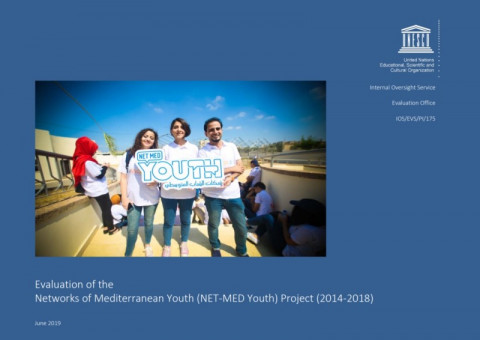 Evaluation of the Networks of Mediterranean Youth (NET-MED Youth) Project (2014-2018) Year of publication: 2019 Author: Maksymilian Fras | Yael Ohana | Kimiko Hibri Pedersen | Christophe Dietrich | Mamoun Besaiso Corporate author: UNESCO The Networks of Mediterranean Youth (NET-MED Youth) Project is a regional project funded by the European Union and implemented by UNESCO from 2014 until 2018. It followed a comprehensive approach through interdisciplinary activities in different thematic areas aimed at advancing youth legal and policy frameworks, enhancing youth representation in media, and reinforcing youth employability and skills in response to the challenges experienced by young women and men in the region regarding their transition to full autonomous citizenship in the civic, political, economic, social and cultural spheres. NET-MED Youth contributed to the creation of an enabling environment for young women and men from nine of the Southern countries of the European Neighbourhood Policy (i.e. Algeria, Israel, Jordan, Lebanon, Libya, Morocco, Palestine, Syria and Tunisia) to develop their competencies, to exercise their rights and meaningfully engage as active citizens in the development and implementation of national strategies on youth. The evaluation found that, overall, the NET-MED Youth Project was a successful initiative and created a momentum for Youth empowerment in the respective beneficiary countries. Its high relevance in the context of the Agenda 2030 resulted not least from UNESCO’s longstanding experience and good practices in working with youth organizations and youth-related stakeholders through youth engagement as partners and beneficiaries. The Project thus constituted a significant contribution to the UNESCO Operational Strategy on Youth 2014-2021. Gender equality was a central concern of NET-MED Youth, and systematically embedded throughout all activities as a transversal feature. In line with the Agenda 2030 commitment of leaving no one behind, several activities focused on issues of disadvantaged or traditionally underserved groups, such as youth with disabilities. Challenges identified are mainly related to the often difficult and in some countries unstable political environments. Together with the needs-based and rather context-specific approach in each country, this also affected to some extent the full implementation of the regional perspective. Furthermore, in the absence of a coherent and explicit longer-term exit strategy, the structures and results achieved risk not to be maintained, or scaled up over time, despite the strong local commitment and ownership created over the project duration. Through successfully incorporating youth aspirations in its design and implementation, the NET-MED Youth Project represented a new and innovative approach to youth engagement and empowerment in an interdisciplinary fashion, and should thus be considered as a basis for new thinking on which to build in the future. The high potential for replication of the NET-MED Youth Project, as a continuation or as an example of good practice for a comprehensive and interdisciplinary approach is thus to be further explored.
 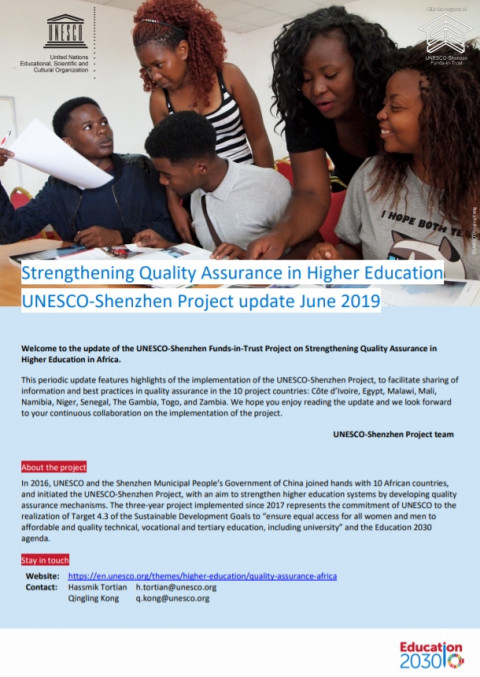 Strengthening Quality Assurance in Higher Education UNESCO-Shenzhen Project Update, June 2019 Year of publication: 2019 Corporate author: UNESCO In 2016, UNESCO and the Shenzhen Municipal People’s Government of China joined hands with 10 African countries, and initiated the UNESCO-Shenzhen Project, with an aim to strengthen higher education systems by developing quality assurance mechanisms. The three-year project implemented since 2017 represents the commitment of UNESCO to the realization of Target 4.3 of the Sustainable Development Goals to “ensure equal access for all women and men to affordable and quality technical, vocational and tertiary education, including university” and the Education 2030 agenda.
  Her education, our future: snapshots of UNESCO's work Year of publication: 2019 Corporate author: UNESCO This collection provides snapshots of some of UNESCO’s efforts to empower women and girls through education. It highlights core areas of work undertaken, as profiled on the next page. The aim is to give the reader a flavour of what it is that UNESCO, including its 53 field offices and specialized institutes, is doing to transform her education and our future.
 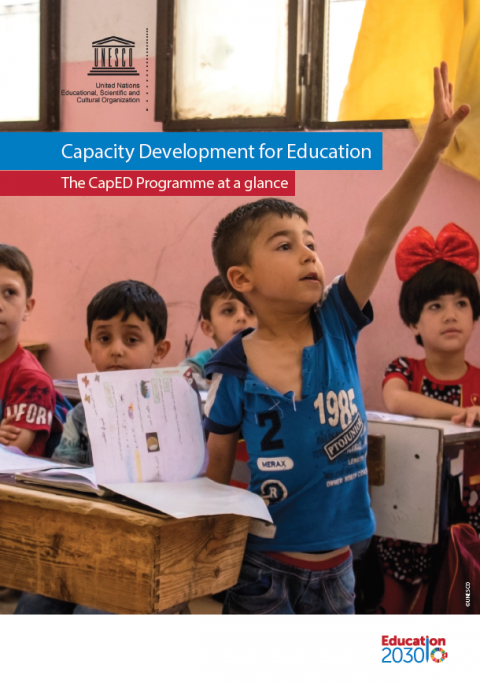 Capacity Develoment for Education: the CapED Programme at a glance Year of publication: 2019 Corporate author: UNESCO Education has the power to transform lives and is at the heart of UNESCO’s mission to build peace, eradicate poverty and drive sustainable development. Right now, 750 million adults – two-thirds women – still lack basic literacy skills. Around 264 million children and youth are out of school and the international community must have almost 69 million new teachers to reach the 2030 education goals. These challenges can be tackled effectively through education reforms. However, these can only take place when countries have the capacities to put this change into action. As well as trained staff, countries need efficient organizational processes, functioning institutions and the tools and resources to design, implement and manage tailored education policies and plans. This is where the CapED Programme steps in. By mobilizing UNESCO’s global network, the Programme provides selected countries with a cohesive package of support. It works alongside stakeholders to reinforce national capacities to undertake evidence-based education reforms that fit into their national priorities and respond to SDG4 commitments, in order to offer quality education opportunities to all.
  Education transforms lives: empowering people and ensuring inclusiveness and equality Year of publication: 2019 Corporate author: UNESCO This brochure compiles the main elements of progress on Sustainable Development Goal 4 (SDG 4) highlighted in the submission by UNESCO, on behalf of the SDG-Education 2030 Steering Committee, to the Office of the Under-Secretary-General, Department of Economic and Social Affairs (DESA) on the occasion of the High-level Political Forum (HLPF) 2019 - Empowering people and ensuring inclusiveness and equality.