
Resources
Explore a wide range of valuable resources on GCED to deepen your understanding and enhance your research, advocacy, teaching, and learning.
2,813 Results found
 International Trends of Lifelong Learning in Higher Education: Research Report Year of publication: 2023 Corporate author: UNESCO Institute for Lifelong Learning (UIL) | Shanghai Open University Against the background of a global education crisis and a growing recognition of the importance of lifelong learning, the UNESCO Institute for Lifelong Learning (UIL) and the Shanghai Open University (SOU) conducted a comprehensive research project from 2020 to 2022 that included, among other components, an international survey on the contribution of higher education institutions to lifelong learning, the results of which are presented in this report. Based on the comprehensive sets of quantitative and qualitative data collected across all world regions, this research constitutes a major step forward in building an international knowledge base on the role of HEIs in establishing lifelong learning opportunities for all. 高等教育机构实施终身学习的国际趋势 : 研究报告 Year of publication: 2023 Corporate author: UNESCO Institute for Lifelong Learning (UIL) | Shanghai Open University 《高等教育机构实施终身学习的国际趋势》这份研究 报告全面概述了全球高等教育领域终身学习的发展 状况。报告研究了高等教育机构如何为终身学习做出 贡献,并展示了不同实施领域的进展情况。报告基于 2020年开展的一项国际调查的结果,该调查由联合国 教科文组织终身学习研究所(UIL)牵头,国际大学协会 (IAU)和上海开放大学(SOU)予以合作。调查收到了来自世界各地区96个国家的399个机构的 有效答复。报告分析了高等教育终身学习(LLL)制度 化的三个主要方面,分别是促进高等教育终身学习的 支持性政策环境;机构治理与实施;高等教育机构通过 多样化和灵活性增加终身学习机会的方法和程度。
  Institutional practices of implementing lifelong learning in higher education: research report Year of publication: 2023 Corporate author: UNESCO Institute for Lifelong Learning (UIL) | Shanghai Open University In many countries, higher education is gaining prominence as a means for the general population to engage in lifelong learning (LLL), whether for personal or professional development, or to participate in broader societal change. In some cases, national governments have introduced policies or funding instruments that create incentives for higher education institutions (HEIs) to align their offerings more closely with changing labour market demands and societal needs, and to expand access for groups previously underrepresented in higher education. Key trends in the higher education sector and the associated global socio-economic transformations were discussed in detail in the international survey report, which was published as part of the research project on the contribution of higher education institutions to LLL (UIL and SOU, 2023). This case study report moves from an international overview of the policies, structures and mechanisms that support LLL in higher education to the close study of institutional practices. It explores the interrelations between national policy environments and institutional strategies. It examines different approaches taken by universities to develop, implement and monitor LLL activities, and further provides practical examples of how universities engage with diverse groups of learners through their LLL mission. As such, this report’s value lies in offering both general insights into the implementation of LLL in HEIs, and case-specific descriptions and analyses of institutional policies and practices. 高等教育机构实施终身学习的实践: 研究报告 Year of publication: 2023 Corporate author: UNESCO Institute for Lifelong Learning (UIL) | Shanghai Open University 在许多国家,高等教育作为大众参与终身学习以获得个 人或职业发展或参与更广泛社会变革的一种手段,日益 受到重视。在某些情况下,国家政府推出了政策或资助 工具,为高等教育机构提供激励,使其提供的服务更紧 密地贴合不断变化的劳动力市场需求和社会需求,并为 以前在高等教育中代表性不足的群体提供更多学习机 会。国际调查报告详细介绍了高等教育部门的主要趋势 以及相关的全球社会经济转型,该报告作为高等教育机 构对终身学习贡献的研究项目一部分发布(终身学习研 究所和上海开放大学,2023年)。本案例研究报告提供了对支持高等教育终身学习的政 策、结构和机制的国际性概述,介绍了对机构实践的深 入研究,探讨了国家政策环境与机构性战略之间的相互 关系,研究了大学为开发、实施和监测终身学习活动而采 取的不同方法,进一步提供了大学如何通过其终身学习 任务与不同群体学习者互动的实例。因此,本报告价值 在于既提供了高等教育机构实施终身学习的一般见解, 也提供了对机构政策和实践具体案例的描述和分析。
  Greening Communities Guidance: Lifelong Learning for Climate and Sustainability Action Year of publication: 2025 Corporate author: UNESCO Institute for Lifelong Learning (UIL) | World Organization of the Scout Movement Climate change poses a serious threat to communities around the world, compelling us to protect vulnerable lives and shape resilient futures. By nurturing lifelong learning and empowering local initiatives, communities can drive transformative change – amplifying local efforts into global impact.Green communities are municipalities of any size that embrace lifelong learning to empower individuals to take meaningful climate and sustainability action. This is achieved by extending climate education beyond the classroom and offering learning opportunities in non-formal and informal settings – rooted in and responsive to local culture and context. By engaging learners of all ages across a variety of learning environments, residents of green communities are equipped to take informed, proactive and responsible action for the climate and environment, contributing to more sustainable living.The sections of this document provide an overview of the diverse learners, learning spaces and educational approaches that can contribute to greening communities. It outlines practical steps for developing a comprehensive green learning strategy and action plan that mobilizes learners of all generations in climate and sustainability efforts.Municipal governments, along with a wide range of local stakeholders and change agents in both urban and rural areas, are invited to use this guidance to foster green communities through a lifelong learning lens.Together, let’s green our communities!
 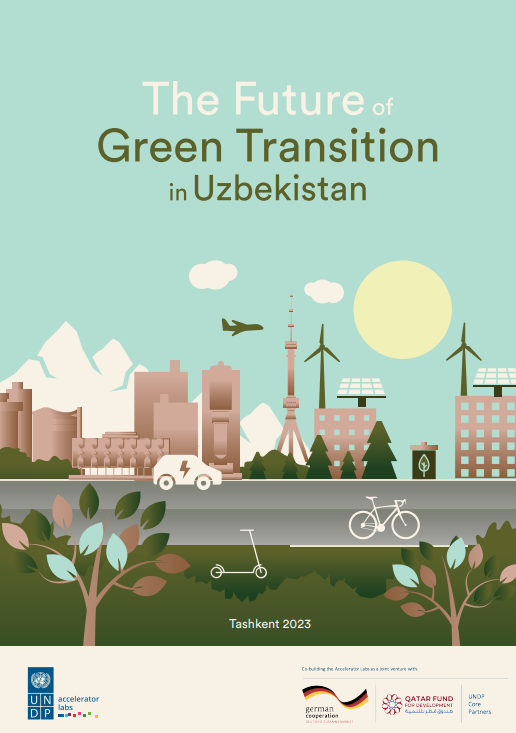 Будущее зелёного перехода в Узбекистане Year of publication: 2023 Corporate author: UNDP Узбекистан При поддержке правительства ПРООН в Узбекистане применила инструменты совместного будущего и прогнозирования для изучения возможностей зеленого перехода в Узбекистане. В результате был получен ряд результатов, включая базу данных сигналов, драйверы, нарративы сценариев и систему изучения произвольных сценариев. Они использовались для разработки идей политик, в которых изложены инновационные подходы.
 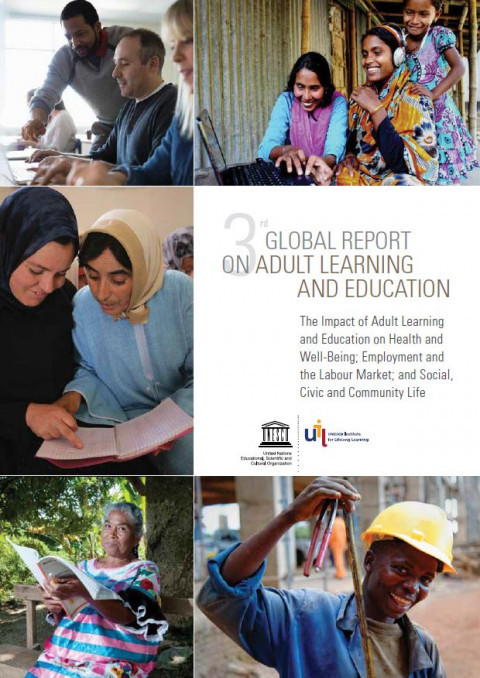 3rd Global Report on Adult Learning and Education: The Impact of Adult Learning and Education on Health and Well-being, Employment and the Labour Market, and Social, Civic and Community Life Year of publication: 2016 Corporate author: UNESCO Institute for Lifelong Learning (UIL) The Global Reports on Adult Learning and Education (GRALE) play a key role in meeting UNESCO’s commitment to monitor and report on countries’ implementation of the Belém Framework for Action. This Framework was adopted by 144 UNESCO Member States at the Sixth International Conference on Adult Learning and Education (CONFINTEAVI), which was held in Belém, Brazil, in 2009. In the Belém Framework for Action, countries agreed to improve ALE across five areas of action: policy; governance; financing; participation, inclusion and equity; and quality (UNESCO Institute for Lifelong Learning, 2010b).GRALE III appears as the ALE community prepares for an important global conference: the 2017 Mid-Term Review of CONFINTEA VI. GRALE III will help high-level decision makers take stock of progress in delivering their Belém promises since 2009. It will also help them look ahead to 2030. Policymakers are now considering how to put into practice the ALE promises made in the 2030 Agenda for Sustainable Development (United Nations, 2015) and the Recommendation on Adult Learning and Education (2015) (UNESCO, 2015). GRALE III will support their deliberations by showing how ALE can help achieve broader health, economic and social outcomes. It will identify major challenges for ALE and examine the implications for ALE of major global trends like migration and demographic shifts.GRALE III brings together the latest data, policy analysis and case studies on ALE. Government leaders will find high quality evidence to inform their policies, strategies and budgets. Proponents of change will find compelling arguments showing how ALE promotes sustainable development, healthier societies, better jobs and more active citizenship. Policy analysts will find entry points and ideas for future research and policy.
  Gender Digital Divide Assessment: Uzbekistan Year of publication: 2023 Corporate author: UNDP Uzbekistan The Government of the Republic of Uzbekistan, realizing the negative impact of the gender digital divide on the development of the country, has included the issue of ensuring gender digital equality among its priorities. The United Nations Development Programme in Uzbekistan conducted an assessment to measure and analyze the main factors affecting the digital inclusion (or isolation) of women and girls, and recommended a number of actions that the Government can take to address existing gaps. Оценка гендерного цифрового разрыва: Республика Узбекистан Year of publication: 2023 Corporate author: UNDP Узбекистан Правительство Республики Узбекистан, осознавая негативное влияние гендерного цифрового разрыва на развитие страны, включило вопрос обеспечения гендерного цифрового равенства в число своих приоритетов. Программа развития ООН в Узбекистане провела оценку с целью измерения и анализа основных факторов, влияющих на цифровую инклюзию (или изоляцию) женщин и девочек, и рекомендовала ряд действий, которые правительство может предпринять для устранения существующих разрывов. The Future of Green Transition in Uzbekistan Year of publication: 2023 Corporate author: UNDP Kazakhstan In support of the government, UNDP Uzbekistan applied participatory futures and foresight tools to explore possibilities for a Green Transition in Uzbekistan. The process produced a range of outputs, including a signals database, drivers, narrative scenarios, and a custom scenario exploration system. They were used to develop policy ideas, which outline innovative approaches.