
Resources
Explore a wide range of valuable resources on GCED to deepen your understanding and enhance your research, advocacy, teaching, and learning.
2,813 Results found
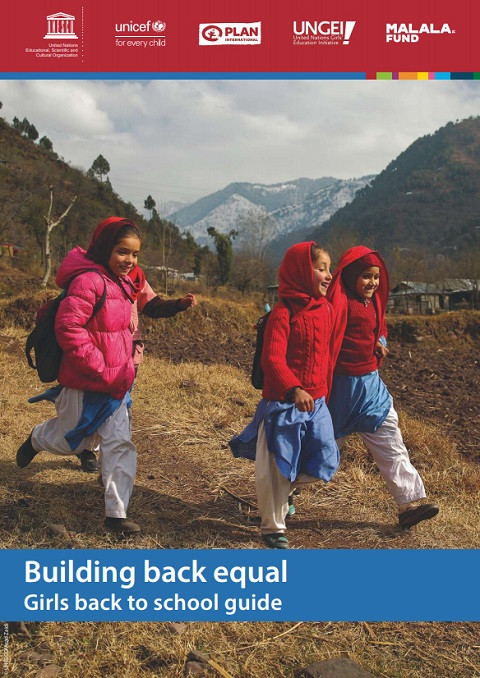 Building Back Equal: Girls Back to School Guide Year of publication: 2020 Corporate author: UNESCO | United Nations Children's Fund (UNICEF) | Plan International | United Nations Girls' Education Initiative (UNGEI) | Malala Fund The guide provides targeted inputs to ensure continuity of learning during school closures, and comprehensive, timely and evidence-based plans for reopening schools in a way that is safe, gender-responsive and child-friendly, and meets the needs of the most marginalised girls. This guide emphasizes an approach to ‘build back equal’ through gender-responsive measures that transform education systems, prioritise resilience and address the key bottlenecks and barriers to girls’ education, including: Gender-responsive data and evidence to inform action, including data disaggregated by sex and gender-responsive monitoring to identify promising practices to promote gender equality. Policies, laws and plans to advance girls’ rights, including the removal of discriminatory practices that impede girls’ educational participation and completion, and ability to apply their learning. Sustained financing to achieve results, protecting education financing for girls’ education, alongside health, social protection and economy recovery initiatives with an equity lens. Reforzar la igualdad: Guía para el regreso de las niñas a la escuela Year of publication: 2020 Corporate author: Organización de las Naciones Unidas para la Educación, la Ciencia y la Cultura (UNESCO) | United Nations Children's Fund (UNICEF) | Plan International | United Nations Girls' Education Initiative (UNGEI) | Malala Fund La guía proporciona información específica para garantizar la continuidad del aprendizaje durante los cierres escolares, así como planes integrales, oportunos y fundados en datos empíricos para reabrir escuelas de forma segura, con perspectiva de género, adaptada a las necesidades de los niños, y que satisfaga las necesidades de las niñas más marginadas. Esta guía enfatiza un enfoque basado en “reforzar la igualdad”, a través de medidas con perspectiva de género que transformen los sistemas educativos, den prioridad a la resiliencia, y aborden los principales obstáculos y limitaciones para la educación de las niñas, incluyendo: Datos y pruebas con perspectiva de género para fundamentar las acciones, incluidos datos desglosados por sexo, y un seguimiento con perspectiva de género para identificar prácticas prometedoras para promover la igualdad de género. Políticas, leyes y planes para promover los derechos de las niñas, incluida la eliminación de las prácticas discriminatorias que impidan la participación y finalización educativa de las niñas, y la posibilidad de aplicar los conocimientos adquiridos. Financiamiento sostenido para lograr resultados, protegiendo el financiamiento educativo para las niñas, junto con iniciativas de salud, protección social y recuperación económica, con una perspectiva de igualdad de género. Reconstruire l’égalité: Guide de rescolarisation des filles Year of publication: 2020 Corporate author: Organisation des Nations Unies pour l'éducation, la science et la culture (UNESCO) | United Nations Children's Fund (UNICEF) | Plan International | United Nations Girls' Education Initiative (UNGEI) | Malala Fund Le guide fournit des contributions ciblées pour assurer la continuité de l’apprentissage pendant les fermetures d’écoles ainsi que des plans complets et opportuns basés sur les données pour rouvrir les écoles de manière sûre, en tenant compte des questions de genre, ainsi qu’en répondant aux besoins des enfants et des filles les plus marginalisées. Ce guide met l’accent sur une approche visant à « reconstruire l’égalité », à travers des mesures tenant compte des questions de genre afin de transformer les systèmes éducatifs, de favoriser la résilience et de résoudre les principaux freins et obstacles à l’éducation des filles, dont : des données et des preuves tenant compte des questions de genre pour éclairer les actions, y compris des données ventilées par sexe et un suivi visant à identifier les pratiques prometteuses pour l’égalité des genres ; des politiques, des lois et des plans pour faire avancer les droits des filles, y compris l’élimination des pratiques discriminatoires qui entravent la participation des filles à l’éducation et leur capacité à mettre leur savoir en pratique ; des financements pérennes pour obtenir des résultats, qui protègent le financement de l’éducation des filles, ainsi que les initiatives en matière de santé, de protection sociale et de redressement économique sur un principe d’équité.
  Les femmes prennent la parole (Le Courrier de l’UNESCO no. 2, Juillet-septembre 2020) Year of publication: 2020 Corporate author: Organisation des Nations Unies pour l'éducation, la science et la culture (UNESCO) Politologues, journalistes, sociologues, chercheuses, écrivaines ou enseignantes dessinent les contours de l’après-pandémie, qu’il s’agisse de l’avenir des musées, des mutations de l’école, des dérives de l’information ou encore des enjeux de la recherche.Ce numéro trace un portrait en creux de notre époque, souligne les lignes de fracture que la crise sanitaire a mises à nu et montre l’ampleur des défis à relever. Il souligne aussi le potentiel de coopération scientifique, culturelle, éducative que cet événement inédit a révélé. Si les réflexions, le désir de changement et les mouvements d’entraide qui se sont manifestés ne restent pas sans lendemain, le monde pourrait réellement devenir plus solidaire, plus durable et plus égalitaire.
  Teaching Journalism for Sustainble Development: New syllabi Year of publication: 2015 Author: Banda Fackson Corporate author: UNESCO This work aims to expand the curriculum of UNESCO in education in journalism and includes new curricula covering current topics in the field of journalism education around the world. The document was prepared on the basis of standard curricula, as well as additional UNESCO publications under the general title “Collection of new curricula” in order to effectively respond to new problems faced by specialists and teachers in the field of journalism. Обучение журналистике в целях устойчивого развития: Новые учебные планы Year of publication: 2015 Author: Banda Fackson Corporate author: Организация Объединенных Наций по вопросам образования, науки и культуры (UNESCO) Данная работа направлена на расширение учебных программ ЮНЕСКО по образованию в области журналистики и включает новые учебные планы охватывающие актуальные темы в области журналистского образования во всем мире. Документ подготовлен на основе типовых учебных программ, а также дополнительных публикаций ЮНЕСКО под общим названием «Сборник новых учебных программ», чтобы эффективно реагировать на новые проблемы, стоящие перед специалистами и преподавателями в области журналистики.
 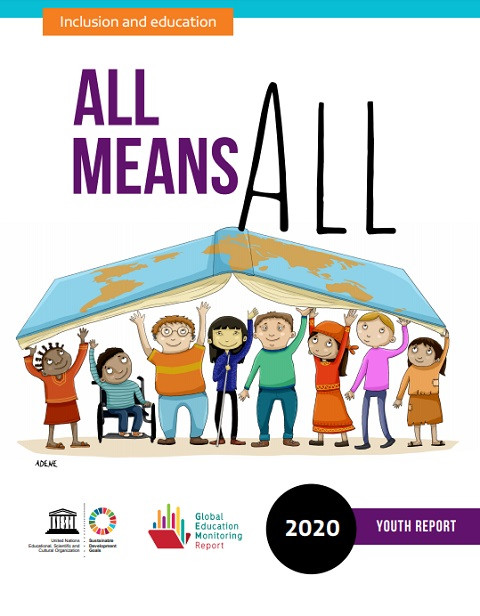 Youth Report 2020: Inclusion and Education; All Means All Year of publication: 2020 Corporate author: UNESCO | Global Education Monitoring Report Team This Youth Report is designed to help you learn about the social, economic and cultural factors that cause vulnerable children, youth and adults to be discriminated against and marginalized in education. It tells the stories of the people who fight to ensure that everyone is included in education, and of those who fought to uphold their own right to education. It brings to life the recommendations of the 2020 Global Education Monitoring Report: Inclusion and education: All means all and calls on youth and teachers to share and discuss the stories and messages, to use them in campaigns and as a teaching tool in class. An open letter to education ministers is included calling, for education systems to be built back more inclusive after the school closures during Covid-19. A Whole New World, Reimagined by Women (The UNESCO Courier no. 2, July-September 2020) Year of publication: 2020 Corporate author: UNESCO In this issue, the UNESCO Courier gives women a voice. Political scientists, journalists, sociologists, researchers, writers, and teachers have drawn the contours of the post-pandemic era – whether it is the future of museums, changes in schools, the rise of disinformation, or the challenges of scientific research.This issue paints a sobering picture of our times – highlights the fault-lines exposed by the health crisis, and shows the magnitude of the challenges ahead. It also underlines the potential for scientific, cultural and educational co-operation that this unprecedented event has revealed. If the reflections, the desire for change, and the movements of mutual aid that have emerged are not short-lived, the world really could become a more united, more sustainable and more egalitarian place.
  Repenser nos futurs ensemble: un nouveau contrat social pour l'éducation Year of publication: 2021 Corporate author: International Commission on the Futures of Education | Organisation des Nations Unies pour l'éducation, la science et la culture (UNESCO) L’avenir de l’humanité sur la planète est, nous le savons aujourd’hui, compromis. La pandémie a eu au moins le mérite de démontrer combien nos existences sont fragiles et combien nos destins sont inextricablement liés. Il est nécessaire et urgent désormais, d’agir collectivement pour changer de cap et réinventer notre avenir. Dans ce tournant, l’éducation jouera un rôle crucial pour sa capacité, universellement reconnue, à provoquer le changement. Mais pour jouer son rôle, elle devra surmonter un double défi : honorer, d’une part, sa plus vieille promesse, c’est-à-dire d’être effective et d’assurer le droit à une éducation de qualité pour chaque enfant, chaque jeune, chaque adulte partout à travers le monde ; et, d’autre part, assumer entièrement son potentiel transformateur, afin d’ouvrir la voie vers un avenir collectif durable. Pour y parvenir, il convient de s’engager dans un nouveau contrat social pour l’éducation, qui permette de corriger les injustices tout en transformant l’avenir. Ce nouveau contrat social doit être enraciné dans les droits humains et être fondé sur les principes de non-discrimination, de justice sociale, de respect de la vie, de la dignité humaine et de la diversité culturelle ; il doit aussi s’appuyer sur une éthique de la sollicitude, de la réciprocité et de la solidarité ; il doit enfin renforcer l’éducation comme projet public et un bien commun de l’humanité. Le présent rapport, préparé durant deux ans et qui a pu s’appuyer sur une consultation mondiale de près d’un million de personnes, invite les gouvernements, les partenaires et les citoyens du monde entier à élaborer un nouveau contrat social en faveur de l’éducation, pour construire un avenir pacifique, juste et durable pour toutes et tous. Les conceptions, les principes et les propositions avancés ici ne constituent qu’un point de départ. Seul un effort collectif pourra les traduire en actes et les adapter aux situations locales. Il existe en effet de vraies lueurs d’espoir. Ce rapport essaie de les ressaisir afin que l’avenir se construise sur ces fondations. Qu’on n’y voit donc pas un manuel ou un plan directeur : c’est le début d’une conversation vitale.
  一起重新构想我们的未来:为教育打造新的社会契约 Year of publication: 2022 Corporate author: International Commission on the Futures of Education | 联合国教科文组织 (UNESCO) 我们人类和地球正遭受着威胁。新冠肺炎疫情只不过证明了我们的脆弱性和相互关联性。我们现在需要采取紧急行动,一起改变方向,重新构想我们的未来。“教育的未来”国际委员会的这份报告认可教育可以带来深刻变革。我们目前面临着双重挑战,即兑现尚未实现的承诺,确保每位儿童、青少年和成年人都有权接受优质教育,以及把教育当作我们通往可持续共同未来的路径,充分实现其变革潜力。为了做到这一点,我们需要一份能够在改变未来的同时,修复现有不公正的新的教育社会契约。这一新的社会契约必须以人权为依据,以非歧视性、社会正义、尊重生命、人的尊严和文化多样性等原则为基础。它必须包含关怀、互惠和团结的伦理。它必须加强教育作为公共事业、共同利益的地位。这份报告建立在历时两年、约100万人参与的全球协商过程的基础之上,它邀请世界各地政府、机构、组织和公民为教育订立一份新的社会契约,帮助我们为所有人创造和平、公正和可持续的未来。这份报告所提出的愿景、原则和建议只是一个起点。对其进行解读和本土化实践,是我们需要共同努力完成的事业。目前的工作中已经存在许多亮点,本报告试图捕捉这些亮点,同时也以其为基础进行构建。本报告既不是一部指南,也不是一幅蓝图,而是一场至关重要的对话的起点。