
Resources
Explore a wide range of valuable resources on GCED to deepen your understanding and enhance your research, advocacy, teaching, and learning.
2,813 Results found
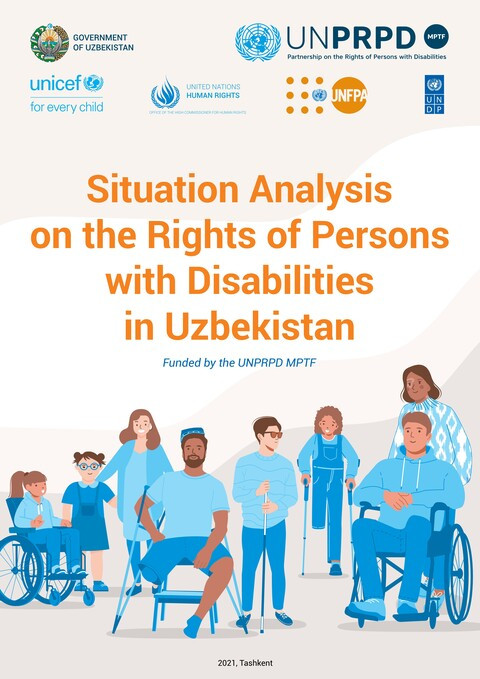 Анализ ситуации по обеспечению прав лиц с инвалидностью в Узбекистане Year of publication: 2021 Corporate author: UNICEF Uzbekistan | United Nations Population Fund (UNFPA) | United Nations Development Programme (UNDP) | UN. Office of the United Nations High Commissioner for Human Rights (UN. OHCHR) Данное исследование основывается на результатах ситуационного анализа детей и взрослых с инвалидностью, проведенного в 2019 г. Цель данного анализа – не в том, чтобы указать на проблемы, а в том, чтобы заложить основу для их решения путем выявления возможностей и сил содействия, возникающих сегодня. В отчете рассматриваются необходимые предпосылки для реализации прав человека людей с инвалидностью, особенно женщин, девочек и мальчиков с инвалидностью, такие как надежная система обеспечения равенства и недискриминации, наличие инклюзивных и доступных услуг в сообществе, финансовые и координационные механизмы, учитывающие интересы людей с инвалидностью, прозрачные системы мониторинга и отчетности, а также значимое участие людей с инвалидностью.
  大数据视角下残疾人高等教育现状分析 Year of publication: 2022 Author: 刘晓征 本文以不同高等学校的调研数据为基础对高等学校内部招生对象、专业设置和分布层次等不同的方面进行分析,以便更好地了解我国残疾人高等教育目前的教育现状,并主张在大数据视角下分析残疾人高等教育的现状,旨在找出更多的优化措施。
  Transformer les entreprises par la diversité et l’inclusion Year of publication: 2022 Corporate author: Organisation Internationale du Travail Depuis plus de cent ans, l’Organisation internationale du Travail (OIT) promeut le travail productif et décent des hommes et des femmes dans des conditions de liberté, de dignité, de sécurité économique et d’égalité des chances. L’OIT s’efforce de promouvoir des lieux de travail plus inclusifs et de lutter contre les discriminations pour tous les motifs, notamment le sexe, l’origine ethnique, la race, le statut d’autochtone, le handicap, la séropositivité, l’orientation sexuelle et l’identité de genre, en garantissant l’égalité des chances et de traitement au travail. L’action de l’OIT dans ce domaine participe à la réalisation du Programme de développement durable à l’horizon 2030 et de l’engagement de ne laisser personne de côté. En établissant des normes internationales du travail, en fournissant des conseils techniques et en renforçant les capacités de ses mandants, l’OIT a contribué à l’élaboration et à l’application d’une législation, de politiques et de bonnes pratiques d’entreprise inclusives et à la promotion de l’égalité et de la non-discrimination sur le lieu de travail. For over a hundred years, the International Labour Organization (ILO) has promoted productive and decent work for men and women in conditions of freedom, dignity, economic security and equal opportunity. The ILO strives to promote more inclusive workplaces and to combat discrimination on all grounds, including gender, ethnic origin, race, indigenous status, disability, HIV status, sexual orientation and gender identity, guaranteeing equality of opportunity and treatment at work. The ILO's action in this field contributes to the achievement of the 2030 Agenda for Sustainable Development and the commitment to leave no one behind. By setting international labor standards, providing technical advice and building the capacity of its constituents, the ILO has contributed to the development and application of inclusive legislation, policies and good corporate practices, and to the promotion of equality and non-discrimination in the workplace.
  Disability Discrimination in the Digital Realm: How the ICRPD Applies to Artificial Intelligence Decision-Making Processes and Helps in Determining the State of International Human Rights Law (Human Rights Law Reivew; Volume. 23, Issue. 3) Year of publication: 2023 Author: Tetyana Krupiy | Martin Scheinin Scholars have identified challenges to protecting individuals from discrimination in contexts where organisations deploy artificial intelligence decision-making processes. While scholarship on ‘digital discrimination’ is growing, scholars have paid less attention to the impact of the use of artificial intelligence decision-making processes on persons with disabilities. This article posits that while the use of artificial intelligence technology can be beneficial for some purposes, its deployment can also construct a disability. The article demonstrates that the Convention on the Rights of Persons with Disabilities can be interpreted in a manner that confers a wide variety of human rights on persons with disabilities in the context when entities deploy artificial intelligence decision-making processes. The article proposes a test for digital discrimination based on disability and shows how it can be incorporated into the treaty through legal interpretation. Thereafter, it moves to developing an analogous general test for digital discrimination under international human rights law, applicable beyond a catalogue of protected characteristics.
 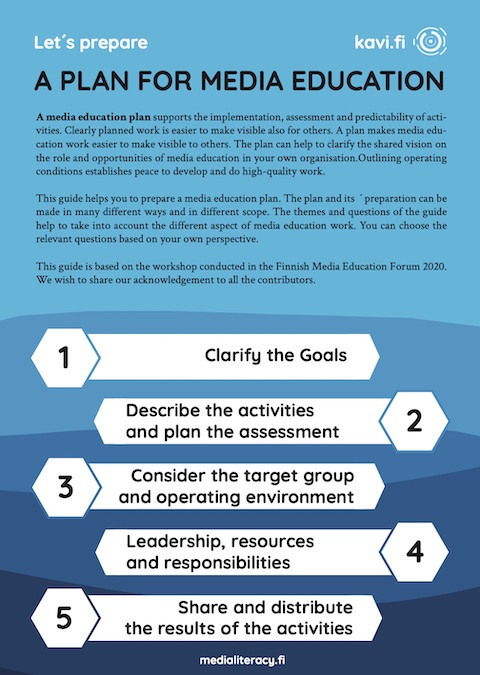 Let's Prepare: A Plan For Media Education Year of publication: 2020 Corporate author: KAVI National Audiovisual Institute (Finland) This guide helps you to prepare a media education plan. The plan and its preparation can be made in many different ways and in different scope. The themes and questions of the guide help to take into account the different aspect of media education work. You can choose the relevant questions based on your own perspective. This guide is based on the workshop conducted in the Finnish Media Education Forum 2020.
  Sultan Qaboos University Students’ Attitudes towards Inclusion of Their Peers with Disabilities Year of publication: 2015 Author: Ibrahim Al Qaryouti | Jokha Al Shukaili Corporate author: Sultan Qaboos University The present study aimed to identify attitudes of students of Sultan Qaboos University towards the inclusion of disabled peers. To achieve the objective of the study, the researchers used a scale to measure students’ attitudes towards inclusion. The final version of the scale consisted of 34 items after verification of validity and reliability. The results showed no significant difference between students of colleges of science and humanities in their attitudes towards the inclusion of their disabled peers. However, there were statistically significant differences in attitudes towards the inclusion of students with disabilities in terms of gender; in favor of females’ domain and the total score. There were differences in attitudes towards the inclusion of students with disabilities among males and females in the college of science, and in favor of females on all domains of the scale.Also, there was significant interaction effect (gender by academic level). Meanwhile, the results of the study did not show statistically significant differences in attitudes between male and female students in the College of Humanities the exception was in behavioral domain, where female students’ attitudes were more positive towards inclusion than male students. In light of these results, the study recommended to study the attitudes of both administration and academic staff towards the inclusion of students with disabilities in Sultan Qaboos University. اتجاهات طلبة جامعة السلطان قابوس نحو دمج اقرانهم ذوي الإعاقة Year of publication: 2015 Author: Ibrahim Al Qaryouti | Jokha Al Shukaili Corporate author: Sultan Qaboos University هدفت الدراسة إلى التعرف على اتجاهات طلبة جامعة السلطان قابوس نحو دمج أقرانهم ذوي الإعاقة. ولتحقيق ذلك، استخدم الباحثان مقياس اتجاهات الطلبة نحو دمج أقرانهم ذوي الإعاقة، وتكون المقياس بصورته النهائية من 34 فقرة بعد التحقق من صدقه وثباته، مقسمة على ثلاثة أبعاد (العاطفي، المعرفي، السلوكي). بينت النتائج عدم وجود فروق ذوات دلالة إحصائية بين طلبة الكليات العلمية والإنسانية، في اتجاهاتهم نحو دمج أقرانهم ذوي الإعاقة؛ وبينت النتائج أيضاً أن هناك فروقاً ذوات دلالة إحصائية في الاتجاهات نمو دمج الطلبة ذوي الإعاقة بين الطلبة الذكور والإناث، ولصالح الإناث على بُعد الأداة الثاني، وعلى المجموع الكلي؛ كما بينت نتائج الدراسة أن هناك فروقاً في الاتجاهات نحو دمج الطلبة ذوي الإعاقة لدى طلبة الكليات العلمية الذكور والإناث ولصالح الإناث، وعلى جميع أبعاد الأداة. في حين لم يظهر وجود فروق ذوات دلالة إحصائية في الاتجاهات بين طلبة الكليات الإنسانية الذكور والإناث على أبعاد الأداة باستثناء البعد السلوكي، حيث كانت اتجاهات الطالبات أفضل من اتجاهات الطلاب الذكور. كما أظهرت النتائج عدم وجود فروق ذوات دلالة إحصائية بين الطلبة في المستويات الدراسية الخمسة، وكذلك للتفاعل بين النوع والمستوى الدراسي. وفي ضوء هذه النتائج، أوصت الدراسة بضرورة دراسة اتجاهات الهيئة الإدارية والتدريسية نحو دمج الطلبة ذوي الإعاقة في جامعة السلطان قابوس.
  For a Transnational History of Disability: Argentina, Brazil and Spain 20th Century Year of publication: 2022 Author: Gildas Bregain Corporate author: Latin American Council of Social Sciences (CLACSO) Publications on disability have been mostly limited to health, rehabilitation and education editorials. On the other hand, this new Editorial Series, open to social movements, platforms of struggle, academic groups, collaboration networks, public policy makers, citizens of all of our Latin America and the Caribbean and other latitudes of the global South, combines a multiplicity of edges, perspectives and approaches. This volume comes to occupy a vacant place in critical studies on disability in Latin America, which is to record the struggles for the rights of these people in our region. Introducing a historical problematization in this regard not only has an epistemological and political relevance, but also makes a contribution to the present and to contemporary disability policies. Para una historia transnacional de la discapacidad: Argentina, Brasil y España Siglo XX Year of publication: 2022 Author: Gildas Bregain Corporate author: Latin American Council of Social Sciences (CLACSO) Las publicaciones sobre discapacidad han estado circunscriptas mayoritariamente a las editoriales de salud, rehabilitación y educación. En cambio, esta nueva Serie Editorial, abierta a los movimientos sociales, a las plataformas de lucha, a los grupos académicos, a las redes de colaboración, a los hacedores de políticas públicas, a los ciudadanos y ciudadanas de toda nuestra América Latina y el Caribe y otras latitudes del Sur global, conjuga una multiplicidad de aristas, perspectivas y enfoques. El presente volumen viene a ocupar un lugar de vacancia en los estudios críticos sobre discapacidad en América Latina, que es el historiar las luchas por los derechos de dichas personas en nuestra región. Introducir una problematización histórica al respecto no solo posee una relevancia espistemológica y política, sino que también realiza una contribución al presente y a las políticas contemporáneas de discapacidad.
  Progress on the Sustainable Development Goals: The Gender Snapshot 2021 Year of publication: 2021 Author: Ginette Azcona | Antra Bhatt | Julia Brauchle | Guillem Fortuny Fillo | Yongyi Min | Heather Page | Yuxi Zhang Corporate author: United Nations Entity for Gender Equality and the Empowerment of Women (UN Women) | UN. Department of Economic and Social Affairs (UN. DESA) The pandemic has tested and even reversed progress in expanding women’s rights and opportunities. Women have not recovered lost jobs and income, hunger is on the rise, and school closures threaten girls’ educational gains. Women’s participation in government, research, and resource management remains far from equal. Vulnerable groups of women, including migrants, those with disabilities, and those affected by conflict, are frequently left behind. Disparities between rich and poor countries are preventing equal access to lifesaving COVID-19 vaccines and treatments, putting women in poorer countries at disproportionate risk.Moreover, despite women’s central roles in responding to COVID-19, including as front-line health workers, they do not have the leadership positions they deserve. Building forward differently and better will require placing women and girls at the centre of all aspects of response and recovery, including through gender-responsive laws, policies, and budgeting.“Progress on the Sustainable Development Goals: The gender snapshot 2021” presents the latest evidence on gender equality across all 17 Goals, highlighting the progress made since 2015 but also the continued alarm over the COVID-19 pandemic, its immediate effect on women’s well-being, and the threat it poses to future generations.