
Resources
Explore a wide range of valuable resources on GCED to deepen your understanding and enhance your research, advocacy, teaching, and learning.
2,771 Results found
 Combattre les discours de haine sur internet Year of publication: 2015 Author: Iginio Gagliardone | Danit Gal | Thiago Alves | Gabriela Martinez Corporate author: UNESCO Le présent rapport offre un panorama mondial des dynamiques caractéristiques des discours de haine en ligne et des mesures prises pour les combattre et les contenir, en mettant en évidence les bonnes pratiques qui ont émergé au niveau local comme au niveau international. Si l’étude fournit une analyse exhaustive des cadres normatifs internationaux, régionaux et nationaux mis en place pour lutter contre les discours de haine en ligne et de leurs répercussions sur la liberté d’expression, elle met particulièrement l’accent sur les mécanismes sociaux et non réglementaires qui peuvent contribuer à lutter contre la production, la diffusion et l’impact des messages de haine en ligne.
 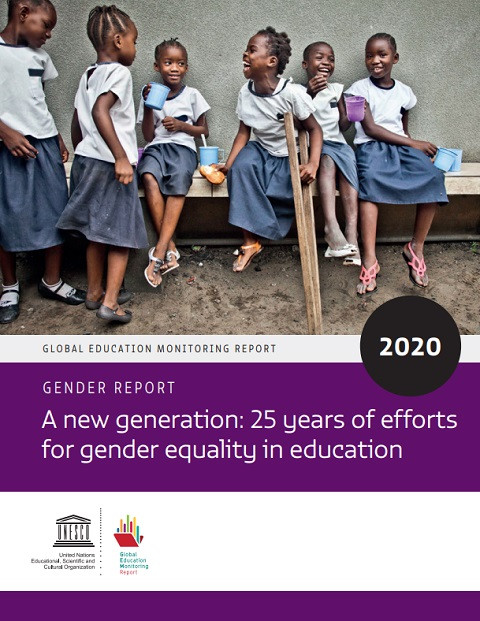 Gender Report 2020: A New Generation; 25 Years of Efforts for Gender Equality in Education (Global Education Monitoring Report) Year of publication: 2020 Corporate author: UNESCO | Global Education Monitoring Report Team Building on the 2020 Global Education Monitoring Report, this report investigates how inclusion in education can advance gender equality in and through education, which is critical to make progress towards gender equality in society. The goal of gender equality is, of course, not new. It was enshrined in the 1979 Convention on the Elimination of All Forms of Discrimination Against Women and was at the core of the 1995 Beijing Declaration and Platform for Action, whose 25th anniversary is marked in 2020.
  Youth and Violent Extremism on Social Media: Mapping the Research Year of publication: 2017 Author: Séraphin Alava | Divina Frau-Meigs | Ghayda Hassan Corporate author: UNESCO | Information for All Programme (IFAP) Does social media lead vulnerable individuals to resort to violence? Many people believe it does. And they respond with online censorship, surveillance and counter-speech. But what do we really know about the Internet as a cause, and what do we know about the impact of these reactions? All over the world, governments and Internet companies are making decisions on the basis of assumptions about the causes and remedies to violent attacks.The challenge is to have analysis and responses firmly grounded. The need is for a policy that is constructed on the basis of facts and evidence, and not founded on hunches – or driven by panic and fearmongering.It is in this context that UNESCO has commissioned the study titled Youth and Violent Extremism on Social Media – Mapping the Research. This work provides a global mapping of research (mainly during 2012-16) about the assumed roles played by social media in violent radicalization processes, especially when they affect youth and women. The research responds to the belief that the Internet at large is an active vector for violent radicalization that facilitates the proliferation of violent extremist ideologies.Indeed, much research shows that protagonists are indeed heavily spread throughout the Internet. There is a growing body of knowledge about how terrorists use cyberspace. Less clear, however, is the impact of this use, and even more opaque is the extent to which counter measures are helping to promote peaceful alternatives. While Internet may play a facilitating role, it is not established that there is a causative link between it and radicalization towards extremism, violent radicalization, or the commission of actual acts of extremist violence. Молодежь и насильственный экстремизм в социальных медиа: Сопоставление исследований Year of publication: 2017 Author: Séraphin Alava | Divina Frau-Meigs | Ghayda Hassan Corporate author: UNESCO | Information for All Programme (IFAP) Оказывают ли влияние социальные сети на уязвимые группы молодежи, в последствие которого они прибегают к насилию? Многие считают, что да. И они отвечают онлайн-цензурой, наблюдением и контрречью. Но что действительно мы знаем об Интернете в качестве причины развития насилия, и что мы знаем о влиянии реакций людей? Во всем мире правительства и интернет-компании принимают решения на основе предположений о причинах и средствах защиты от насильственных нападений.Задача состоит в том, чтобы анализ и ответы были прочно обоснованы. Существует необходимость в политике, которая построена на основе фактов и доказательств, а не основана на суждениях или на панике и страхе.Именно в этом контексте ЮНЕСКО поручила провести исследование под названием «Молодежь и насильственный экстремизм в социальных медиа - сопоставление исследований". Эта работа обеспечивает глобальное сопоставление (в основном в течение 2012-16 гг.) о предполагаемых ролях, которые играют социальные медиа в процессе радикализации, особенно когда они затрагивают молодежь и женщин. Исследование реагирует на убеждение, что Интернет в целом является активным вектором насильственной радикализации, что способствует распространению насильственных экстремистских идеологий.Действительно, много исследований показывает, что протагонисты достаточно широко распространены по всему Интернету. Eсть растущий объем знаний о том, как террористы используют киберпространство. Менее ясное, однако,влияние этого использования и еще более непрозрачное - это степень, в которой встречные меры помогают продвигать мирные альтернативы.
  Enseigner et apprendre avec Twitter Year of publication: 2019 Corporate author: Twitter | Organisation des Nations Unies pour l'éducation, la science et la culture (UNESCO) Ce document est destiné aux enseignants qui souhaitent créer des cours axés sur l'éducation aux médias et à l'information, et leur lien avec le fait d'être un « citoyen du monde » et un « citoyen numérique ». Que vos cours soient orientés sur l'éducation aux médias et à l'information (MIL), sur les bonnes habitudes à adopter sur Internet ou toute autre compétence liée à l'utilisation du Web, ce document contient des informations qui pourront vous être utiles.
 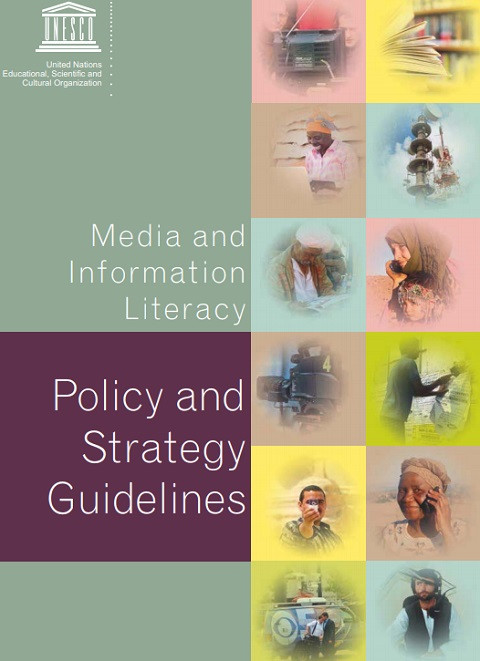 Media and Information Literacy: Policy and Strategy Guidelines Year of publication: 2013 Author: Alton Grizzle | Penny Moore | Michael Dezuanni | Sanjay Asthana | Carolyn Wilson | Fackson Banda | Chido Onumah | Maria Carme Torras Calvo Corporate author: UNESCO This resource aims to treat MIL as a composite concept, unifying information literacy and media literacy as well as considering the right to freedom of expression and access to information through ICTs. It is divided into two parts. Part 1 is the MIL Policy Brief, and is designed for policy or decision makers and can serve as a summary of the publication. Part 2 is divided into several comprehensive chapters and suggests: 1) how to enlist MIL a development tool; 2) conceptual frameworks for MIL policies and strategies; and 3) model MIL policy and strategies that can be adapted by countries globally.
 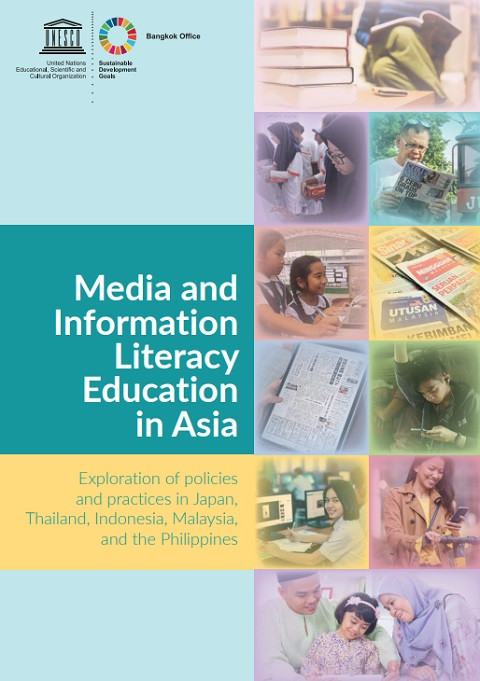 Media and Information Literacy Education in Asia: Exploration of Policies and Practices in Japan,Thailand, Indonesia, Malaysia, and the Philippines Year of publication: 2020 Author: Masato Kajimoto | Phansasiri Kularb | Bobi Guntarto | Sabariah Mohamed Salleh | Therese Patricia S. Torres | Guillian Mae C. Palcon | Ramon Tuazon Corporate author: UNESCO This book looked at the current media and information literacy education policies and teaching practices in formal and informal settings. It explores how MIL could address emerging and pressing problems such as political extremism, false news, online harassment and discrimination in Indonesia, Japan, Malaysia, the Philippines, and Thailand.
 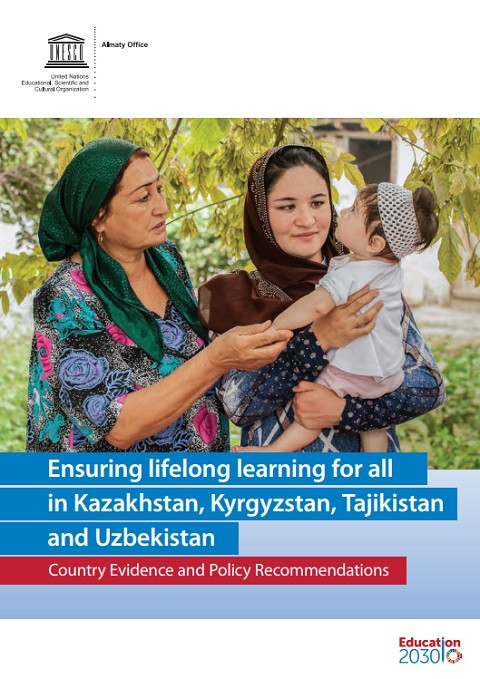 Ensuring Lifelong Learning for All in Kazakhstan, Kyrgyzstan, Tajikistan and Uzbekistan: Country Evidence and Policy Recommendations Year of publication: 2020 Author: Arne Carlsen Corporate author: UNESCO Lifelong Learning is at the heart of the 2030 Agenda for Sustainable Development and its 17 goals. More speci¬cally, Sustainable Development Goal 4 is devoted to ensuring quality education and lifelong learning opportunities for all. As the lead agency for education, UNESCO is mandated to support Member States in implementing SDG 4 through the Education 2030 Framework for Action. Central Asian countries – Kazakhstan, Kyrgyzstan, Tajikistan and Uzbekistan – have all shown their commitment to achieving the SDGs by 2030, including SDG 4, and have taken several actions in this regard. This sub-regional study aims to provide a broader picture of lifelong learning in Central Asia, supported by evidence and policy recommendations in order to propose a systemic approach for future education reforms. Обеспечение возможности обучения на протяжении всей жизни для всех в Казахстане, Кыргызстане, Таджикистане и Узбекистане: Опыт отдельных стран и рекомендации по вопросам политики Year of publication: 2020 Author: Arne Carlsen Corporate author: Организация Объединенных Наций по вопросам образования, науки и культуры (UNESCO) Обучение на протяжении всей жизни лежит в основе Глобальной программы устойчивого развития, состоящей из 17 целей. Суть Цели 4 в области устойчивого развития заключается в «Обеспечении всеохватного и справедливого качественного образования и поощрение возможности обучения на протяжении всей жизни для всех». ЮНЕСКО, как специализированному учреждению ООН по вопросам образования, было поручено оказывать государствам-членам содействие в достижении ЦУР 4 через выполнение Рамочной программы действий в области образования до 2030 года.Страны Центральной Азии – Казахстан, Кыргызстан, Таджикистан и Узбекистан – выразили заинтересованность в достижении к 2030 году всех ЦУР, включая ЦУР 4, и уже предприняли ряд действий в этом направлении. Цель настоящего субрегионального исследования состоит в предоставлении более точной картины положения дел в области обучения на протяжении всей жизни в Центральной Азии, подкрепленной фактическим материалом и рекомендациями по вопросам политики, для подготовки предложений по системному подходу к будущим реформам образования.
 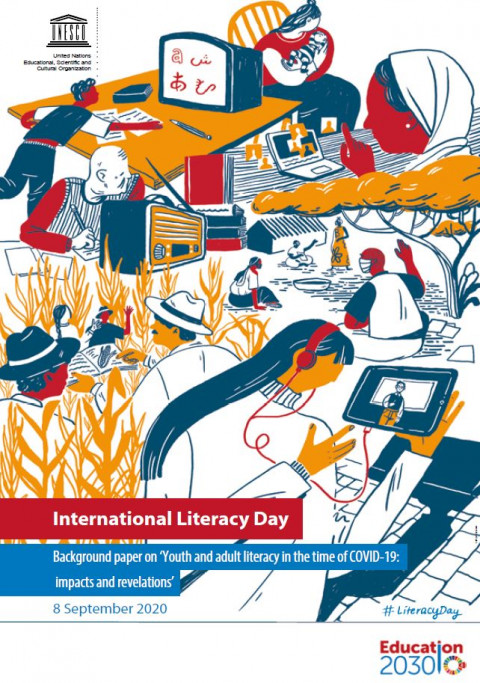 International Literacy Day: Background Paper on 'Youth and Adult Literacy in the Time of COVID-19; Impacts and Revelations' Year of publication: 2020 Corporate author: UNESCO Specially prepared on the occasion of International Literacy Day 2020, this background paper illustrates the impact of the COVID-19 crisis on youth and adult literacy, based on the limited information that is currently available. It provides five regional snapshots and identifies preliminary lessons learned thus far, while aiming to inspire continued reflection and subsequent action. It also makes the case for the ongoing importance of advancing youth and adult literacy, a priority that was already neglected even before the pandemic but which deserves all our attention. ILD 2020 thus seeks to trigger reimaginations of literacy teaching and learning in the COVID-19 crisis and beyond, with a particular focus on the role of educators.