
Resources
Explore a wide range of valuable resources on GCED to deepen your understanding and enhance your research, advocacy, teaching, and learning.
2,813 Results found
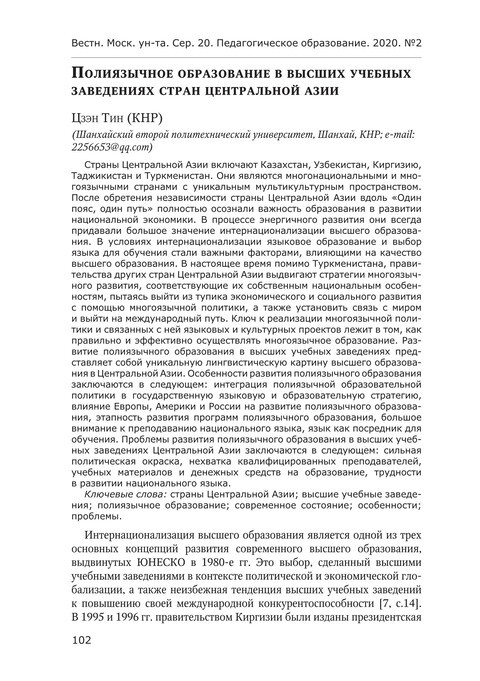 Полиязычное образование в высших учебных заведениях стран Центральной Азии (Вестник Московского университета. Серия 20. Педагогическое образование; No.2, 2020) Year of publication: 2020 Author: Цзэн Тин В условиях интернационализации языковое образование и выбор языка для обучения стали важными факторами, влияющими на качество высшего образования. В настоящее время помимо Туркменистана, правительства других стран Центральной Азии выдвигают стратегии многоязычного развития, соответствующие их собственным национальным особенностям. Проблемы развития полиязычного образования в высших учебных заведениях Центральной Азии заключаются в следующем: сильная политическая окраска, нехватка квалифицированных преподавателей, учебных материалов и денежных средств на образование, трудности в развитии национального языка.
 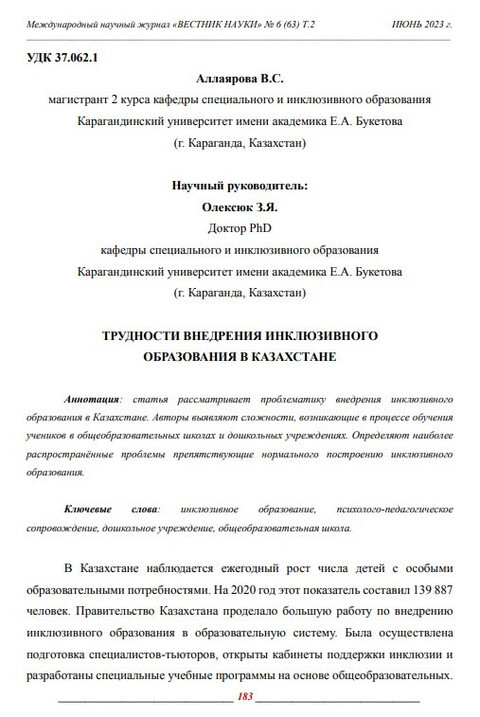 Difficulties of Implementing Inclusive Education in Kazakhstan (Bulletin of Science; Vol.2, No.6) Year of publication: 2023 Author: Аллаярова В.С. | Олексюк З.Я. The article examines the problems of the introduction of inclusive education in Kazakhstan. The authors identify the difficulties that arise in the process of teaching students in general education schools and preschool institutions. Identify the most common problems that hinder the normal construction of inclusive education. Трудности внедрения инклюзивного образования в Казахстане (Вестник науки; Vol.2, No.6) Year of publication: 2023 Author: Аллаярова В.С. | Олексюк З.Я. Статья рассматривает проблематику внедрения инклюзивного образования в Казахстане. Авторы выявляют сложности, возникающие в процессе обучения учеников в общеобразовательных школах и дошкольных учреждениях. Определяют наиболее распространённые проблемы препятствующие нормального построению инклюзивного образования.
 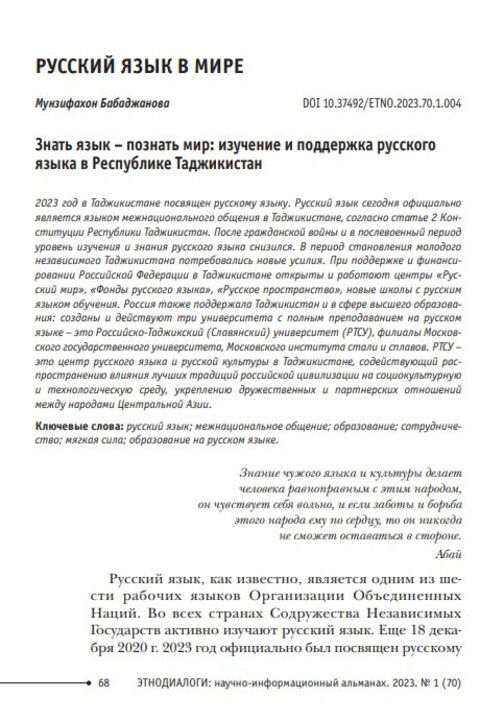 Knowing a Language Is Knowing the World: Learning and Supporting the Russian Language in the Republic of Tajikistan (Ethnodialogues; No.1, 2023) Year of publication: 2023 Author: Мунзифахон Бабаджанова The year 2023 in Tajikistan is dedicated to the Russian language. The Russian language today is officially the language of interethnic communication in Tajikistan. With the support and funding of the Russian Federation, “Russian World”, “Russian Language Foundations”, “Russian Space” centers and new Russian language schools were opened and now operate in Tajikistan. Russia has also supported Tajikistan in higher education: three universities with full Russian-language instruction have been established and are operating. Знать язык - познать мир: изучение и поддержка русского языка в республике Таджикистан (Этнодиалоги; No.1, 2023) Year of publication: 2023 Author: Мунзифахон Бабаджанова 2023 год в Таджикистане посвящен русскому языку. Русский язык сегодня официально является языком межнационального общения в Таджикистане. При поддержке и финансировании Российской Федерации в Таджикистане открыты и работают центры «Русский мир», «Фонды русского языка», «Русское пространство», новые школы с русским языком обучения. Россия также поддержала Таджикистан и в сфере высшего образования: созданы и действуют три университета с полным преподаванием на русском языке.
 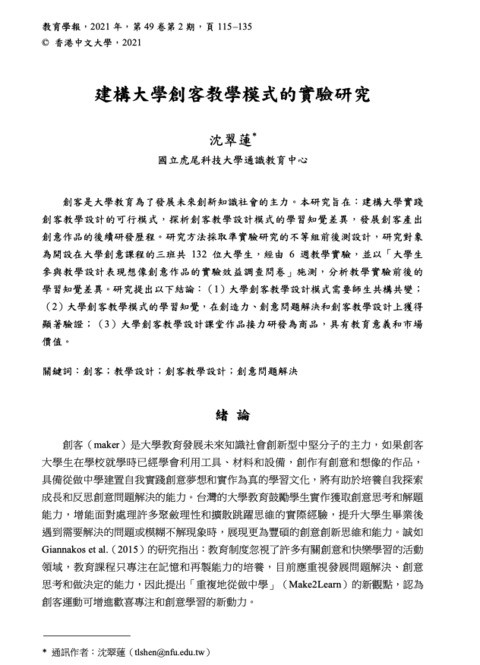 An Experimental Study of Constructing Maker Teaching Model (Educational Journal ; Vol.49, No.2) Year of publication: 2021 Author: 沈翠莲 Makers studying at university are the main powerful pioneers for developing innovative knowledge society. This research aimed to construct a feasible model of maker teaching, to explore the differences of learning perception of the maker instructional model, and to develop the subsequent process of product creation. Nonequivalent pretest-posttest designs of the quasi-experimental research was employed. Research participants included 132 college students from three classes of creativity-related courses, who participated a 6-week experiment. They were divided into the experimental group and two control groups. A questionnaire was employed to test their differences of learning perception. Results found that: (a) for the maker instructional model, CEO-I2M2E2-SF, a collaborative constructive relationship should be built between instructor and makers; (b) in terms of the performances of learning perception under the maker instructional model, significant differences were found in the dimensions of creativity, creative problem solving, and maker instructional design; (c) there were educational and marketing values in the subsequent process of product creation by makers. 建构大学创各教学模式的实验研究 (教育学报; Vol.49, No.2) Year of publication: 2021 Author: 沈翠莲 创客是大学教育为了发展未来创新知识社会的主力。本研究旨在:建构大学实践创客教学设计的可行模式,探析创客教学设计模式的学习知觉差异,发展创客产出创意作品的后续研发历程。研究方法采取准实验研究的不等组前后测设计,研究对象为开设在大学创意课程的三班共132位大学生,经由6周教学实验,并以「大学生参与教学设计表现想像创意作品的实验效益调查问卷」施测,分析教学实验前后的学习知觉差异。研究提出以下结论:(1)大学创客教学设计模式需要师生共构共变;(2)大学创客教学模式的学习知觉,在创造力、创意问题解决和创客教学设计上获得显着验证;(3)大学创客教学设计课堂作品接力研发为商品,具有教育意义和市场价值。
 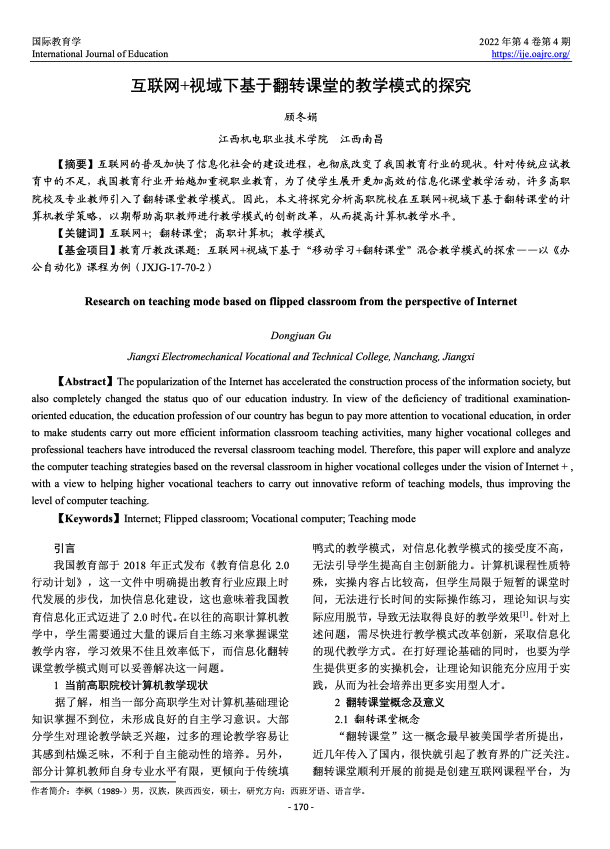 互联网+视域下基于翻转课堂的教学模式的探究 Year of publication: 2022 Author: 顾冬娟 互联网的普及加快了信息化社会的建设进程,也彻底改变了我国教育行业的现状。针对传统应试教育中的不足,我国教育行业开始越加重视职业教育,为了使学生展开更加高效的信息化课堂教学活动,许多高职院校及专业教师引入了翻转课堂教学模式。因此,本文将探究分析高职院校在互联网+视域下基于翻转课堂的计算机教学策略,以期帮助高职教师进行教学模式的创新改革,从而提高计算机教学水平。
 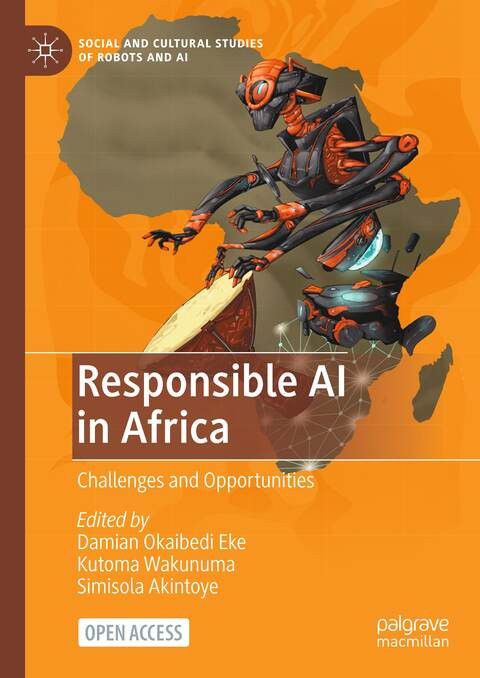 Responsible AI in Africa: Challenges and Opportunities Year of publication: 2023 Corporate author: Palgrave Macmillan This open access book contributes to the discourse of Responsible Artificial Intelligence (AI) from an African perspective. It is a unique collection that brings together prominent AI scholars to discuss AI ethics from theoretical and practical African perspectives and makes a case for African values, interests, expectations and principles to underpin the design, development and deployment (DDD) of AI in Africa. The book is a first in that it pays attention to the socio-cultural contexts of Responsible AI that is sensitive to African cultures and societies. It makes an important contribution to the global AI ethics discourse that often neglects AI narratives from Africa despite growing evidence of DDD in many domains. Nine original contributions provide useful insights to advance the understanding and implementation of Responsible AI in Africa, including discussions on epistemic injustice of global AI ethics, opportunities and challenges, an examination of AI co-bots and chatbots in anAfrican work space, gender and AI, a consideration of African philosophies such as Ubuntu in the application of AI, African AI policy, and a look towards a future of Responsible AI in Africa.
 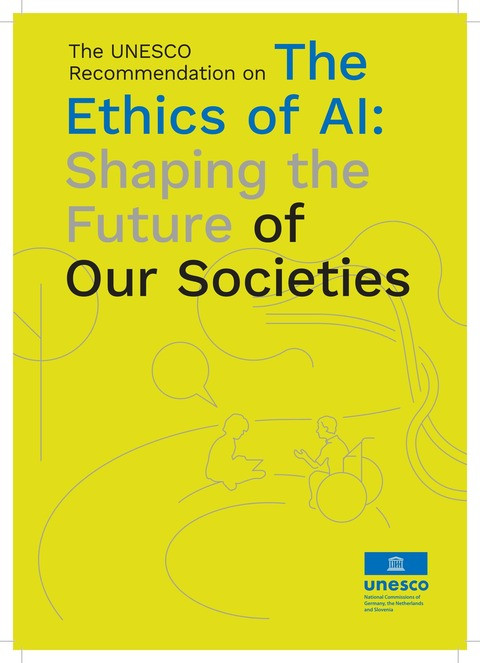 The UNESCO Recommendation on the Ethics of AI: Shaping the Future of Our Societies Year of publication: 2023 Corporate author: German Commission for UNESCO | Netherlands National Commission for UNESCO | Slovenian National Commission for UNESCO The UNESCO commissions of Germany, the Netherlands and Slovenia with the support of IRCAI have jointly published a brochure on the UNESCO recommendation on the ethics of artificial intelligence. It summarizes the most important content in a compact manner and presents the central demands from the areas of health, culture, the environment, gender equality as well as education and research. The recommendation with its diverse topics is not only relevant for political experts, but it offers one for various areas of application of the ethical framework and thus serves as an orientation for dealing with AI in general. The brochure is available for the wider public in a number of formats including the original Adobe InDesign file that allows translations to be inserted and format pages, resulting in new versions of the brochure. Therefore, we strongly encourage all UNESCO Commissions from across all UNESCO regions Africa, Arab States, Asia and the Pacific, Europe and North America, Latin America and the Caribbean to use the text in the basic files and translate the content into their own languages, including using the graphic file to setup their own designs of the brochure.