
Resources
Explore a wide range of valuable resources on GCED to deepen your understanding and enhance your research, advocacy, teaching, and learning.
1,951 Results found
 Regulatory Authorities for Electronic Media and Media Literacy: Comparative Analysis of the Best European Practices Year of publication: 2018 Author: Robert Tomljenović Corporate author: Council of Europe Information event for stakeholders of the media community in Serbia on presentation of the Study “Regulatory Authorities for Electronic Media and Media Literacy - Comparative analysis of the best European practices” was organized by the Council of Europe Office in Belgrade, JUFREX Programme and the Embassy of Finland in Serbia, on 20 December 2018, in order to jointly point out the importance of the development of media literacy in Serbia and the Western Balkans region.The study analyzes and indicates challenges and issues that come with living in a digitalized, hypertechnological mediated world, in which we are faced with countless information, issues of disinformation and fake news, algorithmic separation in ideological echo chambers, hate speech, clickbait journalism, and decreased trust in both mainstream media and the level of journalistic professionalism. With such a media ecosystem, it is vital to define the position of a regulatory authority for electronic media as well as its responsibilities and obligations, and stress the regulator's role in promoting and developing media literacy, one of the key skills for living in the 21st century and the answer to many questions and challenges that come with the modern era."The Council of Europe considers media literacy one of the main tools for strengthening media pluralism and the quality of media content. All media actors in Serbia have the responsibility to promote media literacy to enable understanding and critical analysis of content offered by traditional and digital media. Especially children have the right to a safe and stimulating media environment" said Head of the Council of Europe Office in Belgrade, Tobias Flesenkemper.The study emphasizes that a prerequisite for every democratic process is a well-informed citizen. The Study presents several examples of best European practices and how to engage regulatory bodies and all other relevant actors to increase media literacy, with a particular focus on the Finnish model in this area. Media education is implemented in Finland wherever there are children and youth, not only in kindergartens and schools, but also in libraries, playrooms, youth centers, even in virtual communities and digital games.As pointed out by the Ambassador of Finland in Belgrade, Perti Ikonen, the high level of media literacy of citizens is what the media in Finland forces to adhere to high professional standards, and basically the work of the institutions responsible for the promotion of media literacy. Finland took over the chairmanship of the Committee of Ministers of the Council of Europe in November this year, and during its term of office, until May 2019, the priorities of the Finnish Presidency will be to strengthen the human rights and rule of law system in Europe, support equality as well as inclusiveness with a particular focus on youth and the prevention of radicalization.The study was developed within the framework of the Joint European Union and the Council of Europe Programme "Strengthening the Judicial Expertise on Freedom of Expression and Media in South-East Europe (JUFREX)".
  Gesturing Towards Decolonial Futures Collective: Global Citizenship Education Otherwise; Study Guide Year of publication: 2019 Author: Vanessa de Oliveira Andreotti | Sharon Stein | Rene Suša | Dani d’Emilia | Elwood Jimmy | Bill Calhoun | Sarah Amsler | Camilla Cardoso | Dino Siwek | Kyra Fay | Tereza Čajková Corporate author: Decolonial Futures Collective This booklet was developed with a specific audience in mind: educators working with global citizenship education in Europe. It presents an overview of the work of the collective and outlines two pedagogical experiments. The first pedagogical experiment, “Bare Basics” is a program for self or group study consisting of a collection of resources organized around 6 thematic areas (denial of violence, denial of unsustainability, denial of entanglement, how education has helped create the problem, so what/now what?, the difficulties/impossibilities of imagining otherwise). The second pedagogical experiment is an experiential learning program that we run by request (as a TTT or a residency). It involves mapping, imagination, body and land-based exercises. We invite you to engage with the outline of both programs, starting with our “broccoli seed agreement” on the back of the booklet.
  Developing Digital Citizens: Media Literacy Education for All Students Year of publication: 2020 Author: Jessica R. Wolff | Ann LoBue | Michael A. Rebell Corporate author: DemocracyReady NY Developing Digital Citizens: Media Literacy Education for All Students, a new report from DemocracyReady NY, calls for immediate and decisive steps to require media literacy education in schools throughout New York State. Stressing that “the internet has become the new public square,” it asserts that “to be democracy ready, all students must be media literate.”. The report defines what media literacy encompasses in an increasingly digital age, and establishes a clear framework to ensure that all students become media literate civic participants. This report includes recommendations for:Clear state standards for media literacy educationQualified personnel for teaching media literacySuitable MLE curricula and course offeringsUp-to-date facilities, instructional materials, and technologyTransparent monitoring and reporting of MLE resources and results.
 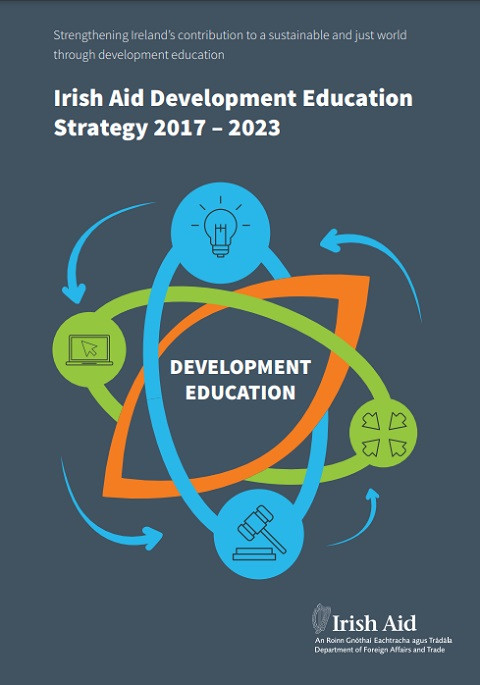 Irish Aid Development Education Strategy 2017-2023: Development Education Year of publication: 2016 Corporate author: Irish Aid Ireland has a long and proud history in development education thanks to many of the civil society organisations represented here today and which pre-dates the start of Ireland’s official aid programme which is itself now over 40 years old.The Development Education Strategy 2017-2023 aims to increase access to development education in Ireland, in schools and colleges, in local and community groups, and among the old and young.Development education is a lifelong educational process which encourages people to critically analyse and challenge the root causes and consequences of global hunger, poverty and injustice, challenge stereotypes and engage in action to bring about change in both their local and global communities.
 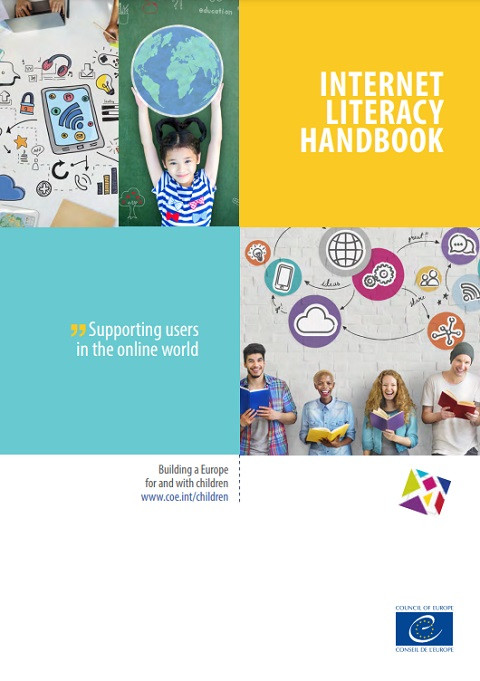 Internet Literacy Handbook: Supporting Users in the Online World Year of publication: 2017 Author: Janice Richardson | Elizabeth Milovidov | Martin Schmalzried Corporate author: Council of Europe Since the first edition of the Internet Literacy Handbook was issued in 2003 the world of the Internet has changed tremendously. The number of Internet users has risen; users are increasingly younger, trends in how people use the Internet and what they are looking for evolve, and new pitfalls in, for example, personal security arise seemingly overnight.This new edition takes into account the myriad changes, although the object of the Handbook still remains, namely to offer families, educators and policy-makers sufficient technical know-how to allow them to navigate, with young people, through communication technology. The new edition also expands the scope of the Fact sheets anchoring previously “new” concepts of digital citizenship and digital parenting. This edition includes 26 Fact sheets arranged under 6 thematic headings including a heading specifically dedicated to “Looking Forward” towards the future of the Internet. The Handbook is designed to be easy to use and helpful, as illustrated by the Fact sheet entitled “Finding quality information on the Web”. It is also available online, where it can be downloaded either in its full format or per individual factsheet. Manuel de maîtrise de l'internet: Accompagner les utilisateurs dans le monde en ligne Year of publication: 2017 Author: Janice Richardson | Elizabeth Milovidov | Martin Schmalzried Corporate author: Conseil de l'Europe Depuis la publication de la première édition du Manuel de maîtrise d’Internet en 2003, le monde en ligne a beaucoup changé. Les Internautes sont de plus en plus jeunes, leur nombre a augmenté, leurs usages d’Internet et l’objet de leurs recherches évoluent et de nouveaux dangers, par exemple en matière de sécurité individuelle, apparaissent chaque jour. Cette nouvelle édition tient compte de ces nombreux changements mais conserve son objectif, qui est de donner aux familles, aux enseignants et aux décideurs politiques des connaissances techniques suffisantes pour pouvoir naviguer, avec les jeunes, dans le monde des technologies de la communication. La nouvelle édition étend également le contenu des Fiches d’information aux concepts qui étaient alors «nouveaux» de citoyenneté numérique et de parentalité numérique, ce qui porte le nombre de fiches à 26, organisées en six thématiques dont l’une est spécialement consacrée à l’avenir d’Internet. Le manuel se veut convivial et pratique, comme l’illustre la fiche intitulée « Trouver de l’information de qualité sur le web ». Il est également accessible en ligne où il peut être téléchargé dans son intégralité ou fiche par fiche.
 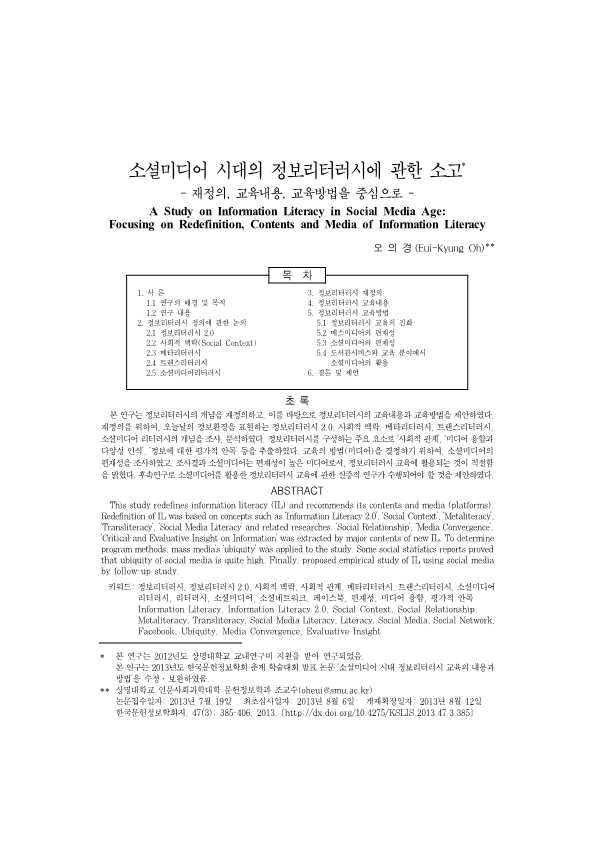 A Study on Information Literacy in Social Media Age: Focusing on Redefinition, Contents and Media of Information Literacy Year of publication: 2013 Author: Euikyung Oh Corporate author: Korean Society for Library and Information Science This study redefines information literacy (IL) and recommends its contents and media (platforms). Redefinition of IL was based on concepts such as ‘Information Literacy 2.0’, ‘Social Context’, ‘Metaliteracy’, ‘Transliteracy’, ‘Social Media Literacy’ and related researches. ‘Social Relationship’, ‘Media Convergence’, ‘Critical and Evaluative Insight on Information’ was extracted by major contents of new IL. To determine program methods, mass media’s ‘ubiquity’ was applied to the study. Some social statistics reports proved that ubiquity of social media is quite high. Finally, proposed empirical study of IL using social media by follow-up study.)
  소셜미디어 시대의 정보리터러시에 관한 소고: 재정의, 교육내용, 교육방법을 중심으로 Year of publication: 2013 Author: Euikyung Oh Corporate author: Korean Society for Library and Information Science 본 연구는 정보리터러시의 개념을 재정의하고, 이를 바탕으로 정보리터러시의 교육내용과 교육방법을 제안하였다. 재정의를 위하여, 오늘날의 정보환경을 표현하는 정보리터러시 2.0, 사회적 맥락, 메타리터러시, 트랜스리터러시, 소셜미디어 리터러시의 개념을 조사, 분석하였다. 정보리터러시를 구성하는 주요 요소로 ‘사회적 관계’, ‘미디어 융합과 다양성 인식’, ‘정보에 대한 평가적 안목’ 등을 추출하였다. 교육의 방법(미디어)을 결정하기 위하여, 소셜미디어의 편재성을 조사하였고, 조사결과 소셜미디어는 편재성이 높은 미디어로서, 정보리터러시 교육에 활용되는 것이 적절함을 밝혔다. 후속연구로 소셜미디어를 활용한 정보리터러시 교육에 관한 실증적 연구가 수행되어야 할 것을 제안하였다.
 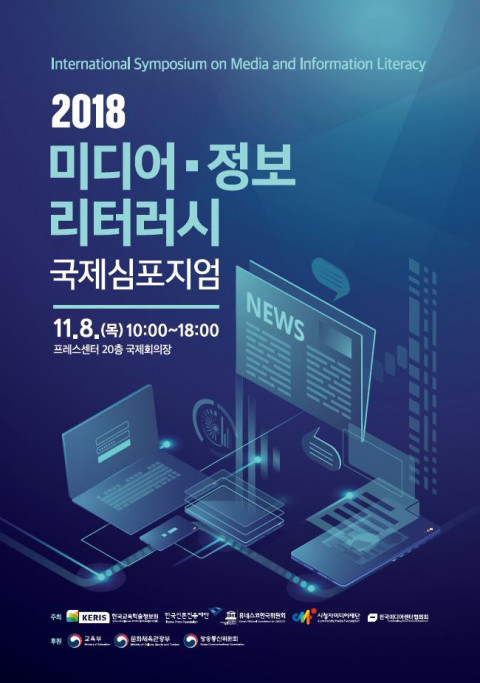 2018 International Symposium on Media and Information Literacy Year of publication: 2018 Corporate author: Korean National Commission for UNESCO | Community Media Foundation | National Association of Community Mediacenters | Korea Education and Research Information Service (KERIS) | Korea Press Foundation (KPF) This book is a conference report of 2018 International Symposium on Media and Information Literacy. The Symposium on MIL is hosted by the Korea Press Foundation (KPF), the Korea Education and Research Information Service (KERIS), and the Korean National Commission for UNESCO (KNCU), in cooperation with the Community Media Foundation, the National Association of Community Mediacenters. 2018 미디어·정보리터러시: 국제심포지엄 자료집 Year of publication: 2018 Corporate author: 유네스코한국위원회 | Community Media Foundation | National Association of Community Mediacenters | 한국교육학술정보원 | 한국언론진흥재단 이 책은 유네스코한국위원회, 한국언론진흥재단, 한국교육학술정보원, 시청자미디어재단, 전국미디어센터협의회가 공동주최하고 교육부, 문화체육관광부, 방송통신위원회가 후원한 「2018 미디어·정보리터러시: 국제심포지엄」의 자료집으로 기조연설 및 주제별 발표내용을 담고 있다.